Gate Wallet Gas Station Explained: How Gas Management Is Evolving in the Multi-Chain Era
New Challenges in Gas Management for the Multi-Chain Web3 Era
In the early days of Web3, users typically interacted with a single network, making gas management relatively straightforward. However, as Layer 2 solutions, public chains, and application-specific chains have proliferated, users now face increasingly fragmented transaction paths.
Today, users often operate on multiple EVM-compatible networks at the same time, each with distinct gas assets, balance management, and usage logic. If any part of this process is not properly prepared, transactions can be interrupted, disrupting the overall experience.
Gas is evolving from a simple “cost issue” into a broader “user experience issue.”
Gate Wallet’s Gas Station: Design Philosophy
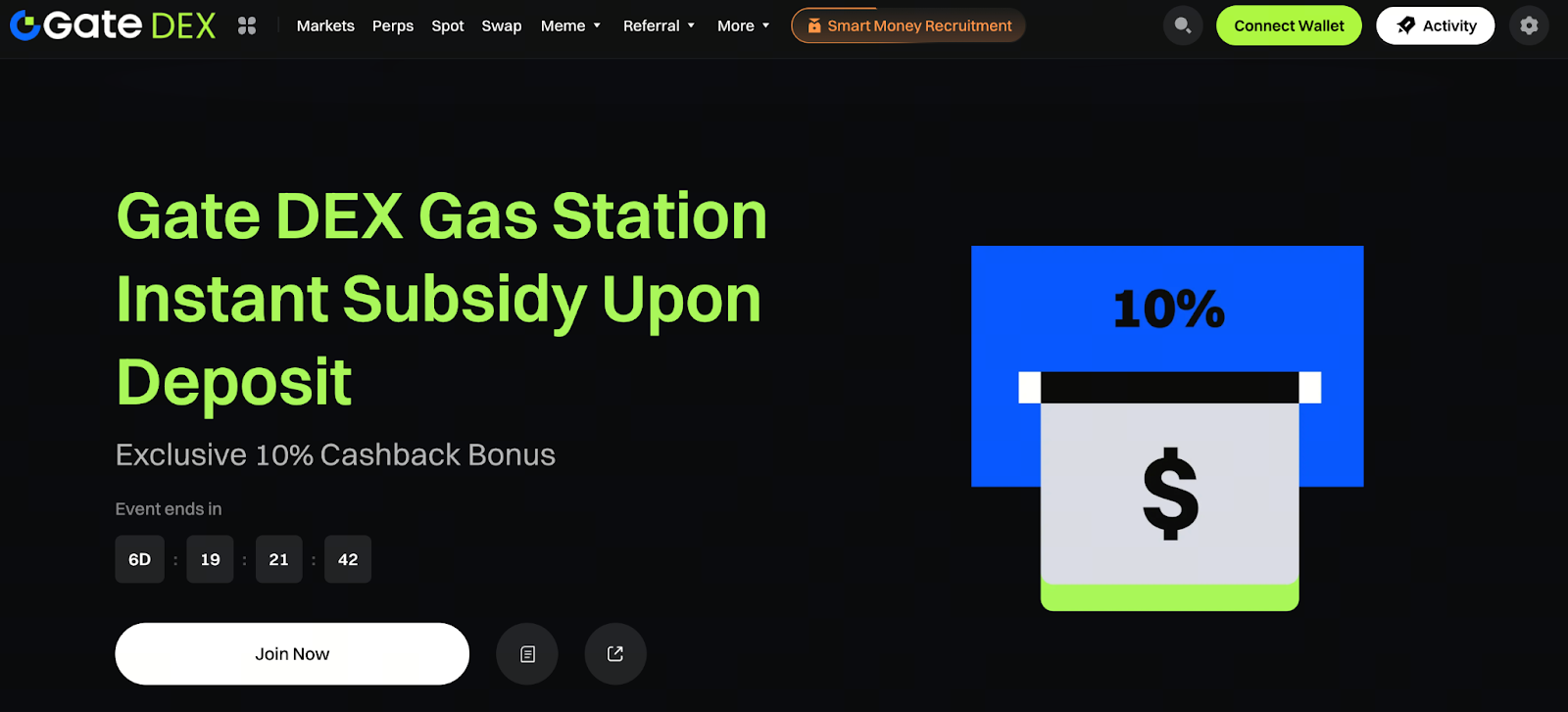
Image: https://web3.gate.com/campaigns/site-60
Gate Wallet’s Gas Station is not simply a subsidy or discount program. Instead, it aims to fundamentally reorganize how gas operates in a multi-chain environment.
The core idea is to turn gas into a platform-level capability, rather than a variable that users must manage separately for every transaction.
By centralizing complex gas logic within the wallet itself, Gate aims to minimize the preparatory steps users need to take before transacting, making on-chain interactions as seamless as using everyday tools.
How the Gas Account Mechanism Works
The Gas Station uses a dedicated gas account model. Each EVM wallet is linked to its own independent gas account, which covers network fees for on-chain activity.
If a user initiates a transaction on a network without enough native gas, the system automatically pays the fee from the gas account, ensuring the transaction is not interrupted. This process does not require additional smart contract authorizations and does not impact the user’s control over their main wallet assets.
This mechanism transforms unexpected gas shortages from an “operational risk” into a manageable background process.
Network Coverage and Supported Assets
Gate Wallet’s Gas Station currently supports a broad range of leading EVM networks, including Ethereum, BNB Smart Chain, Arbitrum, Base, Polygon, and Optimism, with ongoing expansion.
For funding, users can top up with more than 100 major cryptocurrencies, including GT, USDT, USDC, ETH, and BNB. This approach eliminates the need to repeatedly swap native tokens for different networks, making gas preparation more streamlined and unified.
Impact on Regular and High-Frequency Users
For regular users, the Gas Station reduces the “learning curve.” Even without understanding the gas mechanics of different chains, users can complete on-chain transactions smoothly.
For high-frequency users, this feature enhances operational stability by preventing delays caused by sudden gas shortages—especially valuable for those frequently interacting across chains or with multiple applications.
All user groups benefit directly from unified gas management.
Transparency, Security, and Control
Gate Wallet’s design prioritizes transparency without sacrificing convenience. Users can view gas account balances, payment history, and detailed spending records at any time for full oversight of their funds.
Moreover, the Gas Station does not require extra smart contract authorizations, reducing potential security risks and balancing emergency payments with asset safety.
Impact of Incentives on Usage Costs
To encourage adoption, Gate has launched limited-time incentives for the Gas Station, including preloaded subsidies for new users and cashback or referral bonuses for ongoing users.
While these incentives are not the core functionality, they effectively lower the barrier for users to try multi-chain transactions in the early stages, accelerating real-world adoption.
The Long-Term Value of Gate Gas Station
In the long run, the Gas Station is not a standalone feature but a critical component of Gate’s foundational Web3 user experience.
As multi-chain operations become the industry norm, platforms that best manage underlying complexity will be best positioned as stable Web3 gateways. By investing early in gas management, Gate is laying the groundwork for more frequent and diverse on-chain activity in the future.
Optimizing the core user experience rarely becomes an immediate focal point, but it ultimately determines a platform’s long-term competitiveness. The Gas Station is a concrete realization of this philosophy.
Share
Content
New Challenges in Gas Management for the Multi-Chain Web3 Era
Gate Wallet’s Gas Station: Design Philosophy
How the Gas Account Mechanism Works
Network Coverage and Supported Assets
Impact on Regular and High-Frequency Users
Transparency, Security, and Control
Impact of Incentives on Usage Costs
The Long-Term Value of Gate Gas Station


Related Articles

Gold Price Forecast for the Next Five Years: 2026–2030 Trend Outlook and Investment Implications, Could It Reach $6,000?

Crypto Future Profit Calculator: How to Calculate Your Potential Gains
Crypto Futures Calculator: Easily Estimate Your Profits & Risks
What is Oasis Network (ROSE)?
The $50M Crypto Scam Nobody Is Talking About