Image: https://goldprice.org/
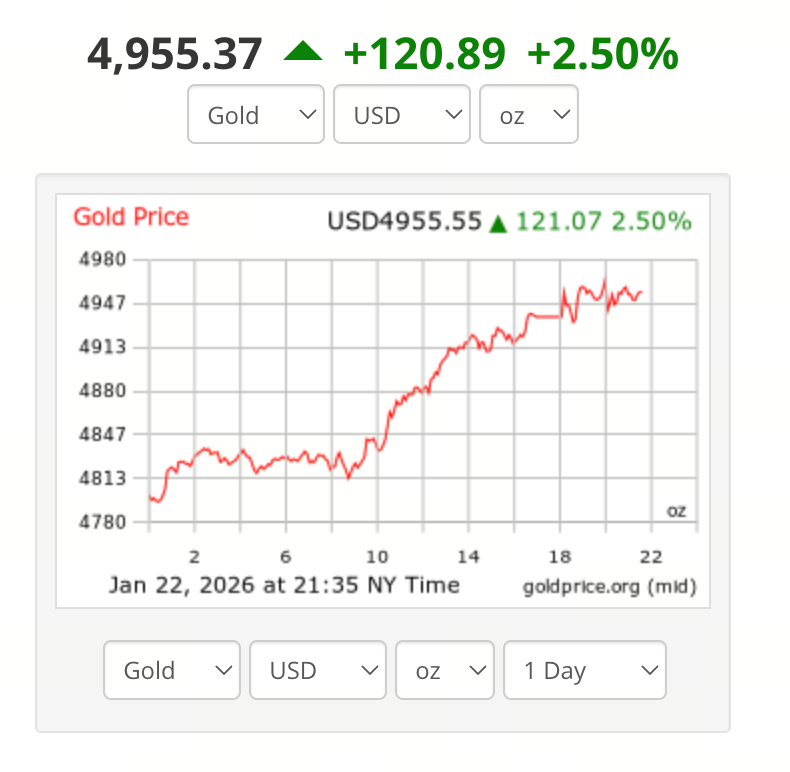
With global macroeconomic uncertainty intensifying, gold prices are experiencing a rare and powerful rally. The precious metals market has recently stood out, as spot gold briefly broke above $4,400 per ounce and repeatedly set new record highs. Market anticipation for gold to reach the $5,000 threshold is rapidly growing.
Key Drivers of Gold’s Surge
Gold’s rise is driven by a complex mix of factors. First, heightened global inflation expectations and surging demand for safe-haven assets have prompted investors to favor traditional hedges amid economic uncertainty. Large-scale buying by central banks and sovereign wealth funds has also strengthened demand for physical gold, continuously pushing prices higher worldwide.
Volatility in the US Dollar Index has further supported gold prices. When the dollar weakens or faces devaluation risks, dollar-denominated gold typically attracts more international buyers, fueling price increases. At the same time, uncertainty surrounding certain US economic and fiscal policies has reinforced gold’s reputation as a “safe asset.”
Institutional Views: Gold Could Challenge $5,000
Goldman Sachs and other financial institutions have recently reported that, under specific scenarios, gold prices could approach or even reach $5,000 per ounce. This projection is based on continued macroeconomic instability, potential dollar weakness, and sustained global demand for safe-haven assets.
Opinions from these leading institutions have sparked market debate, with many believing that persistent economic pressures and a search for safer stores of value will keep gold’s momentum strong. This expectation has further fueled bullish sentiment and buying activity in the gold market.
Bitcoin’s Underperformance Versus Gold—Why Has It Lagged?
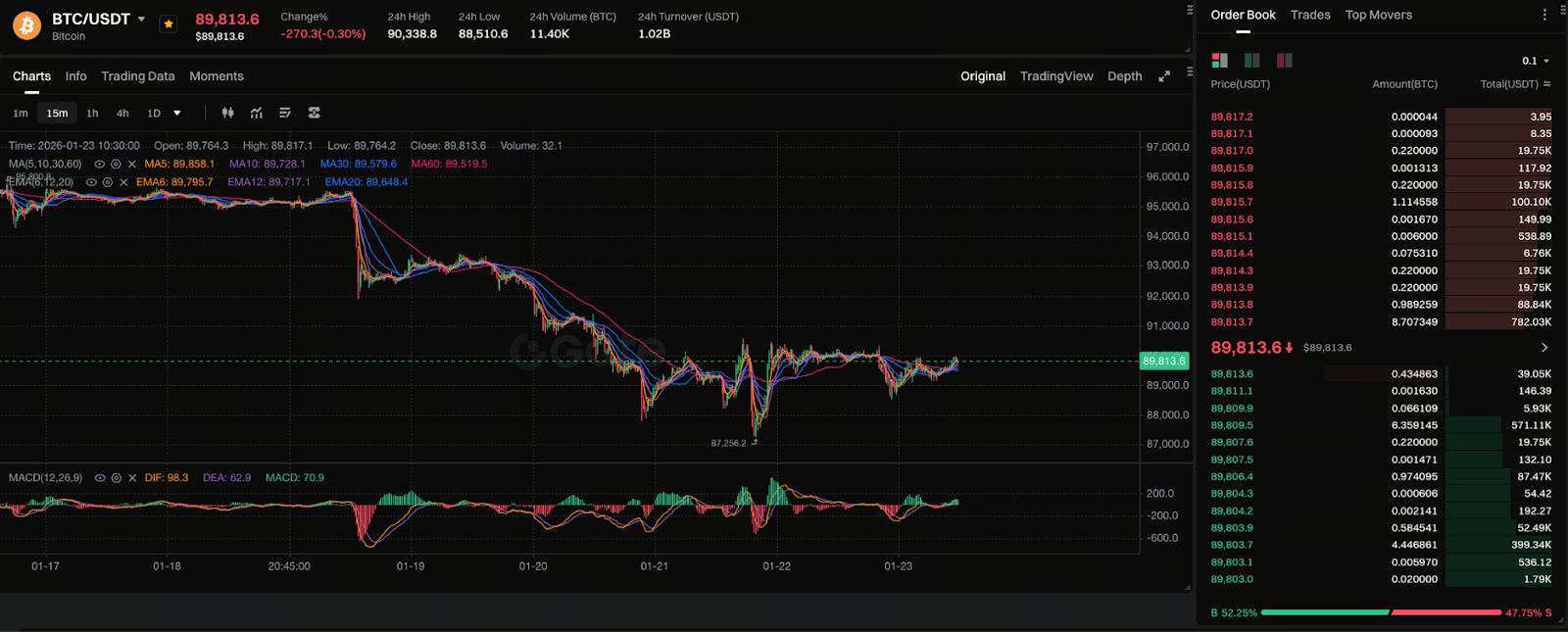
Image: https://www.gate.com/trade/BTC_USDT
In stark contrast to gold’s strong run, Bitcoin has shown notable weakness recently. Although Bitcoin is widely regarded as “digital gold” and a store of value with high risk, its performance has clearly lagged behind gold in today’s market. Latest data shows Bitcoin’s price has remained volatile and range-bound after its correction, with no decisive breakout.
Analysts point to several reasons for this. Investors have become less willing to allocate to risk assets, making it difficult for highly volatile assets like Bitcoin to attract capital in a risk-averse climate. Additionally, macro factors—such as interest rate trends, liquidity shifts, and regulatory expectations—have all weighed on Bitcoin’s upward momentum.
Policy and Market Sentiment Impact
While Bitcoin has occasionally rebounded in recent years, its performance tends to be less stable than gold’s when faced with policy uncertainty and rising macro risks. Gold’s long-standing role as a safe-haven asset makes it much more likely to attract capital during market turmoil. This reallocation trend is a major reason for the divergence in their performance.
Although some analysts note a long-term correlation between Bitcoin and gold, current market conditions have not translated this relationship into a price advantage for Bitcoin.
How Should Investors Approach Future Trends?
Looking forward, opinions on gold and Bitcoin remain divided. Some believe gold may continue its climb and break the $5,000 psychological barrier, while Bitcoin could still stage a technical rebound in a more accommodative macro environment. Given their distinct asset characteristics, investors should weigh risk tolerance, investment horizon, and overall portfolio balance when allocating to gold and Bitcoin.
In summary, gold’s current approach to historic highs highlights growing demand for hedging and value preservation. Bitcoin’s relative weakness reflects a short-term shift in risk appetite. While gold and Bitcoin may each present unique trends under different conditions, gold’s safe-haven appeal and upward momentum are especially pronounced at present.