How Global Trade Policy Risks Are Reshaping Lululemon’s Supply Chain and Profit Model
Global Trade Policy Risks on the Rise and the Lululemon Supply Chain
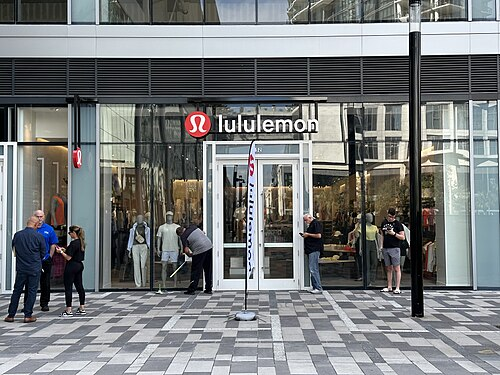
Source: https://en.wikipedia.org/wiki/Lululemon
With the United States ending the previous de minimis tax exemption threshold and imposing higher tariffs on imports, global trade policy risks have shifted from an abstract macro concept to a concrete factor impacting Lululemon’s (hereafter “LULU”) operating costs and supply chain design. Recent analysis shows that these policy changes are pushing LULU to evolve its supply chain from a cost-driven model to a multi-country, regionalized structure.
From 2025 through 2026, the US will continue to increase tariffs on goods imported from Vietnam, other Asian countries, and China. As a result, LULU will face higher tax burdens at the import stage, which will intensify overall supply chain cost pressures.
How Tariff Changes Are Reshaping Lululemon’s Cost Structure
The US has eliminated the longstanding de minimis provision that exempted low-value packages (under $800) from tariffs. Until this policy takes effect in August 2025, most of LULU’s online orders have entered the US via Canadian warehouses, avoiding many tariffs. Once the new policy is in force, these orders will be subject to standard tariff rates, which will directly impact LULU’s profitability.
Estimates suggest this single policy shift could reduce LULU’s gross profit by roughly $240 million in 2025. If even higher reciprocal tariffs take effect in 2026, the company’s operating profit could face an additional hit of more than $320 million.
This shift not only increases pressure on LULU’s supply chain cost structure but also worsens inventory pricing challenges. Without adjustments to pricing or supply chain configuration, the company’s gross margin will face further compression.
Supply Chain Transformation: Lululemon’s Strategic Response
LULU is taking proactive steps to counter these trade policy changes, including:
1. Diversifying the Supply Chain: LULU is rebalancing its supplier network to reduce reliance on any single country, especially by sourcing more from Southeast and South Asia for better cost efficiency and risk diversification.
2. Regional Production and Distribution Hubs: By establishing more warehouses and production centers near key markets, LULU can shorten shipping times, reduce tariff exposure, and improve both inventory turnover and customer service efficiency.
3. Negotiation and Cost Buffering: The company is negotiating more aggressively with suppliers for better pricing and terms, and making targeted price adjustments on select products to pass some costs on to long-term customers.
These moves are designed to build a more resilient supply chain—not only to address current risks but also to keep options open for future policy shifts.
Market Pricing and Inventory: Analyzing Price Fluctuations
As cost pressures mount, LULU is adjusting its pricing strategy. The company is slightly raising prices on certain high-margin, core products to offset the impact of higher tariffs on gross margins. At the same time, it’s using promotions and discounts in selected markets to maintain sales and ensure steady inventory turnover.
Despite rising supply chain costs, LULU continues to see robust growth in Asia—especially in China—which has helped offset pressure in North America. In 2025, the Chinese market delivered double-digit growth, providing stability to overall revenue performance.
Risk Trends and Long-Term Strategic Insights
Over the long term, global trade policy risks are unlikely to fade quickly. Geopolitical tensions and protectionist policies are reshaping the international apparel supply chain landscape. For global brands like LULU, ongoing optimization in the following areas will be essential:
- Multi-regional production and sourcing strategies
- Intelligent supply chain risk forecasting systems
- More flexible pricing and inventory management
In summary, global trade policy risks are not just external challenges—they may also serve as catalysts for supply chain innovation and business transformation at Lululemon.
Share
Content


Related Articles

Gold Price Forecast for the Next Five Years: 2026–2030 Trend Outlook and Investment Implications, Could It Reach $6,000?

Crypto Future Profit Calculator: How to Calculate Your Potential Gains

Gate Alpha Launches Points System: Trade On-Chain, Earn Points, Unlock Airdrops

Crypto Futures Calculator: Easily Estimate Your Profits & Risks

What is Oasis Network (ROSE)?