Price volatility has consistently played a crucial role in limiting the broad adoption of digital assets within the cryptocurrency market. While mainstream cryptocurrencies like Bitcoin and Ethereum offer high liquidity, their pronounced price swings create challenges for payments, settlements, and asset storage. As a result, stablecoins—designed to maintain price stability—have become foundational infrastructure in blockchain finance.
Among various stablecoins, USDC stands out as one of the most prominent USD-backed stablecoins, thanks to its transparent reserve structure and strong compliance standards. Issued by Circle, USDC is widely used across crypto trading, DeFi protocols, cross-border payments, and on-chain USD settlements, serving as a critical liquidity instrument in the blockchain financial system. Understanding USDC’s operational model provides insight into how stablecoins deliver value stability and facilitate capital movement within the blockchain ecosystem.
What is USDC’s core operating mechanism?
USDC operates on a 1:1 USD reserve backing model. For every USDC token issued, Circle holds $1 in reserve assets.
These reserves typically consist of cash and short-term US Treasury bonds, ensuring both liquidity and security. This structure allows USDC to maintain its peg to the US dollar and deliver stable value.
How is USDC issued?
When a user or institution deposits USD with Circle, Circle mints an equivalent amount of USDC on the blockchain at a 1:1 ratio.
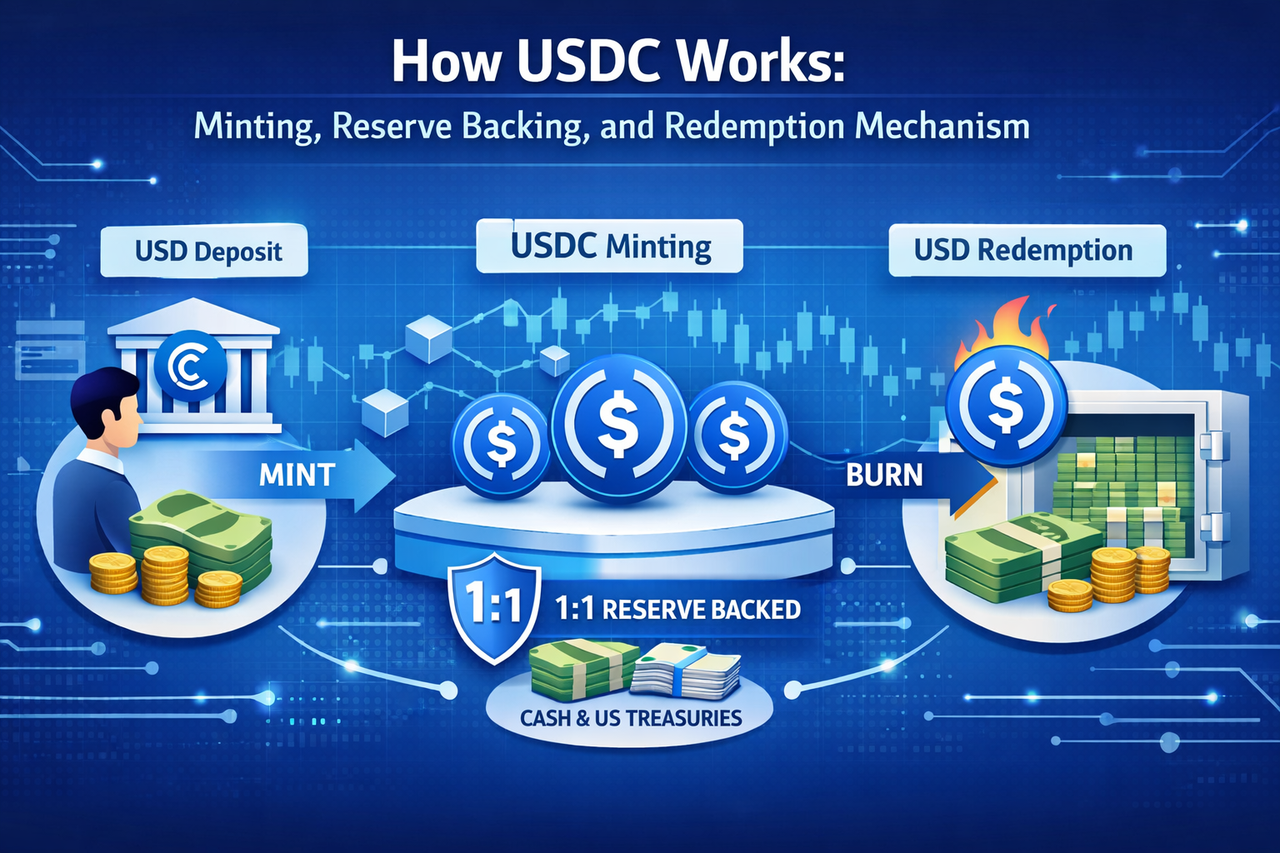
For example, if a user deposits $10,000, the system mints 10,000 USDC and transfers them to the user’s Wallet Address. This process, known as Minting, is the primary method for increasing USDC’s circulating supply.
How does USDC burn and redeem?
When a user wants to swap USDC for USD, they can submit a redemption request to Circle.
Once Circle receives the returned USDC, it burns the corresponding tokens and pays the user the equivalent amount in USD. This process, called Burning, ensures that USDC’s circulating supply always matches its USD reserves, maintaining price stability.
How does USDC maintain its 1:1 USD peg?
Besides the reserve backing mechanism, USDC leverages market arbitrage to maintain price stability.
If USDC’s Market Price rises above $1, institutions can deposit USD with Circle to mint USDC and sell it in the market for profit, increasing supply and lowering the price.
If USDC’s price falls below $1, market participants can buy USDC and redeem USD with Circle, reducing circulation and driving the price upward. This arbitrage mechanism keeps USDC’s price close to $1.
How are USDC’s reserves managed?
Market confidence in USDC largely depends on the transparent management of its reserves. Circle regularly posts reserve reports, disclosing the assets backing USDC.
Typical reserves include:
- Cash deposits
- Short-term US Treasury bonds
- Highly liquid USD assets
This transparent reserve structure boosts market trust and makes USDC a preferred stablecoin for institutions and DeFi users.
What risks are associated with USDC’s operating model?
Despite its robust design, USDC faces several risks.
First, reserve risk: If the banks holding reserve assets encounter liquidity issues, USDC’s redemption capability could be affected.
Second, de-pegging risk: If market participants question reserve security, USDC’s price may temporarily deviate from $1.
Additional risks include regulatory risk and Smart Contract risk. Regulatory changes may impact issuance and circulation, while on-chain asset management may be vulnerable to technical flaws and security threats.
FAQs
How is USDC issued?
When users deposit USD with Circle, Circle issues USDC at a 1:1 ratio.
Why does USDC maintain price stability?
USDC maintains its USD peg through reserve backing and market arbitrage mechanisms.
What assets back USDC?
USDC reserves primarily consist of cash, short-term US Treasury bonds, and other highly liquid USD assets.
Who issues USDC?
USDC is issued and managed by Circle.
Is USDC’s operating model safe?
USDC’s model is generally secure, but risks remain, including reserve risk, de-pegging risk, regulatory risk, and Smart Contract risk.