Ngày 20 tháng 1, Noble—một chuỗi ứng dụng Cosmos chuyên về stablecoin—thông báo sẽ rời hệ sinh thái Cosmos để xây dựng mạng lưới EVM L1 độc lập. Noble EVM dự kiến ra mắt ngày 18 tháng 3, đội ngũ vẫn tiếp tục hỗ trợ các blockchain dựa trên Cosmos trong thời gian tới. Sau khi chuyển đổi, stablecoin USDN do Noble phát hành sẽ trở thành tính năng trọng tâm trên EVM L1, còn token NOBLE sẽ đóng vai trò tài sản quản trị, gắn chặt mọi quyết định giao thức và giá trị với hoạt động stablecoin trên toàn mạng lưới.
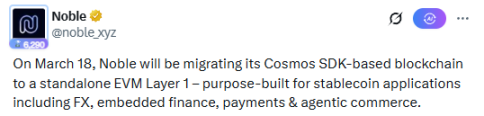
Nguồn ảnh: Noble Twitter
Ngay sau đó, nhà sáng lập Cosmos đã phản hồi, khẳng định rằng bước chuyển của Noble không phải là từ bỏ tầm nhìn Cosmos, mà chính là hiện thực hóa nguyên lý cốt lõi: chủ quyền và khả năng tương tác. Noble chuyển đổi nhưng không cắt đứt liên kết với Cosmos Hub. Qua giao thức IBC v2, Noble EVM mới sẽ trở thành cầu nối trọng yếu giữa hệ sinh thái EVM và nền kinh tế Cosmos. Ông nhấn mạnh: “Chúng ta đang bước vào thời đại mà thanh khoản, chứ không phải chuỗi, mới là trung tâm.”
Vì sao dự án stablecoin hàng đầu của Cosmos lại lựa chọn rời đi?
Noble là một trong những dự án hạ tầng stablecoin thành công nhất của Cosmos. Dự án phát hành USDC của Circle trực tiếp lên Cosmos, phân phối USDC an toàn, liền mạch tới hơn 50 chuỗi qua IBC, đồng thời đã xử lý hơn 22 tỷ USD giao dịch.
Sự có mặt của Noble giúp Cosmos có lợi thế về stablecoin gốc, loại bỏ rủi ro tín nhiệm từ các cầu nối bên ngoài.
Vậy lý do Noble chuyển đổi là gì? Lý do chính thức rất rõ ràng:
Hệ sinh thái EVM chiếm ưu thế tuyệt đối. Hơn 75% thị trường stablecoin hoạt động trên các chuỗi EVM. Nhà phát triển, công cụ, ví và dApp đều tập trung ở EVM. Với mục tiêu trở thành “hạ tầng stablecoin L1”, Noble phải đi theo dòng vốn và người dùng.
Bộ công cụ EVM thân thiện hơn với nhà phát triển. EVM cung cấp các công cụ trưởng thành—Solidity, Remix, Hardhat—và tích hợp với Uniswap, Aave dễ dàng. Cosmos SDK dù mạnh, nhưng khó học và thiếu công cụ hỗ trợ là điểm yếu rõ rệt.
EVM mang lại hiệu năng vượt trội, nhiều ứng dụng thực tế. Noble EVM hướng đến độ trễ dưới 1 giây cho thanh toán, tài chính nhúng, thương mại tự động, ngoại hối,... Trong khi Tendermint của Cosmos đáng tin cậy, EVM lại phù hợp hơn cho chuỗi thanh toán đại chúng.
Noble theo đuổi chiến lược riêng. Thay vì chỉ là “người chơi tiện ích” trong Cosmos, Noble muốn trở thành stablecoin Layer 1 độc lập, hiệu suất cao, cạnh tranh trực tiếp với các chuỗi stablecoin công khai khác.
Tóm lại, Noble đã lựa chọn bằng hành động. Cosmos là bệ phóng, còn EVM mở ra con đường phát triển quy mô lớn.
Noble rời đi làm suy giảm sức sống của Cosmos
Noble là “siêu sao” duy nhất của Cosmos. Trong 30 ngày gần đây, khối lượng giao dịch IBC của Noble đạt 93,84 triệu USD—gấp 1,8 lần Osmosis đứng thứ hai (50,06 triệu USD). Trong số 110 Zone kết nối qua Cosmos IBC, Noble chiếm phần lớn thanh khoản.
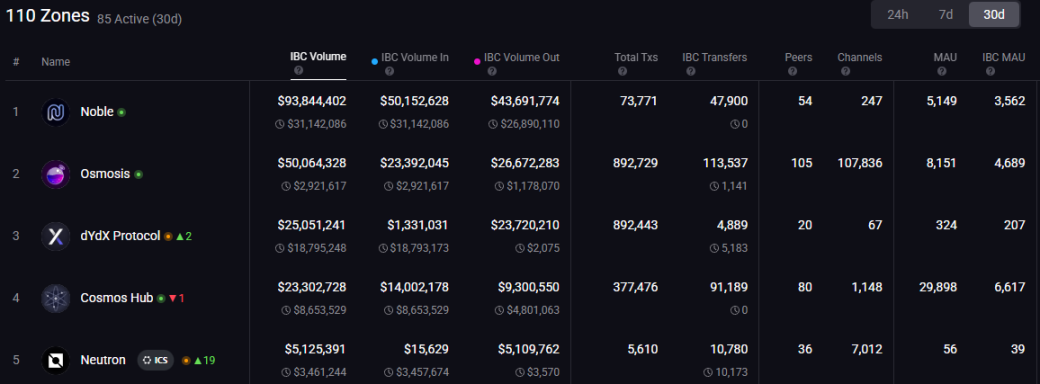
Nguồn ảnh: MAP OF ZONES
Noble là “vòi nước” của dòng vốn tổ chức. Osmosis xử lý gần 900.000 giao dịch, Noble chỉ 73.000, nghĩa là giá trị giao dịch trung bình của Noble cao hơn hẳn, phục vụ thanh toán stablecoin quy mô lớn, không phải giao dịch lẻ.
Dù IBC kết nối 110 Zone, chỉ 85 còn hoạt động—tức 23% chuỗi đã ngừng hoạt động. Thanh khoản tập trung vào bốn chuỗi lớn nhất, các dự án ngoài top 10 chỉ đạt khối lượng giao dịch hàng tháng khoảng triệu USD. Hoạt động bán lẻ trong hệ sinh thái đã cạn kiệt nghiêm trọng.
Cosmos Hub có khoảng 30.000 người dùng hoạt động mỗi tháng—gấp sáu lần Noble (5.000)—nhưng dòng vốn thực tế lại tập trung ở Noble. Đa số người dùng Cosmos chỉ staking hoặc đứng ngoài tại Hub, còn giá trị trao đổi stablecoin gần như đều xoay quanh Noble.
IBC: Trái tim của Cosmos, động cơ cho “Internet of Blockchains”
Cosmos xây dựng câu chuyện “Internet of Blockchains”—hiện thực hóa nhờ Giao thức Truyền thông Liên chuỗi (IBC).
IBC là đổi mới nổi bật của Cosmos. Giao thức này cho phép các chuỗi độc lập, chủ quyền giao tiếp và chuyển tài sản an toàn, không cần tín nhiệm—giống như TCP/IP với Internet. Các đặc điểm chính gồm:
Giảm thiểu tín nhiệm: Dùng light client xác minh trạng thái chuỗi đối tác, loại bỏ nhu cầu tài sản ký quỹ hay cầu nối multisig.
Kết nối không cần cấp phép: Ai cũng có thể tạo kênh, cho phép chuyển token, tài khoản liên chuỗi, truy vấn liên chuỗi,...
Tính phổ quát: Không giới hạn bởi cơ chế đồng thuận—đã kết nối hơn 110 chuỗi (theo Map of Zones), thậm chí mở rộng sang các chuỗi ngoài Cosmos như Ethereum, Optimism.
IBC rất an toàn, chưa từng bị tấn công lớn, đã xử lý hàng chục tỷ USD giao dịch. Dù các thành phần khác gây tranh cãi, IBC vẫn là giải pháp tương tác hàng đầu ngành blockchain.
Tuy nhiên, việc Noble chuyển đổi đã phơi bày nghịch lý: IBC kết nối cả thế giới nhưng không giữ chân được dự án. Cuối cùng, ai cũng muốn trở thành chuỗi EVM đơn lẻ.
Làn sóng rời đi: Các dự án Cosmos đóng cửa hoặc chuyển đổi trong 2025–2026
Từ năm 2025 đến đầu 2026, Cosmos chứng kiến làn sóng dự án rút lui và đóng cửa quy mô lớn.
Đầu tiên là các dự án đóng cửa hoàn toàn—hầu hết đã sụp đổ trước năm 2025, chỉ còn lại sự thất vọng của cộng đồng và vài nỗ lực duy trì nhỏ lẻ.
Chuỗi riêng tư Penumbra đóng cửa hoàn toàn, đội ngũ rời bỏ. Dù cộng đồng cố duy trì, thực chất chuỗi đã bỏ hoang—điển hình “dead chain”. Pryzm đóng cửa, Comdex và Kujira nối gót, trong đó Kujira sụp đổ kéo theo cả Fusion, Levana, làm đứt gãy chuỗi DeFi.
Stride chính thức dừng hoạt động; Quasar, Tower lần lượt đóng cửa; Picasso/Composable sụp đổ, làm kẹt tài sản SOL chuyển cầu, người dùng mất trắng. Drop hủy TGE và đóng cửa, Milkyway đóng cửa, Demex không phục hồi sau hack, Evmos gần như “chết lâm sàng”.
Các dự án này trải dài từ DEX, lending, privacy, NFT,... Nguyên nhân: tăng trưởng yếu, doanh thu thấp, đội ngũ rời bỏ, hậu quả lâu dài từ sự sụp đổ của Terra.
Bên cạnh đó, nhiều dự án chọn rời khỏi Cosmos stack—giáng đòn mạnh vào câu chuyện của Cosmos. Ngoài Noble, Sei quyết định qua nâng cấp SIP-3 sẽ bỏ kiến trúc hai lớp, chỉ giữ lại chuỗi EVM vào giữa năm 2026.
Akash chuyển sang Solana; Elys, pStake, Jackal, Omniflix,... chuyển sang Base; Stargaze trở thành chuỗi độc lập và dự kiến về Cosmos Hub; Shade Protocol (nay là Feather) chuyển sang Sei và có thể EVM hóa tiếp.
Động lực cốt lõi: công cụ phát triển, thanh khoản, quy mô thị trường của EVM vượt xa Cosmos. Các đội ngũ “bỏ phiếu bằng hành động”, theo dòng vốn và cơ hội.
Một số dự án không chết nhưng chuyển sang duy trì hoặc phân bổ lại nguồn lực, tiến độ phát triển chậm rõ rệt.
Osmosis hiện chỉ duy trì—tokenomics và cập nhật vẫn có, nhưng nguồn lực đội ngũ phân tán, hoạt động giảm mạnh. Astroport cũng trì trệ. Đội ngũ Axelar bị Circle thâu tóm, ảnh hưởng dự án gốc suy yếu. Những dự án từng là trụ cột DeFi Cosmos giờ phản ánh sự co hẹp của hệ sinh thái.
Mantra tái cấu trúc (cắt giảm nhân sự, tối ưu chi phí tháng 1 năm 2026) và OM token sụp đổ (giảm gần 99%), nhưng dự án vẫn tiếp tục. OM chuyển sang ERC-20 đang triển khai, vault RWA, launchpad và các sản phẩm khác đang phát triển, sẽ tiếp tục là RWA EVM L1 tương thích IBC.
Bên cạnh đó, hàng loạt DEX như Wynd, Hopers, Junoswap, Loop, TerraSwap,... đóng cửa trong 2024–2025. DeFi bán lẻ gần như biến mất, chỉ còn tổ chức và RWA cầm cự.
MAP OF ZONES cho thấy IBC kết nối 110 chuỗi, nhưng lưu lượng tập trung ở một số ít (Noble, Osmosis, Cosmos Hub). Nếu Noble rút thanh khoản, hoạt động hệ sinh thái sẽ càng suy giảm.
Dù lộ trình Cosmos 2026 cố đảo ngược suy thoái bằng nâng cấp EVM và hiệu năng, việc Noble “rời đi” phơi bày thực tế: trước dòng vốn, câu chuyện kỹ thuật khó đủ sức thuyết phục.
Lưu ý:
- Bài viết này đăng lại từ [Foresight News] với bản quyền thuộc tác giả gốc [Sanqing]. Nếu có thắc mắc về việc đăng lại, vui lòng liên hệ đội ngũ Gate Learn, chúng tôi sẽ xử lý theo quy trình liên quan.
- Lưu ý: Quan điểm, ý kiến trong bài viết này hoàn toàn thuộc về tác giả, không phải lời khuyên đầu tư.
- Các bản dịch ngôn ngữ khác do đội ngũ Gate Learn thực hiện. Trừ khi Gate được nhắc đến, nghiêm cấm sao chép, phát tán, đạo văn bài dịch.