SEC Chair Signals Cautious Path for Crypto in U.S. Retirement Funds
SEC Chair: Retirement Funds Have Long Been Indirectly Exposed to Crypto Markets
(Source: CNBC)
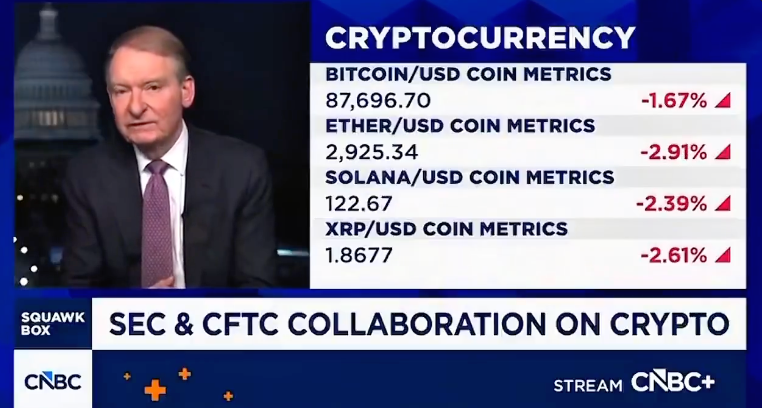
In a CNBC interview, U.S. Securities and Exchange Commission Chair Atkins noted that the U.S. retirement fund system has already gained indirect exposure to crypto asset markets through a range of investment vehicles—though most investors may not realize it.
Atkins, who will formally take office as SEC Chair in April 2025, emphasized that any move toward more direct crypto exposure for retirement funds must be managed prudently by trustees and fiduciaries, rather than implemented hastily.
401(k) Market Size Draws Attention as Potential Capital Inflows Loom
The U.S. 401(k) retirement account market is valued at around $10 trillion. Any policy shift could trigger substantial capital inflows into the crypto market. This discussion was prompted by an executive order from the Trump administration, which eased restrictions on retirement funds investing in alternative assets—making new asset classes, including crypto, potential options.
Volatility Poses Risks to Workers’ Retirement Security
While the policy climate is gradually becoming more open, opposition remains. U.S. Senator Elizabeth Warren has publicly warned that the high volatility of crypto assets could threaten workers’ long-term savings if included in retirement plans. Her stance represents a regulatory perspective that retirement funds should prioritize stability and low risk, rather than introduce highly uncertain asset types.
No Final Decision: DOL and ERISA Review Still Required
To date, the U.S. government has not enacted any formal changes regarding 401(k) plans and crypto assets. Even if policy trends favor greater openness, any real change must undergo review by the Department of Labor and meet Employee Retirement Income Security Act (ERISA) standards. No immediate policy shift is expected; any substantive changes require a full regulatory process.
Policy Objective: Establishing the U.S. as a Global Crypto Hub
Broadly, this conversation ties into the Trump administration’s larger policy vision—positioning the U.S. as the world’s crypto capital. Easing investment restrictions and shifting regulatory tone both signal an effort to balance financial innovation with systemic stability. For the market, whether retirement funds formally adopt crypto assets is no longer just an investment issue; it is a critical policy signal for the future of the U.S. financial system.
To learn more about Web3, click to register: https://www.gate.com/
Summary
The SEC’s approach to retirement funds and crypto assets reflects a shift in the U.S. regulatory landscape from conservatism toward cautious openness. With the vast 401(k) market and evolving policy direction, crypto assets could enter the mainstream financial system. However, until the regulatory framework is clarified, it remains essential to balance investment innovation with risk control. The pace of implementation will depend on the interaction among regulators, legislation, and market consensus.
Share
Content
SEC Chair: Retirement Funds Have Long Been Indirectly Exposed to Crypto Markets
401(k) Market Size Draws Attention as Potential Capital Inflows Loom
Volatility Poses Risks to Workers’ Retirement Security
No Final Decision: DOL and ERISA Review Still Required
Policy Objective: Establishing the U.S. as a Global Crypto Hub
Summary


Related Articles

Gold Price Forecast for the Next Five Years: 2026–2030 Trend Outlook and Investment Implications, Could It Reach $6,000?

Crypto Future Profit Calculator: How to Calculate Your Potential Gains

Crypto Futures Calculator: Easily Estimate Your Profits & Risks

What is Oasis Network (ROSE)?

The $50M Crypto Scam Nobody Is Talking About