I. Berkshire Hathaway’s Compensation Overhaul
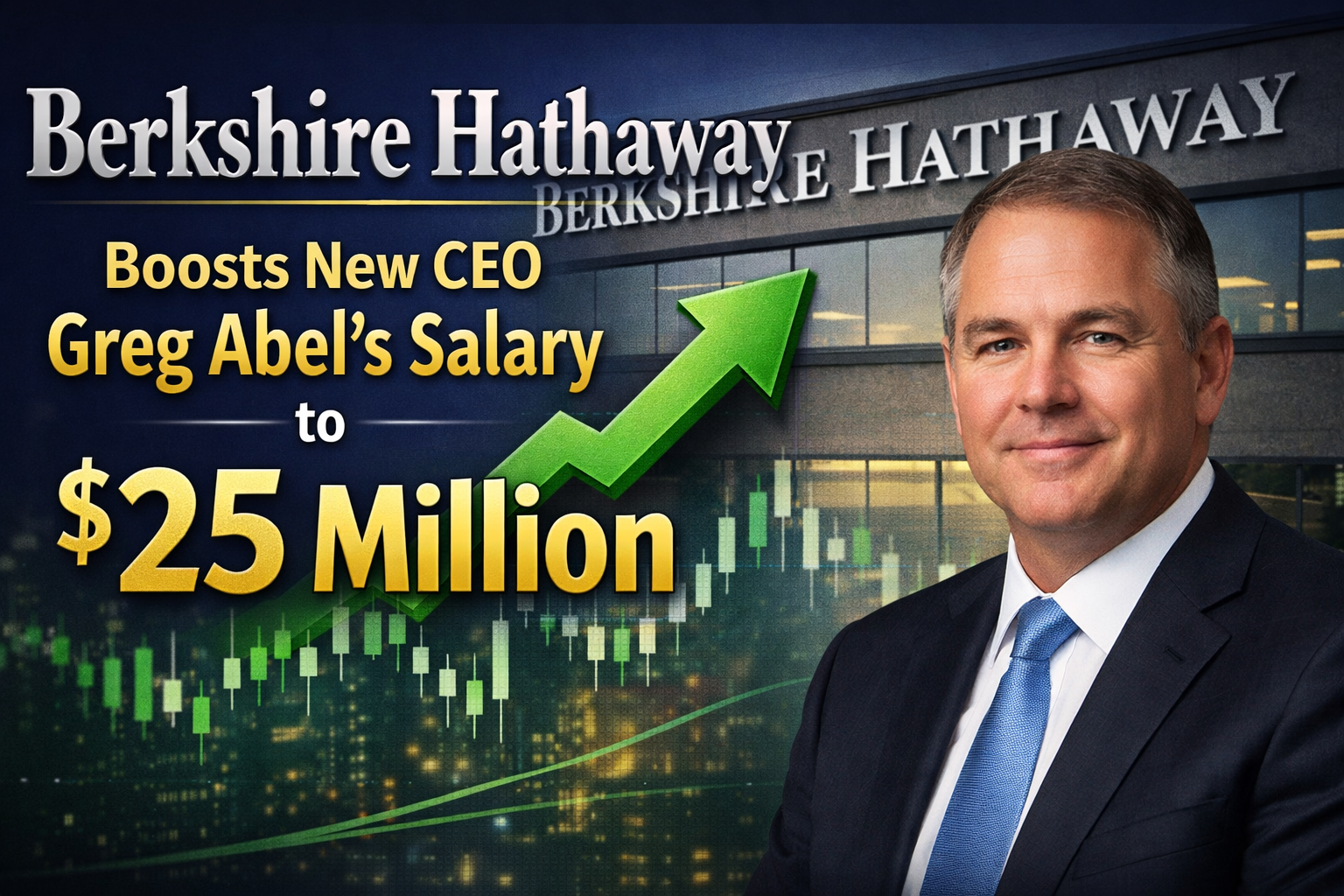
In early 2026, Berkshire Hathaway revealed in its latest regulatory filings that incoming CEO Greg Abel will receive an annual salary of $25 million. This announcement immediately captured the attention of global financial media, especially given the company’s longstanding tradition of symbolic compensation under Warren Buffett. The shift marks a notable change in Berkshire’s executive pay philosophy.
With a market capitalization exceeding $1 trillion, Berkshire Hathaway has always maintained a compensation structure unlike most U.S. corporations. Historically, CEO pay has been primarily cash-based, with almost no use of stock options or other complex incentive schemes. Abel’s new compensation package continues this legacy, focusing solely on cash salary.
II. Greg Abel’s Compensation Structure and Historical Comparison
Greg Abel became Berkshire Hathaway’s CEO in 2026, after serving as Vice Chairman overseeing non-insurance operations. In that role, he earned substantial compensation for several years: approximately $21 million in 2024, around $20 million in 2023, and now, as CEO, his annual salary rises to $25 million.
This increase is significant by industry standards. Yet, compared to the average S&P 500 CEO pay of roughly $19 million (including incentives), Abel’s salary is moderately above average. Importantly, Berkshire Hathaway’s compensation plan excludes stock awards, making Abel’s cash income both rare and exceptionally transparent among industry peers.
III. The Wide Gap with Warren Buffett’s Compensation
By contrast, legendary investor Warren Buffett maintained an annual salary of just $100,000 during his more than 40 years as Berkshire Hathaway CEO—far below industry norms. Buffett repeatedly emphasized that he didn’t need a high salary, as his substantial holdings of company stock were the main source of his wealth.
Abel’s new annual salary not only far exceeds historical levels, but also stands in stark contrast to the Buffett era. This change signals a shift in Berkshire’s approach to executive compensation. Abel’s pay is roughly 250 times Buffett’s, a figure widely cited and discussed in financial media.
IV. Market and Investor Perspectives
Analysts view the compensation change as both recognition of Abel’s experience and contributions, and a message that Berkshire Hathaway aims to remain competitive during its leadership transition. Abel has led key business segments and delivered consistent results, prompting the board to secure his leadership with a more competitive pay package.
Investor reactions have been mixed. Some argue that the adjustment helps attract and retain top management talent, keeping Berkshire competitive with other major firms. Others worry that high executive pay could raise overall salary levels internally, potentially impacting long-term shareholder value.
V. Potential Impact on Stock Price and Corporate Governance
In the short term, this pay adjustment is unlikely to have a major direct effect on Berkshire’s stock price, since investors remain focused on company performance and long-term growth. However, from a governance standpoint, the move signals Berkshire Hathaway’s gradual shift toward a more market-driven, institutionalized executive compensation model. This can boost institutional investor confidence and enhance governance transparency.
Over time, modernizing executive pay may strengthen Berkshire’s position in the competitive talent market, especially as the firm expands its diversified businesses and global footprint. Abel’s performance as CEO will be a critical factor in assessing the effectiveness of this compensation shift.
VI. Conclusion: The Deeper Logic Behind the Change
In summary, Berkshire Hathaway’s decision to set the new CEO’s annual salary at $25 million both recognizes Abel’s past achievements and marks a strategic evolution in corporate governance. The new pay package is a clear break from the Buffett era and reflects Berkshire’s response to the changing landscape of talent competition and market dynamics. As the market continues to monitor developments and more data becomes available, a fuller assessment will emerge over time.