In DeFi protocols, tokenomics determines how value is distributed and how participants are incentivized. For protocols with real revenue streams, tokens must go beyond governance and act as a bridge between protocol income and user incentives.
For USD.AI, CHIP is more than a governance token. It serves as the value coordination layer within an AI infrastructure financing market. Since USD.AI generates revenue from GPU-collateralized lending and AI compute financing, CHIP plays a critical role in transforming these underlying cash flows into a sustainable incentive system. This design connects capital providers, governance participants, and the protocol itself, making CHIP a central pillar for value capture and long-term growth.
USD.AI Tokenomics: Supply, Distribution, and Ecosystem Role of CHIP
CHIP is the native governance token of USD.AI, with a total supply of 10 billion tokens. Its allocation is primarily distributed across ecosystem growth, treasury reserves, core contributors, and investors.
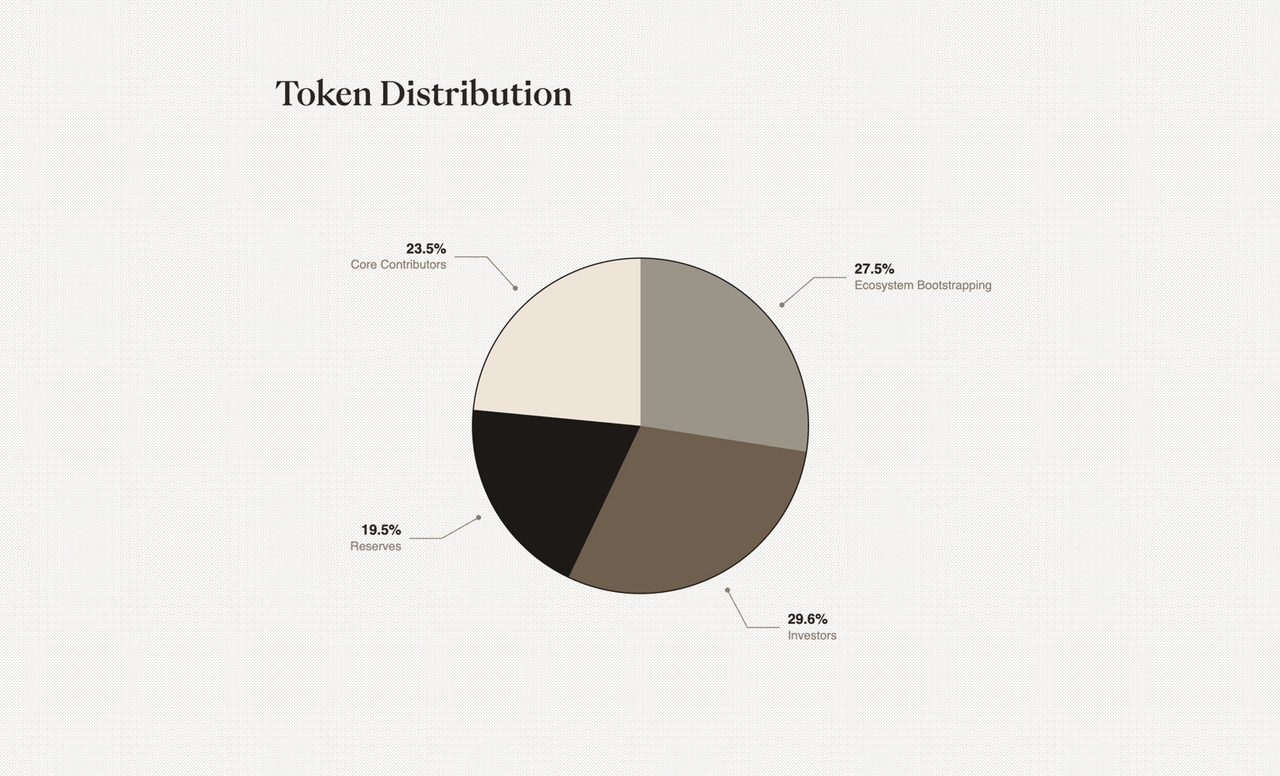
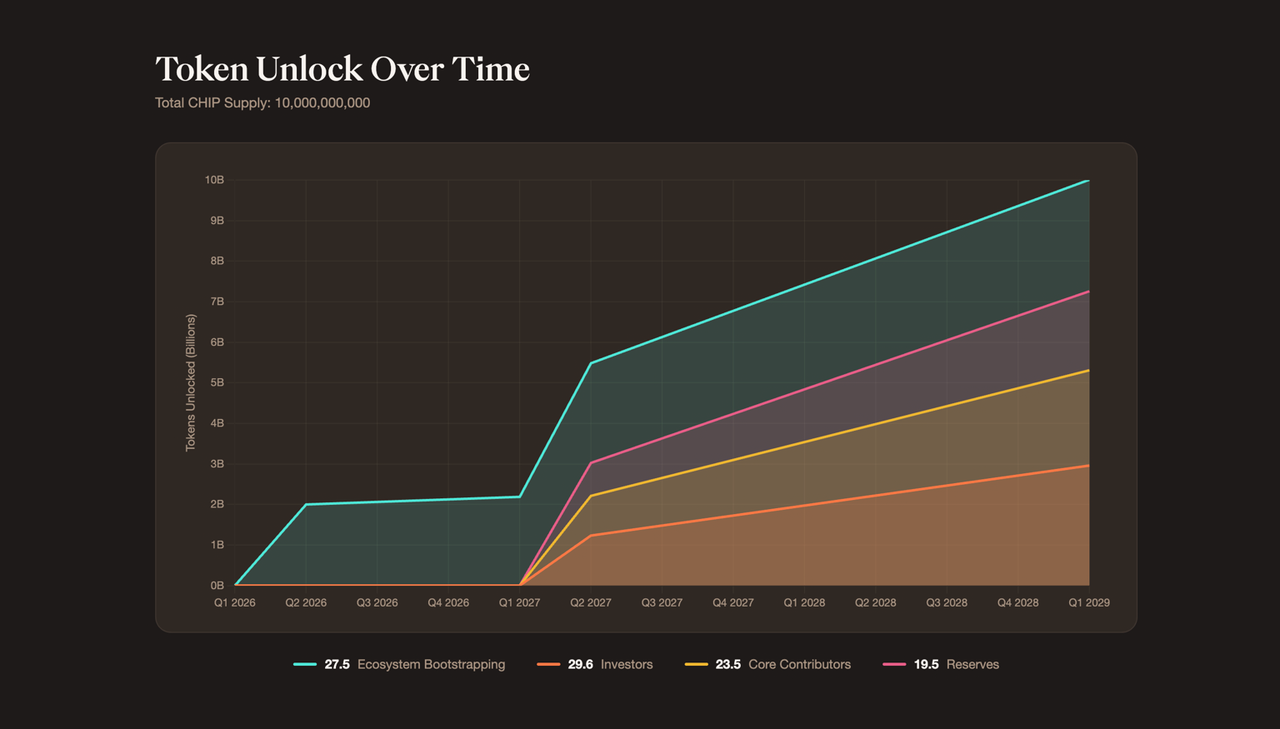
Within the ecosystem, CHIP is responsible for coordinating key protocol parameters and facilitating value distribution. Token holders can participate in governance decisions, such as adjusting loan interest rates, setting collateral requirements, and determining how yield is allocated.
This means CHIP is not merely a voting tool. It acts as the governance core of the AI credit market within USD.AI.
From a functional perspective, CHIP connects governance, revenue distribution, and long-term incentives into a single cohesive system.
What Are the Core Use Cases of CHIP?
CHIP’s primary use cases fall into two categories: governance and incentives.
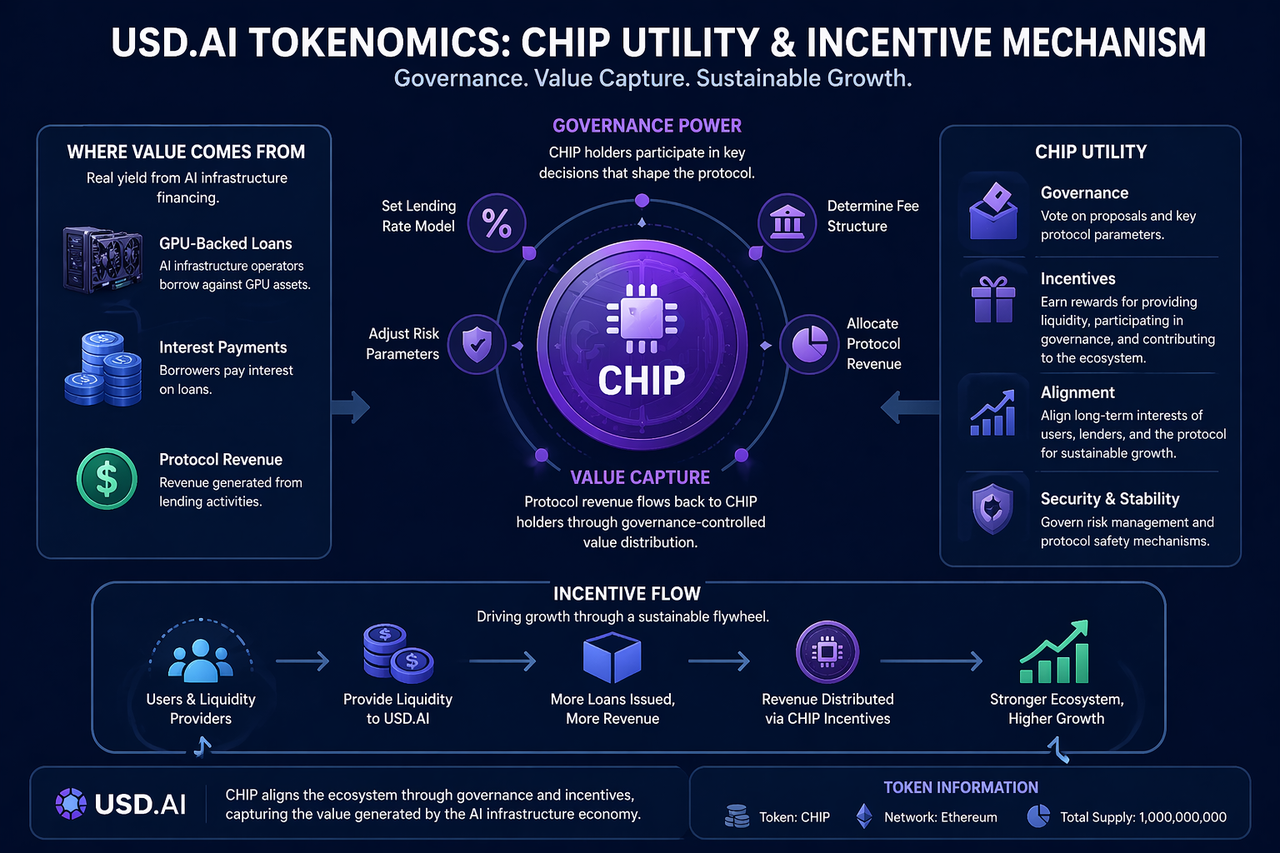
On the governance side, CHIP holders can vote on key protocol parameters, including interest rate models, collateral ratios, and fee structures. On the incentive side, CHIP is used to reward participants such as liquidity providers, governance contributors, and ecosystem builders.
This dual function allows CHIP to operate both as a governance credential and as an engine for ecosystem growth.
How Does CHIP Capture Protocol Value?
USD.AI generates its underlying revenue primarily from AI infrastructure financing, such as interest income from GPU-collateralized lending. CHIP captures this value through governance-controlled distribution mechanisms.
The protocol can allocate a portion of its revenue to governance participants, conduct token buybacks, or enhance incentive programs. These mechanisms create a direct relationship between protocol revenue and CHIP’s value.
As the scale of USD.AI’s lending activity grows, both the governance importance and economic value of CHIP are likely to increase.
This model positions CHIP as a value-capturing asset tied to protocol growth, rather than a purely functional token.
How Does the Incentive Mechanism Drive Growth?
CHIP’s incentive structure is designed to attract liquidity, increase governance participation, and support ecosystem expansion.
By distributing CHIP rewards to liquidity providers, the protocol can draw more capital into the USD.AI ecosystem, expanding the scale of the AI credit market. Governance incentives also encourage users to participate in decision-making, strengthening community engagement.
The overarching goal is to align participant interests with protocol growth through long-term incentives, creating a more sustainable and resilient ecosystem.
Potential Risks of the CHIP Token Model
While CHIP is designed to capture value, it also carries certain risks.
If protocol revenue growth is insufficient, token incentives may struggle to maintain long-term value. Governance tokens are also subject to market sentiment, which can lead to price volatility. Additionally, poorly managed token emission schedules may create dilution pressure.
As a result, CHIP’s long-term value depends not only on its design, but also on the sustained expansion of USD.AI’s underlying AI credit market.
Conclusion
CHIP is the core token that links governance, revenue distribution, and ecosystem incentives within the USD.AI protocol. It enables the transformation of AI infrastructure financing returns into a structured system of governance and rewards, supporting long-term protocol growth. As the market for AI compute financing expands, CHIP’s ability to capture value will play a crucial role in the sustainability of the USD.AI ecosystem.
FAQs
What is the main role of CHIP in USD.AI?
CHIP is the governance token used to control protocol parameters, manage yield distribution, and coordinate ecosystem incentives.
What supports the value of CHIP?
Its value is supported by USD.AI’s revenue growth and its central role in governance and value distribution.
Is CHIP used to reward users?
Yes. CHIP is used to incentivize liquidity providers, governance participants, and ecosystem contributors.
What determines the long-term value of CHIP?
It largely depends on the growth of USD.AI’s AI infrastructure financing market and the protocol’s revenue expansion.
What risks are associated with the CHIP token model?
Key risks include insufficient protocol revenue, market-driven price volatility, and potential dilution from token emissions.