XAUT, known as Tether Gold, and PAXG, known as Paxos Gold, are two of the most prominent digital gold tokens on the market today. They are issued by Tether and Paxos respectively, and each token represents a specific quantity of physical gold. As tokenized gold products, Digital Gold Tokens bring gold onto the blockchain, enabling fractional ownership, seamless transfers, and global circulation. Investors can therefore gain exposure to gold without physically holding bars or coins.
From a technical standpoint, digital gold relies on smart contracts and blockchain ledgers to tokenize financial assets. This allows gold, traditionally viewed as a safe haven asset, to integrate smoothly with the crypto ecosystem. The tokenization model enhances market efficiency and introduces new tools for portfolio diversification.
This article provides a detailed comparison of XAUT and PAXG across key dimensions, including issuance structure, reserve custody and audit transparency, liquidity, fees, and redemption mechanisms. The goal is to help investors understand their differences and identify suitable use cases.
What Are Digital Gold Tokens? Market Overview
A digital gold token is a blockchain based asset whose value is pegged to physical gold and supported by underlying gold reserves held in custody. Unlike traditional gold investments, these tokens allow investors to gain exposure to gold through crypto market trading and transfer mechanisms, without taking possession of physical bullion.
By 2026, the tokenized gold market continues to expand. According to the latest market data, digital gold assets led by XAUT and PAXG account for the vast majority of this niche sector, together representing more than 90 percent of the tokenized gold market capitalization. This growth has been driven by rising global gold prices and increasing demand for safe haven assets.
The growing popularity of digital gold tokens coincides with record breaking gold prices, exceeding 5,000 US dollars per ounce, and with investor demand for more efficient interaction between traditional and crypto assets. These tokens typically offer low entry thresholds, fractional ownership, fast on chain transfers, and compatibility with DeFi protocols.
Issuance Structure Comparison: XAUT vs PAXG
Source: Tether official website
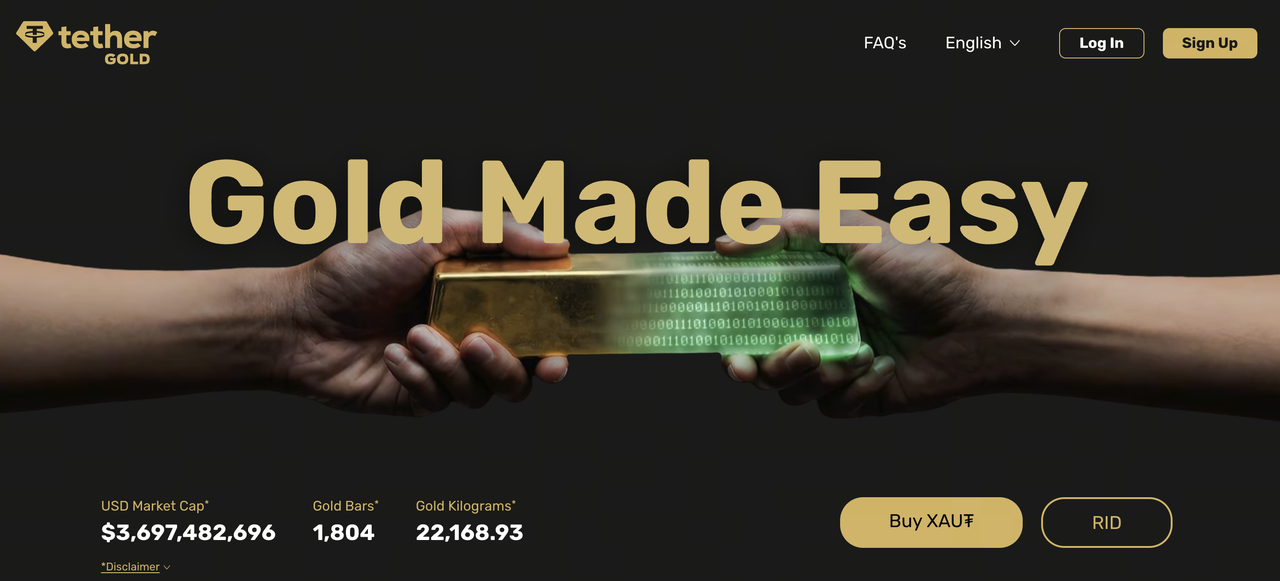
XAUT (Tether Gold) is issued by TG Commodities Limited, an affiliate of Tether. Each XAUT token corresponds to one troy ounce of physical gold stored in regulated vaults. Leveraging Tether’s global crypto ecosystem, XAUT benefits from broad multi chain and multi exchange circulation.
PAXG (PAX Gold) is issued by Paxos Trust Company, a regulated US trust company. Each PAXG token likewise represents ownership of one troy ounce of allocated physical gold. As a trust company regulated by the New York State Department of Financial Services, Paxos emphasizes compliance and transparency, publishing regular audit reports to verify its 1:1 gold backing.
| Comparison Dimension |
XAUT |
PAXG |
| Issuing Entity |
TG Commodities Limited, an affiliate of Tether |
Paxos Trust Company |
| Regulatory Background |
Not structured as a US trust company, operates globally |
Regulated by the New York State Department of Financial Services, NYDFS |
| Gold Peg Ratio |
1 XAUT equals 1 troy ounce of gold from a London Good Delivery bar |
1 PAXG equals 1 troy ounce of gold from a London Good Delivery bar |
| Gold Standard |
London Good Delivery gold bars |
London Good Delivery gold bars |
| Custody Arrangement |
Gold stored in Swiss vaults arranged by the issuer |
Gold held in professional vaults, with Paxos managing the trust structure |
| Token Standard |
Primarily ERC-20 on Ethereum |
ERC-20 on Ethereum |
| Supply Mechanism |
Mint and burn model based on demand |
Mint and burn model based on demand |
| Audit Disclosure |
Publishes periodic reserve reports, though transparency has faced scrutiny |
Regular third party audits with publicly available reports |
| Minimum Redemption Threshold |
Generally high, typically requires redemption in whole gold bars |
Redeemable through the Paxos platform, with a relatively clear structure |
| Market Positioning |
Geared toward the global crypto trading ecosystem, emphasizing liquidity |
Positioned within compliant financial markets, emphasizing regulatory transparency |
In comparison, XAUT focuses more on ecosystem compatibility and flexible circulation, while PAXG places greater emphasis on regulatory compliance and formal oversight. This distinction influences their acceptance among different user groups.
Differences in Reserve Custody and Audit Transparency
XAUT is backed 1:1 by gold reserve, yet details regarding its custodians and the frequency of audits are relatively less transparent. Although Tether provides reserve attestations, the periodicity and depth of disclosure differ from more stringent regulatory standards.
PAXG’s gold reserves are directly custodied by Paxos Trust Company and subject to regular third party audits under supervision from the New York State Department of Financial Services. This structured transparency is especially important for institutional investors.
As a result, in terms of custody and audit transparency, PAXG is generally viewed as more aligned with strict compliance requirements. XAUT, while backed by gold, provides comparatively less detailed public disclosure, which contributes to their distinct market positioning.
Trading Liquidity and Market Acceptance
In terms of liquidity, XAUT is actively traded across multiple exchanges and DeFi platforms. It is often favored by active traders, offering relatively high trading volumes and tighter bid ask spreads, which enhances execution efficiency.
PAXG also enjoys strong liquidity, particularly on regulated exchanges such as Coinbase, Gemini, and Kraken. This broader support within regulated venues makes it attractive for institutional trading and compliance focused strategies.
Both tokens are listed on major platforms. However, PAXG tends to have stronger accessibility within the US market, while XAUT benefits from wider integration across global chains and crypto ecosystems.
Fee Structures and Redemption Mechanisms
XAUT generally offers relatively low entry and exit fees, making it cost efficient for short term trading and flexible allocation strategies. That said, redemption terms may involve additional costs in certain markets, depending on the exchange and liquidity conditions.
PAXG’s fee structure is comparatively clearer, typically including transaction and platform trading costs. PAXG also supports redemption options. Although redeeming for physical gold usually requires a higher minimum amount, the overall cost framework is more transparent, which appeals to institutions and long term holders.
Compliance and Regulatory Environment
From a regulatory perspective, PAXG benefits from issuance by Paxos Trust Company, which is regulated by the New York State Department of Financial Services. This provides a higher degree of transparency and regulatory clarity, making it suitable for investors requiring a strict compliance framework.
XAUT, issued by Tether across multiple jurisdictions, has faced regulatory scrutiny in certain markets. While its gold reserves are structured to maintain 1:1 backing, its regulatory transparency and audit disclosures are comparatively less comprehensive. This factor may influence institutions with stringent compliance requirements.
How Should Investors Choose a Digital Gold Asset?
Investors should choose XAUT or PAXG based on their own investment goals and risk tolerance
- Investors who prioritize high liquidity, short term trading flexibility, and broad global market access may find XAUT more suitable.
- Long term holders who value regulatory transparency and structured custody mechanisms may prefer PAXG.
- For institutional investors and funds operating within regulated markets, PAXG’s regulatory profile may offer clearer advantages.
Regardless of the chosen tokenized gold asset, investors should remain aware of gold price volatility, as well as smart contract and centralized custody risks.
Future Trends in Digital Gold
As gold prices continue to rise and demand for safe haven assets increases, the market capitalization of digital gold tokens is expected to expand further. By 2026, the total market value of tokenized gold has already surpassed several billion US dollars, reflecting strong growth momentum.
Future developments may include stricter compliance standards, enhanced audit transparency, and deeper integration with both DeFi protocols and traditional financial systems. As regulatory frameworks mature, digital gold could become an increasingly important component of long term wealth management and asset allocation strategies.
Summary
| Core Dimension |
XAUT |
PAXG |
Overall Assessment |
| Issuing Entity |
TG Commodities Limited, an affiliate of Tether |
Paxos Trust Company |
Different issuer structures |
| Regulatory Status |
Operates globally, not regulated as a US trust company |
Regulated by the New York State Department of Financial Services, NYDFS |
PAXG has a clearer compliance framework |
| Gold Peg |
1 token equals 1 troy ounce of physical gold |
1 token equals 1 troy ounce of physical gold |
Fundamentally the same |
| Gold Custody |
Stored in Swiss vaults |
Custodied in professional vaults with a formal trust structure |
PAXG follows a more standardized structure |
| Audit Transparency |
Publishes reserve reports, though disclosure depth has been debated |
Conducts regular third party audits with publicly available reports |
PAXG offers greater transparency |
| On Chain Standard |
ERC-20, with some multi chain expansion |
ERC-20 |
Largely equivalent |
| Liquidity |
Strong liquidity across global crypto markets |
Widely accepted on regulated exchanges |
Different market focus |
| Trading Costs |
Generally lower, suited for active traders |
Clearer structure, more aligned with long term holding |
Depends on user objective |
| Redemption Mechanism |
Higher redemption thresholds |
More standardized and transparent redemption process |
PAXG is more institutionalized |
| Target Users |
Crypto native investors and traders |
Compliance focused investors and institutional capital |
Distinct positioning |
Both XAUT and PAXG represent digital assets backed by gold, yet each has a distinct focus. XAUT emphasizes liquidity and ecosystem compatibility, while PAXG stands out for regulatory compliance and transparency. Understanding these differences enables investors to align their asset allocation decisions with their specific needs.
FAQ
Are both XAUT and PAXG backed by physical gold?
Yes. Each token represents ownership of one troy ounce of physical gold and is supported by gold reserves.
Which is more suitable for long term investment?
In general, PAXG offers stronger regulatory transparency and may be better suited for long term holders and institutional investors. XAUT may appeal more to those seeking liquidity and trading flexibility.
Are digital gold tokens safe?
Their safety depends on the issuer’s custody and audit mechanisms, as well as the investor’s own management of private keys and choice of trading platforms.







