Core Issue: Why Is XRP Experiencing "Inflow Without Breakthrough"
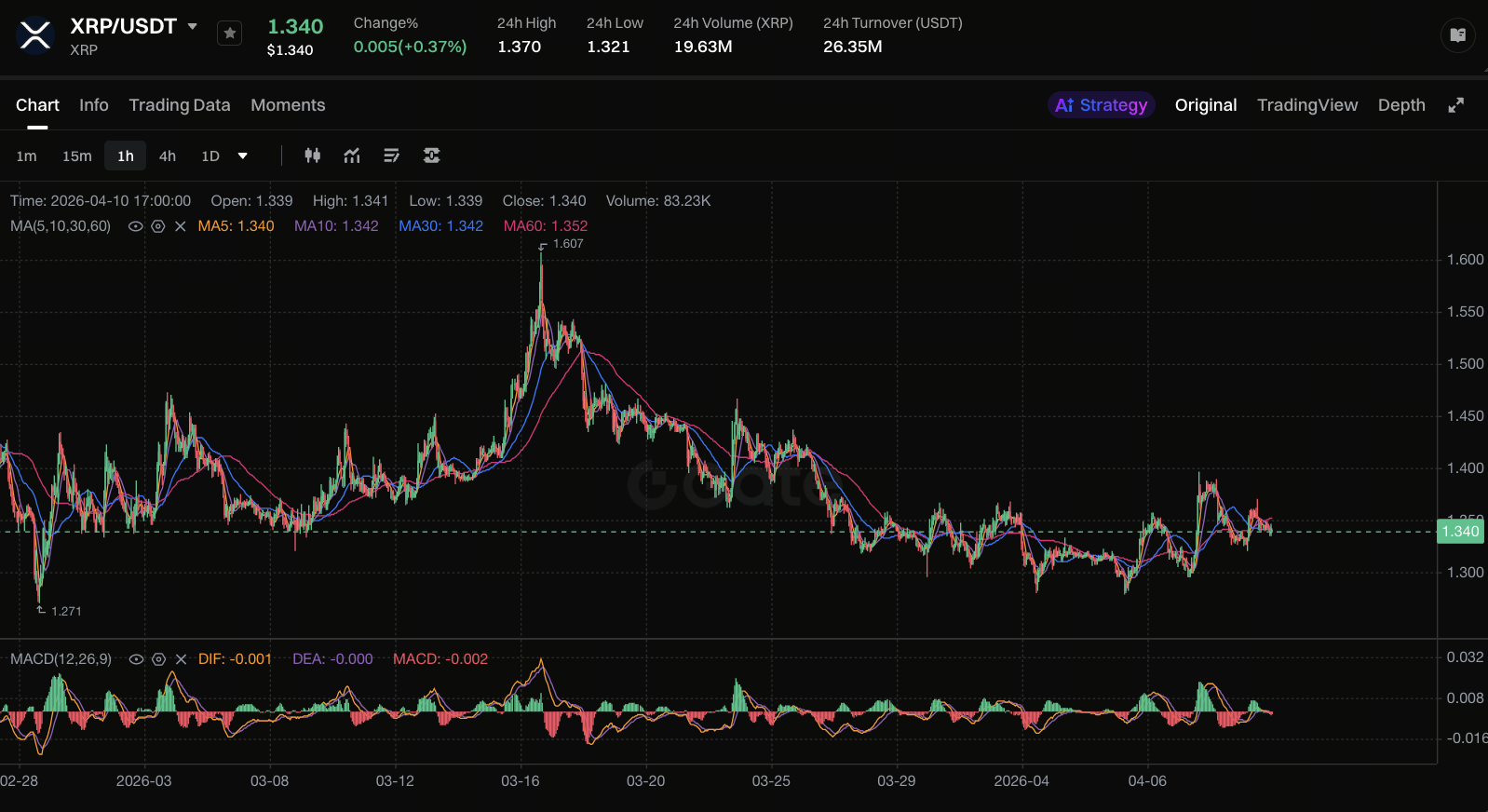
Image source: Gate Marketplace Page
Many retail investors instinctively believe that ETF or ETP inflows should drive price increases. However, the reality of the marketplace is much more nuanced. The primary conflict for XRP today is that while marginal demand is improving, marginal supply and hedging pressure have not decreased in tandem.
This indicates that although new bids are entering the marketplace, they are not yet sufficient to absorb the prevailing sell-side pressure.
The resulting price pattern is typical:
- Rapid spikes following positive news releases;
- Subsequent pullbacks to established trading ranges;
- Formation of an oscillating structure characterized by "news-driven movement, absent sustained trend."
To truly grasp XRP's dynamics, one must move from a "headline-driven" perspective to a "structural-driven" analysis.
Variable One: Why ETF/ETP Inflows Don't Directly Translate to Price Appreciation
ETF/ETP inflows are positive, but they are subject to at least three constraints:
- Inflows may be concentrated in regional marketplaces: Global inflows do not necessarily mean US-dominated institutional capital is entering en masse. Improvements in regional capital typically boost sentiment first, but may not immediately alter the long-term trend.
- Capital has both "allocation" and "trading" attributes: If inflows skew toward short-term trading capital, price elasticity increases but sustainability weakens. Only when the share of medium- and long-term allocation capital rises does the trend become more stable.
- Net inflows must be weighed against selling pressure: Marketplace pricing depends on the net effect—new bids minus existing asks. When early holders take profits at highs or when Derivative short hedging intensifies, inflows are partially offset.
Thus, ETF/ETP inflows are necessary, but not sufficient, for sustained price appreciation.
Variable Two: Regulatory and Compliance Expectations—Impact on Valuation Ceiling
XRP's valuation ceiling is largely determined by regulatory certainty.
The rationale is straightforward: Institutional capital will not assign a premium valuation when the compliance framework is unstable.
Regulatory impacts follow two main pathways:
- Path A: Reducing uncertainty discounts. When asset characteristics, trading boundaries, and custody rules are clarified, institutions are more willing to increase their holdings.
- Path B: Expanding the pool of eligible capital. Once compliance is established, more traditional institutions—banks, asset managers, wealth channels—can participate, shifting the demand curve to the right.
Importantly, regulatory tailwinds are typically "slow variables"—they raise the baseline, but do not necessarily trigger immediate short-term price surges.
As a result, the marketplace often exhibits the phenomenon: "policy tailwinds emerge, but prices rise briefly before reverting to oscillation."
Variable Three: XRPL Ecosystem Progress—When Can It Drive Price Elasticity?
Ecosystem development is the foundation of XRP's long-term narrative, but there is a gap between "application news" and "price revaluation."
This gap hinges on three questions:
- Does the new application generate sustainable trading and settlement demand?
- Can demand be consistently validated via on-chain data?
- Is demand growth outpacing new supply and selling pressure?
Many projects appear successful at the first step, but stall at the second:
They announce partnerships, but lack ongoing on-chain activity.
For price action, what truly matters is repeatable, trackable, and scalable usage—not just one-off partnership announcements.
Variable Four: Marketplace Microstructure—Who Is Buying, Selling, and Hedging?
XRP's short- and medium-term price action is often shaped by microstructure.
Focus on four participant categories:
- Spot allocation capital: sets the baseline;
- Short-term trading capital: drives volatility;
- Market-making and arbitrage capital: determines spreads and liquidity;
- Derivative hedging capital: influences whether upside is capped.
When Derivative short hedging is substantial, even net spot inflows may fail to produce sustained breakouts.
This explains why "capital inflows look promising, but K-line strength is lacking."
For traders, net inflow data alone is insufficient; it's essential to monitor:
- Changes in open Futures contracts;
- Whether Funding Rate is overheated;
- Whether the percentage of spot transactions is rising.
Variable Five: Macro Environment—XRP Is Still a Risk Asset, Not an Isolated Marketplace
Regardless of narrative strength, XRP remains part of the global risk asset framework.
When the US dollar strengthens, real interest rates rise, or risk-aversion sentiment grows, XRP is typically suppressed.
Conversely, when liquidity improves and risk appetite returns, XRP's price elasticity is more likely to expand.
Therefore, evaluating XRP requires context within the broader macro environment.
The most effective framework is:
XRP narrative strength × macro liquidity direction × institutional capital continuity.
Only when all three factors align can a sustainable trend emerge.
2026 XRP Scenario Forecasts: Conservative, Base, Optimistic
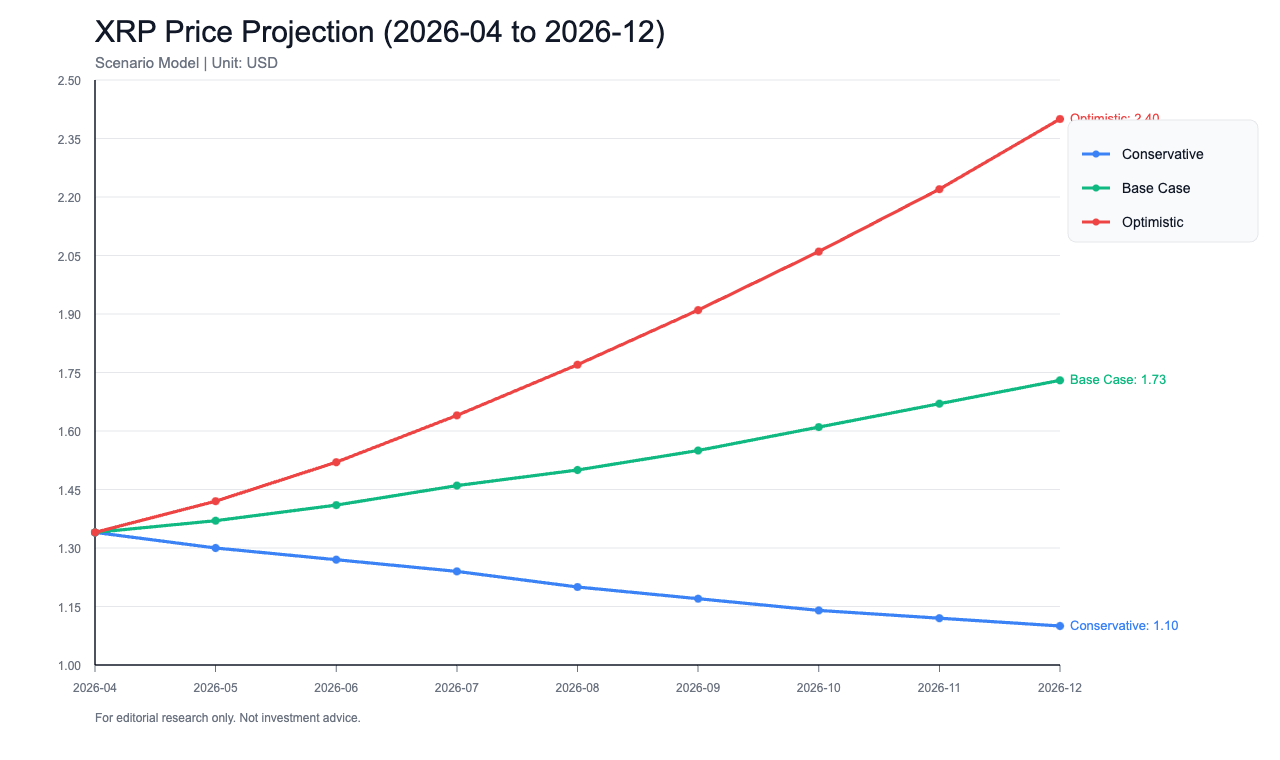
The following is a research framework and does not constitute investment advice.
Conservative scenario (moderate probability)
- Conditions: Tight macro environment, strong US dollar, intermittent capital inflow.
- Range: Weak oscillation, focus on defending key support levels.
Base scenario (highest probability)
- Conditions: Marginal capital flow improvement without explosive growth, steady progress in regulatory expectations.
- Range: Wide-range oscillation shifting upward, rapid tempo, deep drawdowns.
Optimistic scenario (moderately low probability)
- Conditions: Greater regulatory clarity, sustained net institutional inflows, ecosystem data materializes.
- Range: Breaks above previous platform, enters a repricing phase.
From an investment perspective, it's more important to monitor "scenario switching signals" than to bet on an absolute price target.
Conclusion: The Key for XRP Is Not "Having a Story," but "Achieving a Continuous Capital Closed Loop"
XRP is not short on narratives; what it needs is to convert those stories into a continuous capital closed loop.
This loop includes:
- Reduced regulatory uncertainty;
- Sustained institutional channel inflows;
- Verifiable growth in ecosystem usage;
- Derivative structure not excessively hedged.
Once these four steps are achieved, XRP can transition from "news-driven oscillation" to "capital-driven trend." Until then, the most rational strategy is to replace headline-driven thinking with structural analysis, and to validate with data rather than chase emotional momentum.