Zcash core team resigns en masse! Governance conflict between ECC and Bootstrap triggers 20% drop in ZEC price — Analysis
Background and Latest Developments
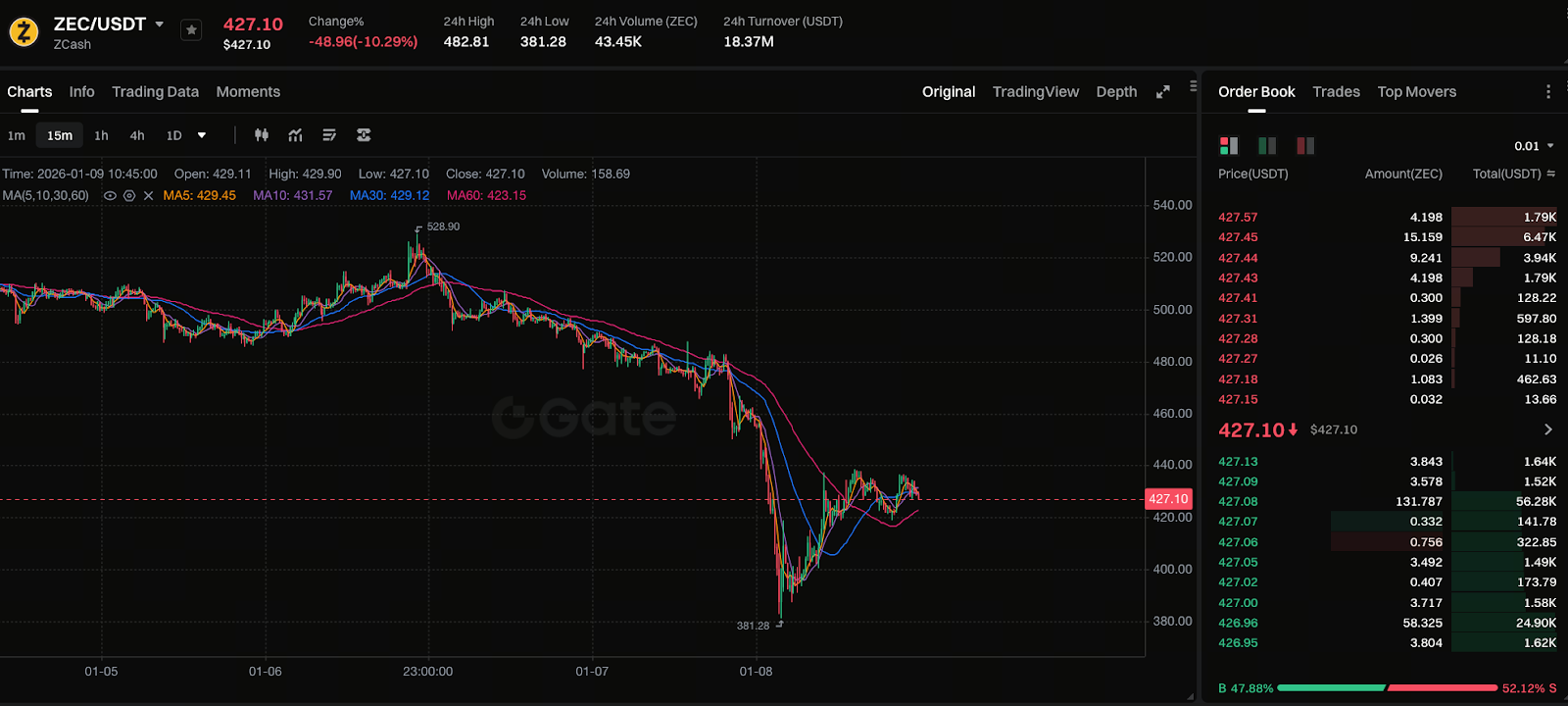
Image: https://www.gate.com/trade/ZEC_USDT
Recently, the crypto community was rocked by major news: the entire core development team behind privacy coin Zcash (ZEC) at Electric Coin Company (ECC) announced their resignation, resulting in a complete split from Bootstrap, the US 501(c)(3) nonprofit overseeing Zcash governance. Following the announcement, panic selling swept the market. ZEC’s price plunged nearly 20% in a short period, making it one of the weakest-performing crypto assets of the day.
Why Did the Entire ECC Team Leave?
According to then-ECC CEO Josh Swihart, most members of Bootstrap’s board had “significant disagreements” with the team over the project’s mission and changed the team’s working conditions, effectively resulting in “constructive discharge.” Swihart stated these governance changes made it impossible for the team to fulfill their responsibilities, leaving collective resignation as the only option.
Swihart specifically named several Bootstrap board members, including Zaki Manian, Christina Garman, Alan Fairless, and Michelle Lai. The team stressed that they are not abandoning the project, but must pursue independent development to protect Zcash’s core values.
Internal communications indicate the ECC team will form a new entity to continue advancing Zcash’s privacy technology and protocol development. The decision to resign does not affect the Zcash protocol itself, as it remains open source.
Why Did ZEC’s Price Drop Nearly 20%?
Zcash’s sharp price decline was primarily driven by market panic and sentiment-driven selling. The resignation of the core development team created uncertainty about the project’s future, and in a market with thin liquidity, this concern quickly magnified the drop. Trading data shows ZEC fell nearly 20% from its recent high. Although it showed signs of rebounding, short-term price pressure remains.
Forced liquidations of leveraged positions in derivatives markets further intensified the decline. With limited trading depth, selling quickly pushed the price below key support levels, amplifying the downward move.
Key Points of Disagreement Between Bootstrap and ECC
Tensions between ECC and Bootstrap had been building for months. The primary conflicts centered on governance models and the project’s future direction. ECC believed Bootstrap’s management was overly conservative and that certain key decisions ran counter to the team’s philosophy. Bootstrap responded that, as a nonprofit, it must adhere to public interest and legal requirements, which limit flexibility in some strategic choices.
Another reported source of conflict involved the privatization of the Zcash ecosystem product “Zashi.” The team sought a more flexible business model, while Bootstrap emphasized the need to operate within nonprofit constraints. This strategic disagreement ultimately led to a public split.
Is the Zcash Network Affected?
Despite the core team’s departure, the Zcash protocol remains open source, decentralized, and fully operational. Zcash founder Zooko Wilcox-O’Hearn stressed that the resignations will not affect the network’s technical security or block production. The protocol will continue to be maintained by global nodes, miners, and developers.
In short, from a technical standpoint, Zcash has not “ceased operations,” but the uncertainty brought by the team’s departure remains a significant factor for market confidence.
Potential Impacts and Outlook for ZEC
This governance rift highlights several points:
- Decentralized project governance remains fragile—even established privacy coins can face core team exit risks due to institutional structures.
- Development resources may shift or be restructured; whether the new entity can stabilize Zcash’s technical roadmap remains to be seen over time.
- Price volatility risk persists; short-term investor sentiment may continue to drive ZEC fluctuations, while the long-term outlook will depend on market momentum and ecosystem vitality.
For investors, reassessing the project’s governance framework and team stability will be essential for evaluating future trends.
Risk Warning and Summary
Although the core team’s departure appears dramatic, Zcash’s open-source nature provides fundamental protection. This incident exposes challenges in governance and organizational structure rather than any failure of the protocol’s technology. Whether ZEC can return to growth under the new structure will depend on ecosystem development, market sentiment, and broader industry trends.
Share
Content


Related Articles

Gold Price Forecast for the Next Five Years: 2026–2030 Trend Outlook and Investment Implications, Could It Reach $6,000?

Crypto Future Profit Calculator: How to Calculate Your Potential Gains

Crypto Futures Calculator: Easily Estimate Your Profits & Risks

What is Oasis Network (ROSE)?

The $50M Crypto Scam Nobody Is Talking About