The Essence of ETFs: From Single Assets to Portfolio Structure
The core feature of ETFs (Exchange-Traded Funds) is constructing an investment portfolio through a basket of stocks to track the performance of a specific index or sector.
Unlike spot stocks, ETFs do not rely on the results of a single company, but rather on the collective performance of multiple constituent stocks. Structurally, ETFs are essentially "systemic asset containers," and their price changes reflect the combined effects of several companies.
For example, a technology index ETF may include both large tech firms and some mid-sized growth companies. In this structure, the impact of any single company's earnings report is dispersed and does not directly determine the overall price trend.
This diversification mechanism is the fundamental source of performance differences between ETFs and spot stocks during earnings season.
During earnings season, different types of ETFs have varying capacities to absorb information, primarily determined by index structure and constituent weights.
When a constituent company releases its earnings report, its impact on the ETF usually depends on two variables: its weighting in the index and its systemic importance within its sector.
If the company is a high-weight constituent—such as a major tech enterprise—its earnings results may significantly affect the ETF's overall price; if its weighting is low, its impact may be diluted by the broader portfolio structure.
Thus, ETF price changes during earnings season are not "a simple sum of all company earnings," but rather "a weighted average market response."
Weighted Stock Effect: The Hidden Driving Force Behind ETF Volatility
In index ETFs, a handful of weighted stocks often determine overall trends, a phenomenon especially pronounced during earnings season.
For example, in a tech index, a few large companies may hold substantial weights, and their earnings results often disproportionately affect ETF prices.
When these weighted stocks release their earnings reports—even if other constituents remain stable—the ETF may still experience significant volatility. This structural impact gives ETFs an apparent risk diversification feature, but in practice they remain driven by concentrated variables.
This "apparent diversification, actual concentration" structure is key to understanding ETF behavior.
ETF Risk Structure: Diversifies Risk But Does Not Eliminate Systemic Fluctuations
The core advantage of ETFs is dispersing single-company risk, but this dispersion does not mean risk disappears; rather, risk transforms in form.
With spot stocks, risk mainly comes from individual company fundamentals; for ETFs, risk shifts more toward industry or index-level systemic volatility.
During earnings season, this systemic volatility can be further amplified. For instance, when multiple weighted sectors enter earnings cycles simultaneously, ETFs may see synchronized swings—even if some companies perform well, they cannot fully offset overall market sentiment changes.
Therefore, what ETFs provide is "structural stability," not "absolute stability."
ETFs as Channels for Market Sentiment During Earnings Season
Another important role of ETFs during earnings season is acting as an "amplifier" or "transmitter" for market sentiment.
Because ETFs represent entire sectors or indexes, their price movements are often seen by the market as signals for broader trends. When ETFs show noticeable volatility, they can further influence capital flows and reinforce trend behavior.
For example, when tech ETFs rise during earnings season, they may attract more capital into related sectors and create a positive feedback loop; conversely, when an ETF is under pressure, it can accelerate capital outflows.
This mechanism makes ETFs not only passive tools but also important nodes for transmitting market sentiment.
Structural Differences Between ETFs and Spot Stocks
During earnings season, the differences between ETFs and spot stocks mainly manifest in three areas.
-
First is the source of price drivers: spot stocks are driven by single company earnings reports; ETFs are driven by the weighted results of multiple companies.
-
Second is volatility structure: spot stocks may show extreme single-point volatility, while ETF volatility is smoother but more systemic.
-
Third is sensitivity to information: ETFs typically react less strongly to individual earnings reports but are more sensitive to changes in overall sector trends.
These differences mean that the two tools play distinct roles in the market during earnings season.
The Role of ETFs in Gate's Stock System
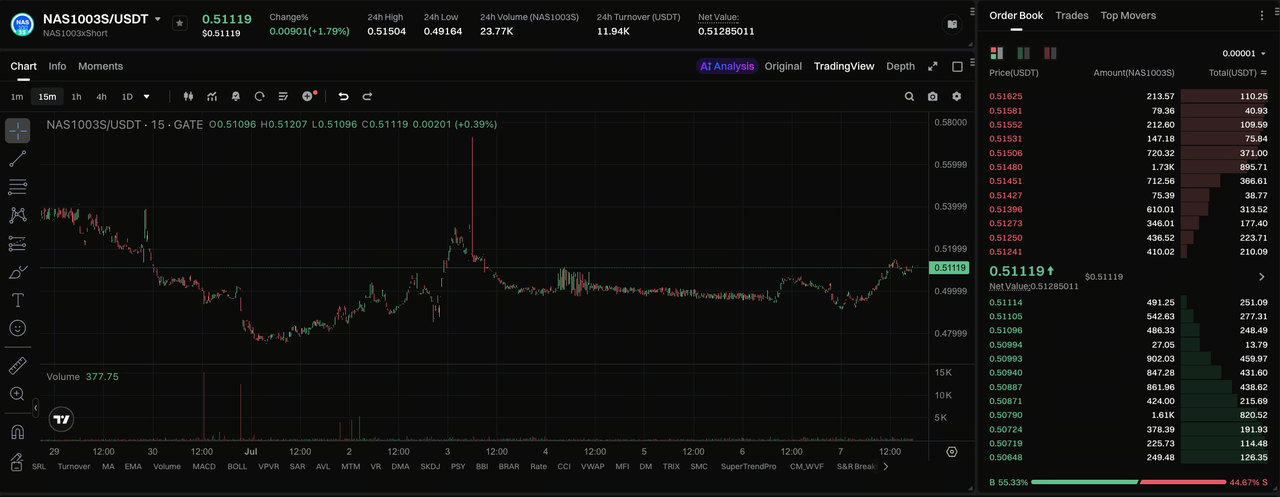
Within Gate's stock trading system, ETFs offer investors a low-barrier way to participate in index or sector allocation.
For investors looking to reduce single-company risk, ETFs provide a structured alternative that allows participation in multiple company performances through a single asset.
During earnings season, this structure helps reduce information processing complexity so investors don't need to analyze every constituent's earnings report individually—they can understand market trends through overall index performance instead.
However, it's important to note that ETFs cannot fully avoid systemic risk; their performance remains significantly influenced by macro environment and weighted stock earnings reports.
Summary
ETF performance during earnings season is essentially a weighted integration of multiple company earnings results—not a direct reflection of any single corporate event.
Their advantages lie in risk diversification and structural stability, but their volatility is still affected by weighted stocks and systemic factors.
Understanding ETF structure helps investors more clearly distinguish between "individual stock events" and "systemic fluctuations" during earnings season and optimize asset allocation strategies.
In the next lesson, we'll analyze stock CFDs and focus on how leverage mechanisms amplify gains and risks during earnings season.