What Is Binance Coin (BNB)?
Binance Coin (BNB) is the native token of the BNB Chain ecosystem, serving as the primary asset for on-chain transaction gas fees (the fees required for block validation and transaction execution), fee deductions within the ecosystem, and asset settlement. BNB utilizes a burn mechanism to gradually reduce its supply, with a long-term deflationary goal to reach 100 million tokens in circulation.
In practice, users pay transaction fees with BNB when transferring funds, interacting with decentralized applications, or participating in ecosystem activities on the BNB Chain. Certain products within the ecosystem also support using BNB for fee discounts or as a staking asset.
What Are BNB’s Current Price, Market Cap, and Circulating Supply?
As of January 21, 2026 (based on the provided market snapshot), key metrics for BNB are as follows: the price is approximately $881.20; circulating supply is about 136.36 million tokens; total supply is also around 136.36 million; maximum supply is capped at 200 million, with a long-term burn target of 100 million. Market capitalization stands at roughly $120.161 billion, fully diluted market cap at $120.161 billion, and market share is about 3.79%.
Recent price movements: 1-hour change is approximately +0.13%, 24-hour change is -5.05%, 7-day change is -7.31%, and 30-day change is +2.87%. The 24-hour trading volume is around $7.138 million. These figures fluctuate with market conditions—always refer to real-time data when making decisions.
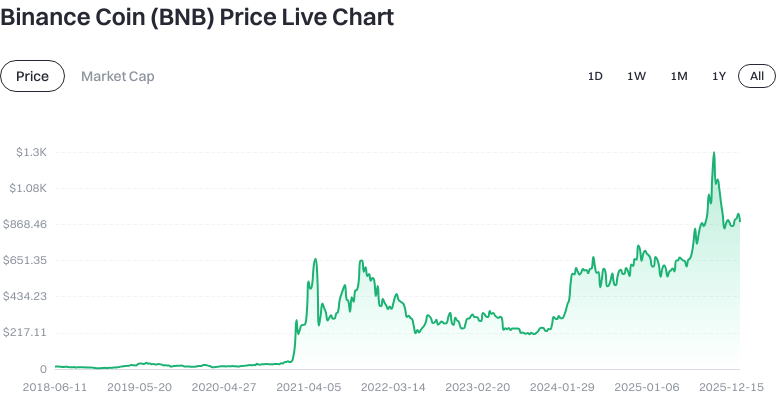
Click to view Latest BNB Price Data
Glossary: Circulating supply refers to the number of tokens available for trading in the market; Market cap = price × circulating supply, reflecting overall scale but not liquidity; Fully diluted market cap estimates total valuation based on max or expected supply, useful for cross-comparison.
Who Created Binance Coin (BNB) and When?
BNB was launched in 2017, initially issued as an ERC-20 token on Ethereum before migrating to the BNB Chain ecosystem. From its inception, BNB incorporated scheduled burn mechanisms and has since evolved to include automated and real-time burning, aiming to offset inflation and enhance the token’s value efficiency.
How Does Binance Coin (BNB) Work?
The BNB Chain is a multi-chain network, with the core execution layer often being BNB Smart Chain, which is EVM-compatible—this allows most Ethereum-compatible contracts and developer tools to migrate easily. On this network, every transaction requires a gas fee paid in BNB.
Consensus is typically achieved via PoSA (Proof of Staked Authority), where selected validators produce and verify blocks to deliver high throughput and low fees. The token mechanism includes:
- Quarterly Auto-Burn: Tokens are systematically repurchased and burned based on BNB’s price and network activity, following a set formula to permanently remove them from circulation.
- Real-Time Burning: A portion of each transaction’s gas fee is burned instantly, creating ongoing deflationary pressure tied directly to network usage.
These mechanisms work together to steadily decrease circulating supply over time, though the actual pace depends on price, on-chain activity, and parameter settings.
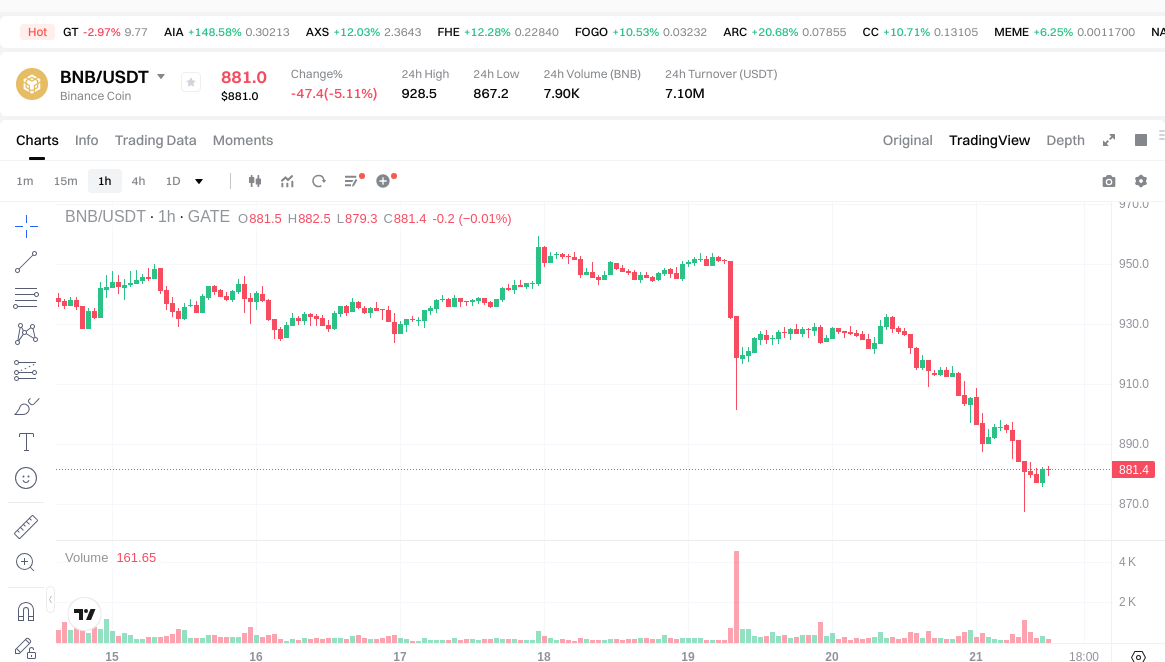
Click to view BNB USDT Price
What Can You Do with Binance Coin (BNB)?
- Pay On-Chain Fees: When transferring assets, deploying smart contracts, or engaging in DeFi or NFT transactions on BNB Chain, users pay gas fees in BNB.
- Fee Deductions Within Ecosystem: Some products allow users to settle or discount service fees using BNB, reducing overall costs.
- Asset Collateral and Participation: In decentralized finance, BNB can serve as collateral, liquidity provision asset, or governance token—actual use depends on specific protocol support.
- Settlement and Payment: Merchants or applications may accept BNB as a digital payment method, facilitating cross-border and on-chain settlements.
What Are the Main Risks and Regulatory Considerations for Binance Coin (BNB)?
- Technical Risks: Smart contracts may have vulnerabilities; mismanagement of cross-chain bridges or multisig setups can result in asset loss.
- Consensus and Decentralization: PoSA relies on a limited validator set, offering operational efficiency but higher concentration risk in governance and block production.
- Market Volatility: Crypto asset prices are highly sensitive to liquidity and sentiment, with short-term fluctuations amplifying leverage and liquidation risks.
- Regulatory Uncertainty: Jurisdictions differ in how they classify platform ecosystem tokens and impose compliance requirements, potentially affecting service availability and token use cases.
- Custody and Operations: When withdrawing BNB to self-custody wallets, ensure you select the correct BNB Chain network—incorrect transfers may be irreversible. Safeguard private keys and seed phrases securely; lost credentials cannot be recovered.
What Is the Long-Term Value of Binance Coin (BNB)?
- Tokenomics: Scheduled and real-time burning mechanisms drive long-term supply reduction, supporting increased scarcity if demand remains stable or grows.
- Network Effect & EVM Compatibility: EVM compatibility lowers development and migration costs, fostering ecosystem growth and user adoption.
- Fees & Performance: Low gas fees and fast confirmation times enhance user experience and support active on-chain participation.
- Ecosystem Synergy: Within the same ecosystem, BNB serves as both fuel and settlement asset; overlapping use cases create positive feedback loops.
It’s important to note that long-term value depends on genuine on-chain demand, developer activity, and regulatory evolution—no single factor can determine future trajectory.
How Can I Buy and Safely Store BNB (BNB) on Gate?
Step 1: Register & Complete KYC. Visit Gate’s official website or app to register an account and complete identity verification for higher limits and enhanced security.
Step 2: Fund Your Account. Depending on your region, deposit fiat currency or crypto. Hold USDT or other stablecoins or fiat balance in your account to prepare for trading.
Step 3: Select Trading Pair. Search for "BNB" in the spot market and choose common pairs such as BNB/USDT. Review order book depth, price movements, fees, and order rules before placing an order.
Step 4: Place Order & Execute Trade. For quick purchases use market orders; for price control set limit orders at your ideal buy price. After execution, confirm BNB credited to your account assets.
Step 5: Withdraw to Self-Custody Wallet (Optional). If you prefer self-management, prepare an EVM-compatible wallet, add the BNB Smart Chain network, copy your receiving address, test with a small transfer first, then move larger amounts once confirmed. Always check network and address accuracy to avoid errors.
Step 6: Security Settings & Backup. Enable two-factor authentication, withdrawal whitelist, and anti-phishing features; if using self-custody wallets, store your seed phrase securely offline—never screenshot or upload it online.
Risk Notice: Trading carries price volatility and slippage risks; on-chain transfers are irreversible—always verify addresses and networks before sending.
What Are the Key Differences Between Binance Coin (BNB) and Ethereum (ETH)?
- Consensus & Decentralization: BNB Chain uses PoSA with fewer validators focused on performance; Ethereum utilizes PoS (Proof of Stake) with a broader validator base prioritizing decentralization and security.
- Token Economics: BNB targets long-term deflation by burning tokens down to 100 million via automated and real-time burns; ETH introduced base fee burning via EIP-1559—supply may deflate or grow moderately depending on network activity but has no fixed cap.
- Use Cases: BNB primarily acts as fuel and settlement asset within the BNB Chain ecosystem; ETH serves as gas for Ethereum while being foundational collateral for DeFi and NFT applications.
- Fees & Performance: BNB Chain typically offers lower fees and faster confirmations; Ethereum can be costly during high congestion but benefits from increasingly diverse Layer 2 scaling solutions. The differing focus reflects trade-offs between performance and decentralization.
Each network has its strengths—choosing between them depends on your application ecosystem preferences and desired network characteristics.
Summary of Binance Coin (BNB)
BNB is the native token of the BNB Chain ecosystem, responsible for gas fees and settlement functions. Through quarterly auto-burns and real-time burning mechanisms, BNB implements long-term deflation. As of January 21, 2026, BNB maintains significant scale in both market cap and circulating supply, though price volatility remains prominent. Its value depends on authentic on-chain demand, developer engagement, and regulatory developments; beginners can follow step-by-step processes on Gate for account setup, trading, and secure storage—avoiding wrong networks and properly securing private keys. When managing your allocation, monitor burn schedules, ecosystem growth, regulatory trends, diversify holdings, and maintain liquidity for more resilient participation.
FAQ
What Are the Main Use Cases for BNB?
BNB is issued by Binance Exchange with primary uses including paying trading fees, participating in Binance ecosystem projects, and staking for rewards. The most common scenario is receiving a 50% discount on trading fees when paying with BNB on Binance. Additionally, BNB can be used in Binance Launchpad fundraising projects, offering investors further earning opportunities.
How Should Beginners Safely Buy and Store BNB?
The easiest way to buy BNB is by registering an account at major exchanges like Gate—complete identity verification and purchase directly with fiat currency. After buying, immediately transfer your BNB to a secure wallet rather than leaving it on the exchange long-term. Using a hardware wallet or an official recommended mobile wallet is advised; always keep your private keys and seed phrases safe—never share them with anyone.
What Factors Influence BNB’s Price Fluctuations?
BNB’s price is mainly affected by Binance platform operations, overall crypto market trends, and policy changes. Higher trading volume on Binance increases demand for BNB and typically drives prices up; conversely, reduced activity leads to declines. Broader bull/bear cycles in crypto markets and regulatory changes also significantly impact price movements—investors should closely monitor these factors.
How Does BNB Compare to Bitcoin or Ethereum?
BNB is a platform token whose value derives from Binance Exchange’s business performance; Bitcoin is a decentralized digital currency; Ethereum is a smart contract platform. BNB’s value depends more on Binance’s health—a higher relative risk—but its utility within the ecosystem is strong with advantages like fee discounts. Each asset serves different purposes; there’s no absolute winner—choose according to your investment strategy.
What Risks Should You Be Aware of When Holding BNB?
As a platform token, BNB’s main risks stem from Binance’s operational stability and regulatory actions. If the exchange faces security incidents or regulatory penalties/business changes, BNB’s value may drop sharply. Crypto markets are highly volatile—BNB price swings can far exceed traditional assets. Evaluate your risk tolerance before investing; never commit more than you can afford to lose.
- Binance Smart Chain: Main application layer for BNB—a public chain compatible with Ethereum supporting smart contracts and DeFi.
- Gas Fee: The cost paid (usually in BNB) for executing transactions or deploying contracts on Binance Smart Chain.
- Staking: Locking up BNB to earn rewards—one of the primary income streams within the Binance ecosystem.
- Cross-Chain Bridge: Technology that enables transfers of BNB or other assets across different blockchains—expanding ecosystem interoperability.
- Governance Token: Holding BNB grants rights to participate in Binance ecosystem decisions and voting on product upgrades.
- Burn Mechanism: Periodic destruction of a portion of BNB supply to achieve deflationary effects supporting value.
Reference & Further Reading for BNB (BNB)