What Is Sahara (SAH) and What Does It Mean?
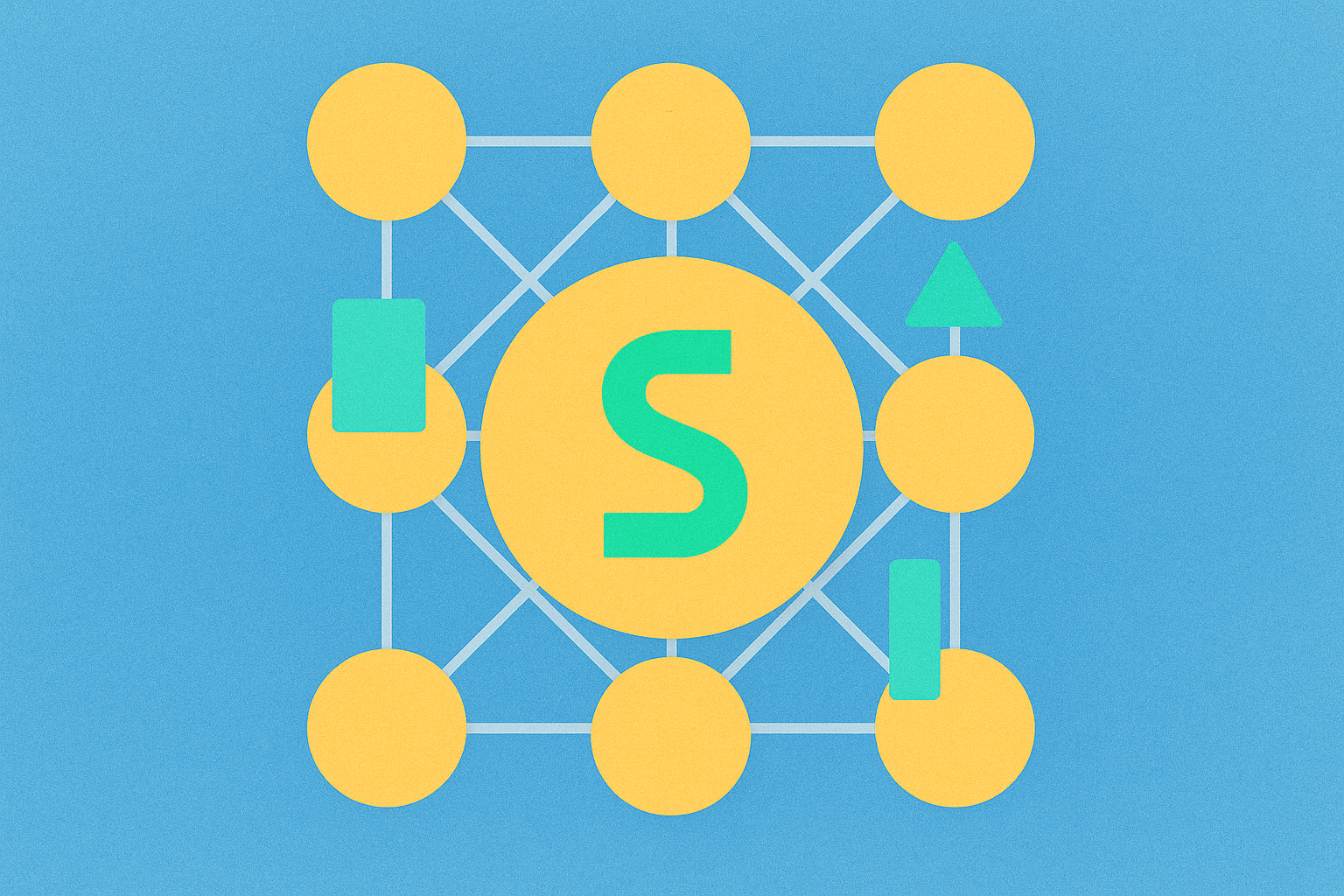
Sahara (SAH) is a utility token at the core of a decentralized network for AI data and model services. Its primary use cases include paying for access to AI services, incentivizing network contributors, and enabling on-chain governance. Governance allows token holders to vote on network parameters, treasury usage, or protocol upgrades. Incentives are distributed as token rewards to data providers, annotators, and developers, encouraging high-quality resource contributions.
Network rules are enforced via smart contracts—self-executing code deployed on the blockchain that manages payments, distributions, and records without intermediaries. Sahara typically operates on EVM-compatible blockchains, offering programmability and a wide range of ecosystem tools.
What Are the Current Price, Market Cap, and Circulating Supply of Sahara (SAH)?
As of 2026-01-23, based on public sources like CoinMarketCap and project documentation, Sahara’s price reflects broader crypto and AI sector cycles—check real-time data for specifics. Market cap is calculated as “price × circulating supply” and helps assess the project’s relative scale. Circulating supply refers to tokens available for trading on the market, influenced by release schedules and vesting.
If you’re researching Sahara, focus on these three key metrics:
- Price: Volatile in the short term, driven by market trends, ecosystem developments, and token demand.
- Market Cap: Useful for comparing Sahara to similar projects but not a direct indicator of long-term value.
- Circulating Supply & Release Schedule: Affects token supply pressure; monitor unlock timelines and allocation details.
Best practice: visit Gate’s market page, search for “SAH” or “Sahara,” review live prices, trading volume, and candlestick charts. Combine this with project-disclosed tokenomics and utility information to make informed decisions.
Who Created Sahara (SAH) and When?
Sahara was developed by a team specializing in AI and blockchain convergence, aiming to build a fair on-chain marketplace for model developers and data providers. According to public records, early development was completed around 2024, followed by the progressive launch of the token and core features.
A typical timeline includes:
- Early R&D and testing: Establishing foundational processes for data marketplaces and model services.
- Token design and launch: Defining total supply, distribution ratios, and release schedules.
- Ecosystem growth: Onboarding data providers, annotators, developers, and infrastructure partners.
For exact dates, refer to official announcements or the project’s whitepaper, available through their documentation or social media channels.
How Does Sahara (SAH) Work?
Sahara uses smart contracts to bring transactions for data and model services on-chain:
- Settlement & Payment: Users pay SAH for data queries or model inference; contracts automatically distribute rewards to providers.
- Incentives & Governance: Contributors earn tokens for supplying datasets, annotation results, or model services; holders participate in governance by voting on parameters and budgets.
- Staking Mechanism: Participants stake SAH to qualify as service nodes or curators—good performance brings rewards, while violations incur penalties.
The protocol often incorporates zero-knowledge proofs (ZKP) or privacy-preserving solutions to validate contributions without exposing raw data. On-chain logs ensure transparency and auditability.
What Can You Do With Sahara (SAH)?
- Pay for Model Inference: Use SAH to cover computational and bandwidth costs when running tasks like text analysis or image recognition.
- Purchase or Subscribe to Data: Acquire curated datasets or labeling services using SAH within compliance frameworks.
- Stake to Participate: Stake SAH to become a service node or data curator, boost reputation, and earn additional rewards.
- Join Governance: Vote on proposals related to fee structures, incentive mechanisms, or treasury management.
Example: A researcher needing sentiment analysis data can purchase datasets with SAH; a model developer can offer inference APIs, receiving SAH payouts based on usage.
What Wallets and Extensions Are Available in the Sahara (SAH) Ecosystem?
- Wallets: Gate custodial accounts are used for trading and storage; common self-custody options include browser extension wallets supporting EVM chains and hardware wallets. Self-custody means managing your private key—the cryptographic password controlling assets—which must be kept secure.
- Hot vs. Cold Wallets: Hot wallets are online and convenient but more exposed; cold wallets are offline and safer for long-term holdings.
- Multi-signature & Permissions: Multi-sig wallets require multiple approvals for transactions—ideal for team or treasury security.
- Tools & Extensions: Block explorers help track transactions and contracts; cross-chain bridges enable asset transfers across compatible chains—always choose audited and official solutions.
What Are the Main Risks and Regulatory Concerns of Sahara (SAH)?
- Market Volatility: Crypto prices are highly sensitive to macroeconomic events and industry developments.
- Smart Contract & Security Risks: Vulnerabilities in contracts, oracle failures, or cross-chain bridge exploits could result in fund losses.
- Data & AI Compliance: Legalities around data sourcing, cross-border transfers, and privacy protection may impact network operations.
- Token Unlocks & Liquidity: Sudden unlocks or low liquidity can amplify price swings—monitor schedules and market-making activity.
- Regulatory Changes: Laws around token classification, trading, and taxation differ by region and may raise participation barriers over time.
- Custody Risks: Both exchange account security and self-custody practices are critical—enable two-factor authentication (2FA) and properly back up credentials.
What Drives Sahara’s Long-Term Value?
Long-term value depends on genuine demand, network effects, and a sustainable token economy:
- Demand Side: Growth in AI applications fuels continuous need for high-quality data and inference services.
- Supply Side: Effective incentives attract data providers and model developers, raising ecosystem activity and resource quality.
- Value Loop: Payments and staking create “use-burn/sink” cycles; unlock schedules and inflation controls manage supply pressure.
- Compliance & Partnerships: Collaborations with compliant data sources, enterprises, and developer communities strengthen the ecosystem’s moat.
Track on-chain usage metrics—volume of transactions, fee revenue, staking rates, developer activity—rather than focusing solely on short-term price movements.
How Can I Buy and Safely Store Sahara (SAH) on Gate?
Step 1: Register a Gate Account & Complete KYC
Go to gate.com, register, then enable two-factor authentication (2FA) under “Security Settings.” Complete identity verification (KYC) to increase account limits and security.
Step 2: Fund Your Account
Deposit fiat currency or stablecoins like USDT through the “Deposit” page. For fiat channels, follow the payment instructions; if depositing via blockchain, double-check networks and addresses.
Step 3: Find Trading Pairs
Search for “Sahara” or “SAH” under “Spot” or “Markets,” select the relevant pair (e.g., SAH/USDT), then review price trends, order depth, and candlestick charts.
Step 4: Place an Order
Choose between limit (set your desired price) or market orders (buy/sell at current price). Confirm quantities and fees before submitting.
Step 5 (Optional): Withdraw to Self-Custody Wallet
For long-term holding, withdraw SAH to your self-custody wallet. Generate a receiving address in your wallet; enter this on Gate’s “Withdraw” page with the correct network. Test with a small amount before larger transfers.
Step 6: Secure Storage
Back up seed phrases/private keys offline on paper or metal in multiple locations. Consider multi-sig setups or hardware wallets for extra safety. Regularly audit permissions and device security.
How Does Sahara (SAH) Differ from Bittensor?
Positioning & Ecosystem: Sahara focuses on an on-chain marketplace for data/model services with transparent payments and incentives. Bittensor (TAO) builds a decentralized model network where “training/inference equals mining,” rewarding competitive model providers.
Token Utility: SAH is mainly used for paying data/inference fees, staking, and governance. TAO supports participation in the network and rewards model contributors while also serving governance functions.
Technology & Incentives: Sahara emphasizes data compliance, privacy-preserving computation, and contract-based settlements. Bittensor prioritizes consensus-driven model evaluation and continuous incentives. Both depend on transparent on-chain operations but differ in service scope and incentive specifics.
Risk Profile: Sahara’s main risks lie in data compliance and ecosystem demand; Bittensor faces risks in model quality evaluation and economic stability. Both are affected by market volatility and smart contract security.
Summary of Sahara (SAH)
Sahara brings AI data/model service transactions and governance on-chain using its native token for payments, incentives, and staking, aiming for greater transparency between supply and demand. To assess its value, monitor ecosystem usage metrics such as transaction volume, fee revenue, staking/unlock cycles, regulatory status, and partnership progress. For best practice, check real-time markets on Gate, diversify trades over time, maintain strong account/private key security, and stay alert during major unlocks or regulatory changes. If AI demand for compliant data/inference grows sustainably with effective incentives in place, Sahara’s token economy is well-positioned to establish a robust value loop.
FAQ
What Type of Investor Is Suitable for Sahara (SAH)?
Sahara is best suited for investors interested in AI infrastructure and decentralized computing. It’s appropriate for those focused on long-term technology growth who can handle volatility—not for short-term speculators. Always review the project whitepaper/team background and invest according to your own risk tolerance.
What Is Sahara’s Token Supply & Economic Model?
Sahara implements a transparent supply mechanism designed to incentivize network participants and governance contributors. The total supply cap and release schedule aim to balance long-term rewards. Check Gate for up-to-date circulating supply figures to gauge scarcity trends.
How Many SAH Do I Need to Earn Rewards in the Network?
Participation requirements depend on node types or governance rules. Generally, users can stake or delegate tokens; minimum thresholds are specified in official documentation. Gate makes it easy to hold/manage SAH in preparation for network participation.
How Does Sahara Compare with Other AI Tokens?
Sahara specializes in decentralized AI infrastructure—many other AI tokens focus on applications or data layers. Its unique value lies in its base-layer compute network design and open participation mechanism. Compared to competitors, Sahara prioritizes accessible infrastructure neutrality—a key long-term advantage.
How Are Technical Upgrades & Governance Managed?
Sahara uses on-chain governance so holders can vote on major decisions like upgrades or parameter changes. Community proposals go through voting rounds to ensure decentralized control. By holding SAH on exchanges like Gate you can participate in governance and stay updated on community developments.
Glossary of Key Sahara Terms
- AI Agent: An autonomous program powered by artificial intelligence capable of executing specific tasks or making decisions.
- Decentralized Data Marketplace: A distributed platform enabling users to trade ownership rights or usage rights over datasets.
- Smart Contract: Self-executing code on the blockchain that does not require third-party verification.
- Token Incentives: Rewards distributed as tokens to encourage user participation or data contributions within the network.
- Privacy Protection: The use of cryptographic techniques to secure user data privacy during transactions or service interactions.
Further Reading & Resources