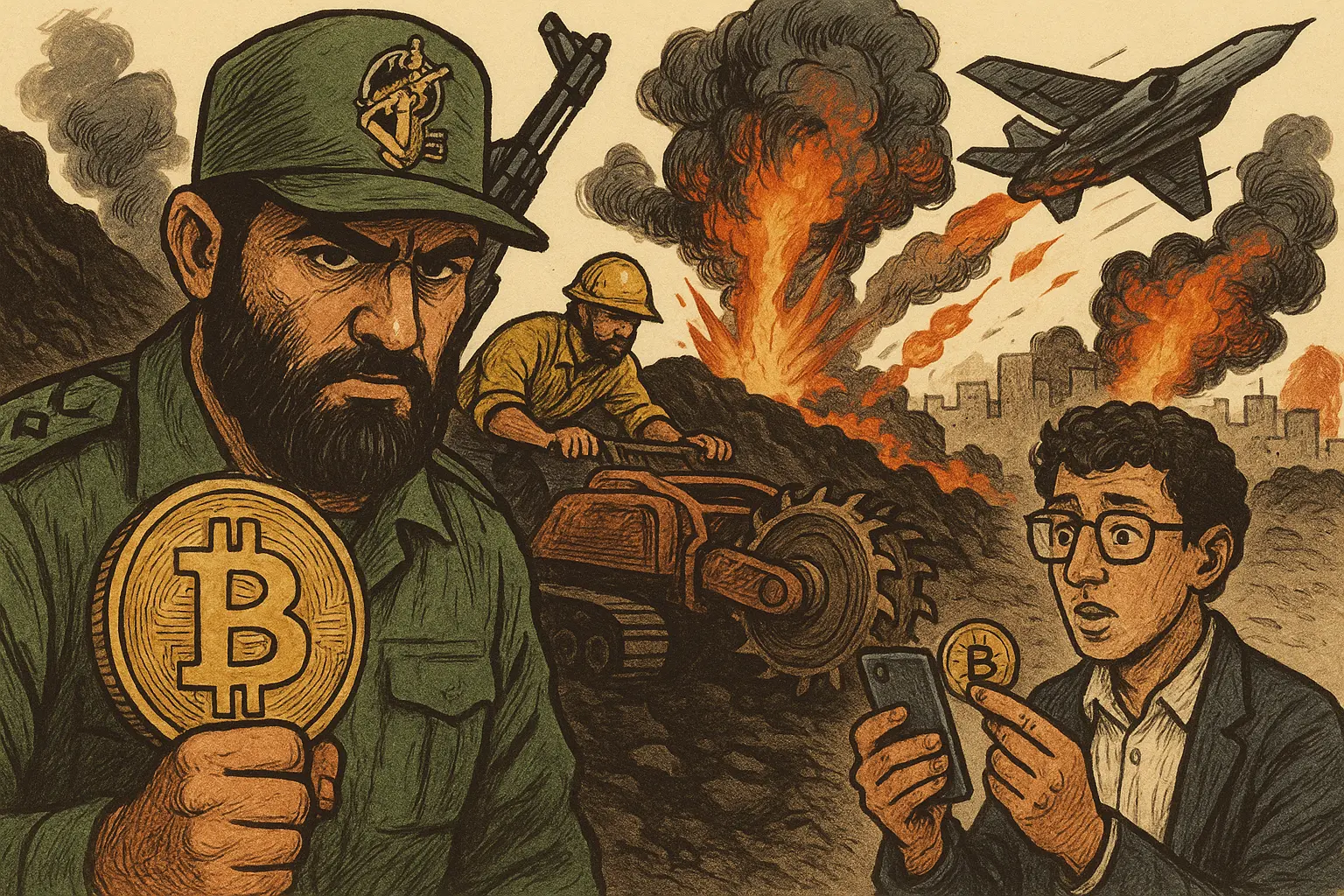
According to the Chainalysis January 2026 report, wallets associated with the IRGC received over $3 billion in crypto assets in 2025, including various sanctions evasion activities, not just mining profits. After the Tehran airstrike in late February 2026, Nobitex, Iran’s largest cryptocurrency exchange, saw a 700% surge in withdrawals within hours.
Iran’s Bitcoin Mining Power Structure: Cheap Energy Reserved for a Select Class
Surplus natural gas is converted into cheap electricity, which drives mining rigs to produce Bitcoin. Bitcoin is then used to bypass sanctions to obtain food and mechanical parts—this is Iran’s unique Bitcoin survival chain. However, only institutions with deep ties to the military or government enjoy electricity at $0.002 per kWh. They build their own power plants and lay their own transmission lines to support mining operations, causing frequent overloads on the civilian grid.
Official estimates suggest about 95% of mining activity nationwide is unauthorized, with underground mines consuming around 2,000 MW of power—equivalent to full capacity of a nuclear power plant. With this computational power, Iran ranks as the fourth or fifth largest mining center globally. In 2021, authorities attempted to shut down an unauthorized mine but were met with armed resistance; in 2022, the parliament passed legislation allowing certain military agencies to build their own power and transmission facilities, further consolidating this monopolistic power structure.
The Cost to Chinese Miners: 30,000 Machines for Over a Billion Yuan in Losses
The news of cheap electricity attracted many Chinese miners seeking opportunities after domestic policies tightened. A veteran miner, “Old Li,” reportedly collaborated with local forces through middlemen, chartered a plane to transport 30,000 second-hand mining machines along with transformers and containers to Tehran. However, he faced a series of systemic risks:
- Overheating and breakdown: Infrastructure shortages led to widespread equipment failures.
- Partner’s price hikes: Local partners gradually demanded up to 30% profit sharing; negotiations failed, and they cut power.
- Equipment confiscation: Attempts to move the miners to Ethiopia for damage control resulted in Iranian customs seizing the equipment, which was ultimately scrapped in Tehran, causing losses exceeding hundreds of millions of RMB.
In 2021, Iranian authorities raided and confiscated 45,000 mining machines nationwide. Local licensed miners later stated that Chinese companies that entered Iran during 2019-2020 “are no longer active” after the 2021 ban. “Few Chinese miners in Iran have left with all their equipment intact.”
After the Bombs Drop: 700% Withdrawal Surge and 99% Internet Blackout
Within hours of the airstrike, Nobitex’s withdrawal volume surged by 700%, reflecting Iranians’ long-term dependence on crypto assets. Since 2018, the Iranian rial has depreciated over 90% against the dollar, with inflation exceeding 40% for years. The Central Bank of Iran explicitly bans individuals from trading cryptocurrencies, yet the government itself has purchased over $500 million in USDT for trade settlements. ViraMiner’s CEO estimates about 18 million Iranians hold crypto assets, with 300 to 600 digital exchanges operating domestically.
Chainalysis suggests that the flow of funds may include: ordinary citizens transferring assets to cold wallets for safety, exchanges rapidly dispersing funds in emergencies, and high-net-worth individuals with special backgrounds moving assets overseas. However, after the airstrike, internet connectivity was cut off in about 99% of the country, causing the withdrawal volume to plummet by 80%. The desire to escape is at 700%, but the only available channel is just 1%.
FAQs
Why is Iran’s Bitcoin mining cost far below the global average?
Iran has the world’s second-largest natural gas reserves but cannot export due to international sanctions. Large quantities of natural gas are converted into cheap electricity at about $0.002 per kWh. Only institutions with deep ties to the IRGC or government can access this electricity, making local mining costs around $1,300 per Bitcoin, far below the global average of approximately $90,000.
What does the 700% surge in withdrawals after the airstrike indicate?
The 700% increase in withdrawals from Nobitex reflects multiple layers of demand: in an environment where the rial has depreciated over 90% and foreign exchange channels are nearly closed, crypto assets have become the most important alternative store of wealth for Iranians. Rapid transfer to cold wallets is the first emergency response during sudden crises. However, the subsequent 99% internet blackout prevented most people from completing transfers.
Why have most Chinese miners’ investments in Iran ended in losses?
Chinese miners in Iran face multiple systemic risks: equipment entering through unofficial channels without proper customs documentation; local partners exerting pressure by cutting power; blocked equipment exports hindering loss mitigation; and the 2021 nationwide confiscation of mining machines. Few large Chinese miners have managed to fully exit the Iranian market unscathed.
Disclaimer: The information on this page may come from third parties and does not represent the views or opinions of Gate. The content displayed on this page is for reference only and does not constitute any financial, investment, or legal advice. Gate does not guarantee the accuracy or completeness of the information and shall not be liable for any losses arising from the use of this information. Virtual asset investments carry high risks and are subject to significant price volatility. You may lose all of your invested principal. Please fully understand the relevant risks and make prudent decisions based on your own financial situation and risk tolerance. For details, please refer to
Disclaimer.


