Three Singapore-based AI startups are addressing fragmentation in construction project management by automating data collection, communication, and safety monitoring across worksites. The companies—OnSite, Wenti Labs, and Ailytics—each take different approaches to solving the same core problem: construction sites generate massive amounts of unstructured data across multiple messaging platforms and devices, creating operational inefficiency and safety risks.
OnSite: Multilingual Communication and Data Compilation
Yong Han Poh and Liam Appelson founded OnSite in December 2024 to centralize construction site communication. Poh, an anthropologist with a doctorate in philosophy from the University of Oxford who studied construction in Singapore and grew up watching her parents run a small renovation company using WhatsApp, identified the problem after joining a large enterprise and discovering that even billion-dollar projects operated the same way. Appelson previously worked in his family's home-building business in upstate New York before moving to Singapore five years ago.
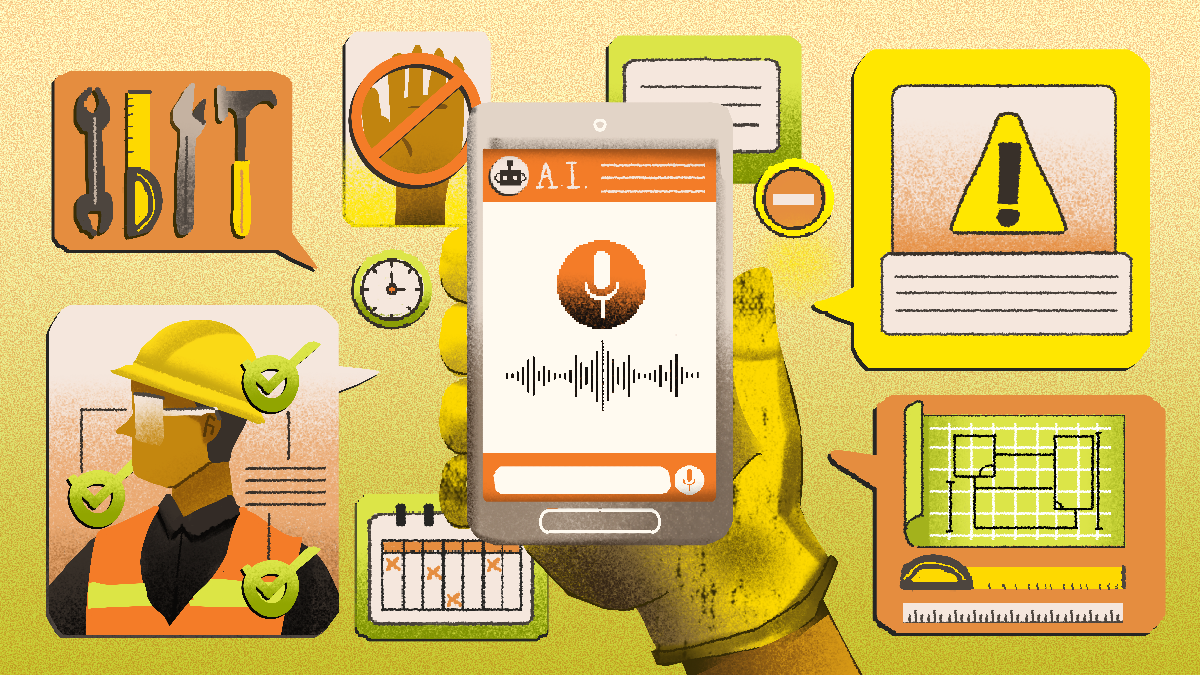 Image credit: Ulla
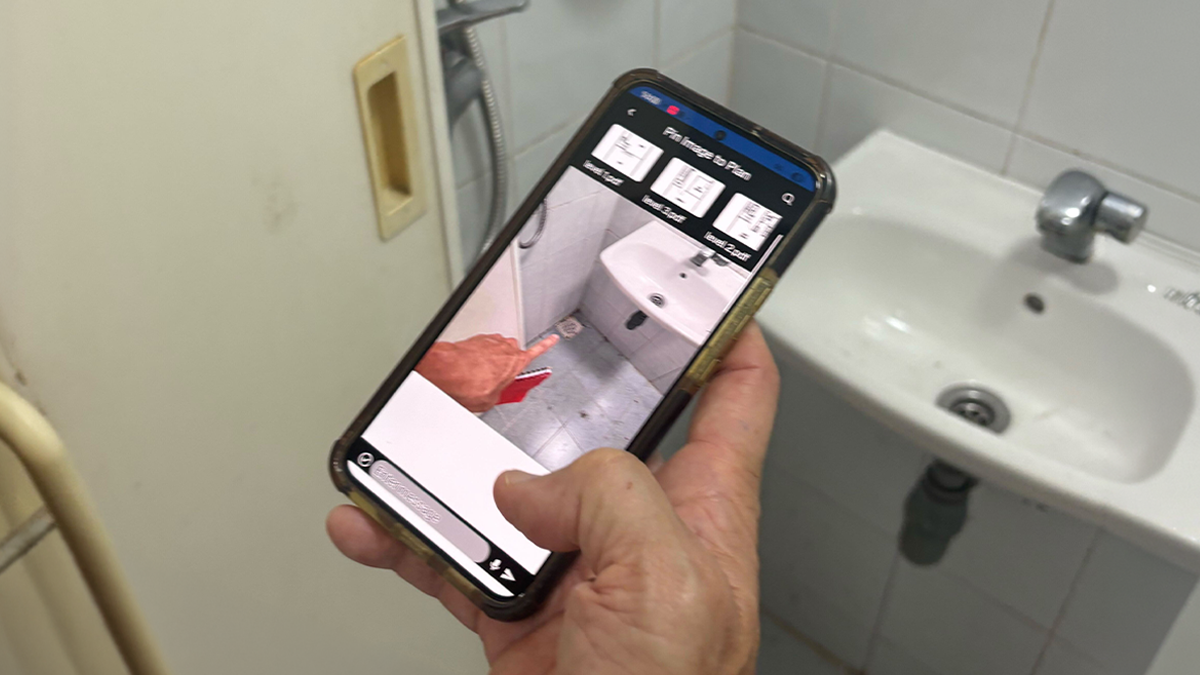
OnSite's app is designed to be simple and runs on basic Android phones commonly used by construction workers. The platform supports eight languages—English, Mandarin, Cantonese, Bahasa Melayu, Bahasa Indonesia, Tamil, Bengali, and Tagalog—built on OpenAI's Whisper model for speech-to-text transcription. According to Poh, workers frequently send long voice messages in their own dialects, and standard messaging platforms provide poor transcription quality outside English. Almost half of OnSite's users are in Hong Kong, driven by the app's Cantonese support.
The core function extends beyond messaging: OnSite converts scattered communications, images, and documents into a searchable database. In December 2024, the company raised S$1.7 million (approximately US$1.3 million) in a seed round. It currently has eight clients and a runway of at least two and a half to three years but has not yet turned a profit. OnSite's software remains in beta testing, with plans to launch the official version by the third quarter of 2026.
 Photo credit: OnSite
Wenti Labs: AI as Workflow Integrator
Ethan Ow founded Wenti Labs in December 2023 after managing construction projects at CapitaLand, one of Singapore's largest real estate developers, and working at Uber and CloudKitchens. At each organization, he observed that construction and field operations—regardless of company size—still relied on WhatsApp and manual Excel files.
Wenti Labs' product, an AI personality named Joey accessible via phone or email, does not require workers to change their existing workflows. Instead, it operates as an "AI intern" that reads messages, emails, and files, then compiles them into Excel files. This approach avoids asking workers to adopt new communication methods.
Language support was also critical; one early customer was a Singaporean client running a Vietnam project where the entire team communicated in Vietnamese. Unlike OnSite, which uses AI agents to compile data into a cloud-based searchable database, Wenti Labs uses OpenAI's API and stores no client data—a choice shaped by the construction industry's sensitivity around information security.
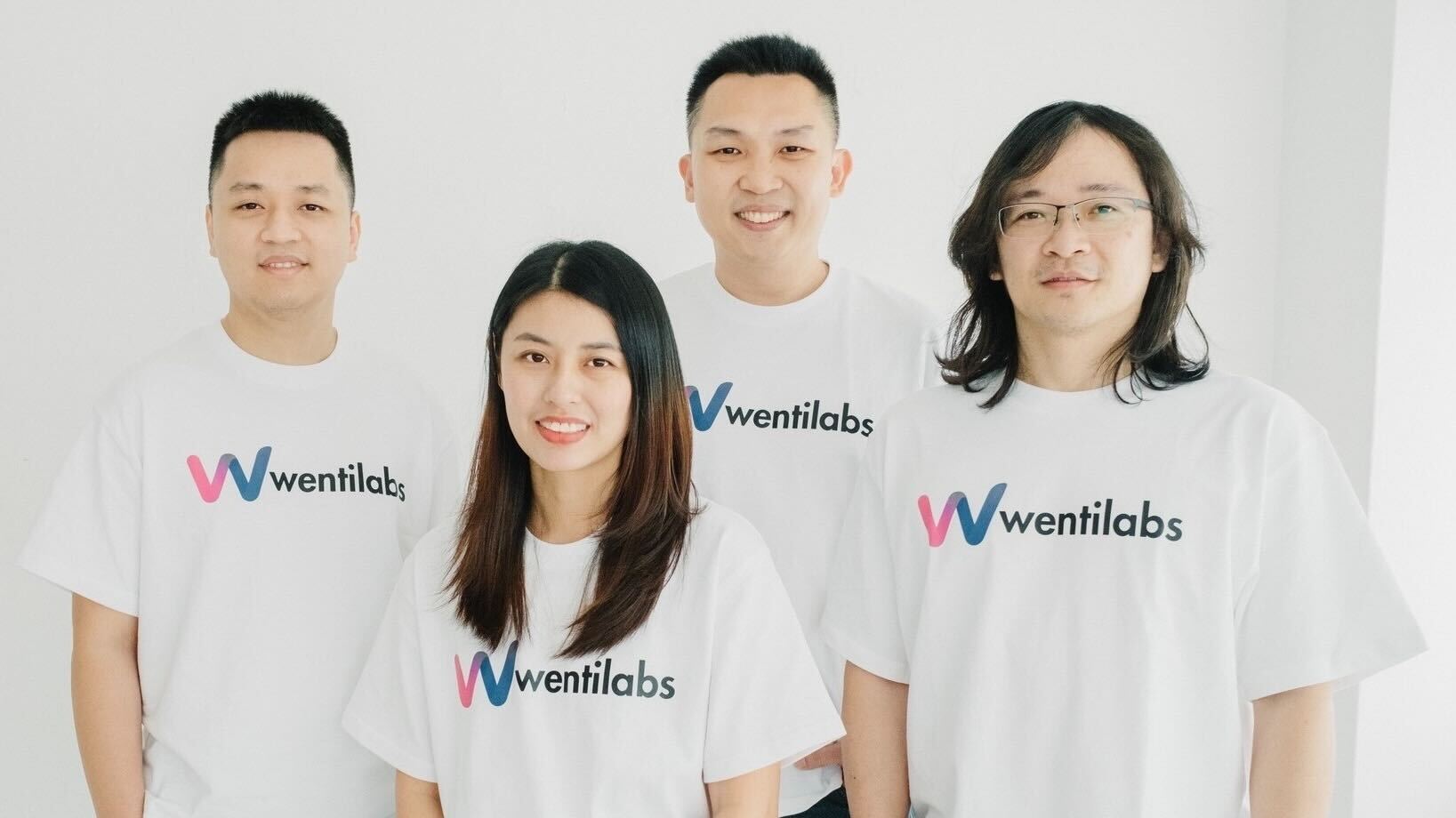 Photo credit: Wenti Labs
The company spent most of 2024 testing ideas before landing its first enterprise client, Wallhub, in June 2025. Current clients include CapitaLand, Kajima, Obayashi, and Penta-Ocean. One of Wenti Labs' highest-profile projects involves tracking the construction of IR2, Singapore's second integrated resort. The firm raised its first institutional round from Zacua Ventures and operates a team of 12. Ow reports the company is already profitable and is considering its next fundraising round for the third quarter of this year at the earliest, with expansion plans targeting Japan, Saudi Arabia, and the United States.
Ailytics: Video Analytics for Real-Time Safety
Lenard Tan co-founded Ailytics in May 2021 as a spin-out from the NUS Grip accelerator following nearly two years of research funded by AI Singapore and the Housing Development Board. Rather than addressing communication, Ailytics focuses on what workers do on-site through AI-powered video analytics.
Tan, a former Boeing aerospace software engineer, sought to make years-old, low-resolution surveillance cameras useful for workplace safety without requiring companies to upgrade their entire camera infrastructure. Industrial areas present challenges including poor lighting and constant movement; most available video training data was too clean for these real-world conditions. Ailytics addresses this by preprocessing video before it reaches the AI model, using techniques like image stabilization, noise reduction, and pixel enhancement—work that Tan estimates comprises about half the total processing load.
Most processing occurs on-premises, with a single gaming computer typically having sufficient GPU power for a single site. The system sends real-time alerts to mobile phones and walkie-talkies, connects to emergency sirens, and provides a web-based dashboard. It monitors safety compliance, flags unsafe behavior, and detects security breaches. The system can even track whether warehouse workers bend their knees correctly when lifting—a feature developed for a multinational logistics firm managing employee injury claims.
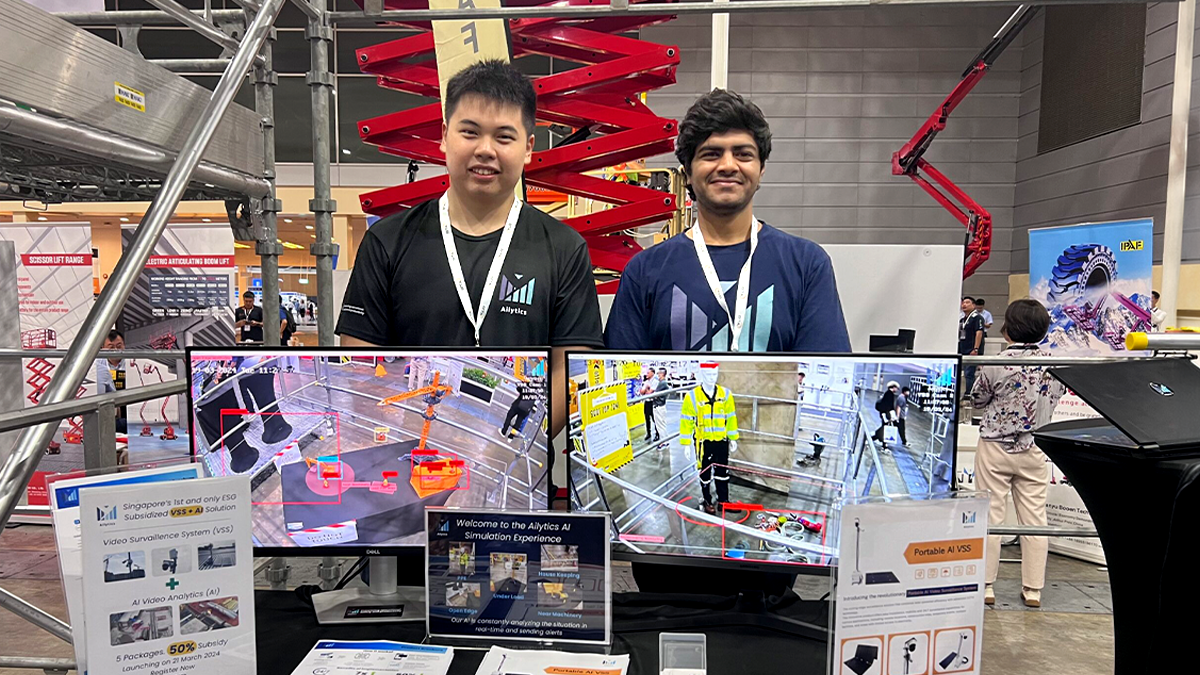 Photo credit: Ailytics
Tan acknowledges that this monitoring approach makes some workers uncomfortable, with "many, many" complaints depending on country, union, and company policies. He frames video monitoring as insurance: "Ensuring compliance – in the event that something happens, then you can have evidence to say something about it."
Ailytics has been deployed across more than 400 projects in 11 countries including Italy and the Netherlands, with Singapore and Hong Kong as main markets. The company is targeting expansion to Japan and Australia next. Ailytics has raised US$3.1 million since launch and now has 43 employees. The firm is not yet profitable and is in late-stage talks with strategic investors, aiming to close a new round before the middle of 2026.
 Using AI to record updates and manage safety is growing, according to independent research firm Verdantix. Photo credit: OnSite
Market Evolution and Next Steps
According to independent research firm Verdantix, the market for AI safety tools in work zones is growing, with most companies seeking to boost workplace safety through employee and site monitoring. Gary Ng, CEO and co-founder of viAct, notes that the challenge is no longer detection but system integration: "What we're seeing across sites today isn't a lack of technology – it's fragmentation. The challenge is no longer just detection but how systems connect into workflows and generate insights teams can act on."
Verdantix research points toward AI agents—systems that move beyond detection to act on observations—as the next evolution. Ng states that viAct plans to launch more than 300 AI agents built for heavy industries.
Ailytics is developing what Tan calls "large vision models" that can read entire scenes rather than individual objects, trained to reason like experienced safety professionals during site walkthroughs. Tan explains: "When a safety professional goes around the site, it's not like they're looking at a particular object and saying this is the issue. They look at the whole scenario … and come to a conclusion that this is not safe because of X, Y, and Z. And now we are able to do that a lot better contextually."
FAQ
What problem are these AI startups solving in construction?
Construction sites generate massive amounts of unstructured data—blueprints, reports, voice messages—scattered across multiple messaging platforms and devices. OnSite, Wenti Labs, and Ailytics each address different aspects: OnSite and Wenti Labs consolidate communication and documentation into searchable databases, while Ailytics uses video analytics for real-time safety monitoring.
How do these companies handle language barriers on international construction sites?
OnSite supports eight languages (English, Mandarin, Cantonese, Bahasa Melayu, Bahasa Indonesia, Tamil, Bengali, and Tagalog) using OpenAI's Whisper model for transcription. Wenti Labs similarly adapted its AI to handle Vietnamese and other languages based on client needs, recognizing that construction projects in Southeast Asia and beyond involve multinational teams.
What is the current profitability and funding status of these companies?
OnSite (founded December 2024) raised S$1.7 million (US$1.3 million) in seed funding and is not yet profitable, with plans to launch officially by Q3 2026. Wenti Labs (founded December 2023) is already profitable after landing its first enterprise client in June 2025 and is considering fundraising in Q3 2025. Ailytics (founded May 2021) has raised US$3.1 million, is not yet profitable, and is pursuing strategic investment rounds before mid-2026.


