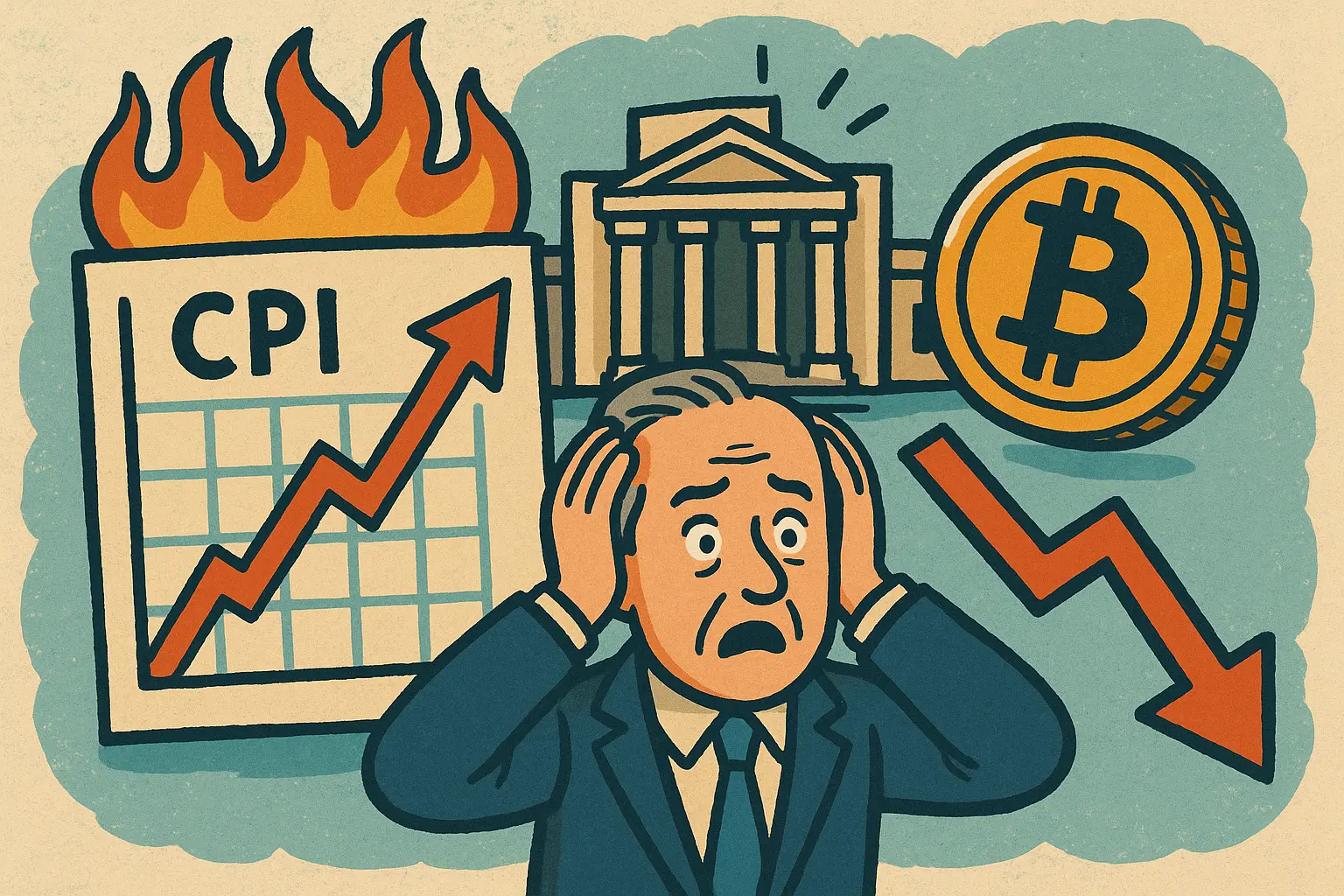
On May 13, Bitcoin fell back to $80,700. According to data released Tuesday by the U.S. Bureau of Labor Statistics (BLS), the U.S. April Consumer Price Index (CPI) rose 0.6% month-over-month, with the year-over-year increase reaching 3.8%, higher than economists’ expectations of 3.7%. On the back of the data, according to the CME’s “FedWatch” tool, the probability that the Federal Reserve will hike rates by 25 basis points in December rose to over 30%.
April CPI Data Background: Hormuz Blockade Lifts Energy Inflation
According to BLS reports and coverage, the reason April inflation came in hotter than expected is that the U.S.-Iran war has entered its 11th week, and the blockade of the Strait of Hormuz has continued to disrupt crude oil supply, driving up energy costs. WTI crude futures rose 4.19% on May 12, closing at $102.18 per barrel; Brent crude gained 3.42% to $107.77 per barrel.
InfraCap CEO Jay Hatfield said, “Unless oil prices fall, inflation won’t improve. This is a historical pattern that can be used as a reference.” Globalt Investments senior portfolio manager Thomas Martin said, “The longer the Middle East conflict lasts, the more inflation will keep accumulating.” LPL Financial chief equity strategist Jeff Buchbinder said, “Given the heightened tensions in the Middle East, the rise in consumer prices could have been even higher.”
Rate-Hike Probability Rises to 30%, as Worsh Confirmed as a Fed Governor
According to CME FedWatch data, the market’s expected probability of a 25-basis-point rate hike in December 2026 rose from Monday’s 21.5% to over 30%. Per reports, on May 12, 2026, the U.S. Senate formally confirmed Kevin Warsh as a Federal Reserve governor with a 51-45 vote, for a 14-year term. The Senate also began a procedural vote on the four-year appointment for Warsh to serve concurrently as Fed chair, with the current chair Jerome Powell’s term set to end on May 15 (Friday).
InfraCap CEO Jay Hatfield commented on Warsh’s rate stance: “Even if Worsh wants to cut rates, he can’t do it, and I don’t think he would want to.”
Reuters: Saudi Arabia’s Secret Strikes on Iran Exposed, Ceasefire Situation Remains Tense
According to a May 13, 2026 Reuters report, two Western officials and two Iranian officials said Saudi Arabia carried out multiple undisclosed military strikes against Iran in retaliation for attacks on Saudi territory during the Middle East war, which Reuters assessed occurred in late March 2026. According to Reuters, the UAE also carried out military strikes against Iran (previously reported by The Wall Street Journal on Monday). Iranian and Western officials said Saudi Arabia had informed Iran of the relevant strike actions, after which both sides engaged in intensive diplomatic contacts and ultimately reached an agreement on de-escalation.
Per the report, U.S. President Trump described the ceasefire as “life support,” because Iran refused the U.S. ceasefire proposal and insisted on conditions including war reparations, full sovereignty over the Strait of Hormuz, and the release of frozen assets. JPMorgan analyst Dubravko Lakos-Bujas said, “If the situation is still unresolved after another four to five weeks, the market could fall into blind optimism.”
U.S. Stock Market Close Data (May 12, 2026)
According to reports, the S&P 500 fell 0.16% to close at 7,400.96; the Nasdaq Composite slid 0.71% to 26,088.20; and the Dow Jones Industrial Average rose 0.11% to close at 49,760.56. On individual stocks, AMD fell 2%; Qualcomm dropped 11%, the largest single-day decline since March 2020; and Micron Technology reversed course and fell 3.6%.
FAQ
What is the latest data on U.S. April CPI, and what special significance does it have?
Based on BLS May 12, 2026 data, April CPI’s year-over-year increase was 3.8%, above the 3.7% expected in a Dow Jones survey. It represented the highest annualized inflation rate since May 2023. This hotter-than-expected inflation is closely related to the disruption in crude oil supply caused by the Hormuz blockade.
What is the latest probability for a Fed rate hike in December?
According to the CME FedWatch tool, driven by the impact of April CPI coming in above expectations, the market expects the probability of the Fed hiking rates by 25 basis points in December 2026 to rise from Monday May 12’s 21.5% to over 30%.
What is the source of information for the Saudi secret strike on Iran incident?
Per Reuters’ May 13, 2026 report, the sources were two Western officials and two Iranian officials. The strike assessment was evaluated in late March 2026; the military strike by the UAE against Iran was first reported by The Wall Street Journal on Monday.


