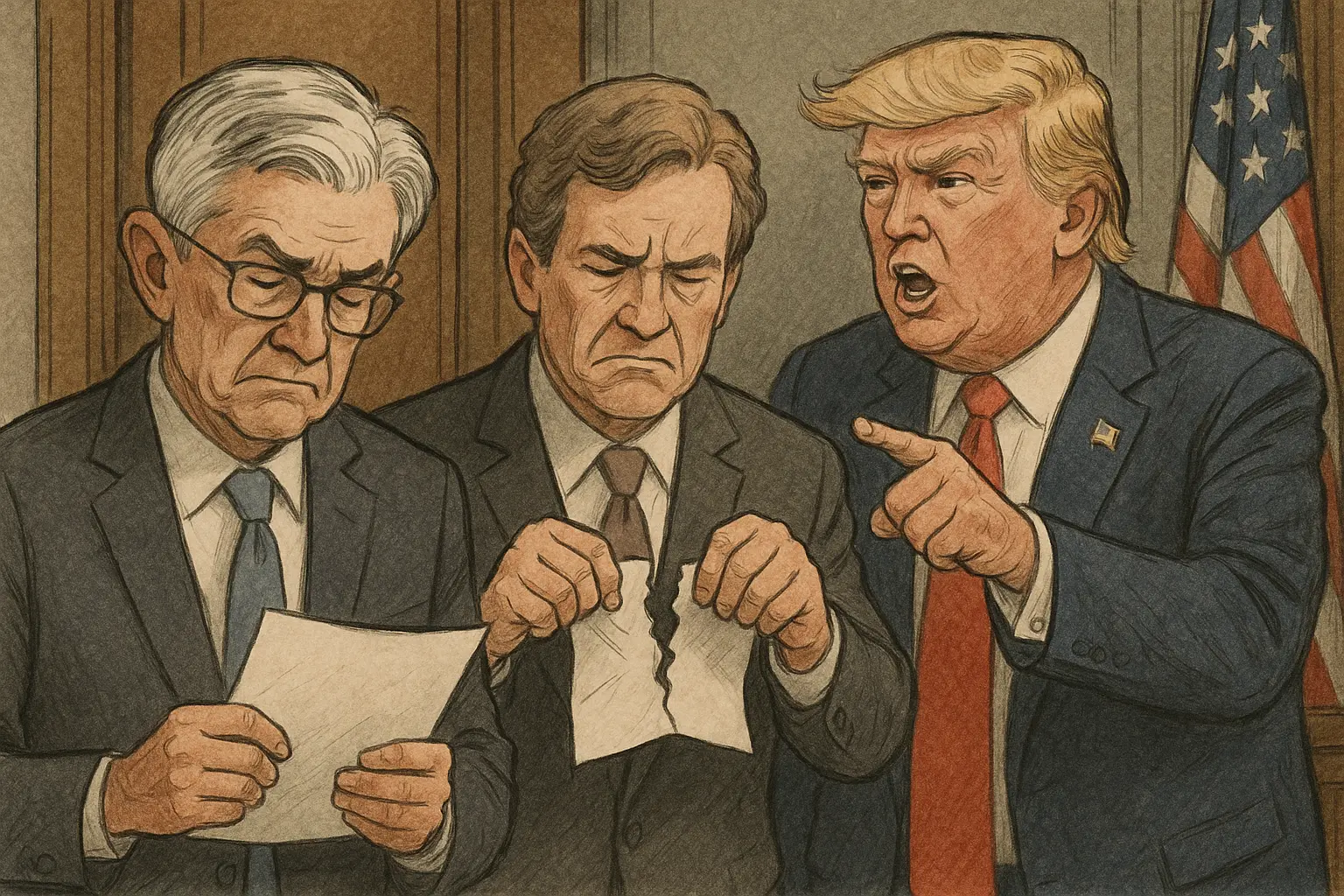
CNBC reported that on May 15, FED board member Stephen Miran submitted his resignation, saying he will step down from his board position when Kevin Warsh, the incoming chair, takes office, or before. Miran cast no votes in opposition at all of the six Federal Open Market Committee (FOMC) meetings. On the same day, board member Barr publicly commented on the balance sheet policy, saying that reducing the balance sheet itself is a “wrong target”.
Miran’s FOMC Voting Record and Confirmation of His Policy Stance
Based on the publicly released FOMC voting records, his votes confirm the following policy stance:
2025: Miran voted against three FOMC decisions approving each 25 bps rate cut, arguing for a larger rate cut
2026: Miran voted against three decisions to keep interest rates unchanged, supporting each 25 bps rate cut
Term total: Attended six FOMC meetings and voted against in all six
Miran’s policy stance: Advocates forward-looking monetary policy, believing the FED “needs to consider non-monetary factors more carefully and their impact on monetary policy,” specifically pointing to slowing population growth, the impact of immigration on employment, and potential deflationary effects from deregulation. He also supports reducing the FED’s balance sheet (current size of $6.7 trillion) and lowering bank regulatory thresholds.
Confirmation Quotes From Miran’s Resignation Letter
According to CNBC, Miran’s confirmation statements in his resignation letter are as follows:
· Refers to his brief term as “the highest honor of my life”
· Says he is “excited” about the changes the FED and Warsh are making in areas such as policy communication and balance sheet policy
· Expects the FED to “stick to its narrow scope of responsibilities and stay away from sensitive political and cultural issues”
· Reiterates that “because monetary policy has lags, policymaking needs to be forward-looking and should immediately begin considering these effects”
Board Member Barr: Balance Sheet Reduction Is a “Wrong Target”
On May 15, 2026 (Thursday), board member Barr issued the following position on the FED’s balance sheet policy:
· Reducing the balance sheet “is not a good idea” by loosening liquidity rules; lowering liquidity requirements would only increase financial stability risks
· Reducing the balance sheet itself is a “wrong target”; many proposals put forward to achieve this target would weaken bank resilience and interfere with the functioning of money markets
· If any adjustments are made, liquidity requirements should be raised rather than lowered
· The FED is currently working to adjust the duration of its balance sheet to better match the broader Treasury market
FAQs
When will Kevin Warsh receive Senate confirmation and formally take office?
Warsh was confirmed by the Senate on May 14, 2026 (Wednesday). In his resignation letter, Miran said he would step down as a board member when Warsh “takes office, or before.” The official formal start date for Warsh’s term has not yet been announced.
In his six opposing votes at the FOMC, what specifically did Miran oppose?
In 2025, Miran voted against three 25 bps rate cut decisions because he advocated for a larger rate cut. In 2026, Miran voted against the decision to keep interest rates unchanged three times, instead supporting each 25 bps rate cut. Miran’s stance has always leaned toward a more aggressive easing direction.
What are the differences between Barr and Miran’s views on balance sheet policy?
Miran supports reducing the FED’s balance sheet (size of $6.7 trillion) and led related research. Barr, on May 15, 2026, explicitly said that balance sheet reduction is a “wrong target,” lowering liquidity requirements would harm bank resilience, and argued that if adjustments are made, liquidity requirements should be increased rather than lowered.


