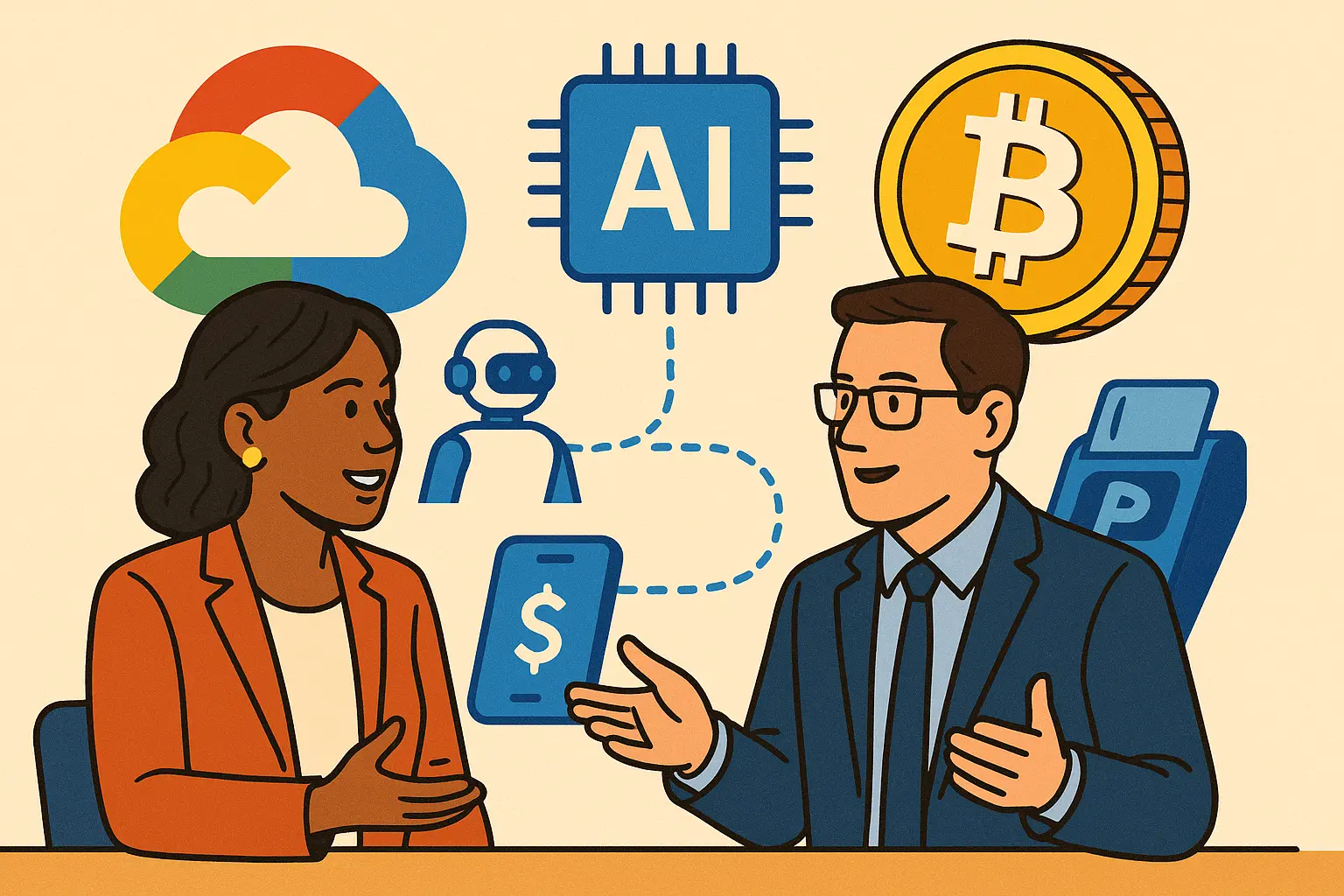
According to CoinDesk’s May 10 report, Richard Widmann, Global Head of Web3 Strategy at Google Cloud, and May Zabaneh, Senior Vice President and General Manager of PayPal’s Crypto business, said at the Consensus Miami conference that AI agents are structurally unable to use traditional finance, and that the next wave of internet commerce will run on the crypto payment rails.
Google AP2 Protocol: Crypto Payment Infrastructure for AI Agents
According to CoinDesk’s report, Widmann said at the conference, “Agents cannot open bank accounts. This isn’t hard—it’s fundamentally impossible.” He noted that technical and regulatory barriers mean traditional financial accounts don’t apply to AI agents, while cryptocurrencies are “an excellent machine-readable payment interface.”
Widmann introduced that AP2, developed by Google, is an open protocol and currently has more than 120 partner organizations, including PayPal. It has been officially donated to the FIDO Foundation. He likened this move to the pattern of donating the x402 internet-native payment standard to the Linux Foundation. He said, “Open dialogue and open standards are what you truly need as the foundation to grow.”
Widmann also pointed out that Google has expanded its cloud key management system (Cloud KMS) platform into the crypto custody space. He said AI agents should hold one of the key shards among two to three, rather than the full private key: “It cannot unilaterally transfer funds or take action.”
PayPal PYUSD Positioning and Current State of Merchant Readiness
According to CoinDesk’s report, Zabaneh said PayPal is viewing AI agents as the next commercial channel after offline, online, and mobile commerce. She also said PayPal’s stablecoin PYUSD is “a very natural programmable payment layer,” especially as commerce moves toward global expansion, AI-native experiences, and tokenized assets.
Zabaneh cited recent PayPal survey data, saying: currently, 95% of merchants have already seen AI agent traffic on their websites, but only 20% of merchants have machine-readable product catalogs. She said, “Merchants need to get ready for the next era,” adding that the logic of this transformation is similar to the shift from physical stores to online shops—merchants need to display products in a format that agents can read.
Responsibility Attribution and Multi-Party Custody Issues
According to CoinDesk’s report, regarding the question of assigning responsibility for AI agents’ commercial actions, Zabaneh said that if an agent makes an incorrect purchasing decision, identifying the responsible party is “an issue that the entire industry must seriously think about.” Widmann, meanwhile, said the core unresolved question is “how to integrate agents into the existing capital markets and infrastructure systems so they can better support today’s payments and trading.”
Frequently Asked Questions
What is Google’s AP2 protocol, and who are the current partners?
According to CoinDesk’s report, Agentic Payments Protocol (AP2) is an open payments protocol for AI agents launched by Google. It currently has more than 120 partner organizations (including PayPal), has been officially donated to the FIDO Foundation, and is positioned as a payments infrastructure standard for AI-agent commerce.
What key data did PayPal’s survey find about merchants’ AI agent traffic?
According to the PayPal survey cited by May Zabaneh, a PayPal executive, at the Consensus conference, 95% of merchants currently have already seen AI agent traffic on their websites, but only 20% of merchants have machine-readable product catalogs.
Why can’t AI agents use traditional bank accounts?
According to statements by Richard Widmann, a Google Cloud executive, at the Consensus conference, AI agents face dual obstacles—both technical and regulatory. “Agents cannot open bank accounts; this isn’t hard—it’s fundamentally impossible.” Therefore, crypto payment rails become their natural machine-readable payment interface.


