Since 2026, the macro narrative has undergone an almost complete reversal. In 2025, the market widely expected the FED to cut rates two to three times in 2026, with ample liquidity viewed as the key driver for the next crypto rally. However, two inflation reports released one after another—April CPI up 3.8% year over year and PPI surging to 6% year over year—completely rewrote this script. As of May 19, CME interest rate futures show the probability of the FED holding rates unchanged in June has reached 99.2%; in Polymarket’s prediction market, the bet weight for “no rate cuts throughout 2026” is close to 66.9%. At such a macro turning point, the crypto market is facing a comprehensive repricing of risk premia.
Why did US inflation accelerate its rebound in spring 2026?
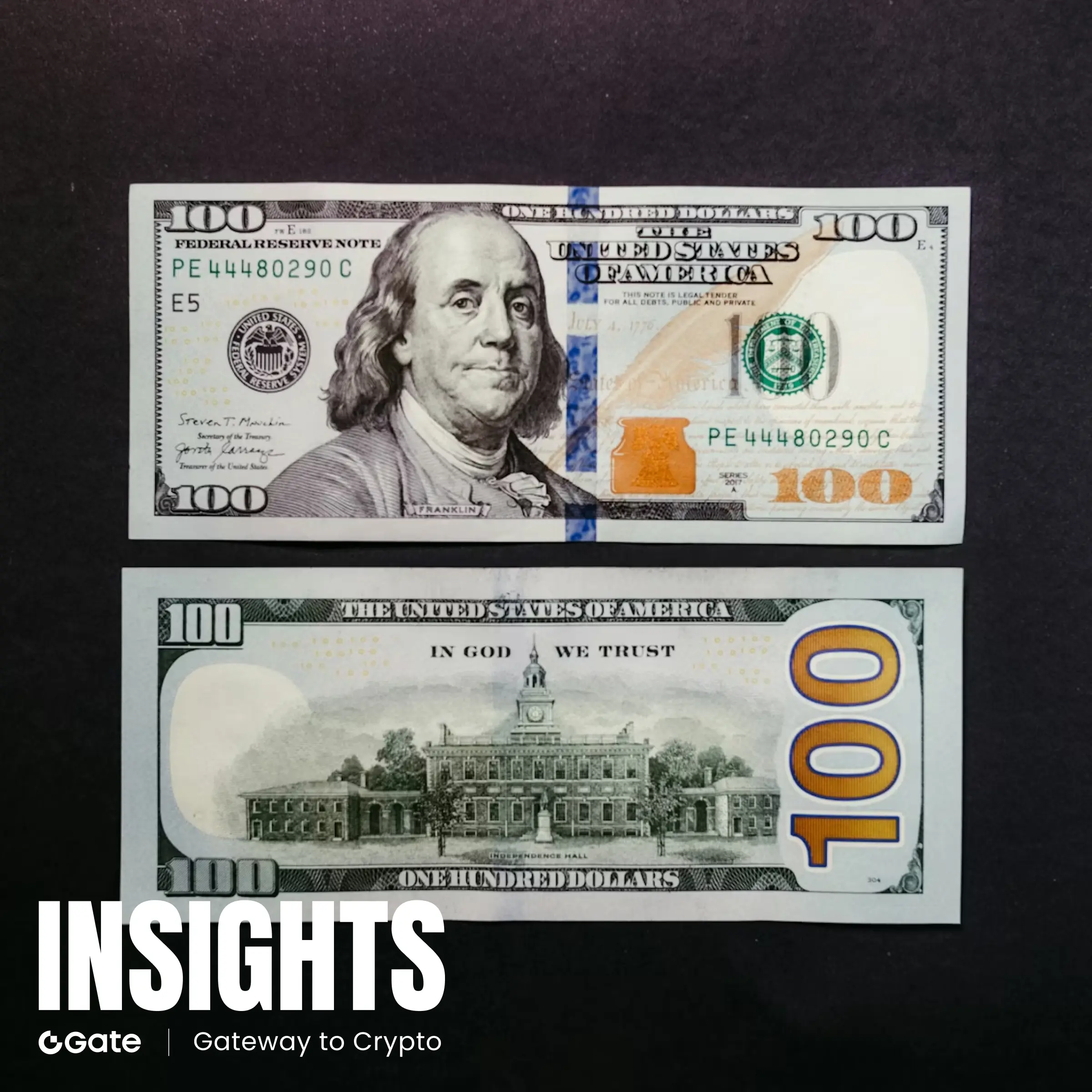
April’s inflation data is not just an isolated reading. US CPI rose 3.8% year over year in April, reaching the highest level since May 2023; core CPI rose 2.8% year over year, the highest since November 2025. PPI rose 6% year over year, with a 1.4% month-over-month increase—both far exceeding economists’ expectations. The combination of the two data points confirms the same fact: upward pricing pressure in the US is accelerating its transmission from the production side to the consumption side.
Energy is the main driver behind this inflation rebound. Brent crude’s average price in April was $102.5 per barrel, up about 53% from the same period last year. The energy price index rose 17.9% year over year that month, contributing more than 40% of the overall CPI increase. Deeper structural pressure is reflected in the services sector: PPI services prices rose 1.2% month over month, the largest increase in four years. Within that, transportation and warehousing services prices rose 5%, and trade services prices rose 2.7%, indicating that energy costs are being systematically transmitted through transportation channels to end products. This means inflation is not a “temporary shock,” but is continuing to permeate downstream along the supply chain.
What pricing do interest rate futures and prediction markets assign to the 2026 policy path?
After the inflation data was released, market pricing quickly completed a directional shift. The CME FedWatch tool shows that as of May 18, the probability of the FED holding rates unchanged in June is 99.2%, while the probability of a cumulative rate cut of 25 bps is only 0.8%. The probability of holding rates unchanged in July is 95.0%, with the probability of a cumulative rate cut only 0.7%, and the probability of a cumulative rate hike of 25 bps has risen to 4.2%. By September, the probability of holding rates unchanged remains as high as 96.1%.
More noteworthy are the forward signals provided by prediction markets (such as Polymarket). By mid-May, this platform’s probability for “no rate cuts throughout 2026” had been priced at between 62% and 67%, rising by more than 15 percentage points over the past month or more. Two very different pricing mechanisms—interest rate futures based on arbitrage pricing and prediction markets based on belief bets—reach a highly consistent directional conclusion: the market is no longer debating “when to cut,” but instead is starting to price “whether to hike.”
How does a 10-year US Treasury yield breaking 4.5% transmit into crypto asset valuations?
The reversal in rate expectations first found an exit route in the bond market. In mid-May, the 10-year US Treasury yield briefly touched 4.6%, while the 30-year US Treasury yield broke above 5.1%, the highest level since 2007. In its latest research report, Soochow Securities decomposed this rise in US Treasury yields into two layers: “distant concerns” and “near-term worries.” Near-term worries come from policy uncertainty following the appointment of Powell as FED chair and the recent inflation data coming in above expectations. The distant concerns are that the market has started pricing expectations of a rate hike in 2027; behind this are resilient US economic data combined with growth expectations driven by the AI industry.
For crypto assets, the impact from rising US Treasury yields is mechanical. Bond yields are the discount-rate denominator in pricing risk assets: when the 10-year real yield of US Treasuries (net of inflation) rises to around 2.1%, the opportunity cost of holding zero-coupon assets like Bitcoin is raised significantly. From an asset allocation perspective, a 5% level risk-free yield means the certain returns that institutional investors give up by holding Bitcoin for a year are already quite substantial.
What tests does Bitcoin’s inflation-hedge narrative face in the current macro environment?
The market’s classic narrative for Bitcoin—its inflation-hedge function at the “digital gold” level—is facing a severe test during 2026’s inflation rebound. One striking comparison: April CPI hit a three-year high, the year-to-date increase in crude oil prices reached 76.9%, and gold—one of the traditional safe-haven assets—rose by more than 8%, while Bitcoin fell by more than 20% over the same period. Geopolitical conflicts should have supported safe-haven demand for hard assets, but the hawkish reassessment by the FED led to a stronger Dollar and higher real yields, causing a rare divergence between Bitcoin and gold.
This divergence reveals a key judgment: Bitcoin’s current market positioning is closer to a “global liquidity-sensitive risk asset” rather than a pure inflation-hedge tool. When real yields rise, gold also faces pressure, but its safe-haven attributes to some extent offset the impact of the rising discount rate; Bitcoin, lacking terminal demand support and with less rigid institutional allocation, suffers a more severe valuation compression in an environment where interest rates rise quickly. Bitcoin is exhibiting “hybrid behavior” somewhere between a “risk asset” and a “fiat-hedge asset,” but the direction of this evolution still depends on where real rates go next.
How does a 5% risk-free yield reshape the relative appeal of crypto assets?
When the 10-year US Treasury yield rises to 4.59% and the 30-year to 5.14%, crypto assets face not only a discount-rate adjustment in valuation models, but also a structural shift at the asset-allocation level.
From an institutional perspective, holding Bitcoin requires bearing annualized volatility above 45% and generates no cash flows; holding US Treasuries with a 5% yield, by contrast, provides predictable coupon income, with volatility only about 6% to 8%. For liability-driven institutions such as pension funds and insurance companies, the difference in this risk-return profile has become difficult to ignore under the current interest-rate environment. As of May 18, 2026, Gate data shows Bitcoin quoted at $77,300 and Ethereum at $2,150; the overall market is still trading in a range under macro pressure.
Even more noteworthy is that the total value locked (TVL) of tokenized US Treasuries has exceeded $15.35 billion, and some crypto-native capital is shifting from high-volatility tokens to on-chain yield-bearing assets. This flow itself is a signal: even within the crypto-native ecosystem, a 5% risk-free yield is changing the priority of asset allocation.
How is market capital undergoing structural reallocation?
Under macro pressure, capital flows show multi-layer structural changes. In the primary market, total crypto venture capital in the first quarter of 2026 was about $1.4 billion, down 22% from the same period in 2025, and the average funding ticket size shrank. In the secondary market, Spot Trading volumes fell by about 28% versus the first-quarter average; Perpetual Contract funding rates remained near zero, indicating weak leverage demand.
Stablecoins also show divergence. Total stablecoin supply remains around $309.9 billion, but Tether first saw supply contraction, while USDC and compliance-oriented new stablecoins (such as USDS, USD1) are accelerating in growth, reflecting capital moving toward more transparent, compliant assets. Stablecoin issuers, as “the largest passive beneficiaries in a high interest-rate environment,” are seeing significant changes in their revenue structure: according to Grayscale research estimates, for every additional 25 bps in short-term interest rates, the stablecoin issuers’ annualized revenue increases by about $190 million.
After the FED leadership change, how will a high-rate environment affect the crypto market in the long run?
In mid-May, Kevin Waugh was formally confirmed as FED chair, with a four-year term. The market’s pricing for this change has already been partly reflected in bond yields. The hawkish background in monetary policy—favoring higher real rates and leaning toward balance-sheet contraction—is the market’s biggest concern. At the same time, traders have started pricing expectations of rate hikes in 2027 rather than simply assuming rates will stay unchanged.
Grayscale research notes that this higher-and-longer rate environment will affect the crypto market from three dimensions: headwinds for trades that hedge against fiat depreciation; accelerated tokenization of fixed-income assets; and stablecoin issuers benefiting from higher rates. Grayscale’s research further summarizes the potential impact of “high rates staying for the long term” on crypto assets as: increased pressure on fiat-depreciation-hedge trades, acceleration of the tokenization of fixed-income assets, and higher income for stablecoin issuers due to rising reserve yields. These three directions will jointly shape the structure of crypto assets over the next 12 to 18 months, rather than only affecting short-term prices.
FAQ
Q1: Is it really completely impossible for the FED to cut rates in June?
As of May 18, 2026, CME interest rate futures show the probability of the FED holding rates unchanged in June is 99.2%, and the probability of a rate cut is only 0.8%. While it cannot be asserted that it is “completely impossible” in an absolute sense, market pricing has compressed that possibility to an extremely low level.
Q2: How credible is Polymarket’s “66.9% probability of zero rate cuts”?
Prediction markets and interest rate futures are two different pricing mechanisms: the former are based on belief bets, and the latter are based on arbitrage constraints. Both are highly consistent directionally—both indicate a very low probability of rate cuts in 2026—so they can serve as an important reference signal. But any market pricing contains uncertainty, and the outcome will still depend on inflation data and the FED’s policy communications.
Q3: How long will the core drivers of the inflation rebound last?
The core driver of the April inflation rebound is rising energy prices, rooted in supply chain disruptions caused by geopolitical conflicts. As long as the Strait of Hormuz remains unsafe for navigation and has not been restored, energy costs will be hard to fall meaningfully, so inflation pressure will likely persist.
Q4: Can Bitcoin still be used as an inflation-hedge tool?
In the 2026 inflation rebound, Bitcoin’s drawdown (more than 20%) diverged sharply from gold’s rise (about 8%), indicating that Bitcoin’s current market positioning is closer to a liquidity-sensitive risk asset rather than an inflation-hedge tool. Whether this feature changes over time depends on the path of real interest rates and shifts in institutional allocation structure.
Q5: What does the FED leadership change mean for the crypto market?
The market broadly interprets Kevin Waugh’s monetary policy preference as hawkish—favoring higher real rates and leaning toward balance-sheet contraction. This suggests that primary-market financing conditions may remain tighter and valuation pressure in the secondary market may persist for the long term, but fixed-income asset tokenization and stablecoin issuers may benefit in a higher-rate environment.


