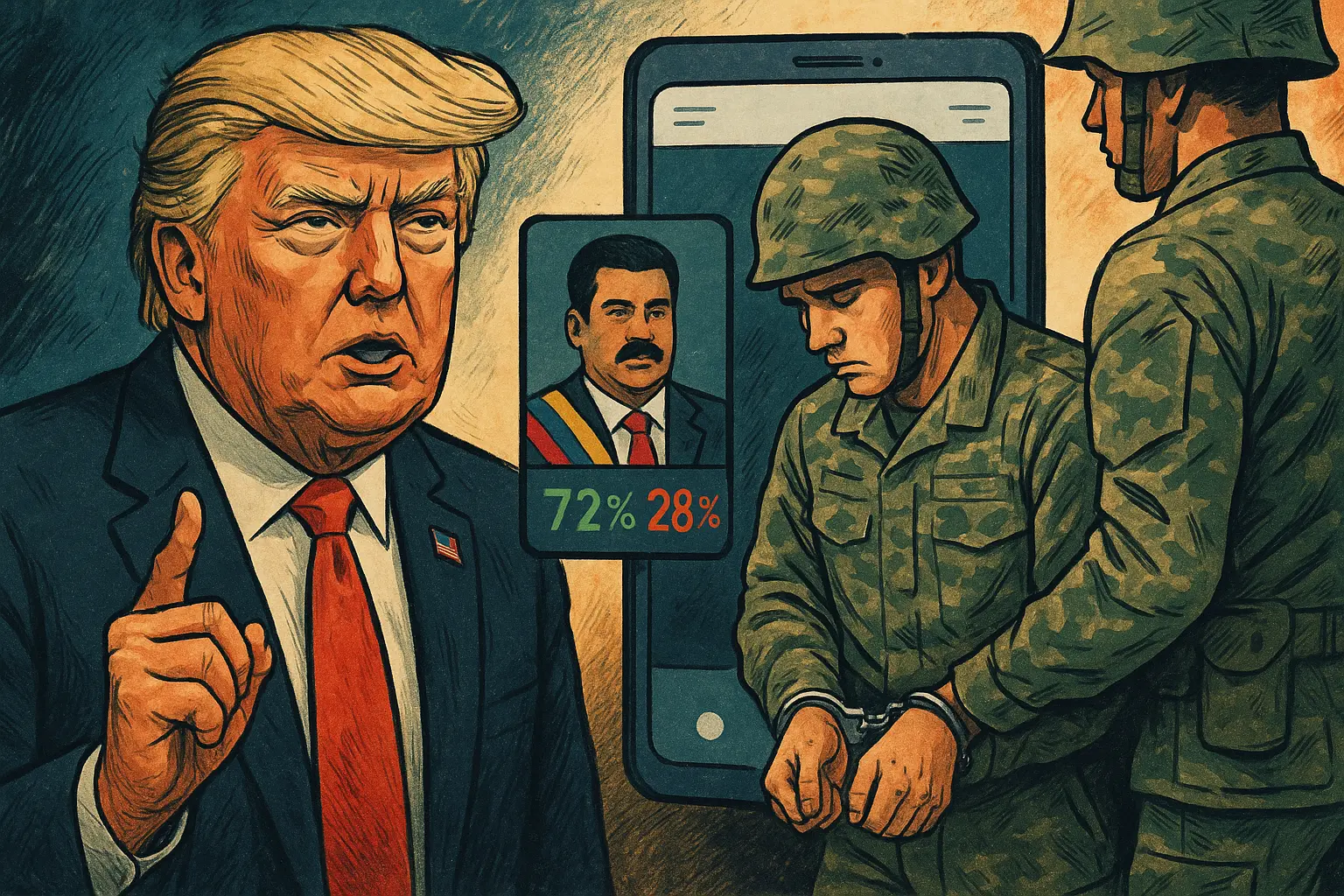
On April 23, the U.S. Department of Justice arrested a U.S. Army soldier, alleging that he used confidential information to place bets on the prediction market Polymarket on whether Venezuelan President Nicolás Maduro would be arrested. The bets ultimately yielded more than $400k on an initial wager of over $330,000. U.S. President Trump said Thursday that he will investigate federal employees placing bets on sports betting platforms, criticizing that “the world has turned into a casino.”
U.S. Army Soldier Case: Front-Running Bets Before the Policy Announcement
According to disclosures in the case, the involved soldier participated in the operation to capture Maduro and, hours before Trump announced the relevant action, placed bets on Polymarket totaling more than $330,000 that Maduro would be ousted, ultimately translating into profits of more than $400k. The U.S. Department of Justice has characterized the case as insider trading involving the use of confidential government information, and it is already in the judicial process.
Against this backdrop, Polymarket’s geopolitical betting market saw its weekly volume surge to $560 million, becoming one of the fastest-growing categories on the platform.
The “Perfect Timing” in Commodity Markets: Funds Running Ahead of the Policy Announcement
The context of this case is not an isolated event. Multiple key time markers indicate that, minutes to hours before Trump announced major policy decisions, abnormal volumes of trading appeared in commodity and stock index futures markets:
About three hours before Trump announced a ceasefire on April 7, within a two-minute window around 15:45 p.m. U.S. Eastern Time, more than 15 million barrels of oil futures (about $1.7 billion) changed hands, after which oil prices plunged and the stock market rebounded. Sixteen minutes before Trump announced the postponement of strikes against Iran on March 23, billions of dollars in oil and stock index futures had already changed hands.
Several members of Congress pointed directly to the related trades as “difficult to explain with luck,” and the U.S. Commodity Futures Trading Commission (CFTC) has launched an investigation under political pressure.
The White House’s Contradictory Stance: Deny, But Ban
The White House denied that any officials profited from insider information, stressing that there is no evidence showing government personnel violated regulations, but at the same time it has issued internal warnings prohibiting trading using nonpublic information. The inherent contradiction in this position has drawn widespread skepticism.
Frequently Asked Questions
What is Polymarket, and why has it become a potential tool for insider trading?
Polymarket is a blockchain-based, decentralized prediction market platform that allows users to bet with cryptocurrencies on the outcomes of various events, including political and geopolitical events. Because the platform lacks strict KYC and trading surveillance mechanisms found in traditional financial markets, people with nonpublic information can, in theory, profit by placing bets before an event becomes public, in a relatively low-risk way.
Does the CFTC have the authority to regulate insider trading in prediction markets?
The CFTC’s traditional regulatory scope is commodity futures and derivatives markets, and there is a legal gray area regarding direct regulatory authority over decentralized crypto prediction markets. This case highlights the limitations of the existing regulatory framework, and it is also part of the broader regulatory debate reflected in the Kalshi v. state gambling regulations lawsuit.
Does the Trump administration’s stance toward prediction markets contain internal contradictions?
Trump’s stance does contain contradictions: on one hand, he publicly criticized that “the world has turned into a casino” and vowed to investigate federal employees; on the other hand, his administration previously took a relatively open attitude toward the legalization of prediction markets, and Trump’s camp has also been flagged in the past for benefiting from the media impact of prediction markets. The exposure of the U.S. Army soldier case has made this contradiction even harder to avoid.


