

Trade
Basic
Futures
Futures
Hundreds of contracts settled in USDT or BTC
TradFi
Gold
Trade global traditional assets with USDT in one place
Options
Hot
Trade European-style vanilla options
Unified Account
Maximize your capital efficiency
Demo Trading
Futures Kickoff
Get prepared for your futures trading
Futures Events
Participate in events to win generous rewards
Demo Trading
Use virtual funds to experience risk-free trading
Earn
Launch
CandyDrop
Collect candies to earn airdrops
Launchpool
Quick staking, earn potential new tokens
HODLer Airdrop
Hold GT and get massive airdrops for free
Launchpad
Be early to the next big token project
Alpha Points
Trade on-chain assets and enjoy airdrop rewards!
Futures Points
Earn futures points and claim airdrop rewards
Investment
Simple Earn
Earn interests with idle tokens
Auto-Invest
Auto-invest on a regular basis
Dual Investment
Buy low and sell high to take profits from price fluctuations
Soft Staking
Earn rewards with flexible staking
Crypto Loan
0 Fees
Pledge one crypto to borrow another
Lending Center
One-stop lending hub
VIP Wealth Hub
Customized wealth management empowers your assets growth
Private Wealth Management
Customized asset management to grow your digital assets
Quant Fund
Top asset management team helps you profit without hassle
Staking
Stake cryptos to earn in PoS products
Smart Leverage
New
No forced liquidation before maturity, worry-free leveraged gains
GUSD Minting
Use USDT/USDC to mint GUSD for treasury-level yields

More




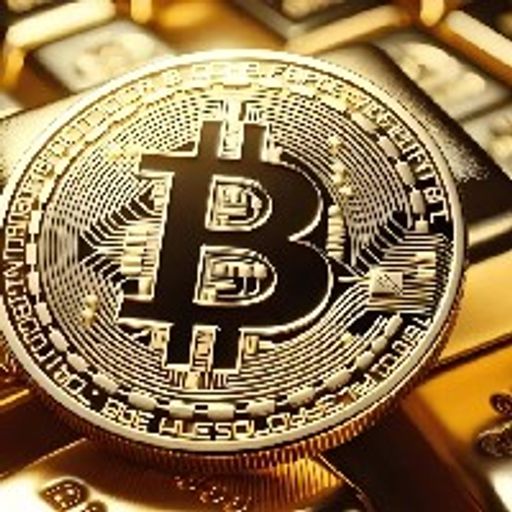


Pundit: Satoshi Vision for Bitcoin Looks a Lot Like XRP Today
@media only screen and (min-width: 0px) and (min-height: 0px) { div[id^=“wrapper-sevio-6a57f7be-8f6e-4deb-ae2c-5477f86653a5”]{width:320px;height:100px;} } @media only screen and (min-width: 728px) and (min-height: 0px) { div[id^=“wrapper-sevio-6a57f7be-8f6e-4deb-ae2c-5477f86653a5”]{width:728px;height:90px;} }
Crypto innovation often reveals its meaning years after the original ideas take shape. What begins as a bold experiment can evolve in unexpected directions as adoption grows and trade-offs harden into design choices.
Today, renewed debate around Bitcoin’s original mission has reopened a familiar question: did the first cryptocurrency ultimately move away from the vision that inspired it?
That question resurfaced after commentary from crypto pundit Xaif, who recently highlighted the striking similarities between Satoshi Nakamoto’s early goals for Bitcoin and the functionality XRP delivers today. His remarks have fueled discussion at a moment when speed, cost efficiency, and real-world usability once again dominate market priorities.
Satoshi’s Early Vision for Digital Cash
Satoshi Nakamoto described Bitcoin as a peer-to-peer electronic cash system. The design emphasized fast settlement, minimal fees, and the ability to send value directly without intermediaries. In Bitcoin’s earliest years, the network largely met those goals, as transactions processed quickly and cheaply.
As adoption expanded, however, limitations became more visible. Block space grew scarce, transaction fees increased, and confirmation times slowed during periods of congestion. Bitcoin gradually shifted toward a store-of-value narrative, prioritizing security and decentralization over transactional efficiency.
How XRP Matches the Payment-First Model
XRP emerged with a different set of priorities. The XRP Ledger processes transactions in seconds, maintains consistently low fees, and supports high throughput without reliance on layered scaling solutions. These features align closely with the characteristics Satoshi originally outlined for a functional digital payment system.
Xaif’s observation centers on this contrast. While Bitcoin adapted to demand by redefining its role, XRP maintained a payments-first architecture from inception. Financial institutions now use XRP-related infrastructure for cross-border settlements, liquidity optimization, and near-instant value transfer.
Diverging Paths, Not Competing Origins
Recent online speculation has blended technical comparisons with broader narratives and political intrigue. However, no verified evidence supports claims of coordinated intent or hidden connections between Bitcoin’s creation and XRP’s development. What can be verified is the outcome of two very different design philosophies.
Bitcoin chose maximal decentralization and predictable monetary policy, even as transaction efficiency declined. XRP accepted a different balance of trade-offs to deliver speed and affordability at scale. Each network is optimized for a distinct purpose rather than converging on a single ideal.
Coincidence or Functional Convergence?
XRP did not emerge to replace Bitcoin, but it does fulfill many requirements Bitcoin once sought to satisfy. That convergence invites reflection rather than conspiracy. Innovation often progresses through parallel solutions that address unresolved limitations.
As the market increasingly emphasizes utility alongside narrative, comparisons between Bitcoin’s origins and XRP’s present capabilities will likely persist. Whether coincidence or evolution, the contrast underscores a deeper truth: the original vision for digital cash did not disappear—it may have simply found a different form.
Disclaimer*: This content is meant to inform and should not be considered financial advice. The views expressed in this article may include the author’s personal opinions and do not represent Times Tabloid’s opinion. Readers are urged to do in-depth research before making any investment decisions. Any action taken by the reader is strictly at their own risk. Times Tabloid is not responsible for any financial losses.*