#CryptoSurvivalGuide
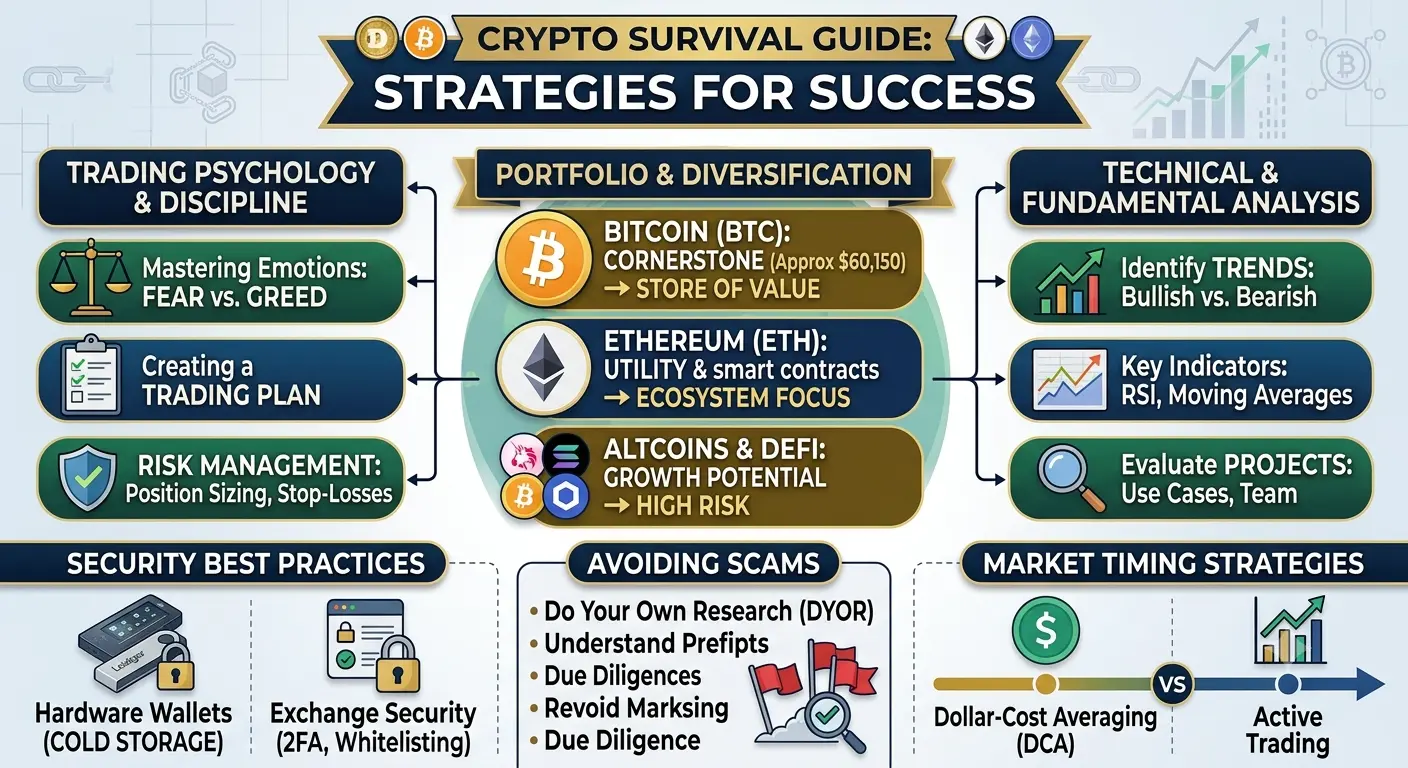
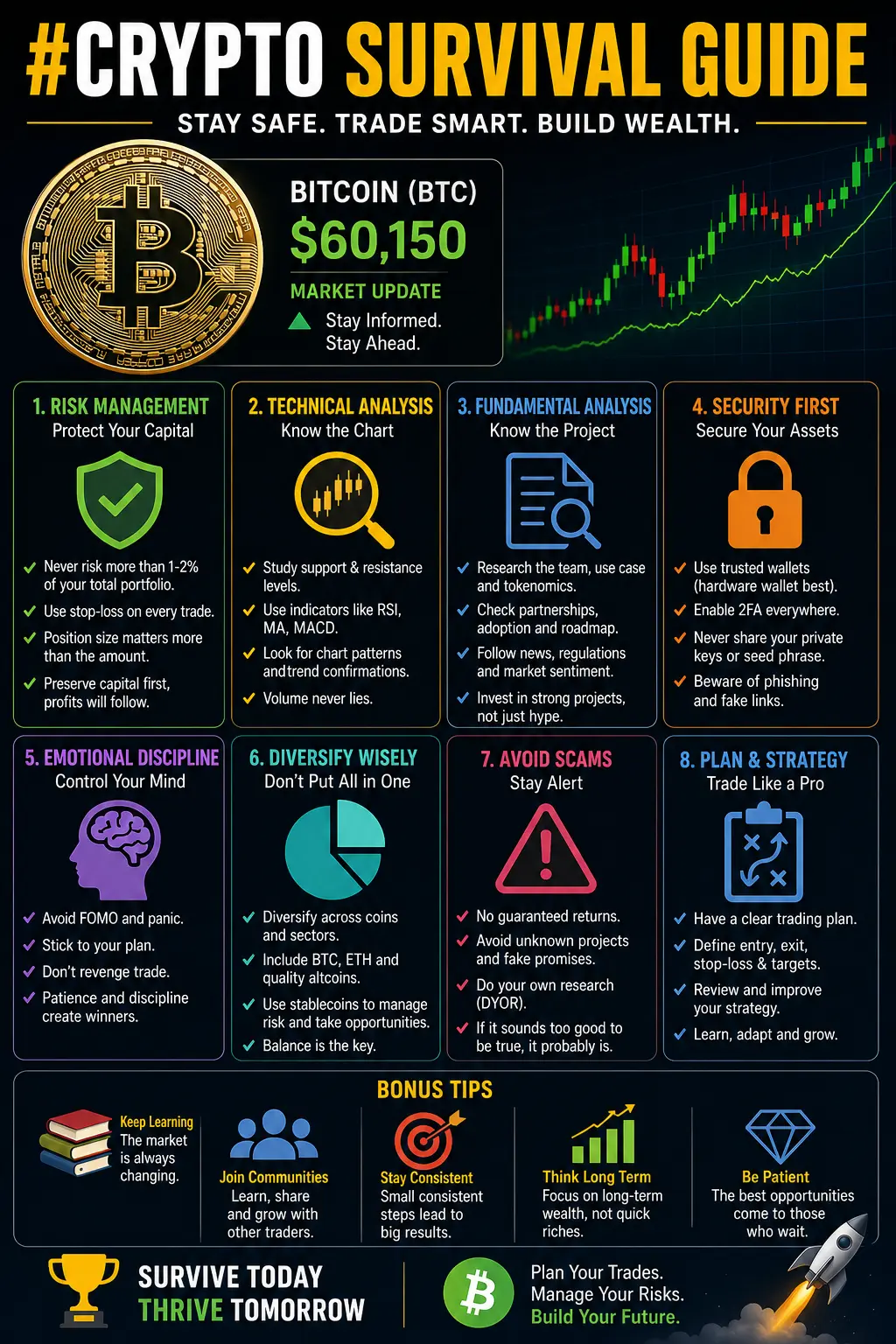
The cryptocurrency market represents one of the most dynamic and potentially rewarding financial landscapes in modern history. With Bitcoin currently trading at $60,150, the market continues to attract both seasoned investors and newcomers seeking financial growth. However, navigating this volatile terrain requires knowledge, discipline, and a comprehensive understanding of risk management principles.
Understanding the Crypto Market Landscape
The cryptocurrency market operates 24/7, unlike traditional financial markets, creating unique opportunities and challenges. Bitcoin, as the pioneer digital currency, often sets the tone for the entire market. When BTC moves, altcoins typically follow, making it essential to understand market correlations. The current price of $60,150 places Bitcoin in a critical zone where technical analysis becomes paramount for trading decisions.
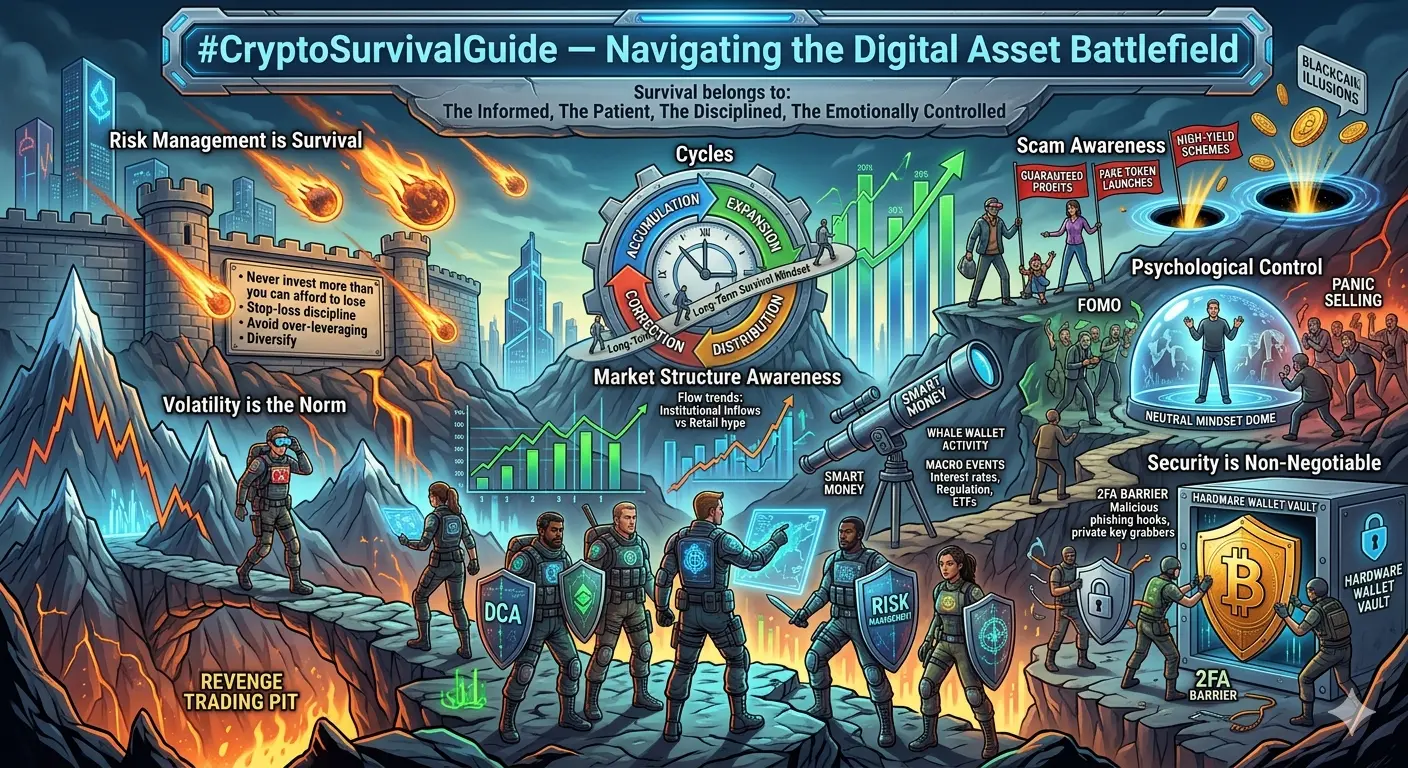
Market cycles in cryptocurrency typically follow patterns of accumulation, markup, distribution, and markdown phases. Understanding where we are in these cycles helps inform better trading decisions. Currently, with Bitcoin testing key support levels, traders must exercise caution while remaining alert to potential opportunities.
Risk Management: The Foundation of Survival
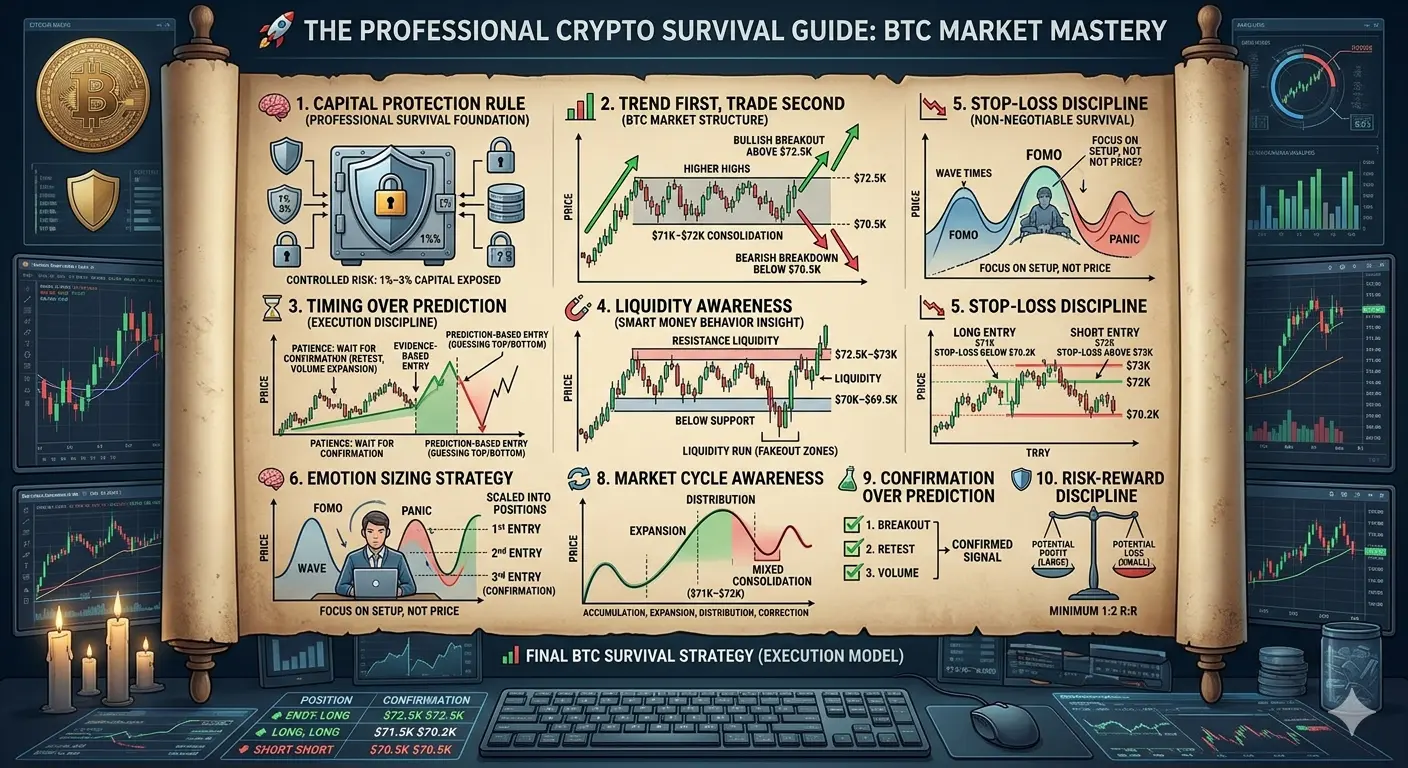
Risk management stands as the most critical component of successful cryptocurrency trading. Without proper risk controls, even the most skilled traders can face catastrophic losses. The fundamental principle is simple: never risk more than you can afford to lose. Professional traders typically risk only 1-2% of their total portfolio on any single trade.
Position sizing represents a crucial aspect of risk management. Rather than investing your entire capital in one asset, diversify across multiple cryptocurrencies while maintaining appropriate position sizes. This approach ensures that a single adverse move doesn't devastate your portfolio. Calculate your position sizes based on your stop-loss distance and the percentage of capital you're willing to risk.
Stop-loss orders serve as your primary defense mechanism in crypto trading. These automated orders sell your position when prices reach predetermined levels, limiting potential losses. Set stop-losses based on technical support levels, percentage-based thresholds, or volatility metrics. Never move your stop-loss further away from your entry point once set, as this defeats the purpose of risk management.
Technical Analysis for Better Decision Making
Technical analysis provides traders with tools to identify potential entry and exit points. Key indicators include moving averages, which smooth price data to identify trends; the Relative Strength Index (RSI), which measures momentum and potential overbought or oversold conditions; and support and resistance levels, which represent price zones where buying or selling pressure has historically emerged.
For Bitcoin at $60,150, monitoring the 200-day moving average, key Fibonacci retracement levels, and volume profiles becomes essential. These technical tools help identify whether current price action represents a buying opportunity or a warning sign for further decline.
Chart patterns also provide valuable insights. Bullish patterns like ascending triangles, cup and handle formations, and double bottoms suggest potential upward moves. Conversely, bearish patterns including head and shoulders, descending triangles, and double tops warn of potential declines. Learning to recognize these patterns takes time but significantly improves trading outcomes.
Fundamental Analysis and Market Sentiment
Beyond technical indicators, understanding the fundamental factors driving cryptocurrency prices proves invaluable. Bitcoin's value proposition includes its limited supply of 21 million coins, institutional adoption trends, regulatory developments, and macroeconomic factors affecting global liquidity.
Market sentiment plays an outsized role in crypto price movements. Social media trends, news cycles, and fear and greed indices can drive prices far beyond what fundamentals might suggest. Monitoring sentiment indicators helps traders identify when markets become excessively bullish or bearish, often signaling potential reversals.
Keep track of major institutional announcements, regulatory changes, and technological developments. Events like ETF approvals, central bank policies, and network upgrades can significantly impact prices. Staying informed allows you to anticipate market moves rather than simply react to them.
Security Best Practices for Asset Protection
Protecting your cryptocurrency holdings requires implementing robust security measures. Exchange security begins with choosing reputable platforms with strong track records. Enable two-factor authentication on all accounts, use unique and complex passwords, and consider whitelisting withdrawal addresses for additional protection.
Wallet security represents another critical consideration. Hardware wallets provide the highest level of security for long-term holdings by keeping private keys offline. For active trading, use hot wallets only for funds needed immediately, keeping the majority of holdings in cold storage. Never share your private keys or seed phrases with anyone, and store backup phrases in secure, offline locations.
Beware of phishing attempts, fake websites, and social engineering attacks. Verify URLs carefully before entering credentials, and never click suspicious links in emails or messages. Scammers constantly evolve their tactics, making vigilance essential for asset protection.
Emotional Discipline and Trading Psychology
Successful trading requires mastering your emotions. Fear and greed drive most trading mistakes, causing traders to buy at tops and sell at bottoms. Develop a trading plan with clear rules for entries, exits, and position sizes, then follow it consistently regardless of emotional impulses.
Avoid revenge trading after losses, which often leads to further mistakes. Accept that losses are part of trading and focus on maintaining positive expectancy over time. Similarly, don't let winning trades inflate your confidence to dangerous levels. Stay humble, stick to your system, and remember that the market can humble even experienced traders.
Keeping a trading journal helps identify patterns in your decision-making. Record your reasons for entering trades, emotional states, and outcomes. Review this journal regularly to identify strengths and weaknesses in your approach.
Portfolio Diversification Strategies
While Bitcoin remains the cornerstone of most crypto portfolios, diversification across different asset classes can improve risk-adjusted returns. Consider allocating portions of your portfolio to large-cap cryptocurrencies like Ethereum, which offers smart contract functionality; mid-cap projects with strong fundamentals; and small allocations to emerging tokens with high potential but higher risk.
Stablecoins serve important roles in crypto portfolios, providing stability during volatile periods and enabling quick deployment of capital when opportunities arise. However, choose stablecoins backed by transparent reserves and avoid those with questionable backing.
Consider the correlation between different cryptocurrencies when diversifying. Many altcoins move in tandem with Bitcoin, so true diversification may require looking beyond crypto into traditional assets or different sectors within the crypto ecosystem like DeFi, NFTs, or layer-2 solutions.
Market Timing and Entry Strategies
Timing entries and exits significantly impacts trading profitability. Dollar-cost averaging represents an excellent strategy for beginners, involving regular purchases regardless of price. This approach removes the stress of timing the market and smooths out volatility over time.
For active traders, various entry strategies exist. Breakout trading involves entering when prices move above resistance levels with volume confirmation. Pullback trading waits for prices to retreat to support levels before entering in the direction of the trend. Range trading works in sideways markets, buying at support and selling at resistance.
Regardless of strategy, patience proves essential. Not every market condition presents good opportunities, and sometimes the best trade is no trade. Wait for setups that meet your criteria rather than forcing trades out of boredom or FOMO.
Understanding and Avoiding Scams
The crypto space unfortunately attracts numerous scams and fraudulent schemes. Ponzi schemes promising guaranteed returns, fake ICOs, phishing attacks, and pump-and-dump groups target unsuspecting investors. Remember that if something sounds too good to be true, it almost certainly is.
Conduct thorough research before investing in any project. Verify team credentials, examine the whitepaper for technical feasibility, check for code audits, and assess community engagement. Legitimate projects welcome scrutiny, while scams often rely on pressure tactics and vague promises.
Be particularly cautious of projects promising guaranteed returns, those lacking transparent team information, and those with anonymous developers unless they have established reputations. The crypto community generally polices itself, so searching for project names plus terms like "scam" or "review" often reveals red flags.
Regulatory Considerations and Compliance
Cryptocurrency regulations vary significantly across jurisdictions and continue evolving. Understanding the regulatory environment in your country helps ensure compliance and protects you from potential legal issues. Keep records of all transactions for tax purposes, as most jurisdictions require reporting of cryptocurrency gains.
Regulatory developments can significantly impact prices and market access. Stay informed about proposed legislation, exchange licensing requirements, and tax reporting obligations. While regulation may seem burdensome, increased clarity often brings institutional investment and market stability.
Long-Term vs. Short-Term Trading Approaches
Decide whether you're a trader or investor, as these require different mindsets and strategies. Investors focus on long-term fundamentals, holding through volatility with conviction in their thesis. Traders capitalize on shorter-term price movements, requiring more active management and technical skills.
Both approaches can succeed, but mixing them without clear distinctions often leads to poor results. If you're primarily an investor, resist the urge to panic sell during normal corrections. If you're a trader, don't hold losing positions hoping they'll recover, as this turns trades into unintended investments.
Building a Sustainable Trading Career
Sustainable success in crypto trading requires continuous learning and adaptation. Markets evolve, strategies that worked in the past may fail in new conditions, and technological developments constantly create new opportunities and risks. Commit to ongoing education through books, courses, and engagement with trading communities.
Start small and scale gradually as you gain experience and confidence. Many successful traders blew up multiple small accounts before finding consistency. Treat early losses as tuition in the expensive school of trading experience, but never risk amounts that would cause financial hardship.
Network with other traders to share insights and learn from their experiences. However, be selective about whose advice you follow, as many self-proclaimed experts lack real trading success. Focus on learning principles rather than following specific trade calls.@Gate_Square
The cryptocurrency market represents one of the most dynamic and potentially rewarding financial landscapes in modern history. With Bitcoin currently trading at $60,150, the market continues to attract both seasoned investors and newcomers seeking financial growth. However, navigating this volatile terrain requires knowledge, discipline, and a comprehensive understanding of risk management principles.
Understanding the Crypto Market Landscape
The cryptocurrency market operates 24/7, unlike traditional financial markets, creating unique opportunities and challenges. Bitcoin, as the pioneer digital currency, often sets the tone for the entire market. When BTC moves, altcoins typically follow, making it essential to understand market correlations. The current price of $60,150 places Bitcoin in a critical zone where technical analysis becomes paramount for trading decisions.
Market cycles in cryptocurrency typically follow patterns of accumulation, markup, distribution, and markdown phases. Understanding where we are in these cycles helps inform better trading decisions. Currently, with Bitcoin testing key support levels, traders must exercise caution while remaining alert to potential opportunities.
Risk Management: The Foundation of Survival
Risk management stands as the most critical component of successful cryptocurrency trading. Without proper risk controls, even the most skilled traders can face catastrophic losses. The fundamental principle is simple: never risk more than you can afford to lose. Professional traders typically risk only 1-2% of their total portfolio on any single trade.
Position sizing represents a crucial aspect of risk management. Rather than investing your entire capital in one asset, diversify across multiple cryptocurrencies while maintaining appropriate position sizes. This approach ensures that a single adverse move doesn't devastate your portfolio. Calculate your position sizes based on your stop-loss distance and the percentage of capital you're willing to risk.
Stop-loss orders serve as your primary defense mechanism in crypto trading. These automated orders sell your position when prices reach predetermined levels, limiting potential losses. Set stop-losses based on technical support levels, percentage-based thresholds, or volatility metrics. Never move your stop-loss further away from your entry point once set, as this defeats the purpose of risk management.
Technical Analysis for Better Decision Making
Technical analysis provides traders with tools to identify potential entry and exit points. Key indicators include moving averages, which smooth price data to identify trends; the Relative Strength Index (RSI), which measures momentum and potential overbought or oversold conditions; and support and resistance levels, which represent price zones where buying or selling pressure has historically emerged.
For Bitcoin at $60,150, monitoring the 200-day moving average, key Fibonacci retracement levels, and volume profiles becomes essential. These technical tools help identify whether current price action represents a buying opportunity or a warning sign for further decline.
Chart patterns also provide valuable insights. Bullish patterns like ascending triangles, cup and handle formations, and double bottoms suggest potential upward moves. Conversely, bearish patterns including head and shoulders, descending triangles, and double tops warn of potential declines. Learning to recognize these patterns takes time but significantly improves trading outcomes.
Fundamental Analysis and Market Sentiment
Beyond technical indicators, understanding the fundamental factors driving cryptocurrency prices proves invaluable. Bitcoin's value proposition includes its limited supply of 21 million coins, institutional adoption trends, regulatory developments, and macroeconomic factors affecting global liquidity.
Market sentiment plays an outsized role in crypto price movements. Social media trends, news cycles, and fear and greed indices can drive prices far beyond what fundamentals might suggest. Monitoring sentiment indicators helps traders identify when markets become excessively bullish or bearish, often signaling potential reversals.
Keep track of major institutional announcements, regulatory changes, and technological developments. Events like ETF approvals, central bank policies, and network upgrades can significantly impact prices. Staying informed allows you to anticipate market moves rather than simply react to them.
Security Best Practices for Asset Protection
Protecting your cryptocurrency holdings requires implementing robust security measures. Exchange security begins with choosing reputable platforms with strong track records. Enable two-factor authentication on all accounts, use unique and complex passwords, and consider whitelisting withdrawal addresses for additional protection.
Wallet security represents another critical consideration. Hardware wallets provide the highest level of security for long-term holdings by keeping private keys offline. For active trading, use hot wallets only for funds needed immediately, keeping the majority of holdings in cold storage. Never share your private keys or seed phrases with anyone, and store backup phrases in secure, offline locations.
Beware of phishing attempts, fake websites, and social engineering attacks. Verify URLs carefully before entering credentials, and never click suspicious links in emails or messages. Scammers constantly evolve their tactics, making vigilance essential for asset protection.
Emotional Discipline and Trading Psychology
Successful trading requires mastering your emotions. Fear and greed drive most trading mistakes, causing traders to buy at tops and sell at bottoms. Develop a trading plan with clear rules for entries, exits, and position sizes, then follow it consistently regardless of emotional impulses.
Avoid revenge trading after losses, which often leads to further mistakes. Accept that losses are part of trading and focus on maintaining positive expectancy over time. Similarly, don't let winning trades inflate your confidence to dangerous levels. Stay humble, stick to your system, and remember that the market can humble even experienced traders.
Keeping a trading journal helps identify patterns in your decision-making. Record your reasons for entering trades, emotional states, and outcomes. Review this journal regularly to identify strengths and weaknesses in your approach.
Portfolio Diversification Strategies
While Bitcoin remains the cornerstone of most crypto portfolios, diversification across different asset classes can improve risk-adjusted returns. Consider allocating portions of your portfolio to large-cap cryptocurrencies like Ethereum, which offers smart contract functionality; mid-cap projects with strong fundamentals; and small allocations to emerging tokens with high potential but higher risk.
Stablecoins serve important roles in crypto portfolios, providing stability during volatile periods and enabling quick deployment of capital when opportunities arise. However, choose stablecoins backed by transparent reserves and avoid those with questionable backing.
Consider the correlation between different cryptocurrencies when diversifying. Many altcoins move in tandem with Bitcoin, so true diversification may require looking beyond crypto into traditional assets or different sectors within the crypto ecosystem like DeFi, NFTs, or layer-2 solutions.
Market Timing and Entry Strategies
Timing entries and exits significantly impacts trading profitability. Dollar-cost averaging represents an excellent strategy for beginners, involving regular purchases regardless of price. This approach removes the stress of timing the market and smooths out volatility over time.
For active traders, various entry strategies exist. Breakout trading involves entering when prices move above resistance levels with volume confirmation. Pullback trading waits for prices to retreat to support levels before entering in the direction of the trend. Range trading works in sideways markets, buying at support and selling at resistance.
Regardless of strategy, patience proves essential. Not every market condition presents good opportunities, and sometimes the best trade is no trade. Wait for setups that meet your criteria rather than forcing trades out of boredom or FOMO.
Understanding and Avoiding Scams
The crypto space unfortunately attracts numerous scams and fraudulent schemes. Ponzi schemes promising guaranteed returns, fake ICOs, phishing attacks, and pump-and-dump groups target unsuspecting investors. Remember that if something sounds too good to be true, it almost certainly is.
Conduct thorough research before investing in any project. Verify team credentials, examine the whitepaper for technical feasibility, check for code audits, and assess community engagement. Legitimate projects welcome scrutiny, while scams often rely on pressure tactics and vague promises.
Be particularly cautious of projects promising guaranteed returns, those lacking transparent team information, and those with anonymous developers unless they have established reputations. The crypto community generally polices itself, so searching for project names plus terms like "scam" or "review" often reveals red flags.
Regulatory Considerations and Compliance
Cryptocurrency regulations vary significantly across jurisdictions and continue evolving. Understanding the regulatory environment in your country helps ensure compliance and protects you from potential legal issues. Keep records of all transactions for tax purposes, as most jurisdictions require reporting of cryptocurrency gains.
Regulatory developments can significantly impact prices and market access. Stay informed about proposed legislation, exchange licensing requirements, and tax reporting obligations. While regulation may seem burdensome, increased clarity often brings institutional investment and market stability.
Long-Term vs. Short-Term Trading Approaches
Decide whether you're a trader or investor, as these require different mindsets and strategies. Investors focus on long-term fundamentals, holding through volatility with conviction in their thesis. Traders capitalize on shorter-term price movements, requiring more active management and technical skills.
Both approaches can succeed, but mixing them without clear distinctions often leads to poor results. If you're primarily an investor, resist the urge to panic sell during normal corrections. If you're a trader, don't hold losing positions hoping they'll recover, as this turns trades into unintended investments.
Building a Sustainable Trading Career
Sustainable success in crypto trading requires continuous learning and adaptation. Markets evolve, strategies that worked in the past may fail in new conditions, and technological developments constantly create new opportunities and risks. Commit to ongoing education through books, courses, and engagement with trading communities.
Start small and scale gradually as you gain experience and confidence. Many successful traders blew up multiple small accounts before finding consistency. Treat early losses as tuition in the expensive school of trading experience, but never risk amounts that would cause financial hardship.
Network with other traders to share insights and learn from their experiences. However, be selective about whose advice you follow, as many self-proclaimed experts lack real trading success. Focus on learning principles rather than following specific trade calls.@Gate_Square