















#GateSquareAprilPostingChallenge
The Market Is Bleeding. Most People Are About to Make the Wrong Move.
Fear & Greed Index sits at 11 — Extreme Fear. BTC is trading at $66,852. ETH is holding $2,050 by a thread. The crowd is panicking, liquidations are stacking, and ETF outflows have not stopped for weeks. And somewhere inside all that noise, the most dangerous and most profitable setups of the entire cycle are forming in complete silence.
This post is not for people who want to feel comfortable about their portfolio. This is for people who want to understand what is actually happening, why it is happening, and what permanently separates traders who survive sustained bear pressure from the ones who get carried out with nothing left.
PART 1 — THE MACRO TRAP NOBODY IS NAMING
Oil has broken $103. Geopolitical friction is tightening the global supply chain at a pace that traditional markets have not fully priced. The Federal Reserve is cornered — it cannot cut aggressively without reigniting inflation that has barely been tamed, and it cannot hold rates at restriction indefinitely without systematically crushing risk appetite across every asset class, crypto included. This is not a crypto problem dressed in macro clothing. This is a structural liquidity problem and crypto is simply one of the first places that liquidity exits when conditions deteriorate.
When institutional financial conditions compress, capital does not rotate into Bitcoin. It retreats to cash, short-duration treasuries, and hard assets. Tether Gold sitting in today's hot list at $4,638 while BTC and ETH fight to maintain ground tells you precisely where real institutional conviction is positioned right now. That signal is not subtle.
The defining mistake retail traders make in this environment is misreading a bounce as a trend reversal. They see BTC hold $66,000 and call it support. They see ETH stabilize and call it a base. They enter long. The market absorbs their liquidity. Then it continues in the original direction. Bounces inside a macro-pressured regime are traps wearing the costume of opportunity. You do not get to celebrate a floor until you have respected the ceiling above it.
PART 2 — WHAT THE ORDER BOOK IS ACTUALLY COMMUNICATING
The market currently has liquidity concentrated in two precise zones. On the upside, $69,000 to $70,100 — this is where short-side stop losses are densely clustered and where trapped longs from the previous rally are bleeding. On the downside, $65,500 remains the structural floor that has been tested and provisionally held multiple times. This is not random price behavior. This is the fingerprint of deliberate institutional positioning.
Large capital does not move markets accidentally. The mechanics are consistent across cycles — accumulate beneath visible structure, engineer volatility to systematically flush undercapitalized positions, then distribute into the retail FOMO that follows every convincing bounce. The 6,000-plus BTC that flowed into exchanges from anonymous wallets over the past 48 hours is not routine. On-chain behavior that precedes distribution phases consistently masquerades as consolidation when viewed from the outside. It looks calm because the violence is being prepared, not executed yet.
The question you need to be asking is not whether BTC will go up. The question is who is positioned, in which direction, and with what size — when the liquidity sitting at those two zones finally gets triggered. That is the only question that pays.
PART 3 — THE INSTITUTIONAL DIVERGENCE THAT DEFINES THE NEXT 90 DAYS
This is where the market becomes genuinely fascinating and genuinely treacherous simultaneously. Two contradictory narratives are running in parallel right now and both are factually true, which is precisely what makes the current environment so dangerous for anyone operating with a binary framework.
On one side, the infrastructure of institutional adoption is being constructed in broad daylight. MetaPlanet continues accumulating. Schwab has formally launched crypto trading services. Circle has released cirBTC explicitly for institutional deployment. Ethereum's EIP-7702 account abstraction upgrade just eliminated the friction barrier between private keys and smart contract wallets — a structural improvement to usability at a scale that takes years to fully manifest in price but matters enormously for long-horizon adoption. These are not speculative narratives. These are capital commitments and protocol-level improvements being made by entities that do not move carelessly.
On the other side, Bitcoin ETFs recorded net outflows of -2,351 BTC representing $173.7 million on April 1st alone. Ethereum ETFs shed another -3,330 ETH simultaneously. And Strategy — the single most aggressive and consistent corporate BTC buyer the market has ever seen — paused its purchases for the first time in all of 2026. It still holds 762,099 BTC. It has not sold. But its absence from the buy side removes a demand anchor that the market has been pricing in as a near-permanent fixture for over fourteen consecutive months. That absence matters more than most analysts are acknowledging.
When you hold both of these realities in the same frame, what you are looking at is a distribution phase dressed as consolidation. The smart money is not capitulating — it is selectively reducing exposure at the margin while the infrastructure adoption narrative keeps retail psychologically anchored to the upside story. This is not cynicism. This is pattern recognition. Do not allow your conviction in the four-year thesis to blind you to the ninety-day structure.
PART 4 — THE TRADING FRAMEWORK THAT ACTUALLY FUNCTIONS IN THIS ENVIRONMENT
Stop searching for the perfect entry point. Start building a decision architecture that functions regardless of whether you are right or wrong on direction.
The first principle is that you do not trade against macro until macro demonstrably changes. The specific conditions that would constitute a genuine shift are a confirmed Fed pivot toward accommodation, a structural de-escalation in geopolitical tension reducing supply chain pressure, or a consecutive multi-week reversal in ETF flow data showing genuine institutional re-accumulation. Until one of those conditions is verified, every aggressive long is a low-probability wager regardless of how technically compelling the chart setup appears. Discipline is not about refusing to trade. Discipline is about refusing to trade below your own probability threshold.
The second principle is the strict separation of accumulation logic from trading logic. If your conviction in Bitcoin's four-to-five year trajectory is genuine, then accumulation at $66,000 is a defensible long-term position. But accumulation is not trading. A long-term accumulation position managed with short-term trading psychology will be stopped out at exactly the wrong moment. A short-term trade held with long-term conviction will turn a controlled loss into a catastrophic one. These two mental models are mutually destructive when mixed. Choose which game you are playing before you enter the position, not after it moves against you.
The third principle is to watch divergence, not price. Current technical data shows BTC forming MACD bottom divergence on both the 4-hour and daily charts while the moving average structure — MA7 below MA30 below MA120 — remains in full bearish sequence on both timeframes. This is textbook late-stage bear market behavior. Divergence does not signal that reversal is imminent. It signals that downside momentum is exhausting and that short positions are becoming dangerously overcrowded. A violent short squeeze toward the $69,000 to $70,100 liquidity cluster is structurally more probable right now than a clean continuation breakdown. But a short squeeze is not a bull market. It is a mechanical event. Trade the mechanism, not the narrative.
The fourth principle is that volatility is inventory exclusively for traders who arrive prepared. Today's gainers board shows EVER up177%, ONG up 76%, Dar Open Network up 53%. These are not fundamental moves. They are liquidity concentration events in illiquid assets during macro uncertainty — short-duration volatility opportunities that reward pre-positioned traders with defined risk parameters and punish everyone else with permanent capital destruction. Without a predetermined invalidation point before entry, volatility is not opportunity. It is a mechanism that transfers money from the unprepared to the disciplined.
PART 5 — THE STRUCTURAL ENDGAME AND WHAT IT ACTUALLY DEMANDS FROM YOU
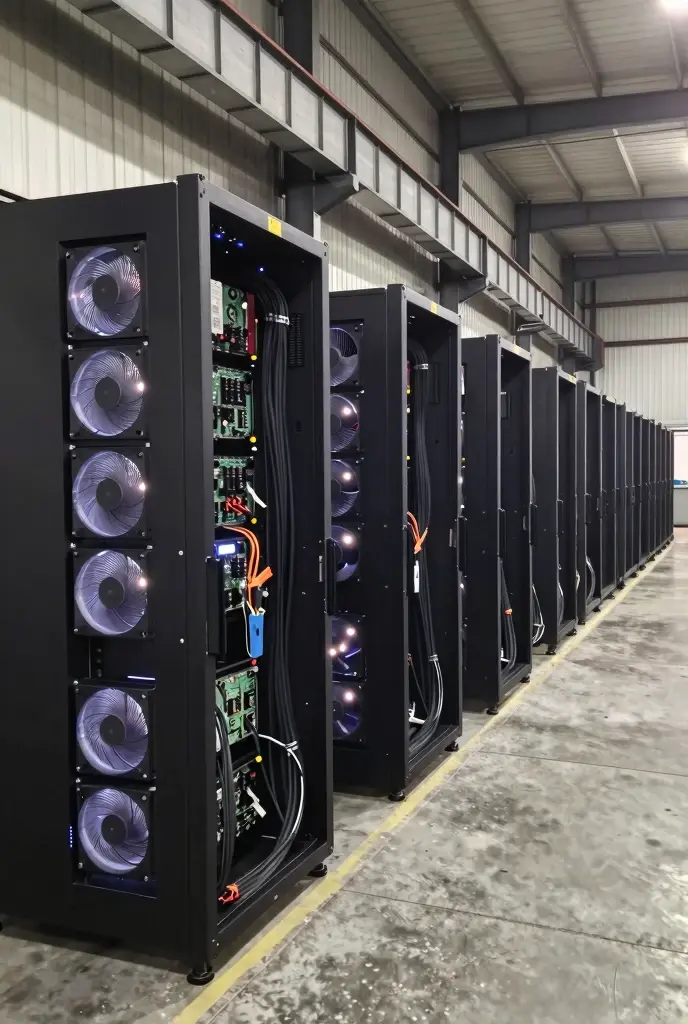
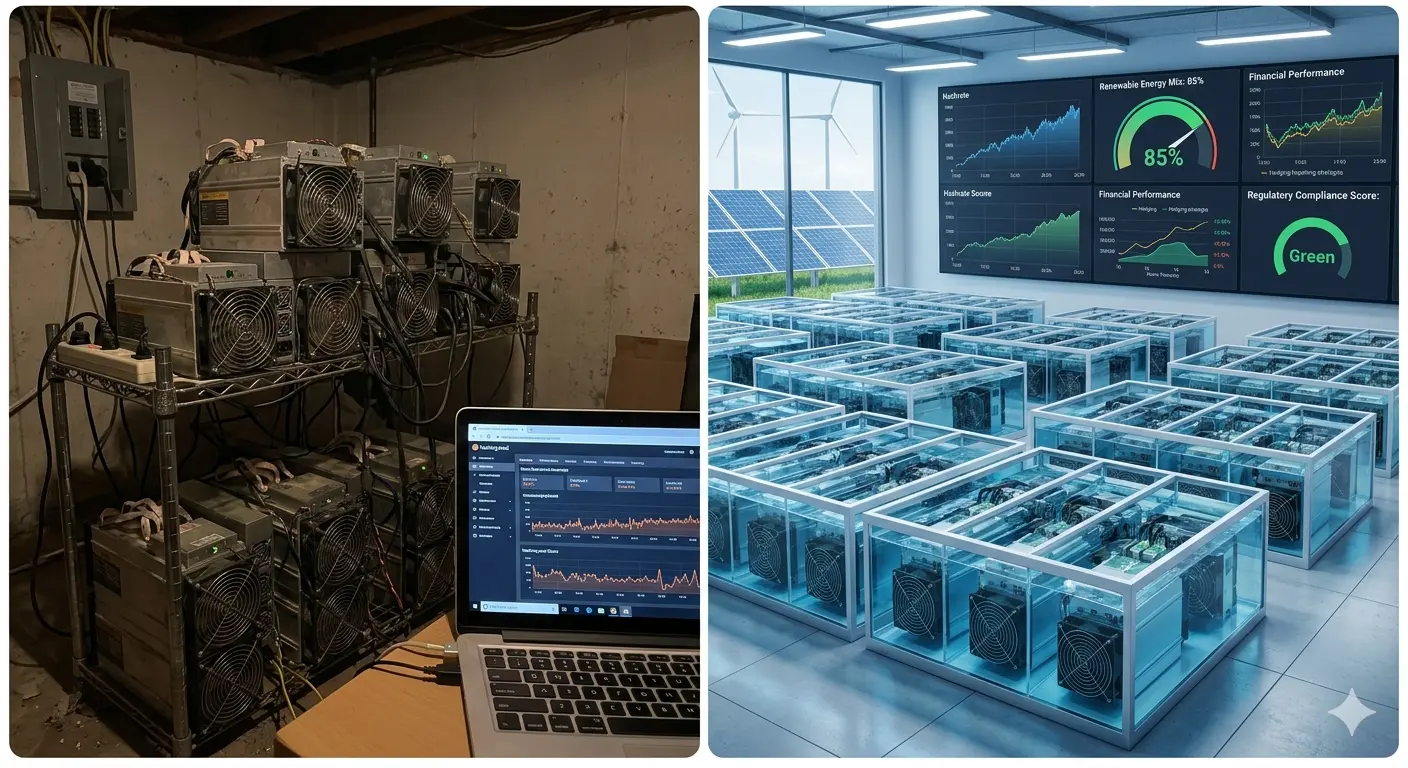
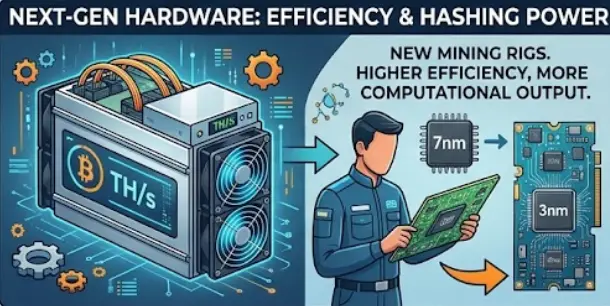
The post-halving compression cycle for Bitcoin follows a pattern that is consistent enough to observe but never consistent enough to blindly rely upon. Mining revenue per TH/s has fallen from approximately $0.080 pre-halving to $0.055 today. Hash price is at post-halving lows of $28to $30per PH/s per day. The global weighted average cash cost of mining one Bitcoin reached $80,000 in Q4 2025, meaning a meaningful percentage of the mining industry is currently operating at a structural loss with BTC trading at $66,852. The weakest participants are being systematically eliminated. This compression, historically, marks the final phase before the next structural appreciation leg begins.
But the word historically carries far more weight and far more risk than most people assign it. The difference between this cycle and every preceding one is the depth, speed, and complexity of institutional participation now embedded in the market. Institutional actors operate under redemption windows, regulatory mandates, portfolio risk limits, and board-level exposure constraints that retail cycle models have never accounted for. They can exit at scale, at speed, and through instruments — derivatives, ETFs, OTC desks — that leave no visible footprint in standard on-chain data until the move is already complete.
The purely retail-driven Bitcoin cycle is over. The participants have changed. The instruments have changed. The timeline and trigger mechanisms have changed. What has not changed — and will never change — is the foundational principle that divides consistently profitable traders from people paying expensive and recurring tuition to the market.
The market does not reward conviction. It rewards precision. Know exactly what you own. Know exactly why you own it. Know at exactly what price level your thesis is structurally invalidated. Know precisely what action you will execute when that price is reached. Everything that falls outside that framework is noise — and noise in this market is not neutral. It is expensive.
The fear present in this market is genuine. The opportunity embedded in this market is equally genuine. They are not opposing forces. They are the identical reality viewed from two different levels of preparation. The only variable that determines which one you experience is whether you showed up ready or whether you are still deciding.
BTC: $66,852 | ETH: $2,050 | Fear & Greed Index: 11 — Extreme Fear | April 4, 2026 | #CreatorLeaderboard #BitcoinMiningIndustryUpdates #GateSquare,
The Market Is Bleeding. Most People Are About to Make the Wrong Move.
Fear & Greed Index sits at 11 — Extreme Fear. BTC is trading at $66,852. ETH is holding $2,050 by a thread. The crowd is panicking, liquidations are stacking, and ETF outflows have not stopped for weeks. And somewhere inside all that noise, the most dangerous and most profitable setups of the entire cycle are forming in complete silence.
This post is not for people who want to feel comfortable about their portfolio. This is for people who want to understand what is actually happening, why it is happening, and what permanently separates traders who survive sustained bear pressure from the ones who get carried out with nothing left.
PART 1 — THE MACRO TRAP NOBODY IS NAMING
Oil has broken $103. Geopolitical friction is tightening the global supply chain at a pace that traditional markets have not fully priced. The Federal Reserve is cornered — it cannot cut aggressively without reigniting inflation that has barely been tamed, and it cannot hold rates at restriction indefinitely without systematically crushing risk appetite across every asset class, crypto included. This is not a crypto problem dressed in macro clothing. This is a structural liquidity problem and crypto is simply one of the first places that liquidity exits when conditions deteriorate.
When institutional financial conditions compress, capital does not rotate into Bitcoin. It retreats to cash, short-duration treasuries, and hard assets. Tether Gold sitting in today's hot list at $4,638 while BTC and ETH fight to maintain ground tells you precisely where real institutional conviction is positioned right now. That signal is not subtle.
The defining mistake retail traders make in this environment is misreading a bounce as a trend reversal. They see BTC hold $66,000 and call it support. They see ETH stabilize and call it a base. They enter long. The market absorbs their liquidity. Then it continues in the original direction. Bounces inside a macro-pressured regime are traps wearing the costume of opportunity. You do not get to celebrate a floor until you have respected the ceiling above it.
PART 2 — WHAT THE ORDER BOOK IS ACTUALLY COMMUNICATING
The market currently has liquidity concentrated in two precise zones. On the upside, $69,000 to $70,100 — this is where short-side stop losses are densely clustered and where trapped longs from the previous rally are bleeding. On the downside, $65,500 remains the structural floor that has been tested and provisionally held multiple times. This is not random price behavior. This is the fingerprint of deliberate institutional positioning.
Large capital does not move markets accidentally. The mechanics are consistent across cycles — accumulate beneath visible structure, engineer volatility to systematically flush undercapitalized positions, then distribute into the retail FOMO that follows every convincing bounce. The 6,000-plus BTC that flowed into exchanges from anonymous wallets over the past 48 hours is not routine. On-chain behavior that precedes distribution phases consistently masquerades as consolidation when viewed from the outside. It looks calm because the violence is being prepared, not executed yet.
The question you need to be asking is not whether BTC will go up. The question is who is positioned, in which direction, and with what size — when the liquidity sitting at those two zones finally gets triggered. That is the only question that pays.
PART 3 — THE INSTITUTIONAL DIVERGENCE THAT DEFINES THE NEXT 90 DAYS
This is where the market becomes genuinely fascinating and genuinely treacherous simultaneously. Two contradictory narratives are running in parallel right now and both are factually true, which is precisely what makes the current environment so dangerous for anyone operating with a binary framework.
On one side, the infrastructure of institutional adoption is being constructed in broad daylight. MetaPlanet continues accumulating. Schwab has formally launched crypto trading services. Circle has released cirBTC explicitly for institutional deployment. Ethereum's EIP-7702 account abstraction upgrade just eliminated the friction barrier between private keys and smart contract wallets — a structural improvement to usability at a scale that takes years to fully manifest in price but matters enormously for long-horizon adoption. These are not speculative narratives. These are capital commitments and protocol-level improvements being made by entities that do not move carelessly.
On the other side, Bitcoin ETFs recorded net outflows of -2,351 BTC representing $173.7 million on April 1st alone. Ethereum ETFs shed another -3,330 ETH simultaneously. And Strategy — the single most aggressive and consistent corporate BTC buyer the market has ever seen — paused its purchases for the first time in all of 2026. It still holds 762,099 BTC. It has not sold. But its absence from the buy side removes a demand anchor that the market has been pricing in as a near-permanent fixture for over fourteen consecutive months. That absence matters more than most analysts are acknowledging.
When you hold both of these realities in the same frame, what you are looking at is a distribution phase dressed as consolidation. The smart money is not capitulating — it is selectively reducing exposure at the margin while the infrastructure adoption narrative keeps retail psychologically anchored to the upside story. This is not cynicism. This is pattern recognition. Do not allow your conviction in the four-year thesis to blind you to the ninety-day structure.
PART 4 — THE TRADING FRAMEWORK THAT ACTUALLY FUNCTIONS IN THIS ENVIRONMENT
Stop searching for the perfect entry point. Start building a decision architecture that functions regardless of whether you are right or wrong on direction.
The first principle is that you do not trade against macro until macro demonstrably changes. The specific conditions that would constitute a genuine shift are a confirmed Fed pivot toward accommodation, a structural de-escalation in geopolitical tension reducing supply chain pressure, or a consecutive multi-week reversal in ETF flow data showing genuine institutional re-accumulation. Until one of those conditions is verified, every aggressive long is a low-probability wager regardless of how technically compelling the chart setup appears. Discipline is not about refusing to trade. Discipline is about refusing to trade below your own probability threshold.
The second principle is the strict separation of accumulation logic from trading logic. If your conviction in Bitcoin's four-to-five year trajectory is genuine, then accumulation at $66,000 is a defensible long-term position. But accumulation is not trading. A long-term accumulation position managed with short-term trading psychology will be stopped out at exactly the wrong moment. A short-term trade held with long-term conviction will turn a controlled loss into a catastrophic one. These two mental models are mutually destructive when mixed. Choose which game you are playing before you enter the position, not after it moves against you.
The third principle is to watch divergence, not price. Current technical data shows BTC forming MACD bottom divergence on both the 4-hour and daily charts while the moving average structure — MA7 below MA30 below MA120 — remains in full bearish sequence on both timeframes. This is textbook late-stage bear market behavior. Divergence does not signal that reversal is imminent. It signals that downside momentum is exhausting and that short positions are becoming dangerously overcrowded. A violent short squeeze toward the $69,000 to $70,100 liquidity cluster is structurally more probable right now than a clean continuation breakdown. But a short squeeze is not a bull market. It is a mechanical event. Trade the mechanism, not the narrative.
The fourth principle is that volatility is inventory exclusively for traders who arrive prepared. Today's gainers board shows EVER up177%, ONG up 76%, Dar Open Network up 53%. These are not fundamental moves. They are liquidity concentration events in illiquid assets during macro uncertainty — short-duration volatility opportunities that reward pre-positioned traders with defined risk parameters and punish everyone else with permanent capital destruction. Without a predetermined invalidation point before entry, volatility is not opportunity. It is a mechanism that transfers money from the unprepared to the disciplined.
PART 5 — THE STRUCTURAL ENDGAME AND WHAT IT ACTUALLY DEMANDS FROM YOU
The post-halving compression cycle for Bitcoin follows a pattern that is consistent enough to observe but never consistent enough to blindly rely upon. Mining revenue per TH/s has fallen from approximately $0.080 pre-halving to $0.055 today. Hash price is at post-halving lows of $28to $30per PH/s per day. The global weighted average cash cost of mining one Bitcoin reached $80,000 in Q4 2025, meaning a meaningful percentage of the mining industry is currently operating at a structural loss with BTC trading at $66,852. The weakest participants are being systematically eliminated. This compression, historically, marks the final phase before the next structural appreciation leg begins.
But the word historically carries far more weight and far more risk than most people assign it. The difference between this cycle and every preceding one is the depth, speed, and complexity of institutional participation now embedded in the market. Institutional actors operate under redemption windows, regulatory mandates, portfolio risk limits, and board-level exposure constraints that retail cycle models have never accounted for. They can exit at scale, at speed, and through instruments — derivatives, ETFs, OTC desks — that leave no visible footprint in standard on-chain data until the move is already complete.
The purely retail-driven Bitcoin cycle is over. The participants have changed. The instruments have changed. The timeline and trigger mechanisms have changed. What has not changed — and will never change — is the foundational principle that divides consistently profitable traders from people paying expensive and recurring tuition to the market.
The market does not reward conviction. It rewards precision. Know exactly what you own. Know exactly why you own it. Know at exactly what price level your thesis is structurally invalidated. Know precisely what action you will execute when that price is reached. Everything that falls outside that framework is noise — and noise in this market is not neutral. It is expensive.
The fear present in this market is genuine. The opportunity embedded in this market is equally genuine. They are not opposing forces. They are the identical reality viewed from two different levels of preparation. The only variable that determines which one you experience is whether you showed up ready or whether you are still deciding.
BTC: $66,852 | ETH: $2,050 | Fear & Greed Index: 11 — Extreme Fear | April 4, 2026 | #CreatorLeaderboard #BitcoinMiningIndustryUpdates #GateSquare,