# WarshSwornInAsFedChair

21.23K

Kevin Warsh was sworn in as the 17th Federal Reserve chairman at 11:00 UTC+8 on May 22. He is the first Fed chair to hold crypto assets, with positions in over 20 projects including Solana, Polymarket, and dYdX. His first rate-setting meeting is scheduled for mid-June.

#WarshSwornInAsFedChair
Title: The Warsh Era Begins: What a Pro-Bitcoin Fed Chair Means for Crypto Markets
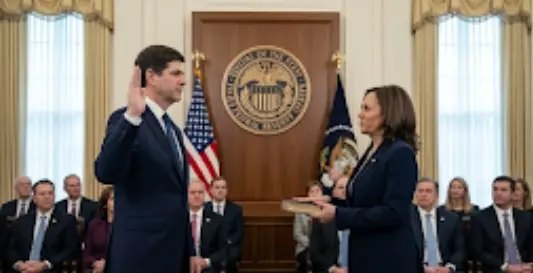
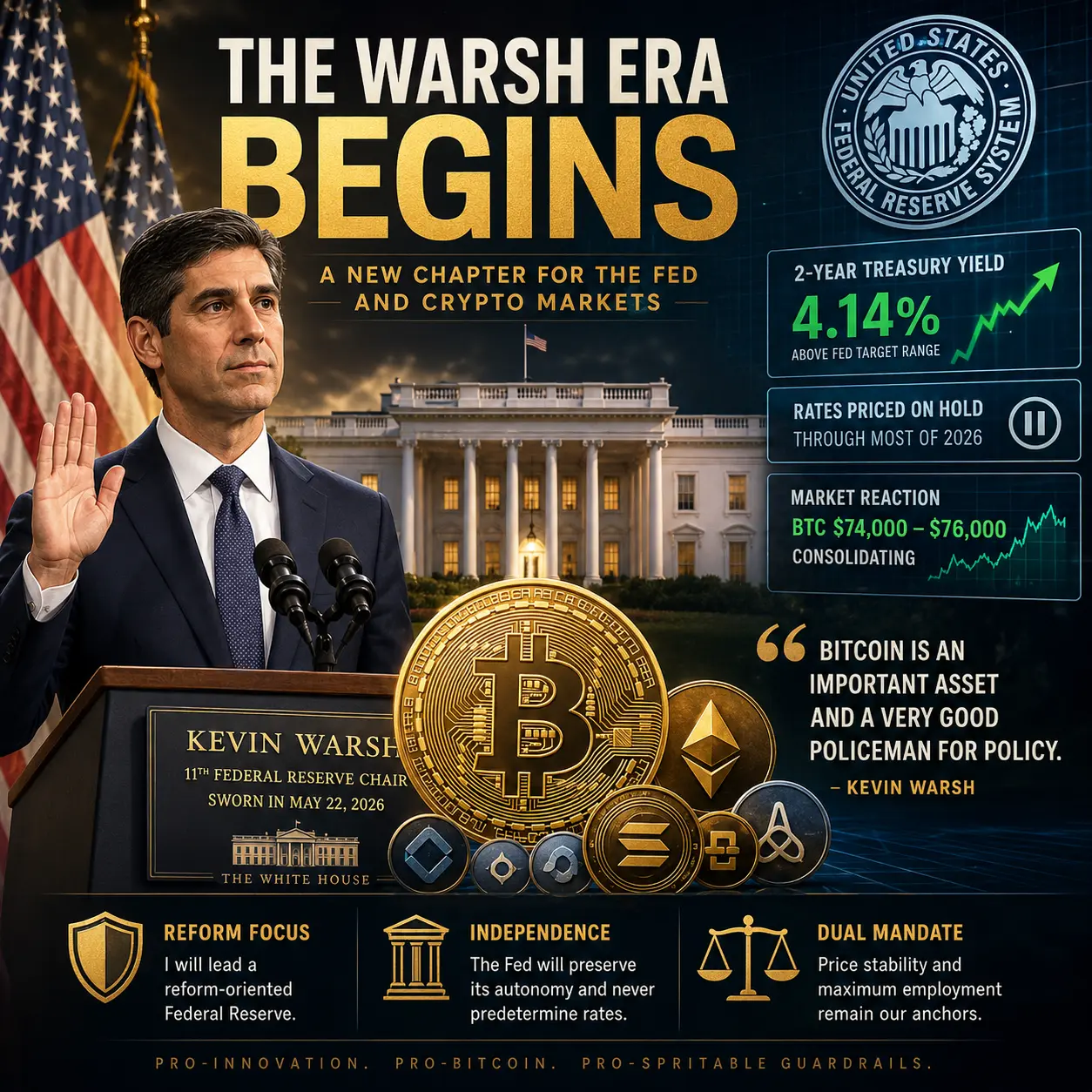
History was made on May 22, 2026. Kevin Warsh was sworn in as the 11th Federal Reserve chair of the modern era — and for the first time since Alan Greenspan in 1987, the ceremony took place at the White House.
The global monetary policy torch has officially passed from Jerome Powell to a 56-year-old reformer who happens to be the most crypto-literate Fed chair ever. The industry is watching closely. Here’s why.
Who Kevin Warsh Is — and Why It Matters
Warsh isn’t just another central bank
BTC0.75%
post-image
  • Reward
  • 7
  • Repost
  • Share
Aziz786:
to the moon definitely
View More
#WarshSwornInAsFedChair
🔥Warsh Sworn In as Fed Chair 🔥 First Crypto-Holding Federal Reserve Chairman Takes Office

Kevin Warsh was officially sworn in as the 17th chairman of the Federal Reserve at 11:00 UTC+8 on May 22, marking one of the most closely watched leadership transitions in modern monetary policy history. The appointment has drawn enormous attention not only because of its implications for interest rates and macroeconomic policy, but also because Warsh is reportedly the first Federal Reserve chair known to hold exposure to digital assets and crypto-related projects.
According t
SOL-0.08%
DYDX0.3%
post-image
post-image
  • Reward
  • 2
  • Repost
  • Share
MasterChuTheOldDemonMasterChu:
Just charge forward 👊
View More
#WarshSwornInAsFedChair most powerful seat in global monetary policy just changed hands — and crypto is watching every move.
🔹 It's official
Kevin Warsh was sworn in as Federal Reserve Chair on May 22, 2026, at the White House — the first Fed chair sworn in there since Alan Greenspan in 1987. He succeeds Jerome Powell and becomes the 11th Fed chair of the modern era.
🔹 Who is Warsh?
At 56, he's the most crypto-literate Fed chair in the institution's history. He holds exposure to over 12 blockchain protocols. He publicly called Bitcoin "an important asset" and "a very good policeman for polic
BTC0.75%
GT0.85%
SOL-0.08%
post-image
  • Reward
  • 4
  • Repost
  • Share
MasterChuTheOldDemonMasterChu:
DYOR 🤓
View More
#WarshSwornInAsFedChair
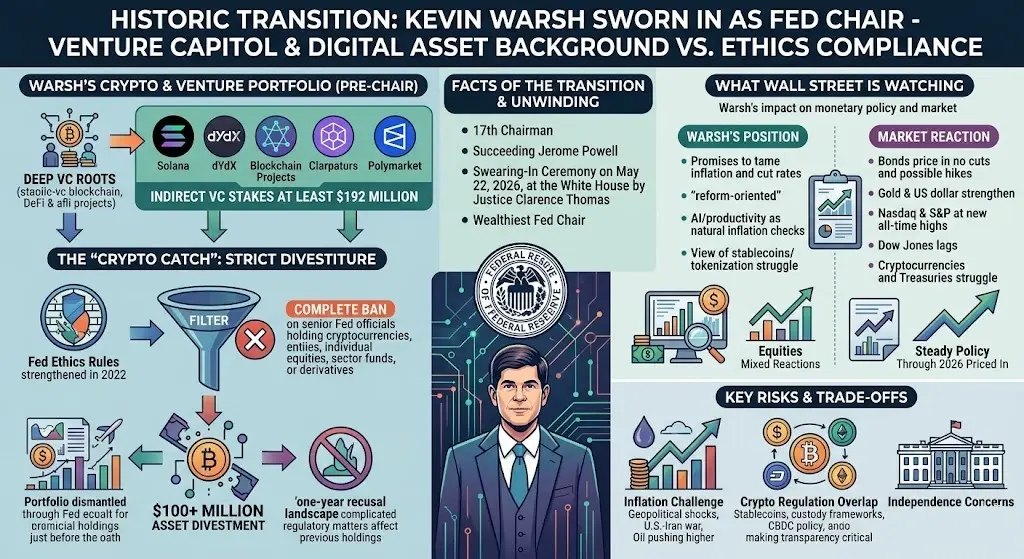
The swearing-in of Kevin Warsh marks a historic transition at the central bank. It is rare to see a Fed Chair with such deep roots in the modern venture capital and digital asset ecosystems.
While the news of his background has energized the crypto community, there is an important regulatory catch to how this plays out in office.
The Crypto Catch: Strict Divestiture
It is true that Warsh's 69-page Office of Government Ethics (OGE) financial disclosure revealed indirect venture capital stakes in over 20 blockchain and DeFi projects—including Solana, dYdX, and Polymarket
SOL-0.08%
DYDX0.3%
ybaser
#WarshSwornInAsFedChair
The swearing-in of Kevin Warsh marks a historic transition at the central bank. It is rare to see a Fed Chair with such deep roots in the modern venture capital and digital asset ecosystems.
While the news of his background has energized the crypto community, there is an important regulatory catch to how this plays out in office.
The Crypto Catch: Strict Divestiture
It is true that Warsh's 69-page Office of Government Ethics (OGE) financial disclosure revealed indirect venture capital stakes in over 20 blockchain and DeFi projects—including Solana, dYdX, and Polymarket. However, he cannot actually maintain these positions while running the central bank.
Fed Ethics Rules: Under strict ethics frameworks strengthened in 2022, senior Federal Reserve officials are completely banned from holding cryptocurrencies, individual equities, sector funds, or derivatives.
To comply with the Ethics in Government Act, Warsh has already executed a massive unwinding of his portfolio, logging over $100 million in asset divestments just days before taking his oath. Furthermore, because of the sheer breadth of his previous venture portfolio, he faces a complicated one-year recusal landscape on regulatory matters directly affecting those specific protocols or stablecoin frameworks.
Key Facts of the Transition
Official Role17th Chairman of the Federal Reserve Board of Governors
Swearing-In Ceremony May 22, 2026, at the White House (administered by Justice Clarence Thomas)
Succeeding Jerome Powell
Net Worth Context Combined assets with his wife (Jane Lauder) total at least $192 million, making him the wealthiest Fed Chair in history.
Upcoming Milestone First rate-setting Federal Open Market Committee (FOMC) meeting in mid-June.
What Wall Street is Watching
Though he has to clear out his personal crypto portfolio, his deep familiarity with the technology means his views on stablecoins, tokenization, and digital finance are highly sophisticated.
Instead of relying solely on staff briefings, Warsh brings first-hand market insights into the room. Historically known as a monetary policy hawk, his more recent commentary suggests he views artificial intelligence and productivity gains as powerful forces that could help naturally keep inflation in check. All eyes are now on the June FOMC meeting to see how his "reform-oriented" approach translates into interest rate strategy.
Kevin Warsh’s crypto exposure is reshaping perceptions of Fed policy: while his $192M in crypto-linked holdings raise conflict-of-interest questions, markets remain skeptical of near-term rate cuts, with equities showing mixed reactions and bonds pricing in steady policy through 2026.
Warsh’s Crypto Exposure and Monetary Policy
Scale of holdings: Warsh disclosed $192M in crypto-specific positions, structured through venture capital funds rather than direct token custody. These include DeFi lending, layer-1/layer-2 networks, prediction markets, and Bitcoin payments infrastructure.
Conflict-of-interest concerns: Senators are expected to press him on whether he must recuse or divest from crypto-related decisions. The layered VC structure complicates oversight since it’s not direct token ownership.
Policy implications:
Optimists argue his exposure could make the Fed more crypto-friendly, encouraging innovation.
Critics counter that personal stakes may push him toward stricter supervision, to avoid reputational risk.
The deeper shift may be cultural: crypto is now treated as an internal category within Fed discourse, not an external fringe asset.
Market Reaction to Warsh’s Appointment
Equities:
Nasdaq & S&P 500 surged to new all-time highs, benefiting from growth stock momentum.
Dow Jones lagged, reflecting investor uncertainty about inflation and Warsh’s stance.
Bonds & Rates: Traders are pricing no rate cuts in 2026, with some even expecting hikes in early 2027. Warsh’s promise to “tame inflation and cut rates” is viewed skeptically.
Currencies & Commodities: The US Dollar and gold strengthened, signaling investor caution. Cryptocurrencies and Treasuries struggled post-confirmation.
Key Risks and Trade-offs
Independence concerns: His swearing-in at the White House East Room raised eyebrows about Fed independence, as the venue choice was unusual and politically symbolic.
Inflation challenge: With inflation still above target and geopolitical shocks (e.g., U.S.–Iran war pushing oil higher), Warsh faces a policy credibility test.
Crypto regulation overlap: His holdings intersect with areas the Fed will regulate — stablecoins, custody frameworks, and CBDC policy — making transparency critical.
Comparison: Policy vs Market Expectations
Aspect Warsh’s Position Market Reaction
Rates Promises to cut while taming inflation Bonds price in no cuts, possible hikes
Crypto $192M exposure via VC funds Raises conflict-of-interest concerns
Equities Seen as pro-growth Nasdaq/S&P rally, Dow cautious
Independence Ceremony at White House Economists uneasy about Fed autonomy
$SOL $DYDX
repost-content-media
  • Reward
  • 14
  • Repost
  • Share
AmeliaGlow:
LFG 🔥
View More
#WarshSwornInAsFedChair
🏛️ The Most Crypto-Literate Fed Chair in History Just Took the Oath — and the Fine Print Is Complicated
Two days ago something genuinely historic happened and I don't think the community has fully processed the nuance of it yet.
Kevin Warsh was sworn in as the 17th Federal Reserve Chairman at the White House by Supreme Court Justice Clarence Thomas. Confirmed 54-45 by the Senate — the most partisan Fed chair vote in history. He replaces Jerome Powell and immediately becomes the most crypto-aware person ever to hold this position by a massive margin.
The numbers from h
BTC0.75%
post-image
  • Reward
  • 15
  • Repost
  • Share
AmeliaGlow:
LFG 🔥
View More
#WarshSwornInAsFedChair
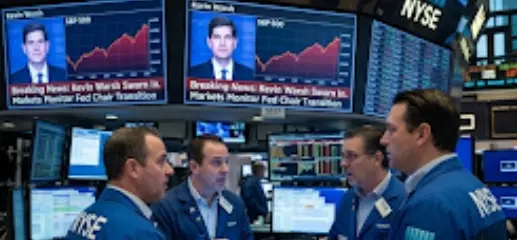
The Federal Reserve has officially entered one of the most consequential monetary chapters in modern financial history — and global markets, especially crypto, are already being violently repriced in real time.
On May 22, 2026, Kevin Warsh was sworn in as the 17th Chairman of the Federal Reserve, replacing Jerome Powell during a period of extreme macro instability that now resembles a hybrid of inflation shock, energy crisis, and liquidity tightening simultaneously. The ceremony was held at the White House in the East Room with President Donald Trump presiding, and Sup
HighAmbition
#WarshSwornInAsFedChair
The Federal Reserve has officially entered one of the most consequential monetary chapters in modern financial history — and global markets, especially crypto, are already being violently repriced in real time.
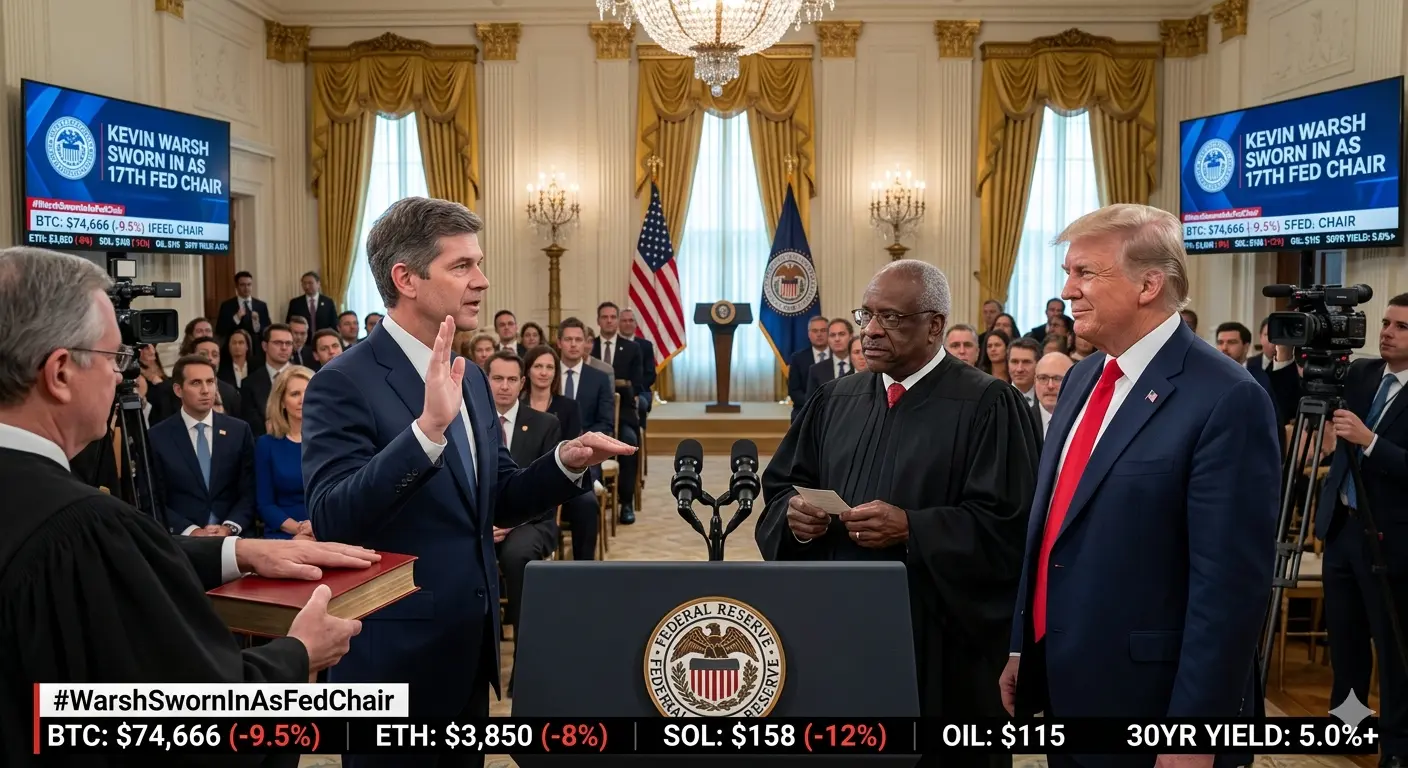
On May 22, 2026, Kevin Warsh was sworn in as the 17th Chairman of the Federal Reserve, replacing Jerome Powell during a period of extreme macro instability that now resembles a hybrid of inflation shock, energy crisis, and liquidity tightening simultaneously. The ceremony was held at the White House in the East Room with President Donald Trump presiding, and Supreme Court Justice Clarence Thomas administering the oath — a highly unusual setting that immediately sparked debate about central bank independence and whether political influence over monetary policy is entering a new phase.
The reaction across global markets was immediate, sharp, and deeply risk-off.
Bitcoin dropped violently from approximately $81,650 → $74,000–$76,000, marking a drawdown of nearly -8% to -10% within days, while triggering more than $430M–$580M in leveraged liquidations across derivatives markets. Ethereum fell roughly -7% to -11%, slipping below key support clusters near $3,850, while Solana experienced an aggressive retracement of nearly -10% to -15%, falling toward the $158–$162 zone. The total crypto market capitalization shed hundreds of billions in valuation within a short time window as traders rapidly recalibrated expectations for liquidity conditions, interest-rate policy, and global risk appetite.
This is not just another Federal Reserve transition.
This is a structural macro regime shift that may define the entire 2026 crypto cycle.
KEVIN WARSH ERA — THE START OF A MONETARY REPRICING CYCLE
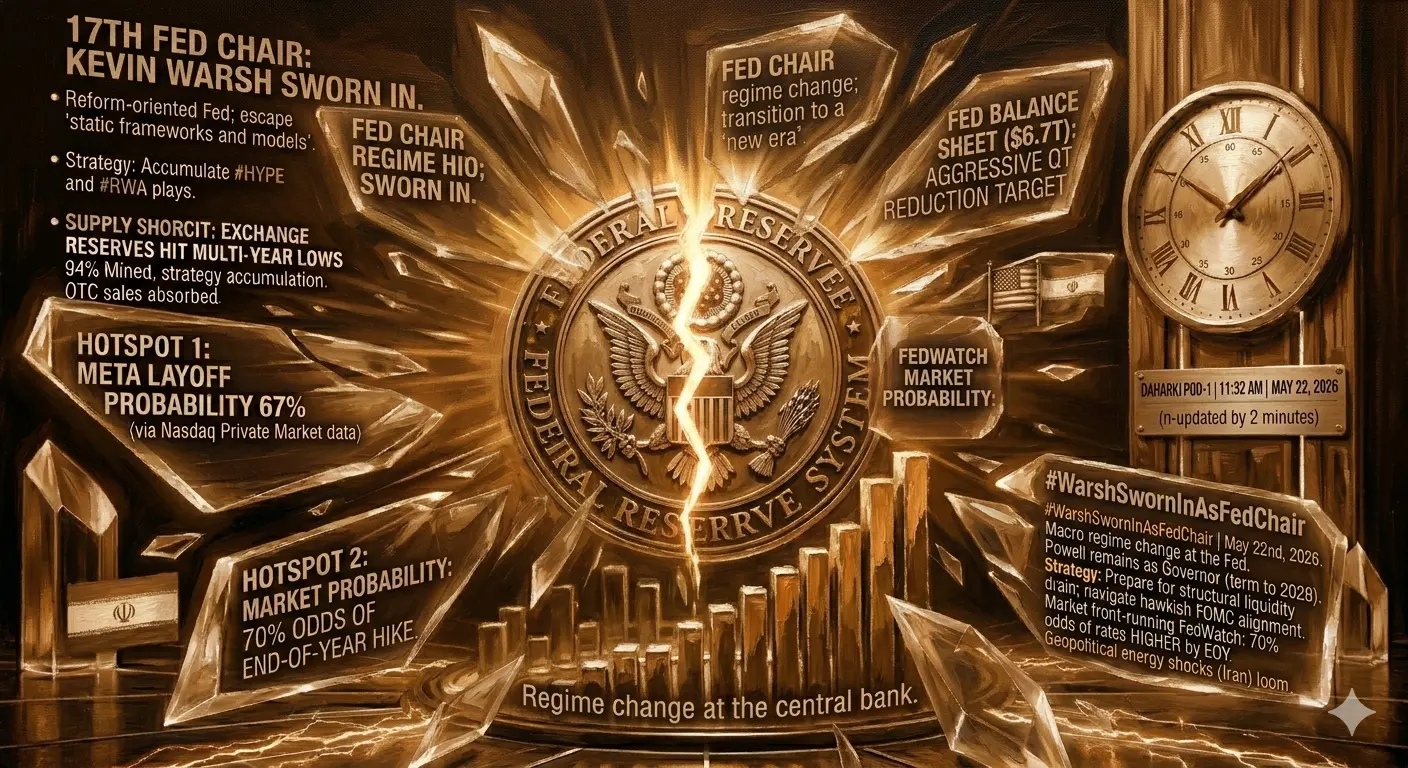
Kevin Warsh enters the Federal Reserve with a strongly reform-driven monetary philosophy that immediately alters how markets interpret future liquidity flows.
Warsh is widely associated with a framework that prioritizes:
• Shrinking the Federal Reserve balance sheet from multi-trillion-dollar levels
• Reducing long-term dependence on quantitative easing
• Restoring market-driven price discovery in interest rates
• Limiting emergency liquidity interventions
• Rebuilding inflation credibility at any cost
This is critical because markets over the last decade have been structurally conditioned to assume one thing:
“The Fed will always intervene to support risk assets.”
Warsh’s policy direction challenges that assumption directly.
And when that belief breaks, liquidity repricing begins immediately across all high-beta markets — especially crypto.
MACRO CONDITIONS WARSH INHERITS — EXTREME SYSTEM PRESSURE
Warsh is stepping into a macro environment that is already under severe structural strain:
US CPI Inflation: ~3.8% and trending upward again
Core inflation persistence: broad-based pricing pressure returning
Oil prices: ~$115 per barrel due to geopolitical escalation and supply disruptions
Consumer sentiment: collapsed near 44.8 (historic lows)
Inflation expectations: ~4.8% forward outlook
30-year Treasury yields: above 5.0% (multi-decade highs)
10-year yields: persistent upward pressure
This combination is highly dangerous because it creates a textbook stagflation risk environment:
• Slowing economic expansion
• Weak consumer demand
• Persistent inflation pressure
• Elevated energy costs
• Tight financial conditions
• Rising borrowing costs
This is the worst possible macro mix for speculative assets like:
Bitcoin, Ethereum, Solana, altcoins, AI tokens, venture-backed crypto infrastructure, and high-leverage derivatives markets.
Because in this environment:
👉 Liquidity contracts
👉 Discount rates rise
👉 Risk premiums expand
👉 Speculation gets repriced aggressively
BOND MARKET REPRICING — THE MOST IMPORTANT SIGNAL
One of the most significant reactions following Warsh’s appointment was the rapid shift in Treasury market expectations.
Before Warsh: Markets were pricing potential easing cycles in late 2026.
After Warsh: Markets aggressively shifted toward:
• Near-zero probability of near-term rate cuts
• Higher-for-longer interest rate regime
• Possible additional tightening cycles
• Reduced expectation of liquidity expansion
This immediately pushed Treasury yields higher and strengthened the dollar environment — both historically negative conditions for crypto performance.
Because Bitcoin’s strongest historical bull phases occur during:
• Liquidity expansion cycles
• Falling real yields
• Aggressive central bank easing
• Weak dollar regimes
Warsh introduces the opposite macro signal.
BITCOIN CRASH MECHANICS — LIQUIDITY SHOCK IN REAL TIME
Bitcoin’s decline was not random — it was a direct macro repricing event.
BTC moved:
• May 15: ~$81,650 local peak
• May 22: ~$74,666 intraday low region
• Weekly drawdown: approximately -8% to -10.5%
Below $76,000, the market experienced a liquidation cascade:
• Estimated liquidations: $430M – $580M
• Long leverage unwinding accelerated volatility
• Funding rates collapsed sharply
• Open interest dropped significantly
This confirms a critical structural insight:
👉 The current crypto market is leverage-driven, not spot-driven.
Which means macro shocks amplify instantly.
WHY ETHEREUM AND SOLANA MOVED EVEN HARDER
Ethereum and Solana experienced sharper volatility because they sit higher on the risk curve than Bitcoin.
ETH dropped from approximately $4,200 → $3,600–$3,850 range, reflecting:
• ETF flow sensitivity
• Staking regulatory uncertainty
• Institutional rotation out of risk
• Reduced liquidity appetite
ETH downside risk range now sits at:
• $3,850 → pivot resistance
• $3,600 → structural support
• $3,250 → correction zone
• $2,900 → macro liquidation zone
Estimated volatility bands: • Downside: -15% to -25% potential in stress cycles
• Upside rebound: +35% to +70% in liquidity recovery phases
Solana (SOL) saw even higher beta movement:
• $185 → recent cycle high
• Current range: $150–$162 zone
Key levels:
• $162 → short-term resistance pivot
• $150 → breakdown confirmation level
• $138 → major support
• $120 → macro flush region
Volatility profile:
• Downside: -20% to -35% in liquidity stress events
• Upside: +50% to +100% in expansion cycles
WARSH VS LIQUIDITY CYCLE — THE CORE CONFLICT
The key market conflict is now structural:
Warsh philosophy: • Reduce liquidity dependence
• Strengthen monetary discipline
• Reduce Fed intervention
Market dependency: • Crypto requires liquidity expansion
• Risk assets depend on falling yields
• Leverage requires cheap capital
This creates a direct structural mismatch.
And when macro policy shifts against liquidity-dependent assets:
👉 volatility increases
👉 correlation with bonds rises
👉 downside accelerates faster than upside
BITCOIN HISTORICAL FED TRANSITION PATTERN
Across previous Federal Reserve leadership cycles, Bitcoin has consistently experienced major drawdowns during transition or tightening phases:
• Yellen era cycle: Bitcoin drawdown ~80%+
• Powell tightening phase: BTC decline ~70%+
• Rate hike cycles: extreme volatility compression phases
The repeating pattern is not purely coincidental:
👉 New Fed regimes often coincide with liquidity resets
👉 Crypto is extremely sensitive to those resets
Warsh now enters the same structural cycle environment.
CRITICAL BITCOIN STRUCTURE — CURRENT MARKET MAP
Bitcoin is now trading in a macro-sensitive corridor:
Major support zones: • $74,000 → immediate defense level
• $72,500 → liquidity absorption zone
• $69,000 → breakdown confirmation
• $64,000 → macro correction level
• $58,000 → deep liquidation zone
Major resistance zones: • $78,000 → recovery rejection level
• $81,500 → structural pivot
• $85,000 → trend recovery confirmation
• $92,000 → bullish continuation zone
• $100,000 → psychological breakout barrier
If BTC loses $74K–$72K decisively:
👉 accelerated liquidation risk increases toward $69K → $64K → $58K
If macro stabilizes:
👉 BTC can recover toward $85K–$92K and retest $100K later in cycle
MACRO DRIVERS NOW CONTROLLING CRYPTO MARKETS
Crypto is no longer driven purely by internal narratives.
The dominant macro forces now include:
• Federal Reserve policy direction
• Treasury yield trajectory
• Inflation expectations
• Energy market shocks (oil above $115)
• Geopolitical risk (Middle East tensions)
• Dollar strength cycles
• Institutional ETF flows
• Global liquidity conditions
This shift means:
👉 crypto is now a macro asset class, not a standalone speculative market
THREE MAJOR BITCOIN SCENARIOS — EXTENDED
Bearish Liquidity Contraction Scenario
Probability: Elevated volatility continuation
BTC Range: $58K – $70K
Conditions: • Inflation persistence
• Higher yields
• QT continuation
• Weak risk appetite
Neutral Macro Consolidation Scenario
Probability: Base case
BTC Range: $72K – $92K
Conditions: • Fed pause
• Inflation stabilizes
• Controlled growth slowdown
Bullish Liquidity Re-Expansion Scenario
Probability: Cyclical expansion later phase
BTC Range: $100K – $150K+
Conditions: • Economic slowdown forces easing
• Liquidity returns
• Dollar weakens
• Risk appetite returns
FINAL CONCLUSION — A STRUCTURAL SHIFT IN GLOBAL MARKETS
Kevin Warsh’s arrival at the Federal Reserve represents far more than a political or administrative change.
It represents a potential transition in how global liquidity is managed.
And in financial markets:
👉 liquidity is everything
Bitcoin, Ethereum, and the entire crypto ecosystem are now fully embedded within:
• Central bank policy cycles
• Bond market dynamics
• Energy-driven inflation shocks
• Global geopolitical risk structures
• Institutional capital allocation flows
Warsh introduces a regime that prioritizes monetary discipline over market support.
That may create short-term pain across crypto markets.
But in the long term, if fiat systems remain under structural inflation pressure and debt expansion continues globally, Bitcoin’s role as a decentralized monetary hedge may become even more significant than in previous cycles.
The next phase is not just volatility.
It is macro regime re-pricing at global scale.@Gate_Square @Gate广场_Official
repost-content-media
  • Reward
  • 6
  • Repost
  • Share
Vortex_King:
2026 GOGOGO 👊
View More
#WarshSwornInAsFedChair 🏛️ The Federal Reserve Just Entered a New Era
For years, markets revolved around one central assumption:
The Federal Reserve would eventually return to easy money.
Rate cuts.
Liquidity injections.
Balance sheet expansion.
And another cycle of cheap capital fueling risk assets higher.
That assumption may have just shattered.
On May 22, 2026, Kevin Warsh was officially sworn in as the 17th Chairman of the Federal Reserve, marking one of the most significant regime shifts in modern monetary policy history.
And Wall Street immediately understood the message:
This is not a
post-image
  • Reward
  • 13
  • Repost
  • Share
MasterChuTheOldDemonMasterChu:
DYOR 🤓
View More
#WarshSwornInAsFedChair Kevin Warsh's Historic Fed Chair Confirmation Signals a New Era for Cryptocurrency Regulation
On May 15, 2026, Kevin Warsh was officially sworn in as the 17th Chairman of the Federal Reserve, marking the most consequential leadership transition in the central bank's modern history. The Senate's 54-45 confirmation vote the closest margin in decades reflects both the contentious nature of Warsh's nomination and the profound implications his tenure holds for digital asset markets.
Warsh arrives at the Fed with credentials unprecedented among his predecessors: direct equity
BTC0.75%
post-image
  • Reward
  • 12
  • Repost
  • Share
ShainingMoon:
To The Moon 🌕
View More
#WarshSwornInAsFedChair
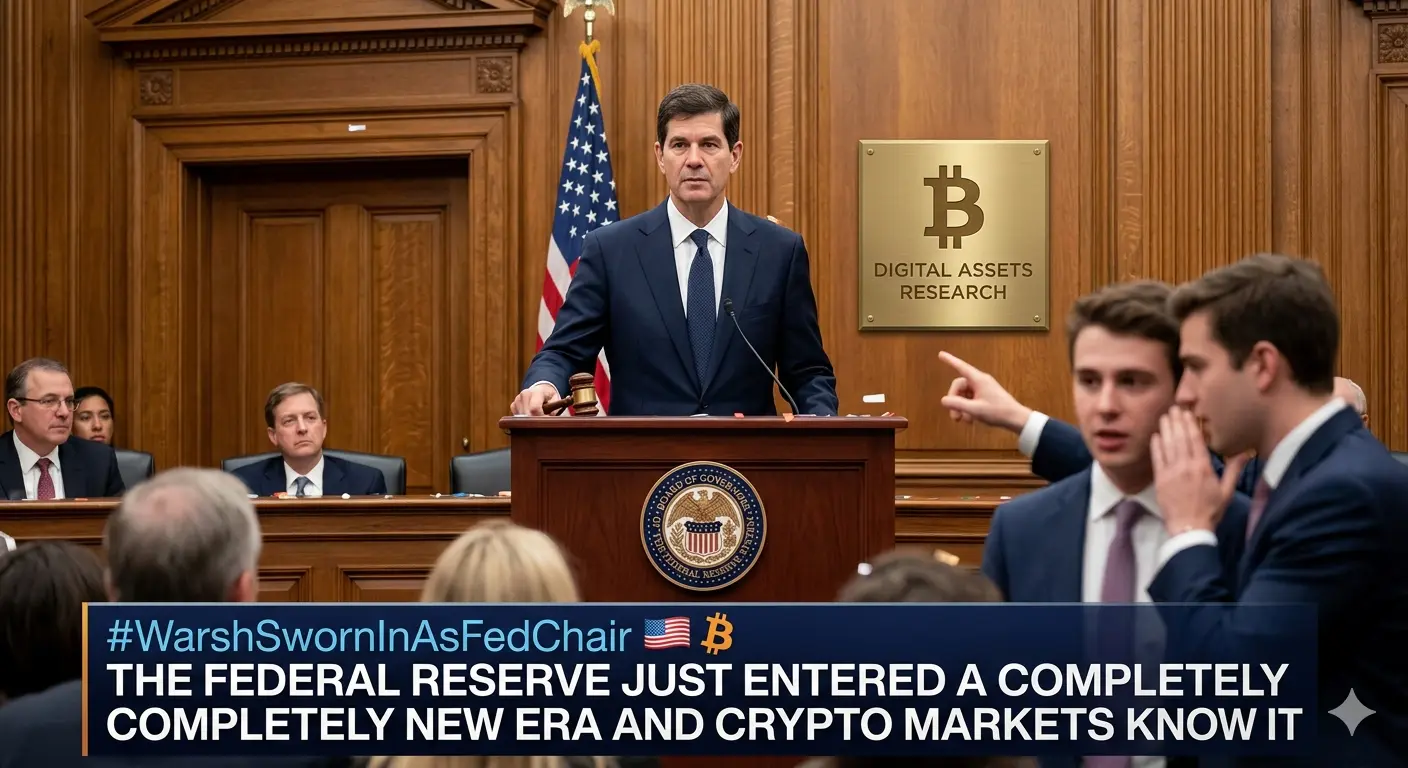
The Federal Reserve Just Entered a Completely New Era And Crypto Markets Know It
On May 15, 2026, 𝗞𝗲𝘃𝗶𝗻 𝗪𝗮𝗿𝘀𝗵 was officially sworn in as the 17th Chairman of the Federal Reserve following one of the most closely contested Senate confirmations in modern central banking history. The narrow 54-45 confirmation vote reflected far more than political division. It reflected a deeper realization spreading across global financial markets: the world's most powerful central bank is now being led by someone who understands cryptocurrency not as a distant speculative expe
BTC0.75%
post-image
  • Reward
  • 10
  • Repost
  • Share
CryptoDiscovery:
very impressive post 📯📯📯
View More
#WarshSwornInAsFedChair #WarshSwornInAsFedChair
Kevin Warsh officially taking the oath as Chairman of the Federal Reserve marks a major turning point for global financial markets at a time when investors are already navigating high volatility, slowing economic momentum, persistent inflation pressure, and growing uncertainty surrounding monetary policy. Every leadership transition at the Federal Reserve matters, but this one carries even more weight because markets are searching for direction after years of aggressive rate hikes, liquidity tightening, banking stress, and shifting geopolitical r
BTC0.75%
post-image
post-image
post-image
  • Reward
  • 6
  • Repost
  • Share
MasterChuTheOldDemonMasterChu:
DYOR 🤓
View More
Load More