
#USMayPCEInflationRisesTo4.1%HighestIn3Years
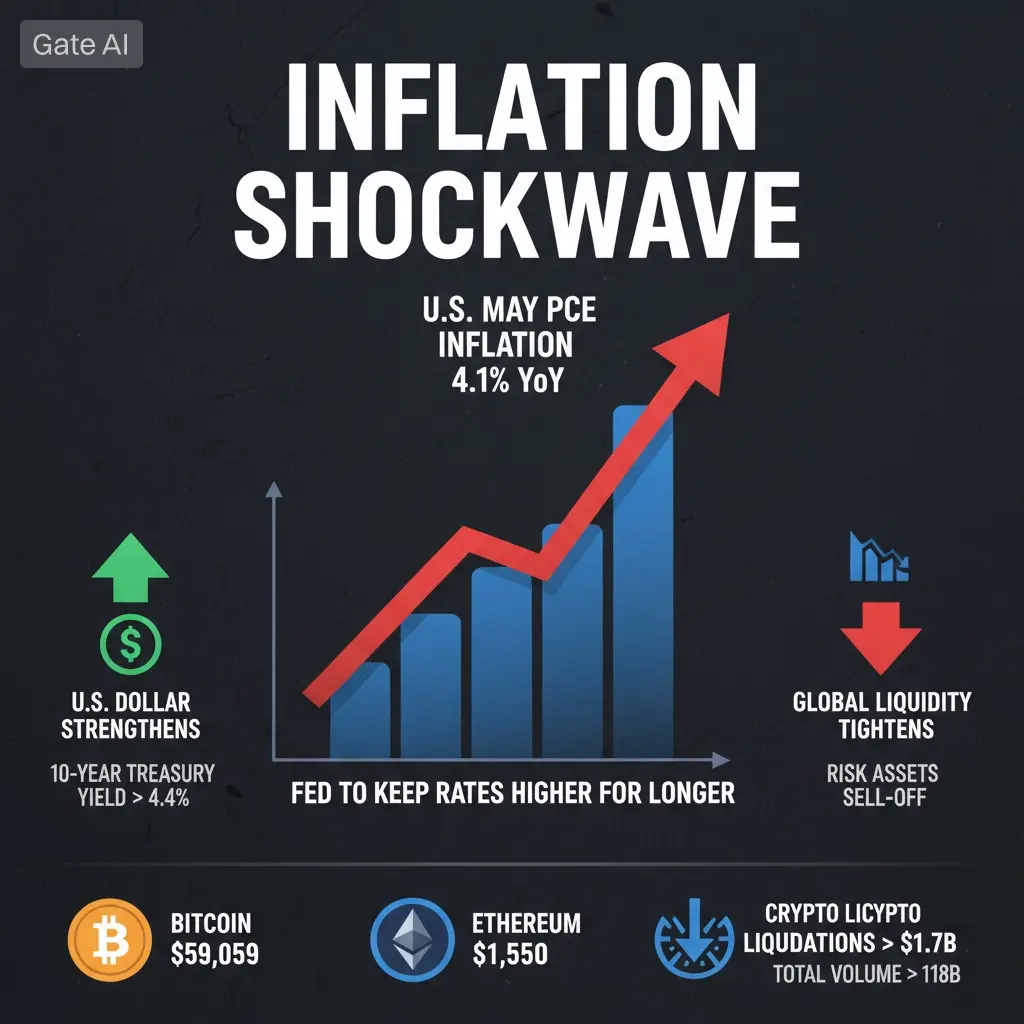
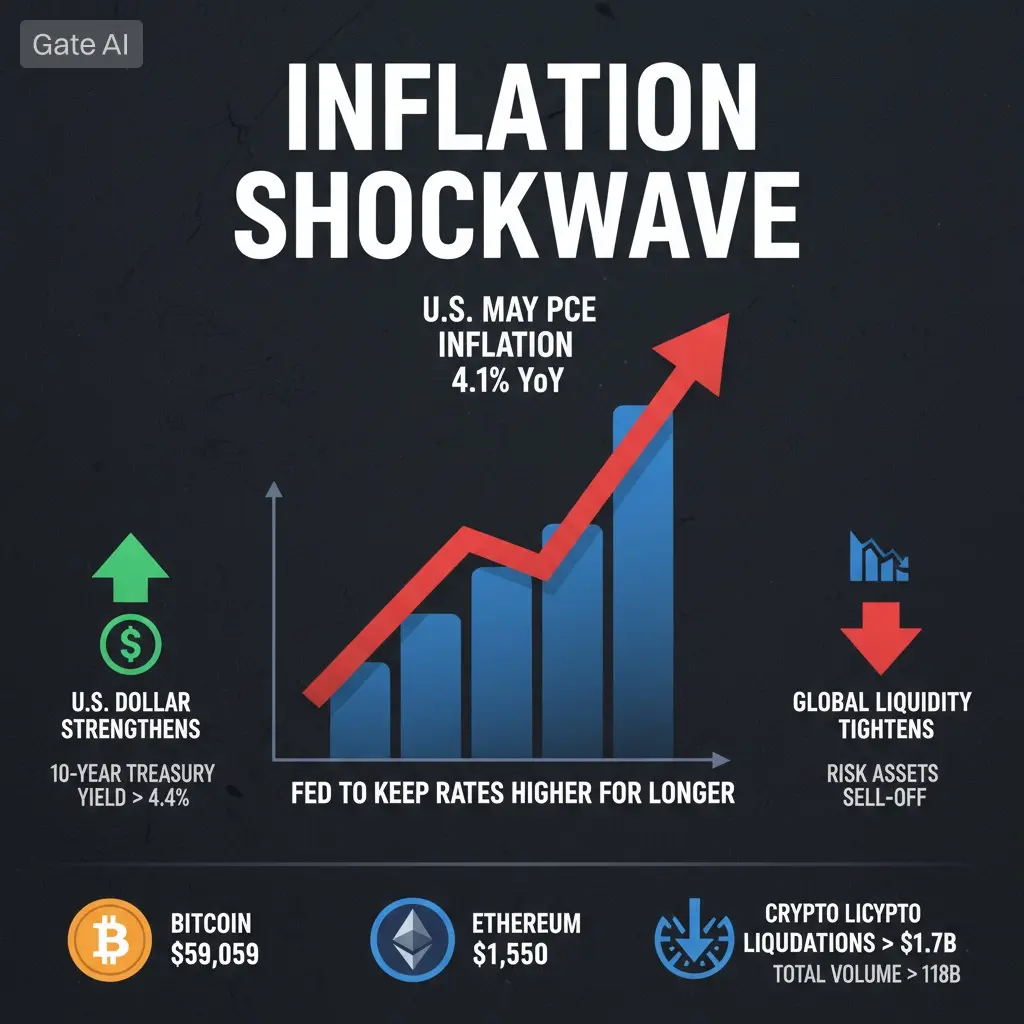
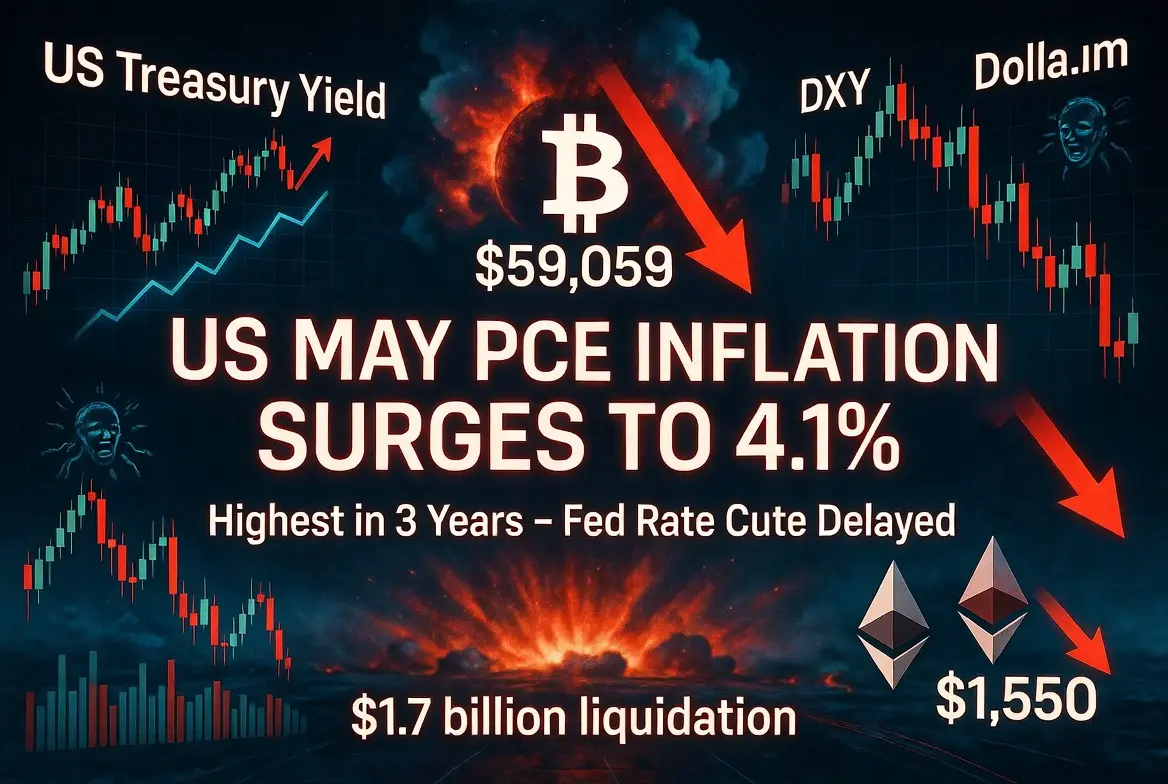
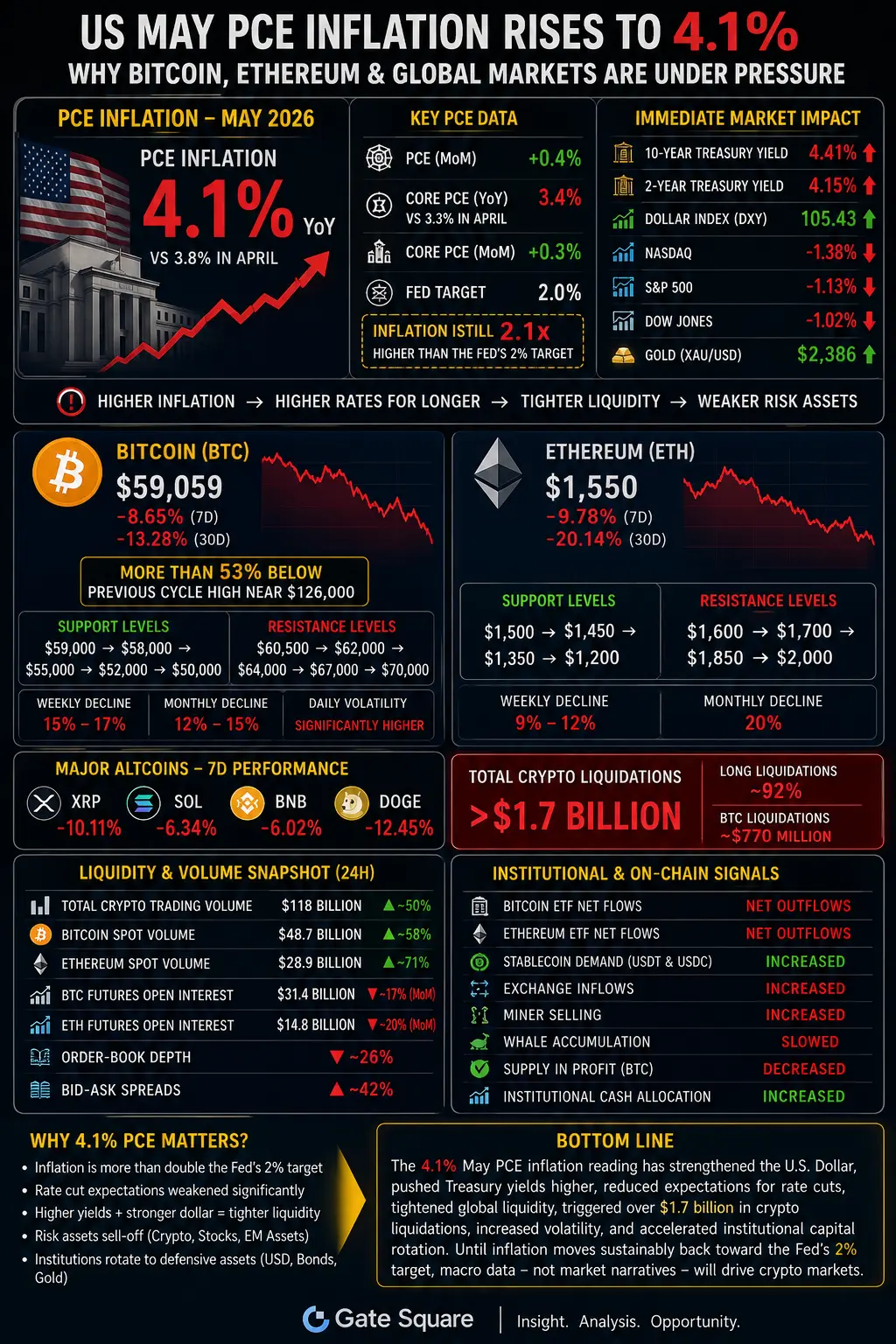
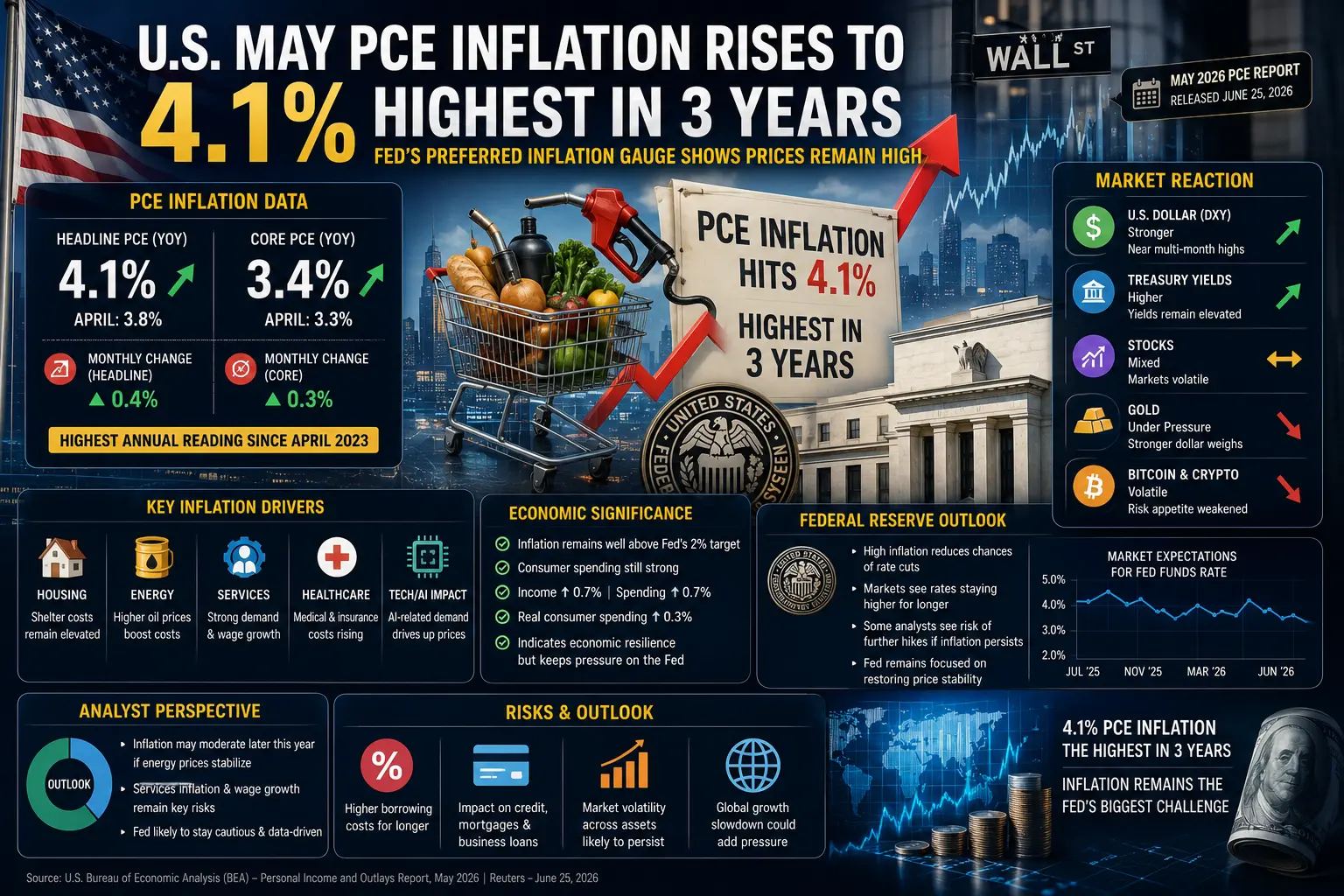
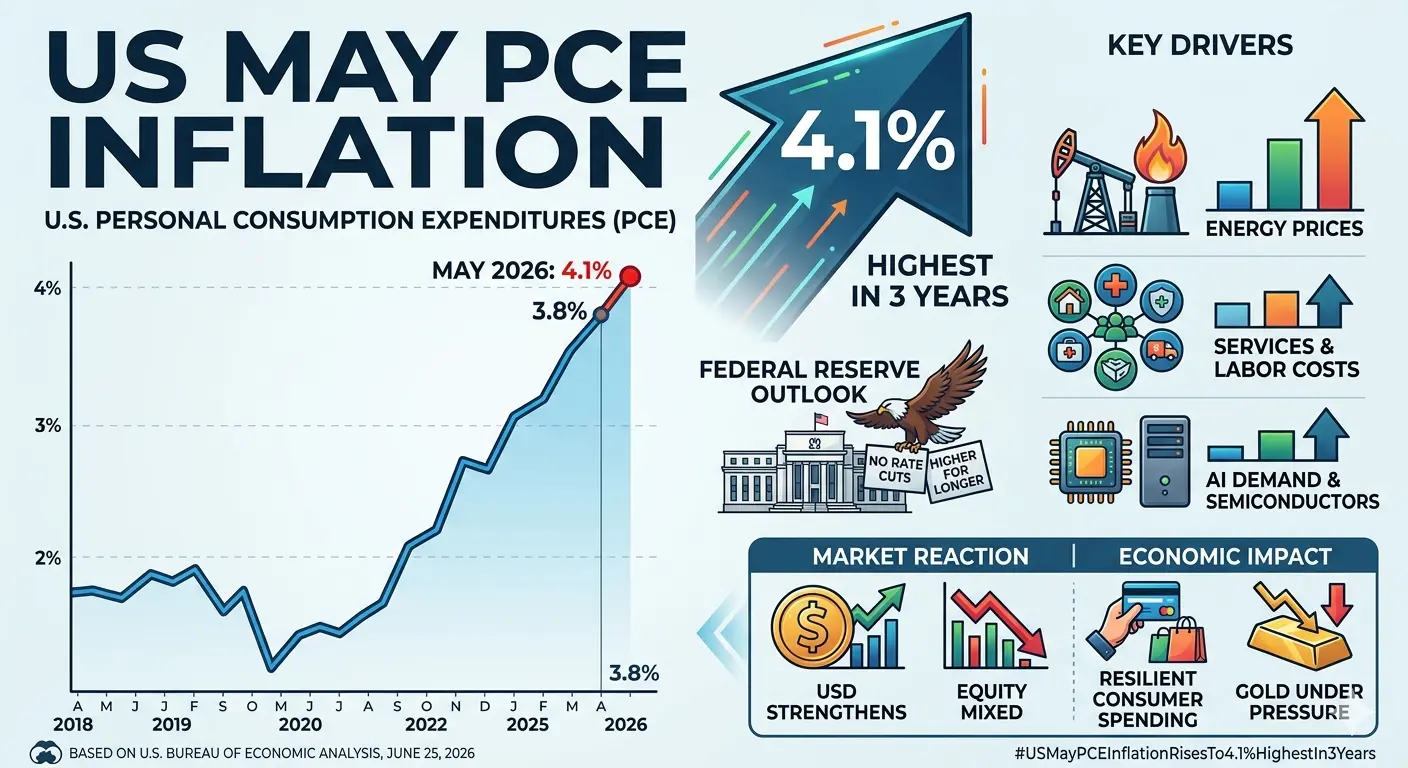
The May 2026 U.S. Personal Consumption Expenditures (PCE) Price Index, the Federal Reserve's preferred inflation gauge, accelerated to 4.1% year-over-year, rising from 3.8% in April and marking its highest level in nearly three years. Monthly headline PCE increased 0.4%, while Core PCE climbed to 3.4% YoY from 3.3%, with a 0.3% monthly increase. The report immediately reshaped market expectations, as investors priced in a longer period of restrictive monetary policy, sending shockwaves across global financial markets.
A 4.1% PCE inflation reading is more than double the Federal Reserve's 2% target, signaling that inflation remains deeply embedded across the U.S. economy despite months of tight monetary policy. Rising costs across housing, healthcare, transportation, insurance, food, labor, and services continue to pressure consumers and businesses alike. As a result, expectations for near-term interest rate cuts weakened significantly, while expectations for higher interest rates for longer strengthened. The immediate consequences included a stronger U.S. Dollar, higher Treasury yields, tighter global liquidity, weaker risk appetite, and increased volatility across equities, commodities, and cryptocurrencies.
The impact extended far beyond inflation data. Following the release, the 10-Year U.S. Treasury yield climbed above 4.41%, while the 2-Year Treasury yield approached 4.15%, reflecting expectations that borrowing costs will remain elevated. The U.S. Dollar Index (DXY) strengthened as investors shifted capital into dollar-denominated assets, reducing global liquidity and making financing more expensive worldwide. At the same time, major U.S. stock indices including the Nasdaq, S&P 500, and Dow Jones weakened, while gold attracted defensive capital as investors searched for protection against persistent inflation.
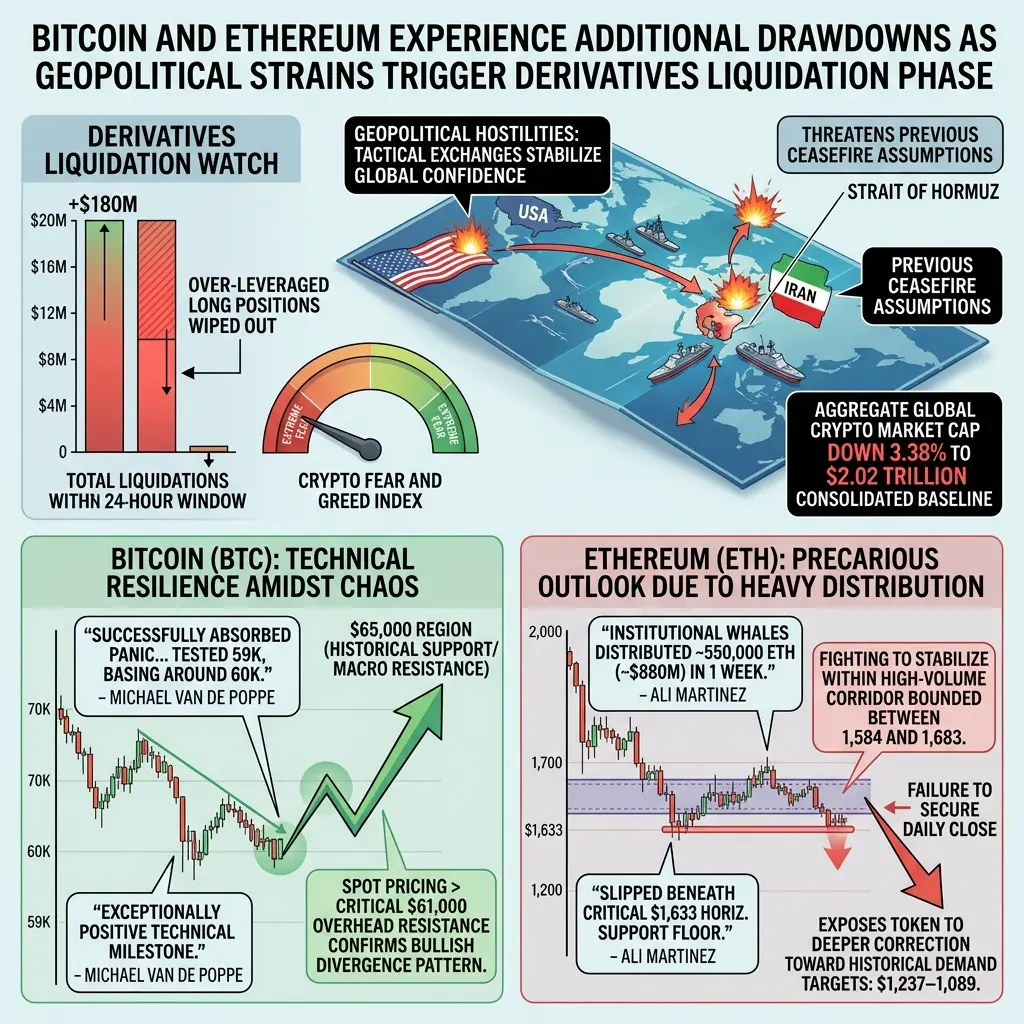
The cryptocurrency market reacted immediately to the tightening financial environment. Bitcoin is currently trading around $59,059, slipping below the key $60,000 psychological level after failing to maintain bullish momentum. The world's largest cryptocurrency remains more than 53% below its previous cycle high, illustrating how strongly macroeconomic conditions continue influencing digital asset valuations. Immediate support is located between $59,000 and $58,500, followed by $57,000, $55,000, and $50,000-$52,000, while major resistance remains at $60,500, $62,000, $64,000, $67,000, and $70,000.
Ethereum is trading near $1,550, remaining under significant pressure as institutional investors continue reducing exposure to higher-risk assets. The primary support level remains $1,500, followed by $1,450, $1,350, and $1,200, while resistance is positioned near $1,600, $1,700, $1,850, and $2,000. Across the broader market, XRP declined nearly 10%, Solana lost around 6%, BNB weakened approximately 6%, and Dogecoin dropped more than 12%, confirming that selling pressure extended well beyond Bitcoin and Ethereum.
One of the biggest consequences of the 4.1% PCE inflation report was the deterioration in market liquidity. Bitcoin spot trading volume surged to approximately $48.7 billion, around 58% above its 30-day average, while Ethereum spot trading volume climbed to nearly $28.9 billion, increasing roughly 71%. Total cryptocurrency trading volume expanded to almost $118 billion within 24 hours, representing more than a 50% increase compared with recent daily averages. However, this surge in activity reflected panic selling and portfolio repositioning rather than fresh bullish demand.
Liquidity conditions weakened considerably despite stronger trading activity. Bitcoin futures open interest declined to approximately $31.4 billion, falling more than 17% month-over-month, while Ethereum futures open interest dropped to around $14.8 billion, decreasing nearly 20%. Buy-side market depth across major exchanges declined by roughly 26%, while bid-ask spreads widened by approximately 42%, making prices far more sensitive to relatively small transactions. This combination of rising volume and weakening liquidity significantly increased intraday volatility and the probability of sharp price swings.
The derivatives market experienced one of its largest liquidation events of the year. More than $1.7 billion worth of cryptocurrency positions were liquidated across major exchanges, with approximately $1.57 billion, or over 92%, consisting of long positions. Bitcoin alone accounted for nearly $770 million in liquidations, while Ethereum contributed several hundred million dollars more. Cascading stop-loss orders accelerated downside momentum as leveraged traders were forced to exit positions.
Institutional capital rotated rapidly into defensive assets. Demand for USDT and USDC increased sharply, stablecoin trading activity expanded, and investors temporarily shifted capital away from volatile cryptocurrencies. Bitcoin Spot ETFs continued recording net outflows, Ethereum ETFs also experienced persistent withdrawals, exchange inflows increased, miner selling accelerated, whale accumulation slowed, and the percentage of Bitcoin supply remaining in profit declined. These indicators suggest that institutional investors remain focused on liquidity preservation until inflation begins showing a sustained downward trend.
The 4.1% PCE inflation report also reinforced the broader Inflation Echo Effect, where inflation continues influencing the economy long after the original catalyst fades. Rising production costs, transportation expenses, wage growth, and service-sector inflation continue feeding into each other, making inflation much more persistent than markets initially expected. This environment forces central banks to remain cautious, delays monetary easing, and keeps financial conditions restrictive for longer.
Looking ahead, investors should closely monitor future PCE reports, CPI data, employment numbers, Federal Reserve meetings, Treasury yields, the U.S. Dollar Index, ETF flows, funding rates, futures open interest, exchange liquidity, trading volume, stablecoin market capitalization, and institutional positioning. These macroeconomic indicators are expected to remain the primary drivers of Bitcoin, Ethereum, and the broader cryptocurrency market throughout the remainder of the year.
Final Thoughts
The May 2026 PCE inflation reading of 4.1% has become one of the most important macroeconomic catalysts of the year. It strengthened the U.S. Dollar, pushed Treasury yields above 4.4%, reduced expectations for Federal Reserve rate cuts, tightened global liquidity, increased borrowing costs, accelerated institutional capital rotation, triggered more than $1.7 billion in crypto liquidations, lifted cryptocurrency trading volume above $118 billion, weakened order-book depth by 26%, widened bid-ask spreads by 42%, and intensified volatility across Bitcoin, Ethereum, equities, commodities, and global financial markets.
With Bitcoin trading around $59,059 and Ethereum near $1,550, the market remains highly sensitive to every inflation update and Federal Reserve signal. Until inflation moves convincingly back toward the 2% target, macroeconomic fundamentals, liquidity conditions, trading volume, institutional capital flows, and monetary policy are likely to remain the dominant forces shaping the direction of digital assets.@Gate_Square
The May 2026 U.S. Personal Consumption Expenditures (PCE) Price Index, the Federal Reserve's preferred inflation gauge, accelerated to 4.1% year-over-year, rising from 3.8% in April and marking its highest level in nearly three years. Monthly headline PCE increased 0.4%, while Core PCE climbed to 3.4% YoY from 3.3%, with a 0.3% monthly increase. The report immediately reshaped market expectations, as investors priced in a longer period of restrictive monetary policy, sending shockwaves across global financial markets.
A 4.1% PCE inflation reading is more than double the Federal Reserve's 2% target, signaling that inflation remains deeply embedded across the U.S. economy despite months of tight monetary policy. Rising costs across housing, healthcare, transportation, insurance, food, labor, and services continue to pressure consumers and businesses alike. As a result, expectations for near-term interest rate cuts weakened significantly, while expectations for higher interest rates for longer strengthened. The immediate consequences included a stronger U.S. Dollar, higher Treasury yields, tighter global liquidity, weaker risk appetite, and increased volatility across equities, commodities, and cryptocurrencies.
The impact extended far beyond inflation data. Following the release, the 10-Year U.S. Treasury yield climbed above 4.41%, while the 2-Year Treasury yield approached 4.15%, reflecting expectations that borrowing costs will remain elevated. The U.S. Dollar Index (DXY) strengthened as investors shifted capital into dollar-denominated assets, reducing global liquidity and making financing more expensive worldwide. At the same time, major U.S. stock indices including the Nasdaq, S&P 500, and Dow Jones weakened, while gold attracted defensive capital as investors searched for protection against persistent inflation.
The cryptocurrency market reacted immediately to the tightening financial environment. Bitcoin is currently trading around $59,059, slipping below the key $60,000 psychological level after failing to maintain bullish momentum. The world's largest cryptocurrency remains more than 53% below its previous cycle high, illustrating how strongly macroeconomic conditions continue influencing digital asset valuations. Immediate support is located between $59,000 and $58,500, followed by $57,000, $55,000, and $50,000-$52,000, while major resistance remains at $60,500, $62,000, $64,000, $67,000, and $70,000.
Ethereum is trading near $1,550, remaining under significant pressure as institutional investors continue reducing exposure to higher-risk assets. The primary support level remains $1,500, followed by $1,450, $1,350, and $1,200, while resistance is positioned near $1,600, $1,700, $1,850, and $2,000. Across the broader market, XRP declined nearly 10%, Solana lost around 6%, BNB weakened approximately 6%, and Dogecoin dropped more than 12%, confirming that selling pressure extended well beyond Bitcoin and Ethereum.
One of the biggest consequences of the 4.1% PCE inflation report was the deterioration in market liquidity. Bitcoin spot trading volume surged to approximately $48.7 billion, around 58% above its 30-day average, while Ethereum spot trading volume climbed to nearly $28.9 billion, increasing roughly 71%. Total cryptocurrency trading volume expanded to almost $118 billion within 24 hours, representing more than a 50% increase compared with recent daily averages. However, this surge in activity reflected panic selling and portfolio repositioning rather than fresh bullish demand.
Liquidity conditions weakened considerably despite stronger trading activity. Bitcoin futures open interest declined to approximately $31.4 billion, falling more than 17% month-over-month, while Ethereum futures open interest dropped to around $14.8 billion, decreasing nearly 20%. Buy-side market depth across major exchanges declined by roughly 26%, while bid-ask spreads widened by approximately 42%, making prices far more sensitive to relatively small transactions. This combination of rising volume and weakening liquidity significantly increased intraday volatility and the probability of sharp price swings.
The derivatives market experienced one of its largest liquidation events of the year. More than $1.7 billion worth of cryptocurrency positions were liquidated across major exchanges, with approximately $1.57 billion, or over 92%, consisting of long positions. Bitcoin alone accounted for nearly $770 million in liquidations, while Ethereum contributed several hundred million dollars more. Cascading stop-loss orders accelerated downside momentum as leveraged traders were forced to exit positions.
Institutional capital rotated rapidly into defensive assets. Demand for USDT and USDC increased sharply, stablecoin trading activity expanded, and investors temporarily shifted capital away from volatile cryptocurrencies. Bitcoin Spot ETFs continued recording net outflows, Ethereum ETFs also experienced persistent withdrawals, exchange inflows increased, miner selling accelerated, whale accumulation slowed, and the percentage of Bitcoin supply remaining in profit declined. These indicators suggest that institutional investors remain focused on liquidity preservation until inflation begins showing a sustained downward trend.
The 4.1% PCE inflation report also reinforced the broader Inflation Echo Effect, where inflation continues influencing the economy long after the original catalyst fades. Rising production costs, transportation expenses, wage growth, and service-sector inflation continue feeding into each other, making inflation much more persistent than markets initially expected. This environment forces central banks to remain cautious, delays monetary easing, and keeps financial conditions restrictive for longer.
Looking ahead, investors should closely monitor future PCE reports, CPI data, employment numbers, Federal Reserve meetings, Treasury yields, the U.S. Dollar Index, ETF flows, funding rates, futures open interest, exchange liquidity, trading volume, stablecoin market capitalization, and institutional positioning. These macroeconomic indicators are expected to remain the primary drivers of Bitcoin, Ethereum, and the broader cryptocurrency market throughout the remainder of the year.
Final Thoughts
The May 2026 PCE inflation reading of 4.1% has become one of the most important macroeconomic catalysts of the year. It strengthened the U.S. Dollar, pushed Treasury yields above 4.4%, reduced expectations for Federal Reserve rate cuts, tightened global liquidity, increased borrowing costs, accelerated institutional capital rotation, triggered more than $1.7 billion in crypto liquidations, lifted cryptocurrency trading volume above $118 billion, weakened order-book depth by 26%, widened bid-ask spreads by 42%, and intensified volatility across Bitcoin, Ethereum, equities, commodities, and global financial markets.
With Bitcoin trading around $59,059 and Ethereum near $1,550, the market remains highly sensitive to every inflation update and Federal Reserve signal. Until inflation moves convincingly back toward the 2% target, macroeconomic fundamentals, liquidity conditions, trading volume, institutional capital flows, and monetary policy are likely to remain the dominant forces shaping the direction of digital assets.@Gate_Square