
#TrumpCallsForClarityActPassage
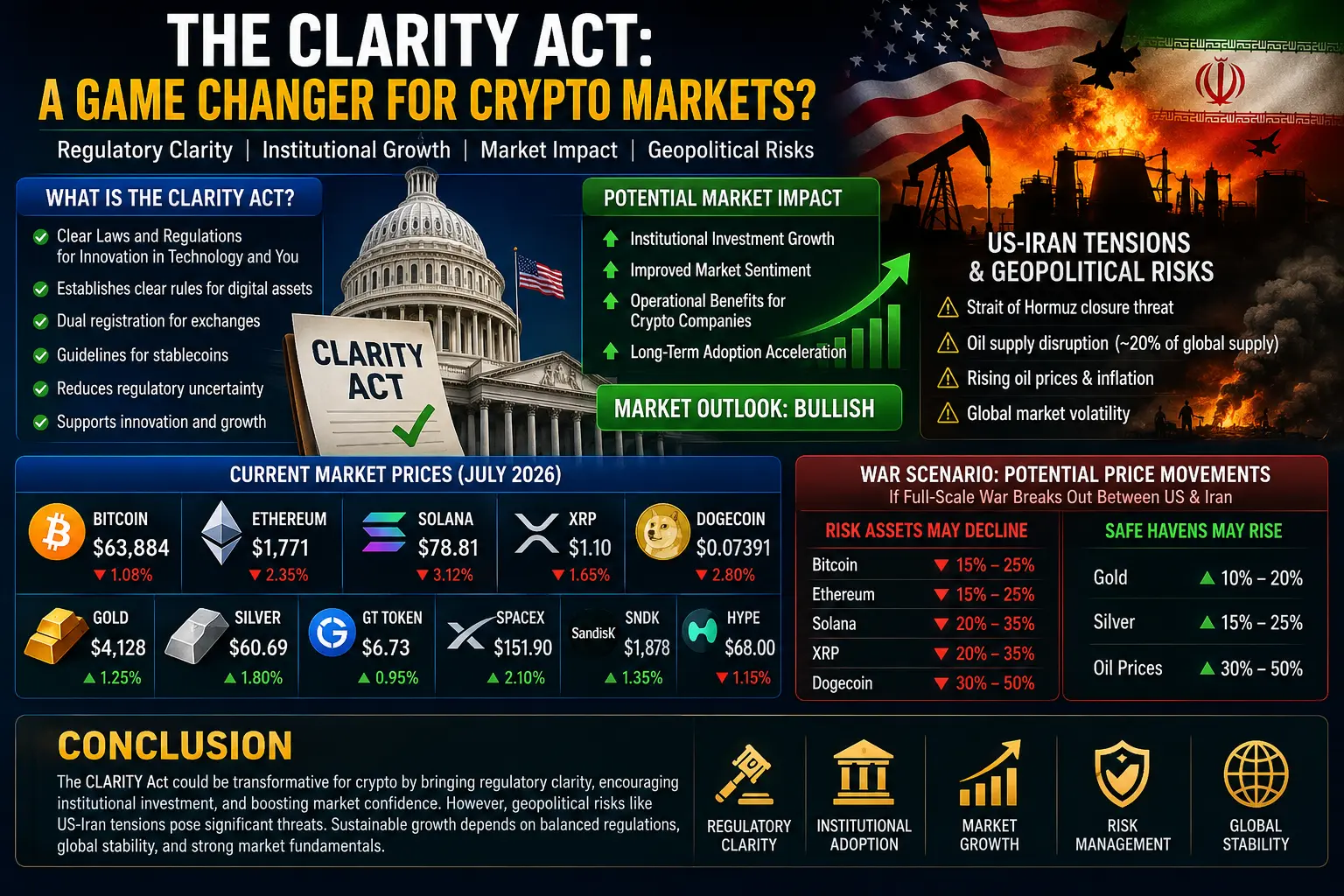
President Donald Trump has made a significant push for cryptocurrency regulatory reform by calling on the U.S. Senate to pass the Digital Asset Market Clarity Act of 2025, commonly known as the CLARITY Act. This legislation represents one of the most comprehensive attempts to establish a clear regulatory framework for digital assets in the United States, and its passage could fundamentally transform the cryptocurrency landscape.
The CLARITY Act addresses a critical problem that has plagued the crypto industry for over a decade: regulatory uncertainty. Currently, the U.S. Securities and Exchange Commission (SEC) and the Commodity Futures Trading Commission (CFTC) have been engaged in what industry participants describe as "regulation by enforcement." This approach has created legal ambiguity, constrained participation from traditional financial institutions, and pushed innovation abroad to more crypto-friendly jurisdictions. The lack of a unified regulatory framework has left market participants and developers in a legal gray zone, unsure whether crypto products fall under securities or commodities laws.
The CLARITY Act proposes to solve this jurisdictional battle by establishing a three-tiered asset classification system. First, it defines digital commodities as assets intrinsically linked to blockchain systems where value is directly related to the functionality or operation of that system. Second, it categorizes investment contract assets separately, providing clarity on which tokens constitute securities. Third, it addresses permitted payment stablecoins, building upon the recently passed GENIUS Act which provided clarity on stablecoin issuance and oversight. This classification framework aims to separate token-based transactions from the investment contract securities analysis under the Howey test, which has been the source of significant regulatory friction.
The implications of this legislation passing would be profound for the cryptocurrency market. Regulatory clarity would reduce uncertainty that has historically made institutional investors cautious about entering the crypto space. Large banks, investment funds, and institutional investors could participate in the cryptocurrency market with greater confidence, knowing exactly which laws apply to their activities. This institutional influx could bring substantial capital into the market, potentially driving up prices for major cryptocurrencies like Bitcoin and Ethereum.
Market sentiment would likely improve significantly if the legislation is perceived positively by the market. Clear regulations reduce the fear of sudden enforcement actions that have previously caused market volatility. If the market interprets the CLARITY Act as a bullish development, buying pressure could increase for Bitcoin, Ethereum, and other major cryptocurrencies. The legislation would provide cryptocurrency companies operating in America with a clear framework, allowing exchanges and blockchain companies to operate with defined rules rather than navigating ambiguous regulatory territory.
The CLARITY Act has already passed the House of Representatives with bipartisan support, receiving 294 votes in favor and 134 against. The Senate Banking Committee approved the bill 15-9 in May, with two Democrats joining Republicans to advance the legislation. However, the path to full Senate passage has encountered complications. Democrats have pushed for increased ethics guardrails for elected officials, particularly in light of President Trump's significant cryptocurrency earnings. According to financial disclosures, Trump earned over 1.4 billion dollars from digital assets in 2025, with nearly 800 million dollars linked to the crypto project World Liberty Financial. Senator Elizabeth Warren has proposed amendments to prevent high-ranking officials from profiting from the crypto industry.
The recent death of Senator Lindsey Graham adds another layer of complexity to the legislative process. While Graham was not a primary player in the CLARITY Act, his passing narrows the already thin Senate Republican majority to 52-47, potentially making passage more challenging. President Trump called for the Senate to pass the CLARITY Act in honor of Graham, stating on Truth Social that China and other countries would like to take complete control of this major financial happening as well as artificial intelligence, urging Congress not to let China win on either subject.
The crypto industry has broadly supported the CLARITY Act, with major players including Coinbase, Circle, and Ripple backing the legislation. These companies hope that clear regulation will encourage more investors to enter the market by reducing compliance risks and operational uncertainty. However, the legislation faces opposition from banks, who warn it could allow crypto groups to offer interest-like payments to stablecoin holders, potentially leading to decreased bank deposits and reduced capital available for loans. Law enforcement agencies and some labor groups have also expressed concerns about the measure.
From a geopolitical perspective, the CLARITY Act is viewed as a competitive necessity. The United States has fallen behind other jurisdictions in establishing clear crypto regulations, with countries like Singapore, Switzerland, and the United Arab Emirates attracting crypto businesses that might otherwise operate in America. By passing comprehensive legislation, the U.S. could reclaim its position as a leader in financial innovation and prevent capital flight to more welcoming regulatory environments. The legislation also addresses national security concerns by bringing crypto activities under clearer oversight, making it easier to monitor transactions and prevent illicit use.
If the CLARITY Act passes, the long-term effects could reshape the cryptocurrency landscape. Institutional adoption would likely accelerate as compliance frameworks become clearer. Traditional finance could integrate more seamlessly with decentralized finance, creating new products and services. The United States could establish itself as the crypto capital of the world, fulfilling President Trump's vision of making America the Bitcoin superpower. However, it is important to note that while clear regulations reduce uncertainty, sustainable price increases depend on multiple factors including economic conditions, interest rates, ETF flows, and global developments. Regulatory clarity alone does not guarantee perpetual price appreciation, though it removes a significant barrier to institutional participation.
In conclusion, the CLARITY Act represents a pivotal moment for cryptocurrency regulation in the United States. President Trump's advocacy for its passage signals strong executive support for establishing America as a leader in the digital asset space. The legislation promises to end the era of regulation by enforcement, provide clear rules for market participants, and potentially unlock significant institutional investment. While challenges remain in the Senate, the bipartisan momentum behind crypto regulation suggests that comprehensive legislation may finally become reality, marking a new chapter in the evolution of digital assets.@Gate_Square
President Donald Trump has made a significant push for cryptocurrency regulatory reform by calling on the U.S. Senate to pass the Digital Asset Market Clarity Act of 2025, commonly known as the CLARITY Act. This legislation represents one of the most comprehensive attempts to establish a clear regulatory framework for digital assets in the United States, and its passage could fundamentally transform the cryptocurrency landscape.
The CLARITY Act addresses a critical problem that has plagued the crypto industry for over a decade: regulatory uncertainty. Currently, the U.S. Securities and Exchange Commission (SEC) and the Commodity Futures Trading Commission (CFTC) have been engaged in what industry participants describe as "regulation by enforcement." This approach has created legal ambiguity, constrained participation from traditional financial institutions, and pushed innovation abroad to more crypto-friendly jurisdictions. The lack of a unified regulatory framework has left market participants and developers in a legal gray zone, unsure whether crypto products fall under securities or commodities laws.
The CLARITY Act proposes to solve this jurisdictional battle by establishing a three-tiered asset classification system. First, it defines digital commodities as assets intrinsically linked to blockchain systems where value is directly related to the functionality or operation of that system. Second, it categorizes investment contract assets separately, providing clarity on which tokens constitute securities. Third, it addresses permitted payment stablecoins, building upon the recently passed GENIUS Act which provided clarity on stablecoin issuance and oversight. This classification framework aims to separate token-based transactions from the investment contract securities analysis under the Howey test, which has been the source of significant regulatory friction.
The implications of this legislation passing would be profound for the cryptocurrency market. Regulatory clarity would reduce uncertainty that has historically made institutional investors cautious about entering the crypto space. Large banks, investment funds, and institutional investors could participate in the cryptocurrency market with greater confidence, knowing exactly which laws apply to their activities. This institutional influx could bring substantial capital into the market, potentially driving up prices for major cryptocurrencies like Bitcoin and Ethereum.
Market sentiment would likely improve significantly if the legislation is perceived positively by the market. Clear regulations reduce the fear of sudden enforcement actions that have previously caused market volatility. If the market interprets the CLARITY Act as a bullish development, buying pressure could increase for Bitcoin, Ethereum, and other major cryptocurrencies. The legislation would provide cryptocurrency companies operating in America with a clear framework, allowing exchanges and blockchain companies to operate with defined rules rather than navigating ambiguous regulatory territory.
The CLARITY Act has already passed the House of Representatives with bipartisan support, receiving 294 votes in favor and 134 against. The Senate Banking Committee approved the bill 15-9 in May, with two Democrats joining Republicans to advance the legislation. However, the path to full Senate passage has encountered complications. Democrats have pushed for increased ethics guardrails for elected officials, particularly in light of President Trump's significant cryptocurrency earnings. According to financial disclosures, Trump earned over 1.4 billion dollars from digital assets in 2025, with nearly 800 million dollars linked to the crypto project World Liberty Financial. Senator Elizabeth Warren has proposed amendments to prevent high-ranking officials from profiting from the crypto industry.
The recent death of Senator Lindsey Graham adds another layer of complexity to the legislative process. While Graham was not a primary player in the CLARITY Act, his passing narrows the already thin Senate Republican majority to 52-47, potentially making passage more challenging. President Trump called for the Senate to pass the CLARITY Act in honor of Graham, stating on Truth Social that China and other countries would like to take complete control of this major financial happening as well as artificial intelligence, urging Congress not to let China win on either subject.
The crypto industry has broadly supported the CLARITY Act, with major players including Coinbase, Circle, and Ripple backing the legislation. These companies hope that clear regulation will encourage more investors to enter the market by reducing compliance risks and operational uncertainty. However, the legislation faces opposition from banks, who warn it could allow crypto groups to offer interest-like payments to stablecoin holders, potentially leading to decreased bank deposits and reduced capital available for loans. Law enforcement agencies and some labor groups have also expressed concerns about the measure.
From a geopolitical perspective, the CLARITY Act is viewed as a competitive necessity. The United States has fallen behind other jurisdictions in establishing clear crypto regulations, with countries like Singapore, Switzerland, and the United Arab Emirates attracting crypto businesses that might otherwise operate in America. By passing comprehensive legislation, the U.S. could reclaim its position as a leader in financial innovation and prevent capital flight to more welcoming regulatory environments. The legislation also addresses national security concerns by bringing crypto activities under clearer oversight, making it easier to monitor transactions and prevent illicit use.
If the CLARITY Act passes, the long-term effects could reshape the cryptocurrency landscape. Institutional adoption would likely accelerate as compliance frameworks become clearer. Traditional finance could integrate more seamlessly with decentralized finance, creating new products and services. The United States could establish itself as the crypto capital of the world, fulfilling President Trump's vision of making America the Bitcoin superpower. However, it is important to note that while clear regulations reduce uncertainty, sustainable price increases depend on multiple factors including economic conditions, interest rates, ETF flows, and global developments. Regulatory clarity alone does not guarantee perpetual price appreciation, though it removes a significant barrier to institutional participation.
In conclusion, the CLARITY Act represents a pivotal moment for cryptocurrency regulation in the United States. President Trump's advocacy for its passage signals strong executive support for establishing America as a leader in the digital asset space. The legislation promises to end the era of regulation by enforcement, provide clear rules for market participants, and potentially unlock significant institutional investment. While challenges remain in the Senate, the bipartisan momentum behind crypto regulation suggests that comprehensive legislation may finally become reality, marking a new chapter in the evolution of digital assets.@Gate_Square