Top 4 Coins with the Highest Mining Profitability
What is Cryptocurrency Mining?
Cryptocurrency mining is the fundamental process of creating new digital currencies and validating transactions on blockchain networks. Taking Bitcoin as an example, miners serve two critical roles in the ecosystem. First, they verify and confirm transactions, ensuring the integrity of the network. Second, they generate new bitcoins through computational work, adding them to the circulating supply.
When someone sends cryptocurrency to another person, miners validate these transactions on the blockchain. This validation process is essential for maintaining the security and trustworthiness of the entire network. Miners collect transactions from the memory pool—a waiting area in the blockchain network where unconfirmed transactions are temporarily stored. They then organize these transactions into blocks. The memory pool functions as a holding area for all pending transactions that have been submitted to the network but not yet included in a block.
Once miners successfully validate transactions and add them to the blockchain, the protocol rewards them with newly minted cryptocurrency. This reward system incentivizes miners to continue securing the network and processing transactions. The mining process ensures that all transactions are permanently recorded and cannot be altered or reversed, which is fundamental to blockchain's security model.
What Are Miners?
Miners are the backbone of cryptocurrency networks, serving as the nodes that hold everything together. They collect, verify, and organize transactions into blocks, maintaining the decentralized nature of blockchain technology. In the Bitcoin network, for instance, miners validate transactions and issue new cryptocurrency, performing functions similar to central banks in traditional financial systems—but in a decentralized manner.
Bitcoin operates similarly to traditional currencies like the US dollar, with one crucial difference: decentralization. While the US government issues new bills with little to no input from citizens, Bitcoin relies on a global network of distributed miners who verify all transactions and secure the network. This decentralized approach ensures that no single entity controls the currency.
To process Bitcoin transactions, miners invest in high-performance specialized computers. These powerful machines solve complex computational problems that link transaction blocks together. When a miner successfully validates transactions and adds them to the blockchain, those transactions become immutable and irreversible. This work is directly connected to network security, making mining an essential component of cryptocurrency infrastructure.
Mining ensures the fairness, stability, and security of the Bitcoin network and other proof-of-work blockchains. As compensation for their efforts, the protocol rewards miners with new bitcoin approximately every 10 minutes. This issuance schedule is hardcoded into Bitcoin's programming. The only way to mine cryptocurrency is to verify transactions and include them in blocks, creating a system where security and currency creation are intrinsically linked.
Cryptocurrency Mining Methods
There are several methods to acquire cryptocurrency through mining, each with distinct advantages and requirements. In this section, we'll explore CPU mining, GPU mining, ASIC mining, and cloud mining, providing detailed insights into each approach.
1. CPU Mining
CPU mining utilizes a computer's Central Processing Unit to mine cryptocurrency. In the early days of cryptocurrency, CPU mining was the primary method used by miners. However, as GPU and ASIC equipment were developed, CPU mining's efficiency became relatively lower. Despite this, CPU mining is still used for certain specialized cryptocurrencies, small-scale mining operations, and educational purposes. To maximize profitability, it's advisable to select cryptocurrencies and mining pools that are suitable for small-scale CPU mining.
Advantages of CPU Mining
- Low Initial Cost: You can utilize your existing computer's CPU without purchasing additional equipment, keeping costs minimal.
- Accessibility: Anyone can easily access CPU mining, making it suitable for small-scale or personal mining operations.
- Flexibility: CPUs can flexibly handle various algorithms, allowing you to mine different types of cryptocurrencies without specialized hardware.
Disadvantages of CPU Mining
- Low Computational Power: CPUs process complex hash calculations much slower than GPUs or ASICs, making them less competitive in the mining landscape.
- Poor Power Efficiency: Due to CPU mining's low efficiency, relatively high power consumption can reduce profitability significantly.
- Overheating Issues: When processing high-load tasks for extended periods, CPUs can overheat, potentially degrading computer performance and requiring additional cooling systems.
Cryptocurrencies Suitable for CPU Mining
- Monero (XMR): A cryptocurrency favorable for CPU mining, using the RandomX algorithm with strong ASIC resistance, encouraging CPU mining participation.
- VerusCoin (VRSC): Uses algorithms optimized for CPUs, making it popular among those who prefer CPU mining.
- Argocoin: Designed for small-scale miners and CPU miners, allowing mining with low power consumption.
2. ASIC Mining
ASIC mining uses Application-Specific Integrated Circuit chips specifically designed for cryptocurrency mining. Because ASICs are custom-built to process specific algorithms, they are highly effective for mining Proof of Work cryptocurrencies like Bitcoin. They excel at processing hash calculations quickly, delivering far more efficient performance than GPUs and CPUs.
Advantages of ASIC Mining
- High Performance: ASICs are designed to process only specific calculations, allowing them to mine much faster than GPUs or CPUs.
- Energy Efficiency: They require relatively less power to process the same computational workload, helping to reduce electricity costs.
- Profitability: Due to their superior performance, miners can expect higher mining rewards. They remain advantageous even in high-difficulty mining scenarios like Bitcoin.
Disadvantages of ASIC Mining
- High Initial Cost: ASIC miners are expensive, and once purchased, can only be used for specific cryptocurrencies, resulting in high initial investment costs.
- Lack of Flexibility: ASICs are specialized for specific algorithms and cannot be used to mine other cryptocurrencies. For example, a Bitcoin ASIC miner cannot mine other cryptocurrencies.
- Equipment Obsolescence: As mining difficulty increases, newer ASIC models with better performance are released, and older equipment may lose profitability.
Cryptocurrencies Suitable for ASIC Mining
- Bitcoin: The most representative cryptocurrency that can be mined with ASICs, using the SHA-256 algorithm.
- Litecoin: Uses the Scrypt algorithm and is one of the altcoins suitable for ASIC mining.
- Bitcoin Cash: Uses the same algorithm as Bitcoin, making it compatible with ASIC mining.
3. GPU Mining
GPU mining utilizes Graphics Processing Units to mine cryptocurrency. This method was widely used in Bitcoin's early days and remains effective for altcoin mining today. GPUs have superior parallel processing capabilities compared to regular CPUs, allowing them to handle many calculations simultaneously—an advantage that makes them ideal for cryptocurrency mining, which requires extensive hash computations.
Advantages of GPU Mining
- Computational Power: Higher computational efficiency than CPUs allows faster solving of complex hash problems.
- Flexibility: Can mine various cryptocurrencies and easily adapt to new mining algorithms.
- Scalability: Multiple GPUs can be used simultaneously to maximize mining performance.
Disadvantages of GPU Mining
- Power Consumption: GPUs consume significant power and generate substantial heat, requiring cooling systems. This increases long-term operational costs.
- Price: High-performance GPUs are expensive, leading to high initial investment costs.
- Competition and Difficulty: GPU mining has relatively lower performance compared to ASIC mining in competitive environments.
Cryptocurrencies Suitable for GPU Mining
- Ravencoin, Bitcoin Gold, Ergo: These cryptocurrencies use ASIC-resistant algorithms, making them mineable with GPUs.
4. Cloud Mining
Cloud mining is similar to trading stocks through an investment broker. The broker does the work while you earn the profits. Cloud mining involves renting mining machines and expertise from mining service companies. Service providers perform maintenance and monitoring for a fee, and investors receive profits after the contracted period ends.
Cloud mining is a popular method that allows investors to participate in mining without purchasing mining equipment. Cloud mining service providers possess multiple professional mining rigs and can operate them to maximize production. Each service company offers different plans with varying costs. Cloud mining prices can start from around $300.
Depending on the operation of the mined asset and market prices, you can reach break-even within 9-14 months. However, this calculation assumes market prices and difficulty levels remain constant. When selecting a service provider, carefully examine the contract period, allocated mining capacity, and maintenance costs, as these factors determine profitability.
Representative cloud mining companies include BitDeer, Hashmart, Hashing24, and StormGain.
Advantages of Cloud Mining
- No Equipment Management Required: Eliminates the hassle of purchasing, setting up, and maintaining equipment, making it easy for beginners to participate.
- Low Initial Cost: Allows participation in mining with less capital than purchasing mining rigs directly, with no burden of equipment failure or replacement.
- Flexible Contract Terms: Most cloud mining services allow users to choose contract periods, hash rates, and other parameters flexibly.
Disadvantages of Cloud Mining
- Uncertain Profitability: Profitability fluctuates based on mining difficulty, cryptocurrency prices, and power costs, with the possibility of not recovering initial investment.
- Fraud Risk: With many untrustworthy companies in the market, wrong choices can result in significant investment losses.
- Fixed Costs: Costs remain fixed during the contract period, making it difficult to respond flexibly to changes in mining difficulty or cryptocurrency prices.
Cryptocurrencies Suitable for Cloud Mining
- Bitcoin: The most commonly cloud-mined cryptocurrency, with many companies offering Bitcoin cloud mining services.
- Litecoin, Dash, Bitcoin Cash: These can also be mined through cloud mining services.
How to Choose Cryptocurrencies Suitable for Mining
Whether an asset is good for mining depends on various factors, but profitability is most important for most investors. Unless mining as a hobby, you need profitability to justify investing funds and time. Here are several important criteria for determining an asset's profitability.
1. Asset Price
Cryptocurrencies are highly volatile and often experience significant daily fluctuations, so you should verify whether the cost of mining one coin is higher than its market price. This principle isn't absolute, as miners sometimes hold acquired cryptocurrency to anticipate future price increases. While this may not lead to immediate success, considering the volatile nature of cryptocurrency markets, bull markets will likely arrive eventually.
2. Legality
Owning and mining cryptocurrency must be legal in your country. Some countries have restrictions on mining, while others appear to have no regulations. In countries where cryptocurrency mining is legal, you can mine with cheap electricity without fear of crackdowns. For power-dependent assets like Bitcoin, lower electricity costs translate to higher profits.
3. Costs
You need the financial capability to pay electricity bills and acquire high-performance mining equipment. All mining operations require equipment, which can range from something as small as a computer to much larger setups. Mining equipment can cost over $3,000.
Besides hardware, you must invest in software. However, if traditional mining seems too complex, you can start mining through exchanges. This is an excellent way to begin mining without taking significant risks.
Most Profitable Coins to Mine
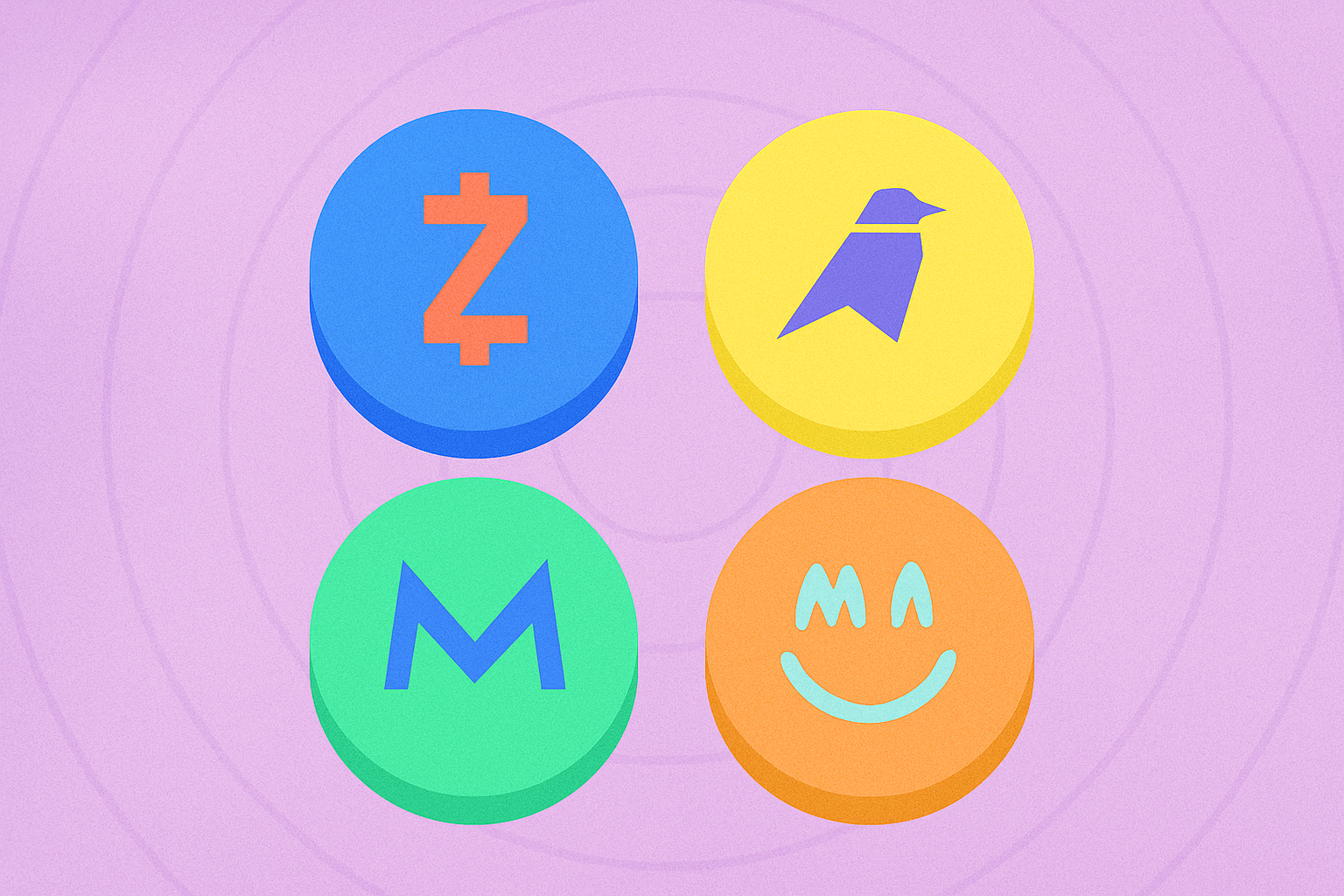
1. Zcash (ZEC)
Zcash began operations in 2016 and has established itself as one of the most privacy-focused cryptocurrencies in the market. One of this asset's impressive features is its substantial mining rewards, making it attractive for miners seeking profitability.
Zcash operates on the Equihash algorithm, which is not compatible with ASICs. Therefore, you don't need ASIC equipment to mine Zcash—good news if you're concerned about initial mining costs. Instead, you'll need a GPU or CPU to mine this asset.
While you can purchase a new CPU at a much lower cost, you'll also need to consider cooling requirements. If you use a GPU, you'll spend slightly more on equipment. Zcash can be purchased on most major cryptocurrency exchanges. It uses proof-of-work mining technology, with mining rewards of 10 ZEC per block.
2. Ravencoin (RVN)
Ravencoin is one of many cryptocurrencies derived from the original Bitcoin. It is mined through proof-of-work mining techniques using the X16R algorithm. This algorithm alternates between SHA512 and X15 mining algorithms, with the sequence defined by the previous block's hash. You can start mining Ravencoin by purchasing graphics cards from NVIDIA and AMD.
Ravencoin can be seamlessly exchanged on various platforms. It is a cryptocurrency focused on asset transfer, based on Bitcoin and Ethereum technology. The mining reward is 5,000 RVN per block, making it attractive for miners with GPU setups.
3. Monero (XMR)
Monero's excellent compatibility with Bitcoin is a significant feature. However, Monero provides a higher level of privacy, which is its greatest advantage. With a market capitalization exceeding $2.8 billion, Monero ranks as a valuable cryptocurrency, and its value has been steadily rising over recent years.
Monero doesn't require ASICs for mining, keeping initial mining costs low. Monero miners receive 4.99 XMR for verifying transactions on the blockchain, with transaction fees around 0.06573 XMR. Monero uses proof-of-work mining technology but adjusts its mining algorithm to allow miners to use both GPUs and CPUs for mining. It can be purchased on most major exchanges.
4. Grin (GRIN)
Grin is a relatively new cryptocurrency based on the Mimblewimble consensus algorithm, ensuring transaction privacy. GRIN holds unlimited coins, making it preferred by miners. Mining difficulty varies according to network hash, and the asset itself is based on proof-of-work mining technology.
Written in the Rust programming language, GRIN uses the Equihash algorithm. It has strong ASIC resistance, requiring hard forks every six months to avoid ASICs. AMD and NVIDIA GPUs can facilitate the mining process. The mining reward is 60 GRIN per block.
GRIN can be purchased on major cryptocurrency exchanges, making withdrawals straightforward and accessible for miners looking to convert their rewards.
FAQ
Which cryptocurrencies had the highest mining profitability in 2024?
Bitcoin (BTC), Ethereum Classic (ETC), Litecoin (LTC), and Zcash (ZEC) were among the most profitable cryptocurrencies to mine in 2024. Profitability depends on market value, mining difficulty, block rewards, and electricity costs. GPU-friendly options like Dogecoin (DOGE) and Ravencoin (RVN) also offered viable opportunities.
How to assess a cryptocurrency's mining profitability? What factors need to be considered?
Evaluate mining profitability by analyzing mining algorithm difficulty, hardware efficiency, electricity costs, network rewards, and coin market price. These core factors directly impact your mining returns and ROI.
How much does it cost and how long does it take to mine one Bitcoin or Ethereum?
Mining one Bitcoin costs over $10,000 and takes several years, while Ethereum is generally less costly and faster due to network changes. Costs depend on hardware, electricity, and network difficulty.
Which is more profitable: solo mining or pool mining? What are the differences?
Pool mining offers more stable, consistent rewards with lower technical requirements, ideal for most miners. Solo mining has higher potential returns but requires significant hardware and expertise, with highly variable rewards. Pool mining is generally more profitable for individual miners due to predictable income.
What are the profitability differences between different mining algorithms (PoW, Scrypt, etc.)?
PoW and Scrypt differ primarily in hardware efficiency and electricity costs. PoW typically requires high-performance GPUs, while Scrypt favors ASIC miners. Profitability fluctuates with market conditions, network difficulty, and coin prices.
What is the typical investment payback cycle for mining hardware (GPU, ASIC)?
Mining hardware typically achieves payback in 8-12 months. The ROI timeline varies based on hardware costs, electricity expenses, and current mining profitability. Market volatility and hash rate changes can significantly impact actual payback periods.
Share
Content
How to Buy Cryptocurrency


Trending Cryptocurrencies



How to Mine Ethereum in 2025: A Complete Guide for Beginners

Exploring the Crypto World: The Ultimate Mining Guide and Profit Secrets

From Zero to Hero – Mining Technology and Trends Analysis

Mining Strategies – Building Your Digital Gold Factory

Pi Network (PI): Mobile-Friendly Cryptocurrency for Global Adoption

Pi Network 2025: Latest Mining Updates and Mainnet Launch Progress

Top 10 Metaverse-Related Stocks to Watch in the US
What is SLAY: Understanding the Modern Slang Term and Its Cultural Impact

What is CAPS: A Comprehensive Guide to Capital Letters and Their Usage in Modern Communication

What is P00LS: A Comprehensive Guide to Decentralized Liquidity Pools and DeFi Innovation
What is FLT: A Comprehensive Guide to Fermat's Last Theorem and Its Revolutionary Impact on Mathematics