Get the latest information on the expected approval timeline for a Dogecoin ETF. This in-depth guide covers Grayscale and Bitwise's application activity, the SEC review process, the likely market impact of an approval, and the specific risk factors unique to meme coins. Suitable for both beginner and intermediate investors, it offers a comprehensive overview of crypto asset ETF investing—including integration with exchanges like Gate.
What Is Dogecoin?
Dogecoin (DOGE) is the first meme coin, launched in 2013 by Billy Markus and Jackson Palmer and inspired by an internet meme. While it started out with a playful community culture and friendly mascot, Dogecoin has grown to be recognized as a global cryptocurrency.
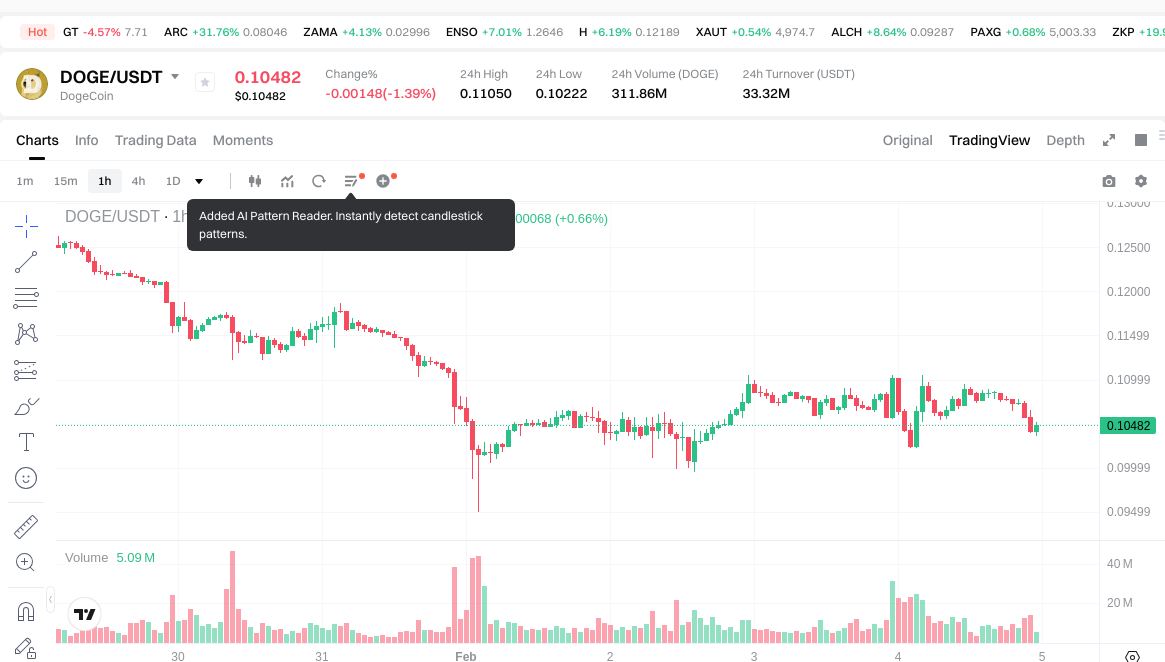
Dogecoin is built on Litecoin’s technical foundation, sharing many features with Bitcoin and Litecoin. All three use the PoW (Proof of Work) consensus algorithm to secure and decentralize their networks. In PoW, miners solve complex computations to create blocks and validate transactions.
Unlike Bitcoin, Dogecoin’s supply is unlimited. Five billion DOGE are issued annually, making it an inflationary asset. This design favors everyday payments and transactions rather than long-term value storage.
Dogecoin was originally developed as a tipping currency for online communities. It stands out for fast transaction confirmations (about one minute) and very low fees, making it ideal for micropayments. Today, it’s widely used for rewarding social media creators and purchasing in-game items—demonstrating its utility in daily life.
Dogecoin Supporters and Community Influence
Dogecoin has attracted support from notable figures and companies, most famously entrepreneur Elon Musk, whose social media posts often trigger sharp price movements. Widely known as the “Musk Effect,” this dynamic highlights Dogecoin’s community-driven nature.
Sports teams and charities have also adopted Dogecoin. For example, the Jamaican bobsled team received Dogecoin community donations for their Olympic campaign, and the coin has funded projects supporting access to clean water. These real-world use cases show Dogecoin’s value beyond speculation.
Dogecoin ETF: Fundamentals and Structure
A Dogecoin ETF (Exchange-Traded Fund) is a financial product that tracks Dogecoin’s price, allowing investors to profit from price movements without direct ownership. ETFs trade on stock exchanges, making buying and selling as easy as trading stocks, and lowering the entry barrier for crypto investing.
Key features of Dogecoin ETFs include:
-
Convenience: No need to open accounts on crypto exchanges or manage wallets—investors can use existing brokerage accounts. This makes Dogecoin accessible to those without technical expertise.
-
Security: ETFs operate under strict regulations, strengthening investor protection. Custodians securely hold assets, significantly reducing risks of hacking or lost private keys.
-
Liquidity: Investors can trade in real time during market hours, enabling flexible asset management. The experience is similar to stocks, allowing fast decisions and transactions.
How Does It Differ from Traditional Crypto Investing?
Traditionally, investors bought Dogecoin directly and managed it in personal wallets—putting the burden of key management and security on the investor, and exposing them to risks like exchange hacks and fraud.
With a Dogecoin ETF, trading happens via stock exchanges, assets are securely held by custodians, and operations are supervised by regulators like the SEC. This eliminates technical barriers and gives investors peace of mind. ETFs also integrate seamlessly with existing brokerage accounts, allowing consolidated management alongside stocks and bonds.
Investor Benefits
Dogecoin ETFs offer investors clear advantages:
-
Regulatory Transparency: SEC oversight reduces risks of fraud and manipulation. ETF issuers must provide regular financial reports, giving investors reliable information for decision-making.
-
Easy Diversification: ETFs can be added to portfolios alongside stocks and bonds, enabling efficient risk management. Combining traditional assets with Dogecoin ETFs can optimize portfolio risk-return profiles.
-
Tax Advantages: ETF trading may qualify for tax benefits. In some jurisdictions, ETF gains are taxed more favorably than direct crypto trades.
-
Expanded Access: Both individuals and institutions can participate. Pension funds and mutual funds, which may be restricted from direct crypto investment, can access Dogecoin via ETFs.
Application Status and Major Players
In recent years, several major asset managers have filed for Dogecoin ETFs, signaling the coin’s maturity as an investment product.
Grayscale’s Dogecoin ETF Application
Grayscale, a leader in crypto investment trusts, recently launched a Dogecoin trust and quickly applied to convert it into an ETF.
- Application timing: Recent
- Manager: Grayscale
- Custodian: Leading crypto custody providers
- Management fee: 2.5%
- Application details: Conversion of an existing Dogecoin trust to a spot ETF
Grayscale’s strategy—converting a trust into an ETF—was also used in past Bitcoin ETF filings. By leveraging an established trust with significant assets and investors, Grayscale aims to ensure liquidity after ETF approval.
Bitwise’s Dogecoin ETF Application
Bitwise is another active player in crypto ETFs.
- Application timing: Recent
- Manager: Bitwise
- Legal basis: Spot ETF filed under the Securities Act of 1933
- Custodian: Leading crypto custody providers
Bitwise’s application is a formal spot ETF request under the Securities Act of 1933, aligning with robust legal standards and aiming for high reliability in SEC review.
Rex Shares Meme Coin ETF Application
Rex Shares is seeking to launch an ETF covering a broader set of meme coins.
- Application timing: Recent
- Assets covered: Multiple meme coins, including DOGE
- Additional filings: Includes Bitcoin, Ethereum, Solana, and XRP ETFs
Rex Shares stands out by targeting a basket of meme coins rather than just Dogecoin, allowing investors diversified exposure to the meme coin market. However, multi-asset ETFs may face more complex regulatory scrutiny, possibly lengthening the approval timeline.
Market Impact and Reactions
Prediction market data shows Dogecoin ETF approval odds surged immediately after filings, fueling optimism. Past Bitcoin ETF approvals led to sharp price increases post-announcement; news about Dogecoin ETF filings could similarly boost investor expectations and trigger short-term rallies.
Simultaneous applications from multiple asset managers signal broad industry preparation for Dogecoin ETF approval, sending a strong message of market demand and readiness to the SEC.
When Will Dogecoin ETFs Be Approved? — The SEC’s Role
Considering prediction market data and the application process, Dogecoin ETF approval could come as early as this year, and most likely by the first half of next year.
What Is the SEC?
The SEC (U.S. Securities and Exchange Commission) is the principal regulator of U.S. securities markets and plays a central role in crypto ETF approvals. Its mandate includes investor protection, fair market maintenance, and capital formation.
The SEC’s approach to crypto has evolved, as seen in multiple Bitcoin spot ETF approvals—a major shift recognizing crypto market maturity. Dogecoin ETF filings continue this trend.
Dogecoin ETF Review Process
The SEC’s ETF review process involves:
-
Application submission: Asset managers file with the SEC, detailing strategies, risk management, custodian info, fees, and more.
-
Initial review (45 days): Within 45 days, the SEC decides to approve, deny, or extend the review—scrutinizing applications for investor protection.
-
Extended review (up to 240 days): For complex cases, the SEC can extend the process, requiring further information and detailed discussions with applicants.
-
Final decision: The SEC approves or rejects the application. Approval leads to ETF listing and investor trading.
Key review points for Dogecoin ETFs include liquidity, manipulation risk, custodian reliability, and investor protection. Given Dogecoin’s meme coin status, the SEC will likely focus on volatility and manipulation risks.
Market Effects After Approval
If approved, Dogecoin ETFs could have several market impacts:
-
Short-term price surge: ETF approval news may boost investor optimism and drive up prices, as seen with Bitcoin ETFs.
-
Institutional entry: Approval may attract institutional investors, improving market stability. Pension and mutual funds restricted from direct crypto investment could now participate via ETFs, increasing liquidity and price stability.
-
Shift in investor sentiment: Official ETF status could prompt investors who previously dismissed Dogecoin as a “meme coin” to reevaluate it as a serious investment.
-
Market maturity: ETF approval could spur overall market development, with strengthened regulation and transparency fostering broader investor confidence.
Obstacles to Dogecoin ETF Approval
Several important hurdles remain for Dogecoin ETF approval, each requiring careful SEC scrutiny.
Risks Inherent to Meme Coins
Meme coins are known for high volatility and speculation. Recent research found most influencer-promoted meme coins suffered steep price declines.
Key findings include:
- About 67% of influencer-backed meme coins are now worthless
- 86% lost 90% of value within months
- Only 1% of influencers promoted coins yielding 10x returns
Additionally, 80% of these coins dropped 70% within a week and 80% within a month, showing rapid value erosion.
Industry data shows 97% of recent meme coins have failed, with an average lifespan of one year—much shorter than the three-year average for other crypto projects.
These figures underscore meme coin risks and justify the SEC’s caution. However, Dogecoin’s long history, large community, and real-world use cases set it apart and may weigh favorably in the review.
Regulatory Challenges
The SEC requires strict standards for meme coin markets, including:
- Liquidity: The market must be deep enough that large trades don’t distort prices
- Manipulation prevention: Effective surveillance must prevent market abuse
- Custodian reliability: Secure, reputable custodians must safeguard assets
- Investor education: Clear disclosures must help investors understand meme coin risks
Meeting these criteria will advance Dogecoin ETF approval.
Summary
Dogecoin’s evolution from an internet meme to a global financial asset is remarkable. Major managers like Grayscale and Bitwise have filed for Dogecoin ETFs with the SEC, marking a pivotal moment in its investment history.
Drawing on the impacts of previous Bitcoin and Ethereum ETF approvals and prediction market data, Dogecoin ETFs could be approved as early as this year, or by the first half of next year.
ETF approval should drive short-term price gains and foster market maturity through institutional participation. Improved regulation and transparency will help more investors enter the Dogecoin market with confidence.
Nonetheless, meme coin volatility and regulatory hurdles remain, so investors must carefully balance risks and opportunities. Dogecoin ETF approval could be a landmark for the entire crypto sector, making prudent research and risk management essential for anyone considering investment.
FAQ
When will Dogecoin ETFs be approved?
As of February 2026, approval for Dogecoin ETFs is still pending. The SEC accepted the application on February 14, 2025, but no final decision has been announced. Please stay tuned for updates.
When will the Dogecoin spot ETF be approved in the United States?
The Dogecoin spot ETF was approved in the U.S. in September 2025 and is now listed. This marks a major milestone with institutional investor participation.
What impact will Dogecoin ETF approval have on Dogecoin’s price?
Dogecoin ETF approval is likely to draw institutional investors and boost market confidence. Similar to Bitcoin ETFs, it could drive significant capital inflows and substantial price appreciation.
How do Dogecoin ETFs differ from Bitcoin and Ethereum ETFs?
Dogecoin ETFs track DOGE’s price, while Bitcoin ETFs track the leading cryptocurrency, and Ethereum ETFs follow the smart-contract platform. Each ETF’s performance and volatility reflect the underlying asset’s characteristics and market dynamics.
Are there advantages to Dogecoin ETFs compared to direct DOGE purchases?
Dogecoin ETFs offer greater safety and lower risk thanks to professional management. They’re regulated by financial authorities, with transparent rules and compliance benefits.
Which financial institutions have filed for Dogecoin ETF approval?
The SEC is reviewing multiple crypto ETF applications. The specific institutions seeking Dogecoin ETF approval haven’t been disclosed, but initial approvals are expected soon.
* The information is not intended to be and does not constitute financial advice or any other recommendation of any sort offered or endorsed by Gate.