


Why did Bitcoin drop today? PPI surges and the UK credit crisis hit from both sides
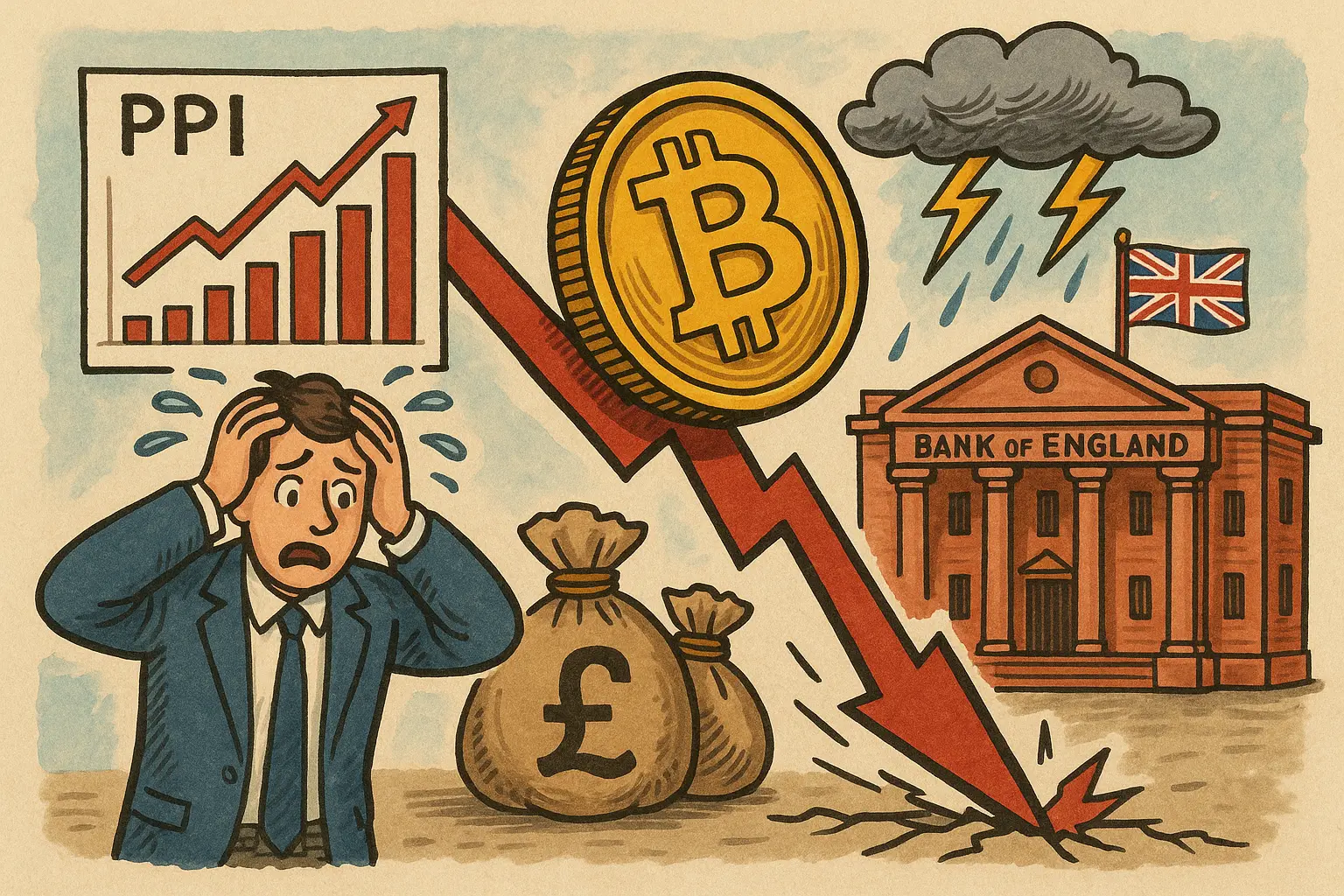
Bitcoin declined today under pressure, as the US January Producer Price Index (PPI) far exceeded expectations. The core PPI increased by 0.8% month-over-month, raising concerns about persistent inflation and increasing uncertainty regarding Federal Reserve policies. Meanwhile, the bankruptcy of major UK lender Market Financial Solutions (MFS) triggered systemic panic over excessive leverage in the private credit market, leading to sharp declines in the stock prices of several well-known financial institutions and a general downturn in risk assets.
Macro Triggers: PPI Inflation Surpasses Expectations, Fed Faces Dilemma
The US January PPI data became the immediate catalyst for the recent decline in risk assets. PPI for January rose 0.5% month-over-month, above the expected 0.3%. Core PPI surged significantly by 0.8%, well above the forecasted 0.3%, indicating that inflationary pressures have not eased as markets anticipated.
Integrated Partners Chief Investment Officer Stephen Kolano pointed out that this inflation increase is mainly driven by the service sector, suggesting companies are passing on tariff-related costs to consumers. The Federal Reserve faces a dilemma: should it cut interest rates to stimulate growth or maintain high rates to curb inflation? “Inflation is not yet resolved,” he warned, which will intensify market uncertainty about the policy direction for the rest of the year.
Top 3 Macro Pressures Behind Bitcoin’s Drop Today
- PPI Inflation Surpasses Expectations: Core PPI at 0.8% (vs. 0.3%), significantly weakening expectations of a rate cut in June.
- UK MFS Credit Crisis: The bankruptcy of major lender MFS sparks systemic panic over excessive leverage in private credit, with stocks like Apollo (-8%+) and Jefferies (-9%+) plunging.
- Tech Sector Continues to Underperform: Zscaler down 12%, CoreWeave down 18%, NVIDIA continues to retreat, with Nasdaq down over 3% in February.
Credit Crisis Chain Reaction: MFS Bankruptcy Impacts Market Confidence
UK-based major lender Market Financial Solutions Ltd. (MFS) officially filed for bankruptcy this Wednesday. Court proceedings revealed serious allegations of fraud and concerns over double-pledging of assets. MFS’s debt exposure involves several top institutions: Barclays and Apollo’s structured credit division Atlas provided hundreds of millions of dollars in loans, with other creditors including Jefferies, Santander, Wells Fargo, and Castlelake LP.
MFS’s collapse is not an isolated event. Last year, the failure of US auto parts supplier First Brands Group and subprime lender Tricolor Holdings already raised alarms in credit markets. JPMorgan Chase CEO Jamie Dimon warned this week that some competitors’ pursuit of high returns reminded him of the pre-2008 financial crisis. Systemic stress in the private credit sector has heightened risk aversion, spilling over into high-risk assets like Bitcoin.
Technical Analysis: $64,000 Is the Last Defense for Bulls and Bears
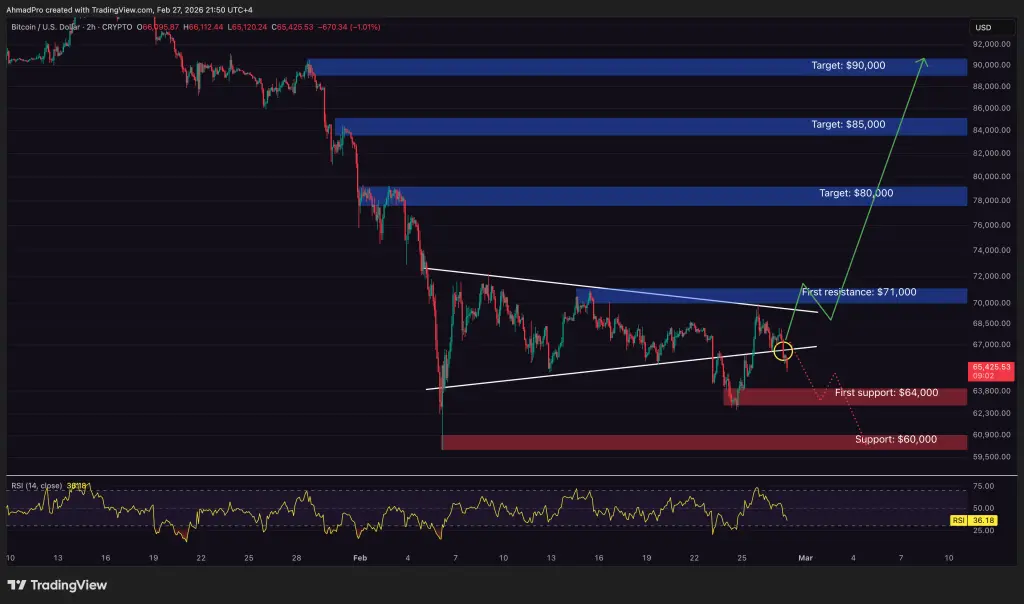
(Source: TradingView)
After breaking below the contracting triangle’s lower boundary, the short-term market structure has officially turned bearish. The failed attempt to push above $71,000 signals the end of the bullish rally, with price retreating toward around $64,000, as selling momentum reasserts itself.
$64,000 remains the most critical technical support level. A clean break below this could open the door to $60,000, potentially transforming the current triangle pattern into a distribution phase, leading to deeper liquidity sweeps. However, on higher timeframes, as long as $60,000 holds, the long-term bullish outlook remains intact.
Frequently Asked Questions
Why did Bitcoin fall today?
Bitcoin’s decline today was driven by three main pressures: US January core PPI up 0.8% MoM (far exceeding expectations), increasing inflationary stickiness and Fed policy uncertainty; the bankruptcy of UK lender MFS triggering systemic panic in private credit markets; and ongoing weakness in the tech sector (Zscaler, CoreWeave, NVIDIA), dragging down overall risk sentiment.
How does MFS bankruptcy affect Bitcoin?
MFS’s bankruptcy directly impacts major creditors like Apollo and Jefferies, sparking sell-offs in private credit markets and heightening fears of overly loose credit standards. This risk aversion spreads from traditional financial markets to high-risk assets like Bitcoin, creating cross-asset selling pressure.
What happens if Bitcoin drops below $64,000?
If $64,000 is effectively broken, the next major support is at $60,000. Losing this level could invalidate the long-term bullish structure on higher timeframes, potentially triggering deeper liquidity sweeps and reinforcing the short-term bearish trend.
Related Articles
REX Shares Launches GIF ETF, Collaborating with CEX and Strategy, Weekly Dividend Strategy Focused on High-Yield Crypto and AI Sectors
SBI Holdings Yen Bonds Tied to XRP Attract Customers, Rewards Only $129,000 Spark Controversy
Bitcoin drops back to $65,000! PPI exceeds expectations and Nvidia's sharp decline drag down, Solana, XRP, and Dogecoin all pull back collectively
Uniswap launches eight-chain fee sharing voting, UNI token monthly earnings could significantly double
XRP Today's News: XRPL Serious Vulnerability Nearly Cleared Wallets, Emergency Patch Promotes $1.35 Rebound
PI (Pi) increased by 2.82% in the past 24 hours