This comprehensive analysis examines Hydro Protocol (HDRO) price dynamics from 2026 to 2031, addressing investor needs for informed decision-making in the LSDFi infrastructure sector. The article covers HDRO's current market position at $0.001811 with 93.92% annual decline, historical price evolution since 2024 peak, and detailed price forecasts ranging from $0.0017-$0.00418 through 2031. It explores core factors influencing price movements including supply-demand dynamics, market competition, macroeconomic conditions, and technological advancement. Professional investment strategies encompass long-term holding approaches for LSDFi exposure and active trading techniques utilizing Gate exchange. Comprehensive risk management frameworks address market liquidity constraints, regulatory uncertainties, and smart contract vulnerabilities. Suitable for both experienced crypto investors and institutional participants seeking LSDFi ecosystem exposure with appropriate risk controls.
Introduction: HDRO's Market Position and Investment Value
Hydro Protocol (HDRO), as an infrastructure platform specializing in yield and liquidity strategy management on the Injective Network, has been developing its unique LSDFi product suite since its launch in 2024. The platform combines Liquid Staking Derivatives (LSD) products with Real World Assets (RWA) and introduces Real Yielding Asset (RYA) as an innovative yield optimization solution. As of February 2026, HDRO maintains a market capitalization of approximately $261,608, with a circulating supply of around 144.455 million tokens and a current price hovering near $0.001811. This asset, which focuses on yield optimization strategies across the crypto ecosystem, is playing an increasingly important role in the DeFi and LSDFi sectors.
This article will comprehensively analyze HDRO's price trends from 2026 to 2031, combining historical patterns, market supply and demand dynamics, ecosystem development, and macroeconomic conditions to provide investors with professional price forecasts and practical investment strategies.
I. HDRO Price History Review and Market Status
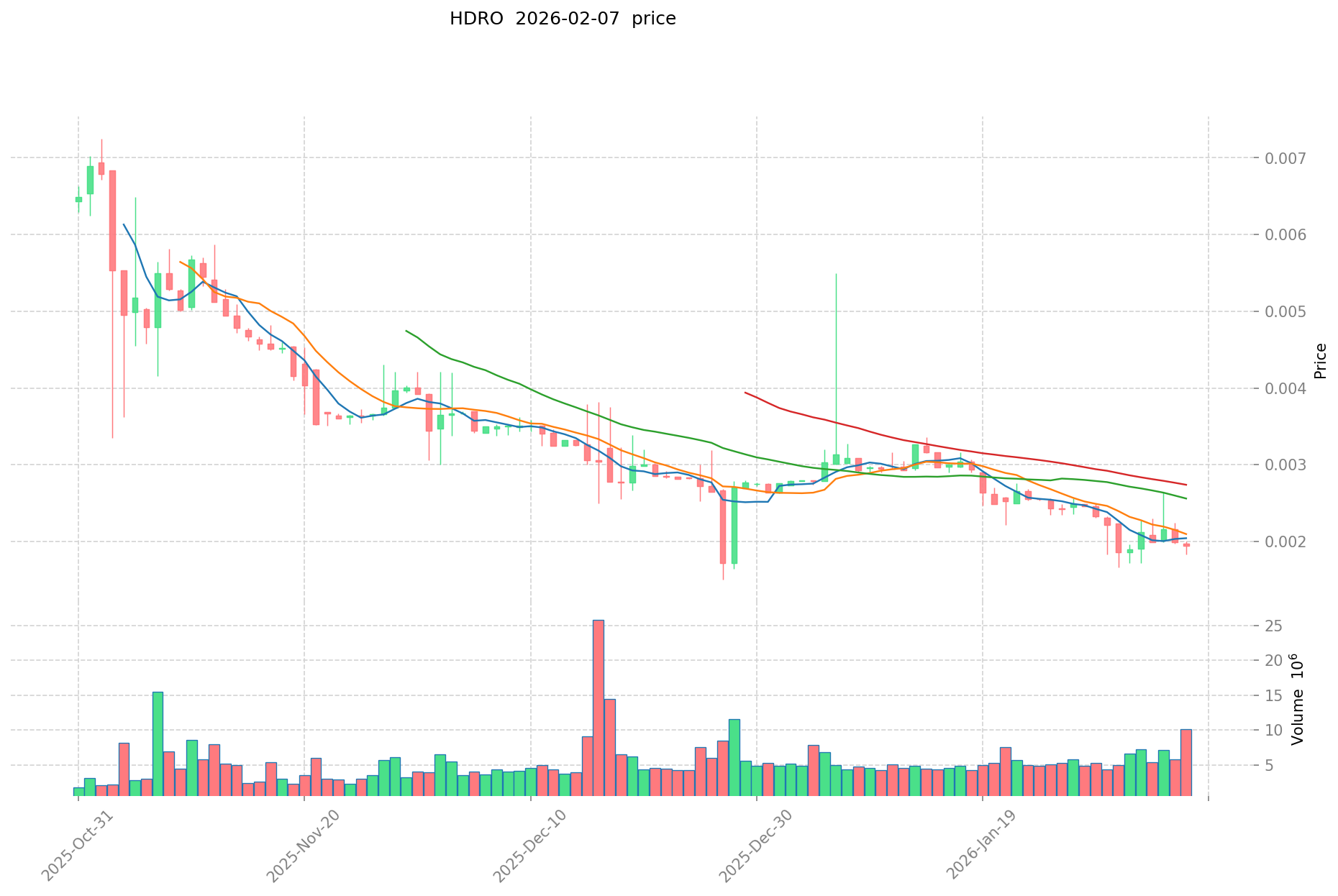
HDRO Historical Price Evolution Trajectory
- 2024: HDRO reached its peak price of $0.349 on May 30, 2024, representing a significant milestone since its initial listing at $0.2062 in May 2024
- 2025: The token experienced substantial downward pressure throughout the year, with price declining from higher levels to its historical low of $0.0015 on December 27, 2025
- 2026: In early February 2026, HDRO continues to trade near historically low levels, showing ongoing bearish momentum across multiple timeframes
HDRO Current Market Status
As of February 8, 2026, HDRO is trading at $0.001811, positioned near its all-time low. The token has demonstrated negative price performance across all measured timeframes: declining 1.69% over the past hour, 0.82% in the last 24 hours, and 9.71% over the past week. The 30-day performance shows a substantial decrease of 38.09%, while the annual performance reflects a significant decline of 93.92% from its previous levels.
The 24-hour trading range spans from $0.001811 to $0.001941, with total trading volume reaching $20,530.67. HDRO's current market capitalization stands at approximately $261,608, based on a circulating supply of 144.455 million tokens out of a maximum supply of 1 billion tokens. This represents a circulation ratio of 14.45%. The fully diluted market capitalization is calculated at $1,811,000, with the market cap to FDV ratio at 14.45%.
HDRO maintains a market ranking of 3,649 and holds a market dominance of 0.000072%. The token is currently listed on Gate.com as its primary trading venue. According to market sentiment indicators, the broader cryptocurrency market is experiencing a VIX reading of 6, indicating extreme fear conditions as of February 7, 2026.
Click to view current HDRO market price
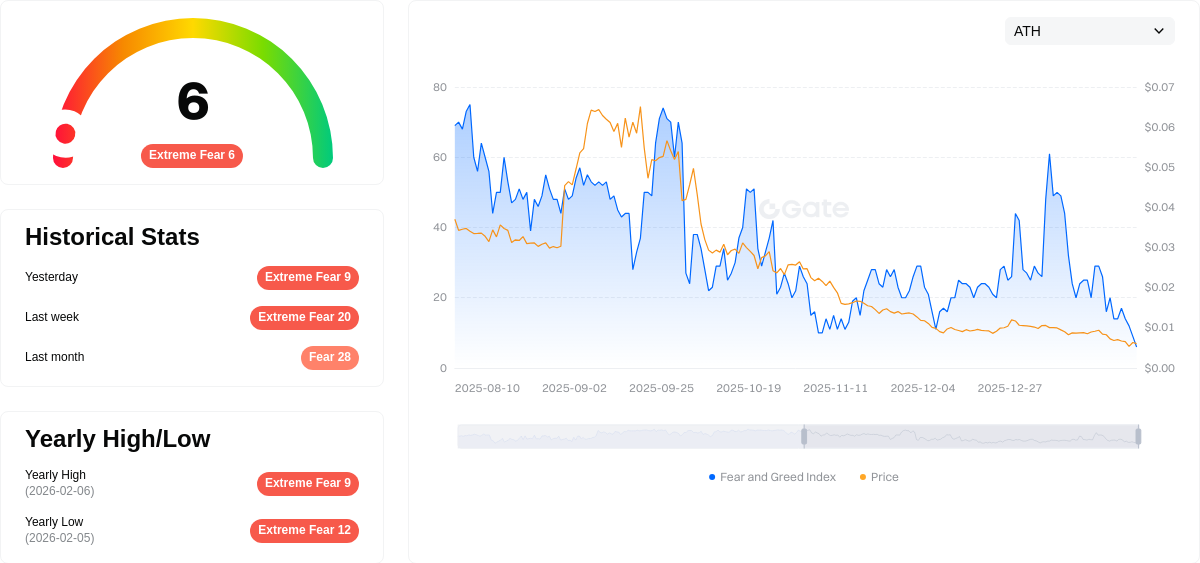
HDRO Market Sentiment Index
2026-02-07 Fear and Greed Index: 6 (Extreme Fear)
Click to view current Fear & Greed Index
The crypto market is currently experiencing extreme fear, with the Fear and Greed Index hitting just 6 points. This historically low reading indicates severe market pessimism and panic selling pressure. Investors are showing heightened risk aversion, often presenting potential buying opportunities for contrarian traders. Such extreme conditions typically precede market reversals. Monitor key support levels closely and consider your risk tolerance before making investment decisions during this volatile period.
HDRO Token Holder Distribution
The token holder distribution chart provides a comprehensive view of how HDRO tokens are allocated across different wallet addresses on the blockchain. This metric serves as a crucial indicator of decentralization level and potential market manipulation risks. By analyzing the concentration of tokens among top holders, we can assess whether the token's governance and price discovery mechanisms are subject to excessive centralization or remain sufficiently distributed.
Based on the current distribution data, HDRO exhibits a relatively concentrated holding pattern among its top addresses. The largest wallet controls a significant portion of the circulating supply, while the top 10 addresses collectively hold a substantial percentage of total tokens. This concentration level suggests that a small group of entities maintains considerable influence over the token's market dynamics. While such concentration is not uncommon during early stages of token distribution or among institutional investors, it does raise concerns about potential price manipulation and liquidity constraints during periods of selling pressure.
From a market structure perspective, this distribution pattern indicates moderate centralization risk. The concentration among top holders could lead to amplified price volatility, as large transactions from major wallets can significantly impact market depth and trigger cascading effects. Additionally, this structure may discourage retail participation due to concerns about whale dominance. However, if these large holders represent project treasury allocations, ecosystem development funds, or long-term institutional investors, the concentration might actually contribute to price stability by reducing circulating supply available for speculative trading.
Click to view current HDRO Token Holder Distribution

| Top |
Address |
Holding Qty |
Holding (%) |
II. Core Factors Influencing HDRO's Future Price
Supply and Demand Dynamics
- Raw Material Cost Fluctuations: The production of HDRO-related products relies heavily on key materials such as liquid helium and steel. Helium prices are subject to supply-demand imbalances, while steel prices respond to broader commodity market trends. These raw material costs directly impact the overall cost structure and, consequently, pricing power in the market.
- Historical Patterns: Past data indicates that when helium supply tightens, prices surge rapidly, exerting upward pressure on production costs. Conversely, declining steel prices due to improved availability have provided some cost relief, creating offsetting effects in the overall pricing equation.
- Current Impact: As of early 2026, helium supply remains constrained in certain regions, potentially sustaining elevated input costs. Meanwhile, steel prices show signs of stabilization, though any sudden shifts in global demand or production capacity could alter this balance and influence HDRO's price trajectory.
Market Competition and Industry Structure
- Competitive Landscape: The sector exhibits moderate concentration, with several established players competing on technology, quality, and cost efficiency. Pricing strategies vary depending on regional market conditions and customer segments.
- Technology and Innovation: Companies investing in advanced production techniques and process optimization tend to gain competitive advantages, enabling better cost control and potentially more favorable pricing positions.
- Regulatory Environment: Industry standards and regulatory requirements can affect production processes and cost structures. Any changes in environmental regulations or safety standards may necessitate additional investments, indirectly influencing pricing dynamics.
Macroeconomic and External Factors
- Global Economic Conditions: Broader economic trends, including industrial activity levels and infrastructure development, drive demand for HDRO-related products. Economic expansion typically supports stronger demand and pricing, while downturns may exert downward pressure.
- Currency Fluctuations: For internationally traded materials and components, exchange rate movements can impact cost structures and competitive positioning across different markets.
- Geopolitical Considerations: Supply chain stability, trade policies, and international relations can affect the availability and cost of critical inputs, thereby influencing overall market conditions and pricing trends.
Technological Advancements and Application Expansion
- Process Improvements: Ongoing research and development efforts aimed at enhancing production efficiency and reducing material consumption can help mitigate cost pressures and support more competitive pricing over time.
- New Applications: Expanding use cases in emerging sectors may drive incremental demand, potentially supporting price levels. However, the pace and scale of such adoption remain uncertain and depend on broader market acceptance and technological maturity.
- Infrastructure Development: Investments in supporting infrastructure, such as supply chain networks and distribution capabilities, can improve market accessibility and operational efficiency, with potential implications for pricing structures.
III. 2026-2031 HDRO Price Forecast
2026 Outlook
- Conservative prediction: $0.0017 - $0.00187
- Neutral prediction: $0.00187
- Optimistic prediction: $0.00235 (requires favorable market conditions and increased adoption)
2027-2029 Outlook
- Market stage expectation: Gradual growth phase with moderate volatility as the token establishes its market position
- Price range forecast:
- 2027: $0.00175 - $0.00283
- 2028: $0.00197 - $0.00299
- 2029: $0.00265 - $0.00374
- Key catalysts: Potential ecosystem expansion, increased trading volume, and broader market recovery trends
2030-2031 Long-term Outlook
- Baseline scenario: $0.00239 - $0.00323 (assuming steady market development and sustained community engagement)
- Optimistic scenario: $0.00326 - $0.00385 (contingent upon significant platform upgrades and enhanced utility features)
- Transformative scenario: Up to $0.00418 (under exceptional conditions including widespread adoption and favorable regulatory environment)
- 2026-02-08: HDRO shows potential for gradual appreciation with projected price changes ranging from 3% in 2026 to 95% by 2031
| Year |
Predicted High Price |
Predicted Average Price |
Predicted Low Price |
Price Change |
| 2026 |
0.00235 |
0.00187 |
0.0017 |
3 |
| 2027 |
0.00283 |
0.00211 |
0.00175 |
16 |
| 2028 |
0.00299 |
0.00247 |
0.00197 |
36 |
| 2029 |
0.00374 |
0.00273 |
0.00265 |
50 |
| 2030 |
0.00385 |
0.00323 |
0.00239 |
78 |
| 2031 |
0.00418 |
0.00354 |
0.00326 |
95 |
IV. HDRO Professional Investment Strategies and Risk Management
HDRO Investment Methodology
(I) Long-term Holding Strategy
- Suitable for: Investors seeking exposure to LSDFi infrastructure and Real Yielding Assets (RYA) innovation on the Injective Network
- Operational Recommendations:
- Consider accumulation during periods when HDRO trades significantly below its historical average, while monitoring platform development progress
- Evaluate the protocol's yield optimization strategies and RWA integration developments as key indicators for long-term potential
- Storage Solution: Utilize Gate Web3 Wallet for secure custody with multi-signature protection and regular security audits
(II) Active Trading Strategy
- Technical Analysis Tools:
- Volume Analysis: Monitor the 24-hour trading volume relative to market cap (currently approximately 7.85% turnover ratio) to identify accumulation or distribution phases
- Support/Resistance Levels: Track the 24-hour range between $0.001811 and $0.001941 to identify short-term trading boundaries
- Swing Trading Essentials:
- Consider the token's high volatility (38.09% decline over 30 days) when sizing positions and setting stop-loss orders
- Monitor developments in the Injective ecosystem and broader LSDFi sector for potential catalysts
HDRO Risk Management Framework
(I) Asset Allocation Principles
- Conservative Investors: 0.5-1% of crypto portfolio allocation
- Aggressive Investors: 2-3% of crypto portfolio allocation
- Professional Investors: Up to 5% with active management and hedging strategies
(II) Risk Hedging Solutions
- Diversification Strategy: Balance HDRO exposure with other Injective ecosystem tokens and established DeFi protocols
- Position Sizing: Implement gradual entry strategies given the limited circulating supply (14.45% of max supply) and relatively low liquidity
(III) Secure Storage Solutions
- Hot Wallet Recommendation: Gate Web3 Wallet for active trading and liquidity management
- Cold Storage Solution: Hardware wallet solutions for long-term holdings exceeding trading needs
- Security Precautions: Never share private keys, enable two-factor authentication, verify contract addresses (factory/inj1etz0laas6h7vemg3qtd67jpr6lh8v7xz7gfzqw/hdro) before transactions, and maintain separate wallets for trading and storage
V. HDRO Potential Risks and Challenges
HDRO Market Risks
- Limited Liquidity: With a market cap of approximately $261,608 and trading on only one exchange, HDRO faces potential liquidity constraints that may result in significant price slippage during larger transactions
- High Volatility: The token has experienced a 93.92% decline over one year and a 38.09% drop over 30 days, indicating substantial price instability
- Low Circulating Supply: Only 14.45% of the maximum supply is currently in circulation, creating potential selling pressure if additional tokens are released
HDRO Regulatory Risks
- DeFi Protocol Uncertainty: Evolving regulatory frameworks for decentralized finance platforms may impact operations and user participation
- RWA Integration Compliance: The combination of Real World Assets with crypto protocols may face scrutiny from financial regulators in multiple jurisdictions
- Cross-border Operations: As a protocol operating on a decentralized network, HDRO may face compliance challenges across different regulatory environments
HDRO Technical Risks
- Smart Contract Vulnerabilities: Despite operating on the Injective Network, complex yield optimization and RWA integration strategies may introduce unforeseen technical vulnerabilities
- Platform Dependency: HDRO's infrastructure relies on the Injective Network's continued stability and development
- Integration Complexity: The combination of LSD products, RWA, and yield optimization strategies increases technical complexity and potential points of failure
VI. Conclusions and Action Recommendations
HDRO Investment Value Assessment
Hydro Protocol presents a specialized value proposition through its combination of LSDFi products and Real World Assets on the Injective Network. The platform's Real Yielding Asset (RYA) framework represents an innovative approach to yield optimization. However, investors should carefully weigh the significant short-term risks, including substantial historical price declines (93.92% from peak), limited liquidity, and low market cap. The long-term potential depends on successful execution of the protocol's yield strategies, broader adoption within the Injective ecosystem, and overall market conditions for LSDFi solutions.
HDRO Investment Recommendations
✅ Beginners: Given the high risk profile and limited liquidity, new investors should consider gaining experience with more established cryptocurrencies before allocating capital to HDRO. If interested, limit exposure to less than 1% of portfolio and thoroughly research LSDFi concepts
✅ Experienced Investors: May consider small allocations (1-3% of crypto portfolio) with clear risk management protocols, stop-loss levels, and continuous monitoring of protocol developments and Injective ecosystem growth
✅ Institutional Investors: Conduct comprehensive due diligence on smart contract security, tokenomics structure, team credentials, and regulatory implications before considering strategic allocation with appropriate hedging mechanisms
HDRO Trading Participation Methods
- Spot Trading: Access HDRO through Gate.com spot markets for direct token exposure with defined risk parameters
- Dollar-Cost Averaging: Implement systematic accumulation strategy to mitigate timing risk and volatility impact
- Yield Optimization: Explore potential yield opportunities within the Hydro Protocol platform itself, while understanding associated smart contract risks
Cryptocurrency investment carries extremely high risks, and this article does not constitute investment advice. Investors should make prudent decisions based on their own risk tolerance and are advised to consult professional financial advisors. Never invest more than you can afford to lose.
FAQ
What is HDRO? What are its main use cases and value sources?
HDRO is the native token of Hydro Protocol, designed to power ecosystem operations and incentive mechanisms. Its value derives from token economics, supply distribution, and utility within the decentralized finance infrastructure.
What are the main factors affecting HDRO price?
HDRO price is primarily influenced by its anti-inflation properties, geopolitical tensions like international conflicts affecting energy markets, market trading volume, and broader cryptocurrency market sentiment.
2024年和2025年HDRO的价格预测如何?
2024年HDRO价格达到0.349美元的历史高点。2025年市场进入下行周期,价格跌至0.0055美元的历史低点。价格波动受市场趋势和项目发展影响。
How to analyze HDRO's technical and fundamental aspects for price prediction?
Analyze HDRO's technical face through trend direction, price channels, and indicators like RSI and moving averages. For fundamentals, examine token metrics, development progress, trading volume, and market adoption. Combine both analyses to identify entry opportunities and price targets.
HDRO price prediction risks and uncertainties?
HDRO price prediction faces market volatility, regulatory changes, and technology development risks. Decentralized token distribution reduces manipulation risks. Market trends and technological progress remain key uncertainty factors affecting predictions.
What is the price trend difference between HDRO and similar tokens?
HDRO has declined 10.90% over the past 7 days,underperforming compared to similar tokens. Its 24-hour trading volume is $21,939.37 with a current market cap of BTC12.2165,showing weaker momentum in the current market cycle.
* The information is not intended to be and does not constitute financial advice or any other recommendation of any sort offered or endorsed by Gate.