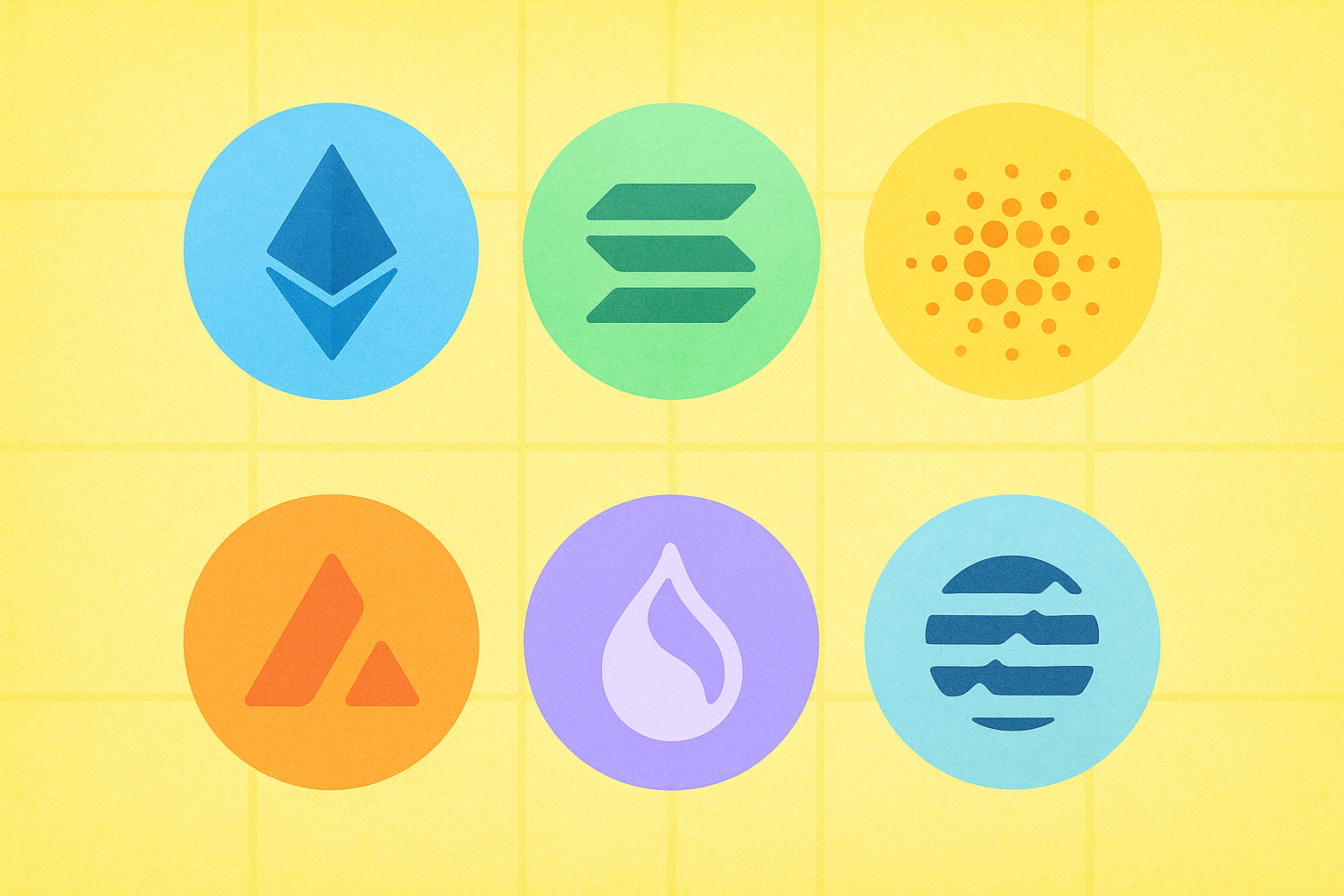
Comparison of Key Layer 1 Networks Listed on Domestic Exchanges | Speed and Fees for Cryptocurrencies Such as Sui and Solana

2026-02-02 05:29:34
ADA
Altcoins
Blockchain
Crypto Ecosystem
DeFi
Ethereum
GameFi
Layer 2
Solana
Web 3.0
Article Rating : 4.5
half-star
16 ratings
Compares transaction throughput, gas costs, and application scenarios for leading Layer 1 blockchains, including Ethereum, Solana, Cardano, Avalanche, Sui, and Aptos. Also provides details on available trading pairs at Japanese exchanges and staking options. This is a must-read selection guide for investors and developers evaluating Layer 1 chains.
Comparison of Key Layer 1 Networks Listed on Domestic Exchanges | Speed and Fees for Cryptocurrencies Such as Sui and Solana

What Is a Layer 1 Blockchain?

A Layer 1 blockchain is a standalone blockchain network that processes transactions and executes smart contracts independently. As the foundational layer of blockchain technology, it provides the core infrastructure on which various applications and services are built.

Prominent examples of Layer 1 blockchains include Bitcoin, Ethereum, and Solana. Each network utilizes its own consensus mechanism and technical architecture, optimized for specific uses and goals. Layer 1 chains are distinguished by their high security and decentralization. Because they operate independently, they are less reliant on external components and offer robust security.

However, Layer 1 chains face scalability challenges as transaction volumes rise, which can result in network congestion and higher fees. To address this, solutions such as Layer 2 protocols have been introduced—Ethereum, for example, employs Layer 2 solutions to boost throughput and lower transaction costs. Layer 2 technologies supplement Layer 1 by enabling faster and more affordable transactions while reducing the operating load on the base network.

Analytics firm CoinGecko reports that native tokens for Layer 1 blockchains have seen substantial growth in recent years. Major assets like BTC and ETH have reached new all-time highs, while other tokens have surged in niche markets. This growth is fueled by rising demand across diverse sectors such as DeFi, NFT, and blockchain gaming.

When evaluating investments or considering development on a Layer 1 blockchain, it is critical to assess its security, scalability, and ecosystem growth potential holistically. It is essential to carefully analyze each network’s technical features, developer community activity, and real-world use cases.

Key Specs Comparison Table: Major Layer 1 Projects Listed on Japanese Exchanges

The table below summarizes TPS (transactions per second), gas fees (transaction fees), main use cases, and listing status on Japanese exchanges for each project. This allows a quick comparison of performance and characteristics across leading Layer 1 blockchains.

Project (Token) Consensus / Technology Performance (Approx. TPS) Transaction Fee (Gas) Main Use Cases / Sectors Status on Japanese Exchanges
Ethereum (ETH) PoS (Casper), EVM Approx. 15–30 TPS (L1); thousands of TPS possible with L2 Several dollars to tens of dollars (highly variable); e.g., approx. $0.61 (about ¥90) General-purpose (DeFi, NFT, and more) Listed on nearly all major exchanges
Solana (SOL) PoH + PoS (TowerBFT), Sealevel parallel execution Measured: 3,000–4,000 TPS; Theoretical: 65,000 TPS Extremely low (<1¢); e.g., approx. $0.00038/tx High-speed apps: DeFi, NFT, gaming GMO Coin, bitFlyer, and several other exchanges
Cardano (ADA) PoS (Ouroboros), EUTXO model Tens of TPS (expandable with Hydra in the future) Low to medium (a few to several dozen yen); e.g., about $0.1/tx (approx. 0.34 ADA) Academically oriented DeFi, NFT, ID authentication Early listing on bitFlyer and other major exchanges
Avalanche (AVAX) PoS (Avalanche consensus), multi-chain model Peak measured: approx. 405 TPS; theoretical: 4,500+ TPS Low (a few yen), less expensive than Ethereum DeFi, NFT, gaming, enterprise (subnets) Listed on several domestic exchanges
Sui (SUI) DPoS + parallel execution, Move language Up to approx. 300,000 TPS (test); practical: several thousand TPS Very low (<$0.01); e.g., approx. $0.0023/tx Gaming, NFT (dynamic assets), high-speed DeFi Listed on several domestic exchanges
Aptos (APT) PoS (improved BFT), parallel processing (Block-STM) Several thousand to over 10,000 TPS (actual: 13.3k TPS) Very low (<$0.01); e.g., approx. $0.005/tx DeFi, gaming, social (Move language security) Listed on several domestic exchanges

*TPS indicates both theoretical maximum and observed network values. Gas fees are recent approximate averages. Exchange rate: $1 ≈ ¥130.

This comparison shows that each Layer 1 chain offers a different technical approach and performance profile. Ethereum stands out for its versatility and mature ecosystem, but it faces challenges with processing speed and transaction fees. In contrast, newer chains like Solana and Sui deliver high throughput and low fees, though their ecosystems are less established than Ethereum’s. When investing or developing, it is essential to understand these distinctions and choose solutions that match your objectives.

* The information is not intended to be and does not constitute financial advice or any other recommendation of any sort offered or endorsed by Gate.
Related Articles
What Is a Phantom Wallet: A Guide for Solana Users in 2025

What Is a Phantom Wallet: A Guide for Solana Users in 2025

In 2025, Phantom wallet has revolutionized the Web3 landscape, emerging as a top Solana wallet and multi-chain powerhouse. With advanced security features and seamless integration across networks, Phantom offers unparalleled convenience for managing digital assets. Discover why millions choose this versatile solution over competitors like MetaMask for their crypto journey.
2025-04-30 02:58:59
Solana Price in 2025: SOL Token Analysis and Market Outlook

Solana Price in 2025: SOL Token Analysis and Market Outlook

Solana's meteoric rise has reshaped the cryptocurrency landscape in 2025. With SOL trading at **$148.55**, investors are keen to understand the factors driving this surge. From Web3 adoption to blockchain innovation, Solana's future value forecast looks promising. This analysis explores the SOL token price, Solana blockchain investment outlook, and broader cryptocurrency market trends shaping the digital economy.
2025-04-28 03:21:35
How Does Solana's Proof of History Work?

How Does Solana's Proof of History Work?

Solana's Proof of History (PoH) is a unique consensus mechanism that significantly enhances the speed and efficiency of the Solana blockchain. Here’s a detailed explanation of how PoH works and its impact on Solana’s performance:
2025-04-17 07:30:34
Solana (SOL) : Low Fees, Memecoins, and the way to moon

Solana (SOL) : Low Fees, Memecoins, and the way to moon

Solana combines ultra-fast speeds and near-zero fees to power a thriving ecosystem of DeFi, NFTs, and retail adoption. From meme coin mania to real-world payments, it’s positioned as a leading blockchain heading into 2025–2027.
2025-04-29 12:17:06
 Is Solana a Good Investment?

Is Solana a Good Investment?

Investing in Solana (SOL) can be a promising opportunity, but it also comes with inherent risks due to the volatile nature of the cryptocurrency market. Here’s a comprehensive analysis based on recent market performance, expert opinions, and future predictions:
2025-04-17 07:35:25
Solana in 2025: Ecosystem Growth and DeFi Dominance

Solana in 2025: Ecosystem Growth and DeFi Dominance

In 2025, Solana's blockchain development has revolutionized the crypto landscape. With its ecosystem growth outpacing competitors, Solana DeFi projects now dominate the market. The Solana vs Ethereum 2025 debate intensifies as institutional adoption soars. Meanwhile, the Solana NFT market trends continue to reshape digital ownership, solidifying Solana's position as a game-changer in the blockchain realm.
2025-05-15 03:07:15
Recommended for You
Top 12 DeFi Protocols

Top 12 DeFi Protocols

In-depth analysis of top DeFi protocols in 2024: Uniswap, Aave, Lido, Curve, PancakeSwap, and more. Includes protocol comparisons, TVL metrics, and essential insights for investors and traders. Learn how to choose the optimal DeFi protocol to meet your goals.
2026-02-02 13:33:14
How to Create an NFT and Maximize Profits in Today’s Market Conditions

How to Create an NFT and Maximize Profits in Today’s Market Conditions

Explore the most effective strategies for selling NFT tokens on trusted marketplaces. This comprehensive guide covers each step—from creating and minting NFTs to selecting the right sales platforms, setting your prices, and marketing your digital assets.
2026-02-02 13:15:16
GetAgent: Advanced AI Trading Assistant vs Traditional Trading Bots

GetAgent: Advanced AI Trading Assistant vs Traditional Trading Bots

GetAgent is an AI-powered trading assistant on Gate that revolutionizes crypto trading through natural language commands, eliminating the need for complex setup or coding. Unlike traditional trading bots operating on fixed parameters, GetAgent understands user intent and adapts to individual trading styles through continuous learning. The platform integrates real-time market insights, 24/7 monitoring, in-chat trade execution, and portfolio management into one unified interface. Users can analyze markets, build strategies, and execute spot, futures, and on-chain trades without switching screens. Available in three tiers—Free, Plus, and Ultra—GetAgent serves both casual and professional traders seeking faster insights, smoother execution, and personalized AI-driven guidance.
2026-02-02 13:04:39
Is NFT Dead? A Guide to NFT Use Cases

Is NFT Dead? A Guide to NFT Use Cases

A comprehensive review of the NFT market’s current landscape and future prospects. The report explores whether the NFT boom is over, shares examples of investment failures, examines 2024 market trends, and provides a beginner’s guide along with robust fraud prevention measures. It also offers detailed insights into real-world use cases and growth opportunities in communities, hometown tax initiatives, crowdfunding, gaming, and more.
2026-02-02 12:52:19
What Is an Airdrop in Cryptocurrency?

What Is an Airdrop in Cryptocurrency?

A comprehensive beginner’s guide to cryptocurrency airdrops. Learn how to join and receive free tokens, explore the four main airdrop categories, discover effective ways to avoid scams, and understand how taxes apply. This resource covers all the critical information you need to know about airdrops, along with practical advice for safe participation.
2026-02-02 12:49:03
What is GMRT: Understanding the Giant Metrewave Radio Telescope and Its Role in Modern Astronomy

What is GMRT: Understanding the Giant Metrewave Radio Telescope and Its Role in Modern Astronomy

The Game Company (GMRT) is a next-generation cloud gaming platform launched in 2025 that combines Web3 mechanics with accessible, hardware-free gaming experiences. Operating on decentralized blockchain infrastructure, GMRT addresses accessibility barriers by enabling players to stream over 1,300 titles without expensive hardware requirements. The platform integrates Play-to-Earn mechanics, tournaments, and fantasy leagues, creating a comprehensive gaming and earning ecosystem supported by strategic partnerships including Tencent Cloud and Aethir. As of February 2026, GMRT demonstrates strong community adoption with 67,080 token holders and a diverse holder base engaging across multiple channels. This article provides comprehensive analysis of GMRT's technical architecture using blockchain-based verification, market performance metrics showing circulating supply of 29.28 million tokens, ecosystem applications, and strategic positioning within the cloud gaming and Web3 gaming convergence landscape.
2026-02-02 12:43:10