Comprehensive Guide to Cryptocurrency Investment Selection
Understanding Cryptocurrency Investment Selection
Cryptocurrencies have emerged as an increasingly popular investment instrument, attracting both traditional finance investors and newcomers to the digital asset space. However, with tens of thousands of projects in existence and new ones launching daily, selecting the right cryptocurrency for investment can be overwhelming, particularly for beginners. This comprehensive guide provides a systematic approach to evaluating and choosing cryptocurrency projects for investment, helping you navigate the complex landscape of digital assets with confidence.
Methodology for Selecting Cryptocurrency Trading Platforms
When selecting cryptocurrency exchanges for purchasing digital assets, our primary objective is to ensure investment security while optimizing the trading experience. We focus on platforms that have demonstrated credibility through years of operation, offering advanced security mechanisms to protect against cyberattacks and unauthorized access.
A crucial element in our selection process is the guarantee of market liquidity, which directly translates to the ability to quickly buy and sell cryptocurrencies at competitive prices. High liquidity ensures that large orders can be executed without significant price slippage, protecting investors from unfavorable market conditions.
User experience factors play an equally important role in our evaluation. We prioritize platforms with intuitive interfaces that simplify the trading process, transparent fee structures that allow investors to calculate costs accurately, and responsive customer support that can address issues promptly. Additionally, we consider the range of available cryptocurrencies, deposit and withdrawal methods, regulatory compliance, and educational resources provided to users.
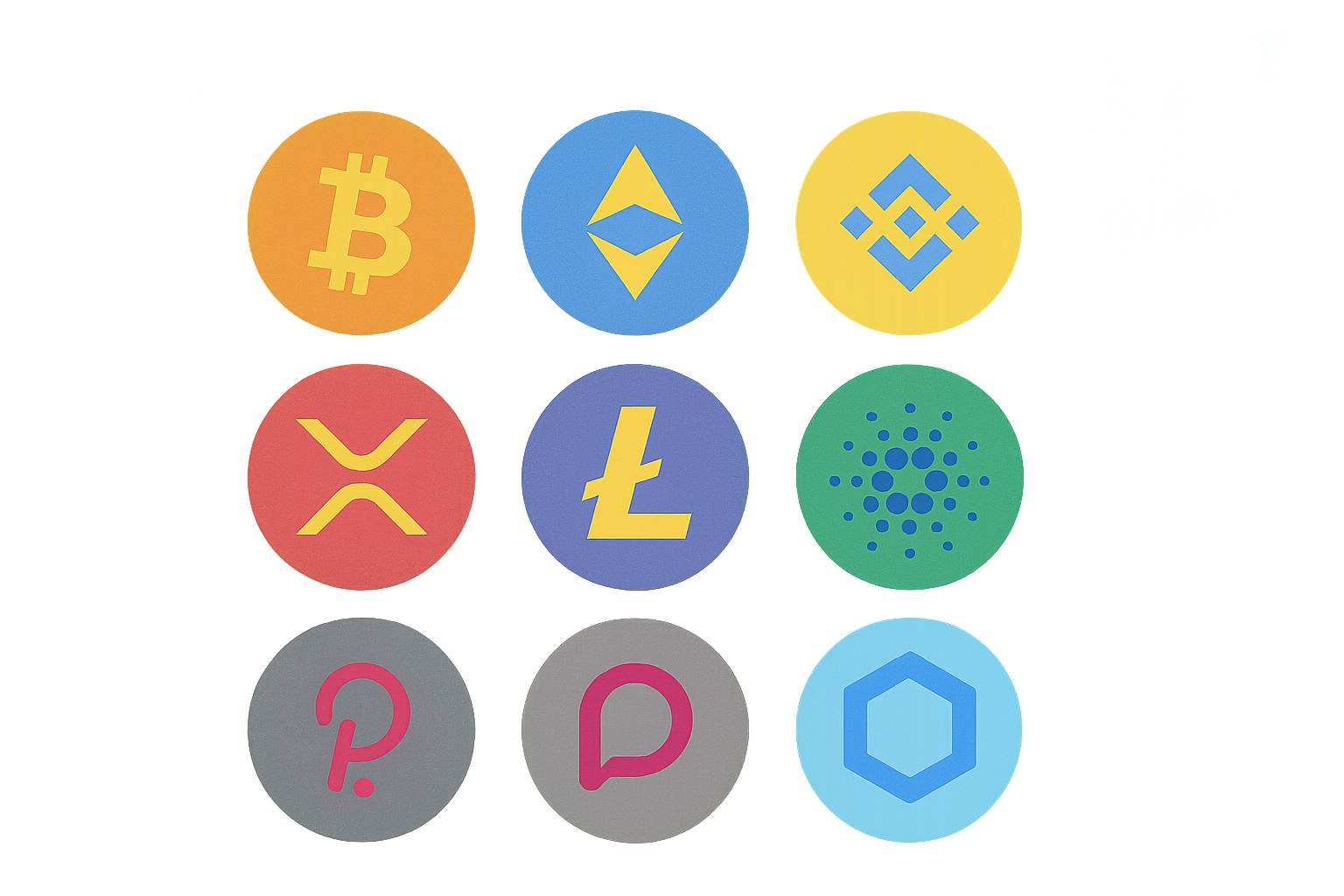
Most Popular Cryptocurrencies for Investment
-
Bitcoin (BTC): Bitcoin represents the pioneering cryptocurrency, created in 2009 as the first decentralized digital currency. Often referred to as "digital gold" due to its limited supply of 21 million coins, Bitcoin serves dual purposes as both a payment method and a store of value. Its widespread adoption, institutional recognition, and proven track record make it a foundational asset in most cryptocurrency portfolios. Bitcoin's network security, achieved through proof-of-work mining, has remained uncompromised throughout its existence.
-
Ethereum (ETH): Ethereum functions as a comprehensive blockchain platform that enables the creation of smart contracts and the deployment of decentralized applications (dApps). Its native cryptocurrency, Ether (ETH), serves as both a medium of exchange and the fuel that powers operations within the network. Ethereum's transition to proof-of-stake through the Ethereum 2.0 upgrade has significantly improved its energy efficiency and scalability, positioning it as the leading platform for decentralized finance (DeFi) and non-fungible tokens (NFTs).
-
BNB: BNB is a cryptocurrency created by a major exchange platform to serve multiple functions within its ecosystem. Token holders can use BNB to reduce trading fees, participate in token sales of new projects through launchpad platforms, and access various services within the platform's expanding ecosystem. The token implements a burn mechanism that gradually reduces its total supply, potentially increasing scarcity over time.
-
Cardano (ADA): Cardano distinguishes itself as a blockchain platform built on peer-reviewed academic research and evidence-based development. Its primary goal is to provide a secure, scalable environment for creating decentralized applications while maintaining energy efficiency through its proof-of-stake consensus mechanism. The native cryptocurrency ADA enables network participation, transaction processing, and governance voting, allowing holders to influence the platform's future direction.
-
Ripple (XRP): Ripple operates both as a payment protocol and a cryptocurrency designed to facilitate instant, low-cost international money transfers. The network enables seamless conversion between different fiat currencies, making it particularly attractive to financial institutions seeking efficient cross-border payment solutions. XRP transactions settle in seconds with minimal fees, offering significant advantages over traditional banking systems.
-
Litecoin (LTC): Created as a fork of Bitcoin, Litecoin is often described as "digital silver" to Bitcoin's gold. It features faster block processing times of approximately 2.5 minutes compared to Bitcoin's 10 minutes, enabling quicker transaction confirmations. Litecoin's lower transaction costs make it practical for everyday purchases and micropayments, while maintaining similar security properties to Bitcoin.
-
Polkadot (DOT): Polkadot represents an innovative blockchain platform designed to enable interoperability between different blockchains, creating a connected network of specialized chains. The native DOT token serves multiple purposes: network governance, staking for security, and bonding for connecting new chains to the network. This multi-chain architecture allows different blockchains to transfer messages and value in a trust-free fashion.
-
Chainlink (LINK): Chainlink provides essential infrastructure that connects blockchain smart contracts with real-world data, enabling them to interact with external information sources, payment systems, and other blockchains. The LINK token compensates node operators who provide data feeds and maintain the network's oracle services. This functionality is critical for many DeFi applications that require accurate, tamper-proof external data.
How to Choose Cryptocurrencies for Investment
-
Market Capitalization Analysis: Larger market capitalization generally indicates greater stability, wider adoption, and established reputation within the cryptocurrency ecosystem. High market cap cryptocurrencies typically experience less volatility and have deeper liquidity, making them more suitable for conservative investment strategies. However, smaller market cap projects may offer higher growth potential, albeit with increased risk.
-
Technology and Use Cases: Conduct thorough research into the underlying technology powering the cryptocurrency and its practical applications. Evaluate whether the project solves real-world problems, offers unique technological innovations, or improves upon existing solutions. Consider the scalability, security, and efficiency of the blockchain architecture, as well as the potential market demand for its use cases.
-
Team and Partnerships: Investigate the backgrounds of project founders and core team members, examining their track record, expertise, and previous achievements in blockchain or related fields. Strong teams typically include experienced developers, business strategists, and advisors with relevant industry connections. Valuable partnerships with established companies, institutions, or other blockchain projects can validate the project's credibility and expand its potential adoption.
-
Community Engagement: Assess the size, activity level, and enthusiasm of the project's community across social media platforms, forums, and developer channels. Active communities often indicate strong grassroots support and can contribute to project development through feedback, testing, and promotion. Monitor the project's presence at industry events, conferences, and hackathons, as these activities demonstrate commitment to ecosystem growth.
-
Reputation and Reviews: Research opinions and discussions about the cryptocurrency on forums, social media platforms, and cryptocurrency news sites. Look for balanced perspectives from both supporters and critics, and be cautious of projects with predominantly one-sided sentiment. Professional reviews from reputable cryptocurrency analysts and publications can provide valuable insights into project strengths and weaknesses.
-
Security Audits: Verify whether the project's smart contracts and code have undergone independent security audits by reputable firms. Quality audits identify vulnerabilities and ensure that the code functions as intended without hidden risks. Check the audit reports for any critical issues and how the team addressed identified problems.
-
Technical and Fundamental Analysis: Perform comprehensive technical analysis of price charts, trading volumes, and market trends to identify potential entry and exit points. Complement this with fundamental analysis of the project's value proposition, competitive advantages, tokenomics, and long-term viability. Consider both short-term trading opportunities and long-term investment potential.
-
Whitepaper and Roadmap Evaluation: Carefully read the project's whitepaper to understand its vision, technical specifications, and economic model. A well-written whitepaper should clearly explain the problem being solved, the proposed solution, and the token's utility within the ecosystem. Review the roadmap to assess whether the team consistently meets development milestones and adapts to changing market conditions.
-
Risk Assessment and Investment Outlook: Evaluate the potential risks associated with the investment, including technological risks, regulatory uncertainties, market volatility, and competition from similar projects. Be realistic about the possibility of total capital loss and never invest more than you can afford to lose. Balance risk considerations with growth potential and align investments with your personal risk tolerance and financial goals.
-
Exchange Availability and Liquidity: Confirm that the cryptocurrency is listed on reputable exchanges with high trading volumes. Greater exchange availability and liquidity ensure that you can easily buy or sell positions at fair market prices. Tokens listed only on obscure or low-volume exchanges may be difficult to trade and more susceptible to price manipulation.
What Not to Invest In
-
Newly Launched Cryptocurrencies: Recently created cryptocurrencies carry exceptionally high risk due to unproven technology, untested teams, and uncertain market reception. Many new projects fail to deliver on their promised technology or lack sustainable business models. Without operational history, it's difficult to assess whether the project can overcome technical challenges or maintain long-term relevance. Wait for projects to demonstrate consistent development progress and community adoption before considering investment.
-
Cryptocurrencies with Questionable Reputation: Some cryptocurrencies have earned dubious reputations due to controversies, fraudulent activities, regulatory violations, or lack of transparency. Projects associated with pump-and-dump schemes, exit scams, or misleading marketing should be avoided entirely. Research any negative news or warnings from regulatory authorities, and be particularly cautious of projects that promise unrealistic returns or employ aggressive promotional tactics.
-
Low Liquidity and Low Trading Volume Cryptocurrencies: Investing in cryptocurrencies with minimal liquidity presents significant risks, as low trading volumes make it difficult to execute trades at desired prices. Low liquidity can lead to extreme price volatility, where even small buy or sell orders cause substantial price movements. Additionally, exiting positions in illiquid markets may be challenging or impossible during market downturns, potentially trapping your investment.
-
Cryptocurrencies Without Real Use Cases or Technological Foundation: Some projects, particularly meme coins and tokens created as jokes or social experiments, lack concrete utility or technological innovation. These speculative assets derive value primarily from social media hype and community sentiment rather than fundamental value. Investing in such projects resembles gambling rather than strategic investment, as prices can collapse rapidly when attention shifts elsewhere.
-
Projects with Poor Transparency: Projects that fail to provide sufficient information about their development plans, team members, technology, or financial operations indicate potential untrustworthiness. Legitimate projects maintain transparency through regular updates, open-source code, clear documentation, and accessible team members. Avoid projects with anonymous teams, vague whitepapers, or reluctance to answer legitimate questions from the community. Lack of transparency often precedes project failures or fraudulent activities.
FAQ
Which cryptocurrencies should beginners choose as entry points for investment?
Beginners should start with Bitcoin or Ethereum due to their stability and widespread adoption. These established cryptocurrencies provide a solid foundation. Additionally, consider exploring emerging projects with strong fundamentals for potential growth opportunities.
What are the differences between Bitcoin, Ethereum, and other mainstream cryptocurrencies?
Bitcoin is digital gold for value storage and payments using proof-of-work. Ethereum enables smart contracts and decentralized applications with proof-of-stake consensus. Bitcoin dominates by market cap; Ethereum ranks second. Other coins serve specialized functions in DeFi, gaming, and NFTs.
How to Evaluate the Investment Value of a Cryptocurrency Project?
Assess institutional funding from top venture firms, evaluate team credentials and track records, analyze token distribution and unlock schedules, review trading volume and market liquidity, and check major exchange listings for legitimacy.
What risks should beginners understand when investing in cryptocurrencies?
Beginners should understand market volatility risks, where cryptocurrency prices fluctuate dramatically. Learn about liquidity risks, security risks of choosing reliable platforms, and the importance of not investing more than you can afford to lose.
How should I choose cryptocurrencies for small-amount investments?
For small investments, prioritize Bitcoin and Ethereum as core holdings. Allocate 40% to innovative projects within top 50 by market cap. Research fundamentals and community support. Rebalance portfolio regularly.
How is cryptocurrency investment security guaranteed?
Use cold wallets, strong passwords, and multi-signature authentication for maximum protection. Enable two-factor authentication and store private keys offline. Avoid public Wi-Fi and regularly backup wallet data. Choose reputable platforms with insurance coverage and security audits to safeguard your digital assets.
Share
Content
How to Buy Cryptocurrency


Trending Cryptocurrencies



Bitcoin Fear and Greed Index: Market Sentiment Analysis for 2025

Hedera Hashgraph (HBAR): Founders, Technology, and Price Outlook to 2030

Cardano (ADA) Price Prediction 2025 & 2030 – Is ADA Set to Soar?
2025 SUI coin: price, buying guide, and Staking rewards

Cardano (ADA): A History, Tech Overview, and Price Outlook
Jasmy Coin: A Japanese Crypto Tale of Ambition, Hype, and Hope

What is AIX9: A Comprehensive Guide to the Next Generation of Enterprise Computing Solutions

What is KLINK: A Comprehensive Guide to Understanding the Revolutionary Communication Platform

What is ART: A Comprehensive Guide to Understanding Assisted Reproductive Technology and Its Impact on Modern Fertility Treatment

What is KAR: A Comprehensive Guide to Knowledge and Reasoning Systems in Modern Technology

What is MART: A Comprehensive Guide to Multi-Agent Reinforcement Learning Through Time