Comprehensive Guide to Dollar Cost Averaging in Cryptocurrency Investment

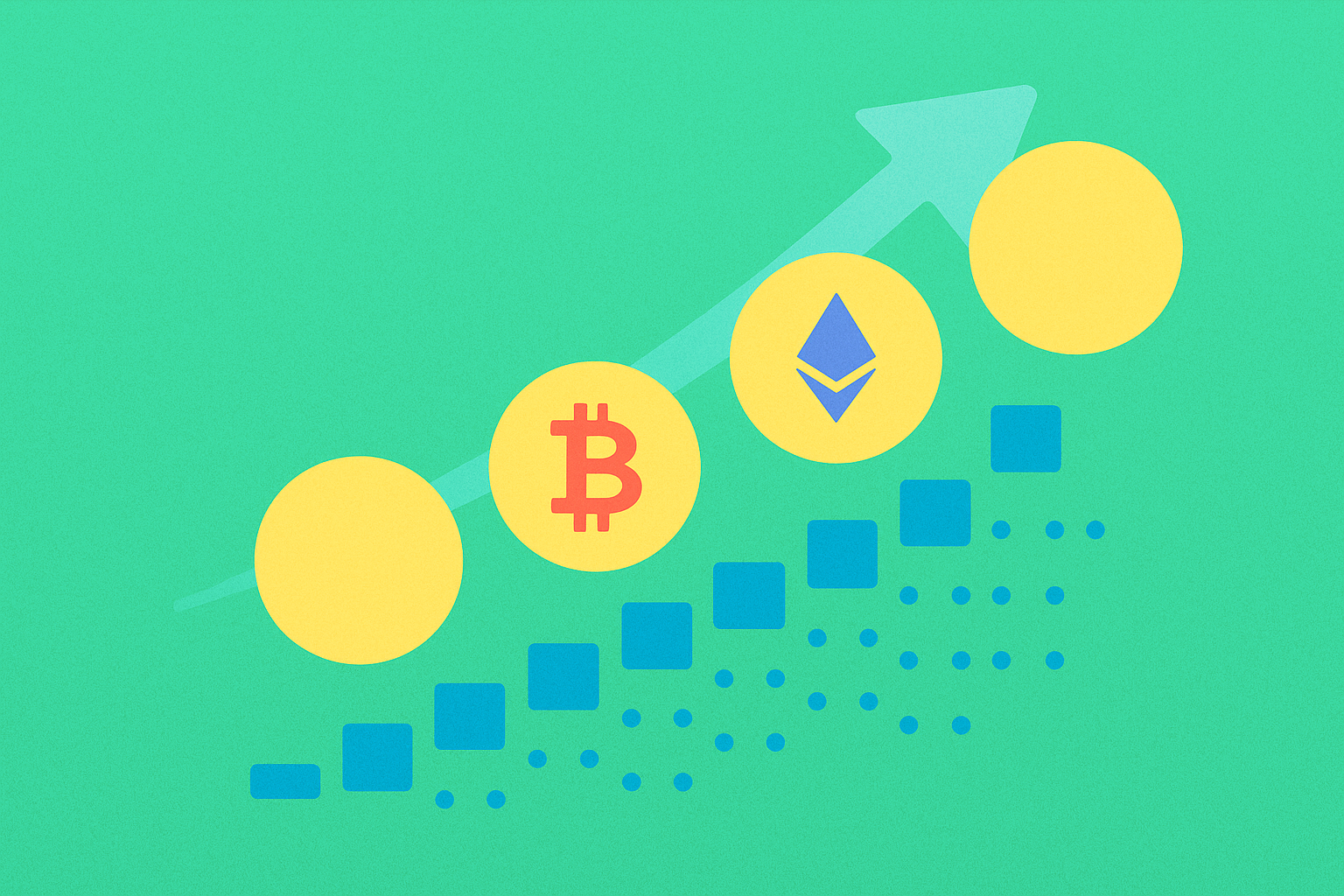
Understanding the Challenge of Cryptocurrency Investment
Stock investment presents significant challenges for many investors. The market often moves contrary to expectations: prices drop after buying and rise after selling. The fundamental questions of when to enter, when to exit, and how much to invest remain unanswered for most traders. For beginners with limited time and experience, investment decisions can become overwhelming burdens. This challenge intensifies dramatically in the cryptocurrency market, where price volatility far exceeds traditional stock markets.
The solution to this dilemma comes in the form of Dollar Cost Averaging, commonly known as DCA. This investment strategy, also referred to as systematic or phased investment, offers a methodical approach to market entry. Rather than attempting to time the market perfectly with a lump-sum investment, DCA distributes investment timing across multiple periods, effectively mitigating risks associated with sudden price fluctuations. This approach transforms the unpredictable nature of market timing into a structured, manageable investment process that reduces emotional decision-making and provides a disciplined framework for building positions over time.
Cryptocurrency Market Volatility Explained
In traditional stock markets, low-priced stocks typically exhibit volatility characteristics similar to cryptocurrencies. This heightened volatility stems from their smaller market capitalization, which makes them more susceptible to significant price movements from large transactions. The analogy of throwing a stone into a small pond versus an ocean illustrates this principle perfectly: the smaller body of water produces much larger ripples from the same impact.
However, even the vast ocean experiences catastrophic disruptions when confronted with massive events. Major news events such as pandemics, wars, natural disasters, corporate bankruptcies of major enterprises, or national-level crises create tsunamis that affect all markets indiscriminately. In smaller markets, these disruptions create even more pronounced effects, generating waves that can completely overwhelm the system.
The volatility inherent in smaller markets carries additional risks beyond natural market movements. While creating artificial waves in an ocean requires enormous resources and coordination, manipulating a small pond demands far less effort and capital. Similarly, in assets with market capitalizations below $2 billion, investors with moderate capital can establish buy walls or sell walls that effectively exclude retail investors from fair market participation.
In the cryptocurrency market, large holders known as "whales" frequently exploit this dynamic by artificially creating these barriers. They attract retail investors into positions, then execute pump-and-dump schemes to realize substantial profits at the expense of smaller participants. Even Bitcoin, despite its current market capitalization exceeding $731.5 billion, remains vulnerable to speculative manipulation and extreme price swings.
For investors who have worked hard to accumulate capital, volatility naturally raises concerns and demands cautious consideration. However, this same volatility simultaneously represents the primary attraction of cryptocurrencies compared to static assets like gold. Few other investment vehicles offer the potential for 200% to 1000% returns within short timeframes, making the risk-reward profile uniquely compelling for those who understand how to navigate it effectively.
How DCA Strategy Works in Practice
Dollar Cost Averaging represents a sophisticated approach to capturing the benefits of volatility while minimizing its inherent risks. This strategy functions as a systematic method where investors gradually enter the market over time rather than committing their entire capital at once, effectively distributing risk across multiple entry points and market conditions.
The mechanics are straightforward yet powerful: instead of investing $10,000 in a single transaction, an investor divides this amount into smaller portions, investing $1,000 daily, weekly, or monthly over ten separate occasions. This approach eliminates the pressure of perfect market timing. When an investor commits their entire capital in one "all-in" transaction, there's no guarantee they've captured the optimal entry point. Consequently, the probability of achieving superior returns compared to a distributed investment approach diminishes significantly.
The DCA strategy offers several additional strategic advantages that enhance its appeal:
First, investment units can be flexibly divided according to individual circumstances. Whether investing $100, $1,000, or $10,000 per period, investors can operate within their comfortable financial boundaries without overextending their resources. This flexibility makes cryptocurrency investment accessible to a broader range of participants, from students with modest savings to professionals with substantial disposable income.
Second, when investment distribution follows a regular schedule, the strategy functions effectively regardless of market conditions. Whether markets experience bearish downturns or bullish rallies, the systematic nature of DCA ensures consistent participation. This regularity transforms market volatility from a threat into an opportunity, as investors automatically buy more units when prices are low and fewer units when prices are high, naturally optimizing their average cost basis.
For investors who maintain conviction in an asset's long-term value proposition, regular fixed-amount investments through DCA become not just a strategy but a natural conclusion. This approach aligns investment behavior with fundamental beliefs about asset value, removing the psychological burden of short-term price movements.
However, successful DCA implementation requires two critical personal attributes: discipline and resistance to market FUD (Fear, Uncertainty, and Doubt). Investors must maintain their investment schedule even when market sentiment turns negative and maintain conviction when prices decline significantly.
Historical Performance Analysis of Bitcoin DCA
During the challenging period known as the "crypto winter" that began in the fourth quarter of a previous bear market, the Bitcoin market experienced numerous significant events and dramatic price movements. Consider a hypothetical scenario where an investor committed to investing $10 daily in Bitcoin throughout this extended period. Over approximately five years, this would represent a total investment of $18,260.
Using specialized DCA calculators to analyze this investment strategy reveals remarkable results: the portfolio would have grown to approximately $32,942, representing an 80.41% return on investment. The profit, calculated by subtracting the original principal, demonstrates the power of consistent, disciplined investment through various market cycles.
Examining the performance graph reveals that during the bull market period spanning from the latter half of one year through the first half of the following year, profit margins expanded dramatically. Investors with strong conviction in Bitcoin's long-term value proposition who maintained their DCA approach throughout these periods positioned themselves to capture substantial gains. Looking forward, similar opportunities likely await patient, disciplined investors.
While debates continue regarding Bitcoin's future price trajectory, historical chart analysis reveals an unmistakable upward trend over extended timeframes. A crucial observation emerges from examining bear market periods: each new low point established during bearish phases consistently exceeded the previous cycle's low point, creating a pattern of higher lows that suggests underlying strength and growing adoption.
This pattern becomes comprehensible when considering Bitcoin's fundamental supply dynamics. Bitcoin's total supply is mathematically limited and predetermined, creating inherent scarcity. As adoption increases and more participants seek to acquire Bitcoin, the remaining available supply naturally appreciates in value. This represents a fundamental economic principle of supply and demand operating in a uniquely constrained environment, where supply cannot expand to meet growing demand.
Key Advantages of DCA Investment Strategy
Dollar Cost Averaging investment operates on the fundamental assumption that markets trend upward over extended periods. While other investors succumb to panic selling during price declines, systematic DCA investors maintain their long-term perspective and adhere strictly to their predetermined investment schedule. This disciplined approach frequently generates superior returns compared to reactive trading strategies that attempt to time short-term market movements.
Another significant advantage lies in DCA's inherent protection against overtrading. By committing to fixed amounts at regular intervals, investors automatically prevent excessive trading activity. This protection extends beyond financial benefits to encompass crucial psychological advantages. Overtrading often leads to emotional exhaustion, poor decision-making, and substantial losses that extend beyond monetary considerations to affect investors' mental well-being and confidence.
Furthermore, DCA eliminates the necessity for complex chart analysis, which often proves challenging for novice investors. Technical analysis requires significant time investment, specialized knowledge, and experience to execute effectively. By removing this requirement, DCA democratizes cryptocurrency investment, making it accessible to individuals who lack technical expertise but possess conviction in long-term value propositions.
Additionally, DCA facilitates diversified investment approaches across multiple altcoins, enabling investors to distribute risk across various projects while maintaining systematic investment discipline. This diversification potential, combined with regular investment scheduling, creates a comprehensive risk management framework suitable for various investment goals and risk tolerances.
Potential Drawbacks and Limitations
As a low-risk strategy that leverages cryptocurrency market volatility, DCA presents relatively few negative aspects. However, investors should understand certain limitations to make informed decisions about strategy implementation.
The primary consideration involves opportunity cost in strongly trending markets. If an investor possesses the analytical capability to identify the beginning of a sustained upward trend with high confidence, committing a larger lump sum at that optimal entry point would theoretically generate superior returns compared to gradual DCA accumulation. In such bullish scenarios, DCA's distributed entry approach results in higher average purchase prices as the market continues rising, potentially reducing overall profit margins.
However, this theoretical disadvantage rarely manifests as a practical concern for most individual investors. Few retail participants possess both the analytical expertise to identify trend beginnings with sufficient confidence and the available capital to make immediately impactful lump-sum investments. The combination of these requirements places such opportunities beyond reach for the majority of market participants.
Another consideration involves transaction fees charged by cryptocurrency trading platforms. DCA strategies necessarily involve more frequent transactions compared to lump-sum investments, resulting in higher cumulative fee expenses. Each purchase incurs platform fees, which accumulate over numerous transactions throughout the investment period.
Nevertheless, this fee consideration should be evaluated within appropriate context. DCA represents a long-term investment game where sustained returns over extended periods typically dwarf the incremental costs of additional transactions. When calculating overall returns across multi-year investment horizons, these additional fee expenses generally represent negligible percentages of total gains, making them acceptable costs for the risk management benefits DCA provides.
Why DCA Suits High-Volatility Markets
Systematic investment strategies prove profitable across various market environments, but they demonstrate particular effectiveness in high-volatility cryptocurrency markets. This enhanced suitability stems from cryptocurrencies' unique characteristics: unlike traditional companies, they lack direct ties to physical products or services that might stabilize valuations.
Cryptocurrency investors employing DCA can simultaneously capitalize on two distinct advantages: volatility-driven profit opportunities from speculative trading activity, and long-term appreciation potential from blockchain project development and adoption. While this analysis has focused primarily on Bitcoin as the cryptocurrency market's leading asset, numerous alternative projects may offer even greater long-term growth potential.
For example, projects such as Ethereum, Cardano, Polkadot, Avalanche, and Radix all provide lending and borrowing services that operate more efficiently and transparently than traditional financial systems. These platforms have already demonstrated viable use cases and practical applications, earning positive long-term outlook assessments from analysts and industry observers. Their proven functionality and growing adoption suggest substantial appreciation potential as blockchain technology continues disrupting traditional finance.
Successful DCA implementation requires active personal engagement and commitment. While some platforms have begun offering automated DCA services, widespread adoption and availability of these tools may require additional time to develop. Rather than waiting for complete service standardization, proactive investors can begin capturing volatility-driven profits immediately by implementing manual DCA strategies. The current period, before DCA becomes universally adopted and potentially less effective due to market efficiency improvements, represents an optimal opportunity for disciplined investors to establish positions and build wealth through systematic accumulation.
FAQ
What is Bitcoin DCA (Dollar Cost Averaging)? How does it help reduce investment risk?
Bitcoin DCA is a strategy of investing a fixed amount regularly at set intervals. It averages your purchase price over time, reduces the impact of market volatility, and eliminates emotional decision-making, helping lower overall investment risk.
Why is risk diversification needed? What advantages does Bitcoin DCA have compared to lump-sum investment?
Risk diversification reduces potential losses. Bitcoin DCA spreads investments over time, minimizing the impact of market volatility and price fluctuations, making it more stable than lump-sum investing.
How to formulate and execute a Bitcoin DCA investment plan? What key points should be noted?
Set a fixed investment amount and schedule, invest consistently over time to average costs. Monitor market trends, manage fees, and maintain discipline regardless of price fluctuations for long-term Bitcoin accumulation.
Is DCA strategy suitable for all investors? What potential risks should be vigilant about when using DCA?
DCA suits most investors seeking steady long-term growth with reduced market timing risk. However, risks include prolonged bear markets reducing returns, requires discipline to maintain regular investments, and may underperform during strong bull markets compared to lump sum investing.
What is the difference between Bitcoin DCA and other investment strategies such as trend trading and long-term holding?
Bitcoin DCA spreads investments over time to reduce timing risk, while trend trading relies on market prediction and timing. Long-term holding requires upfront capital deployment. DCA offers consistent entry points regardless of price fluctuations, reducing emotional decision-making compared to active trading strategies.
Share
Content
How to Buy Cryptocurrency


Trending Cryptocurrencies



XZXX: A Comprehensive Guide to the BRC-20 Meme Token in 2025

Bitcoin Fear and Greed Index: Market Sentiment Analysis for 2025

5 ways to get Bitcoin for free in 2025: Newbie Guide
Top Crypto ETFs to Watch in 2025: Navigating the Digital Asset Boom
Bitcoin Market Cap in 2025: Analysis and Trends for Investors
2025 Bitcoin Price Prediction: Trump's Tariffs' Impact on BTC

How to Create an NFT for Free with Picsart
Top Cryptocurrencies to Watch in 2025: Investment Opportunities

What is AURA: A Comprehensive Guide to Understanding Artificial Understanding and Reasoning Architecture

What is Metaverse? Key Technologies Behind the Virtual World of the Future

What is EDGEN: A Comprehensive Guide to Edge Computing and Distributed Networks