Comprehensive Guide to Stablecoins
What Are Stablecoins?
Stablecoins are cryptocurrencies designed to maintain a predetermined value, making them popular among investors who want to participate in digital asset trading while avoiding drastic price fluctuations. These digital assets achieve stability by being pegged to traditional assets such as fiat currencies, precious metals like gold, or other cryptocurrencies. Some stablecoins utilize algorithmic mechanisms to control their supply and maintain price stability.
The fundamental principle behind stablecoins is that their value remains constant because it is tied to a fixed asset or controlled through automated protocols. This stability makes them particularly valuable in the volatile cryptocurrency market, where other digital assets can experience significant price swings within short periods. For investors and businesses seeking predictability in their digital transactions, stablecoins offer a reliable alternative that combines the benefits of blockchain technology with the stability of traditional financial instruments.
How Stablecoins Work
The inherent volatility of the cryptocurrency market has led many people to perceive cryptocurrencies as highly speculative assets. Price fluctuations of 10% or more in a single day are not uncommon for popular cryptocurrencies like Bitcoin or Ethereum. This volatility creates challenges for those who want to use digital assets for everyday transactions or as a store of value.
Stablecoins aim to serve as a counterbalance to this volatility by providing a certain level of stability to the market. They achieve this by pegging their value to real-world assets, creating a bridge between traditional finance and the cryptocurrency ecosystem. This pegging mechanism ensures that the stablecoin maintains a consistent value relative to its underlying asset.
Most stablecoins maintain reserves that securely store and collateralize the backing assets. These reserves are crucial for maintaining trust in the stablecoin, as they guarantee that each token can be redeemed for its equivalent value in the underlying asset. Independent auditors typically verify these reserves periodically to ensure transparency and maintain user confidence.
One of the primary use cases for stablecoins is as a medium of exchange. Like other cryptocurrencies, they can be traded and transferred on blockchain networks, but they are particularly useful for facilitating payments because their value remains constant during and after transactions. This stability makes them valuable for both institutional and individual users who need predictable transaction values.
For example, institutional investors view stablecoins as tools for international payments. Using stablecoins for cross-border transactions can be more cost-effective and efficient compared to traditional banking systems. In recent years, various countries have explored using stablecoins for trade settlements, recognizing their potential to streamline international commerce and reduce transaction costs.
Types of Stablecoins
Not all stablecoins operate in the same way. Some are backed by other assets, while others rely on algorithmic mechanisms. Understanding the different types helps users choose the most appropriate stablecoin for their needs. Here are the main categories:
Fiat-Backed Stablecoins
Fiat-backed stablecoins maintain reserves equal to their market capitalization in traditional currencies. This means that one unit of the stablecoin can be exchanged for one unit of fiat currency at a 1:1 ratio. These reserves are typically held in bank accounts or other secure financial institutions.
Independent organizations regularly audit these reserves to ensure transparency and maintain user trust. This type represents the simplest form of stablecoin and tends to be the most centralized, as it requires trusted custodians to hold and manage the fiat reserves.
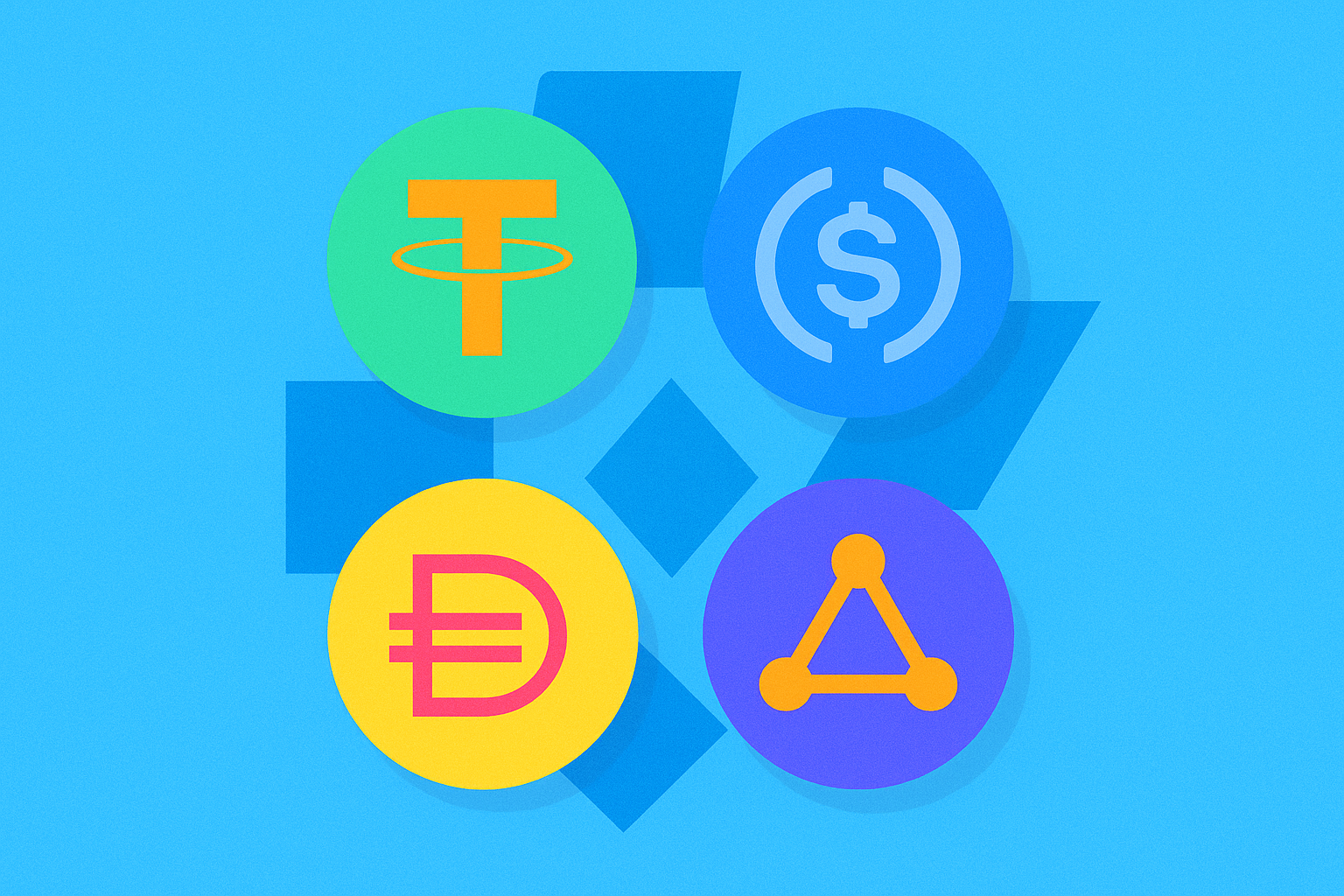
For example, Tether (USDT), a fiat-backed stablecoin, maintains its value pegged to the US dollar at a 1:1 ratio. This means that for every USDT token in circulation, there should theoretically be one US dollar held in reserve. The straightforward nature of this backing mechanism makes fiat-backed stablecoins easy to understand and widely adopted, though it also means they depend on centralized entities to maintain the reserves.
Commodity-Backed Stablecoins
Commodity-backed stablecoins derive their value from precious metals like gold and silver, or other tangible assets. This type of stablecoin offers investors exposure to physical commodities while maintaining the benefits of blockchain technology, such as easy transferability and fractional ownership.
For instance, Paxos Gold (PAXG) is backed by gold reserves held by Paxos. Each token represents ownership of one troy ounce of physical gold stored in professional vault facilities. This allows customers to own a fraction of a gold bar without the logistical challenges of storing and securing physical gold themselves. The tokenization of gold and other commodities opens up new possibilities for investors who want commodity exposure without the traditional barriers to entry.
Similarly, some commodity-backed stablecoins are pegged to the value of other raw materials such as crude oil or natural gas. These stablecoins provide exposure to commodity markets through blockchain technology, potentially offering more efficient trading and settlement compared to traditional commodity markets.
Crypto-Backed Stablecoins
Stablecoins can be created based on other cryptocurrencies rather than real money or physical commodities. These stablecoins are primarily issued for use across multiple blockchains and require over-collateralization, meaning the value of the collateral cryptocurrency must be significantly greater than the stablecoin's value. This over-collateralization is necessary because cryptocurrency prices frequently fluctuate.
For example, MakerDAO's DAI is a stablecoin pegged to the US dollar, but it is actually collateralized by Ethereum and other cryptocurrencies. If $100 worth of DAI is issued, approximately $150 worth of cryptocurrency must be provided as collateral to back it. This over-collateralization ensures that even if the collateral cryptocurrency's price drops, the stablecoin's value remains protected.
The decentralized nature of crypto-backed stablecoins makes them attractive to users who value blockchain's trustless and permissionless characteristics. However, the complexity of maintaining proper collateralization ratios and the volatility of the underlying assets create unique challenges for this type of stablecoin.
Algorithmic Stablecoins
Algorithmic stablecoins may or may not hold collateral reserves. They typically rely on computer programs with preset formulas to stabilize their value through automated mechanisms. These algorithms control the coin's supply and demand through smart contracts, adjusting the circulating supply to maintain the target price.
The algorithm automatically increases the token supply when the price rises above the peg and decreases it when the price falls below the peg. This mechanism theoretically maintains price stability without requiring physical reserves. From a decentralization perspective, these stablecoins surpass other competing stablecoins because they don't depend on central reserves or trusted custodians.
However, algorithmic stablecoins have faced significant challenges. TerraUSD (UST), a well-known algorithmic stablecoin, lost its peg in 2022, leading to a catastrophic collapse that highlighted the risks associated with purely algorithmic stability mechanisms. This event raised important questions about the viability of algorithmic stablecoins and led to increased scrutiny from regulators and market participants.
Simple Comparison of Different Stablecoin Types
| Feature | Fiat-Backed | Commodity-Backed | Crypto-Backed | Algorithmic |
|---|---|---|---|---|
| Backing | Based on USD, EUR | Based on gold, oil | Based on cryptocurrencies | Based on algorithms |
| Price Stability | High, pegged to fiat | Moderate, linked to commodity value | Moderate, linked to volatile crypto | Varies, linked to algorithm |
| Volatility | Low due to stable fiat | Low to moderate | Moderate | Low to moderate |
| Decentralization | Usually centralized | Centralized or decentralized | Often decentralized | Generally decentralized |
| Use Cases | Payments, remittances, trading value storage | Value storage, investment | DeFi collateral, lending | Payments, decentralized finance |
| Examples | Tether (USDT), USDC | Paxos Gold (PAXG), Digix Gold | DAI, sUSD | TerraUSD (UST - before de-pegging) |
What Are the Most Popular Stablecoins?
Tether (USDT)
Launched in 2014, Tether is the largest stablecoin by market capitalization and has maintained its dominant position for several years. Its widespread adoption means that USDT can be purchased on virtually every major cryptocurrency exchange, making it highly accessible to traders worldwide.
Tether's primary function is to facilitate the rapid movement of funds between exchanges. Traders can profit through arbitrage when cryptocurrency prices differ between two exchanges, and USDT's liquidity and widespread availability make it ideal for this purpose. The stablecoin maintains a 1:1 ratio with the US dollar, meaning there should be one dollar in reserves for every USDT token.
While USDT is the most popular stablecoin, it has faced controversy. The U.S. Commodity Futures Trading Commission imposed a substantial fine of $42.5 million on Tether in October 2021. The regulatory agency alleged that the USDT issuer made misleading statements about its reserves from 2016 to 2019.
The authenticity of Tether's reserves remains a subject of debate. Following regulatory investigations, Tether has continued to defend itself, asserting that there are no operational issues with either Tether or USDT. The company has taken steps to increase transparency, including publishing regular attestations of its reserves, though some critics argue that full independent audits would provide greater assurance.
USD Coin (USDC)
Cryptocurrency companies Circle and a prominent exchange launched USD Coin in 2018. Like USDT, this coin is pegged to the US dollar at a 1:1 ratio, providing similar stability and use cases. USDC operates as an open-source protocol that businesses and individuals can use to build their own products and services.
USDC has gained significant popularity as an alternative to USDT by providing evidence that it is backed by assets derived from US dollars. Circle, the primary issuer of USDC, regularly publishes attestation reports from major accounting firms, offering greater transparency about its reserves compared to some competitors.
The stablecoin has found particular success in decentralized finance (DeFi) applications, where its regulatory compliance and transparency make it a preferred choice for many protocols. Major DeFi platforms integrate USDC for lending, borrowing, and yield farming activities, contributing to its growing adoption and liquidity across the cryptocurrency ecosystem.
DAI
The Maker Foundation originally created DAI as a non-volatile lending asset for businesses, offering a decentralized alternative to fiat-backed stablecoins. Governance was subsequently transferred to MakerDAO, a decentralized autonomous organization that manages the protocol through community voting.
MakerDAO's goal is to ensure DAI's stability by strengthening its collateralization. DAI has over-collateralized reserves set in Maker Vaults to protect against market volatility. This means that the value of assets locked in the vaults significantly exceeds the value of DAI tokens in circulation, providing a buffer against price fluctuations in the collateral assets.
DAI is the most widely used stablecoin for decentralized application (DApp) integration, supporting over 400 DApps and wallets. Its decentralized nature and transparent governance make it particularly popular among users who value blockchain's trustless characteristics. The token plays a crucial role in the DeFi ecosystem, serving as collateral, a medium of exchange, and a stable store of value across numerous protocols.
Binance USD (BUSD)
A stablecoin project emerged from collaboration between Paxos and a leading exchange. Paxos backs it with US dollars held in bank accounts, providing fiat-backed stability similar to other dollar-pegged stablecoins.
It was one of the few stablecoins approved by Wall Street regulators, initially giving it credibility and regulatory clarity. However, the stablecoin faced scrutiny regarding liquidity and other concerns. For example, a prominent exchange delisted this stablecoin on March 13, 2023, citing regulatory issues among other reasons.
As SEC investigations intensified, the project encountered problems, and Paxos currently faces lawsuits for alleged violations of investor protection laws. These regulatory challenges have significantly impacted the stablecoin's adoption and usage, highlighting the importance of maintaining compliance in an evolving regulatory landscape.
Stablecoins vs Bitcoin
| Feature | Stablecoins | Bitcoin |
|---|---|---|
| Price Stability | Stable, pegged to assets like fiat or commodities | Highly volatile with significant price fluctuations based on demand |
| Use Cases | Primarily used for payments and transactions | Used as a store of value for investment and trading |
| Transaction Processing Speed | Generally faster | Slower due to network congestion |
| Backing | Supported by real assets or algorithms | Not backed by any assets |
| Volatility | Minimal price fluctuations | High volatility with frequent price changes |
| Decentralization | Some are decentralized (algorithmic), others are not | Fully decentralized |
| Adoption | Growing in payment systems and DeFi | Widely accepted in investment and global markets |
This comparison highlights the fundamental differences between stablecoins and Bitcoin. While Bitcoin serves primarily as a speculative investment and store of value, stablecoins function as practical tools for transactions and as bridges between traditional finance and cryptocurrency markets. Bitcoin's volatility makes it unsuitable for everyday payments, whereas stablecoins' stability makes them ideal for this purpose. However, Bitcoin's decentralized nature and limited supply give it unique properties as a potential hedge against inflation and currency devaluation, which stablecoins, being pegged to fiat currencies, cannot provide.
Are Stablecoins Safe?
Stablecoins are often considered safe due to their lack of volatility, which distinguishes them from other cryptocurrencies. The stable value proposition makes them appear less risky than traditional cryptocurrencies that can experience dramatic price swings.
While this is theoretically correct, safety cannot be guaranteed if companies engage in questionable management practices or fail to properly prove their reserves. The stability of a stablecoin's price does not automatically mean the underlying system is secure or trustworthy. Several factors can compromise a stablecoin's safety:
The sustainability of stablecoins depends on how they are backed. Reserves supporting stablecoins are exposed to credit, market, and liquidity risks. In other words, just because deposits existed at one point doesn't guarantee they will always be safe. Economic downturns, bank failures, or mismanagement of reserves can all threaten a stablecoin's ability to maintain its peg.
Stablecoins have been promoted as the answer to cryptocurrency volatility. While they can be considered safer than other coins, the reputation of this asset class plummeted after the Luna-Terra incident. UST, an algorithmic stablecoin in the Terra ecosystem, lost its peg in May 2022, causing billions of dollars in losses and shaking confidence in the entire stablecoin sector.
Issuers should be regulated to ensure proper oversight and accountability. Without regulation, stablecoin projects can face legal problems that ultimately harm users. The lack of comprehensive regulatory frameworks in many jurisdictions creates uncertainty and potential risks for stablecoin holders.
In reality, the absence of regulations surrounding stablecoins has made it easier for issuers to make false claims about their reserves. Some projects have been accused of not maintaining adequate backing, operating with fractional reserves, or investing reserve assets in risky instruments that could compromise their ability to honor redemptions.
For safety, it is best to use well-known stable cryptocurrencies with high market capitalization. Larger, more established stablecoins typically have greater transparency, more robust reserve management, and are more likely to be subject to regulatory oversight. Users should research a stablecoin's backing mechanism, reserve audits, and the reputation of its issuer before using it for significant transactions or holdings.
The Future Role of Stablecoins
Stablecoins are having a significant impact on cryptocurrency trading and the broader financial ecosystem. They enable faster coin transactions in a more secure environment, providing the benefits of blockchain technology without the volatility associated with traditional cryptocurrencies.
As governments worldwide accelerate cryptocurrency asset regulation, stablecoins are becoming a solution for improving payment systems and facilitating international remittances. Their ability to move value quickly and cheaply across borders makes them particularly valuable for cross-border payments, where traditional banking systems can be slow and expensive.
The integration of stablecoins into traditional financial systems is progressing. Major payment processors and financial institutions are exploring ways to incorporate stablecoins into their services, recognizing their potential to reduce costs and increase transaction speed. This mainstream adoption could significantly expand the use cases for stablecoins beyond cryptocurrency markets.
Central banks are also taking notice, with many countries developing or considering Central Bank Digital Currencies (CBDCs) that share some characteristics with stablecoins. These government-backed digital currencies could coexist with private stablecoins, creating a diverse ecosystem of stable digital assets.
In the decentralized finance (DeFi) sector, stablecoins play a crucial role by providing stable collateral for lending and borrowing, enabling predictable yields, and serving as base pairs for trading. As DeFi continues to grow and mature, the demand for reliable stablecoins is likely to increase.
However, the future of stablecoins will largely depend on regulatory developments. Clear, balanced regulations that protect consumers while allowing innovation could help stablecoins reach their full potential. Conversely, overly restrictive regulations could stifle innovation and limit the benefits these digital assets can provide.
The technology behind stablecoins continues to evolve, with new mechanisms being developed to improve stability, transparency, and efficiency. Hybrid models that combine elements of different stablecoin types may emerge, potentially offering better stability guarantees while maintaining decentralization.
As the cryptocurrency industry matures, stablecoins are positioned to become an increasingly important bridge between traditional finance and the digital asset ecosystem, facilitating greater adoption of blockchain technology in everyday financial transactions.
FAQ
What is a Stablecoin (稳定币)? How does it maintain price stability?
A stablecoin is a cryptocurrency pegged to stable assets like fiat currency, maintaining relatively stable prices. It is typically backed by reserves of the asset it represents, such as USD-pegged stablecoins like USDT and USDC, ensuring minimal price volatility.
What are the types of stablecoins? What are the differences between USDT, USDC, DAI and others?
Stablecoins include USDT (Tether), USDC (Circle/Coinbase), and DAI (MakerDAO). USDT is the most liquid and widely used. USDC emphasizes transparency with regular audits. DAI is decentralized, backed by crypto collateral rather than fiat reserves, offering independence valued by the crypto community.
What are stablecoins used for? Why do traders and investors need stablecoins?
Stablecoins provide stable value for transactions by maintaining 1:1 parity with fiat currencies like the US dollar, eliminating cryptocurrency volatility. They serve as essential mediums for on-chain trading, enable seamless entry into crypto markets, reduce transaction costs, and facilitate efficient fund transfers across blockchain networks.
Are stablecoins safe? What are the risks of using stablecoins?
Stablecoins carry network security risks and potential ransomware exposure. Market volatility, regulatory uncertainty, and smart contract vulnerabilities pose additional threats. Users should understand these risks before participation.
What are the advantages of stablecoins compared to fiat currencies and other cryptocurrencies?
Stablecoins offer price stability by pegging to fiat currencies or assets, eliminating volatility. They provide faster, cheaper transactions than traditional banking while maintaining value consistency, making them ideal for trading and everyday use in crypto ecosystems.
What role do stablecoins play in DeFi?
Stablecoins serve as essential settlement mediums in DeFi, enabling trading, lending, borrowing, and liquidation activities. They provide price stability and liquidity, facilitating seamless transactions and collateral management across decentralized protocols.
How will stablecoins develop in the future, and what impact do regulatory policies from various countries have on stablecoins?
Stablecoins will experience large-scale growth, expanding from crypto trading to real-world payments and traditional finance integration. Global regulatory frameworks are strengthening, with countries emphasizing compliance, reserve management transparency, and anti-money laundering measures. USD stablecoins will maintain dominance while other currencies gain traction through regional development.
Share
Content
How to Buy Cryptocurrency


Trending Cryptocurrencies



What will be the market capitalization of USDC in 2025? Analysis of the stablecoin market landscape.

How is DeFi different from Bitcoin?

What is DeFi: Understanding Decentralized Finance in 2025

USDC stablecoin 2025 Latest Analysis: Principles, Advantages, and Web3 Eco-Applications
Development of Decentralized Finance Ecosystem in 2025: Integration of Decentralized Finance Applications with Web3

2025 USDT USD Complete Guide: A Must-Read for Newbie Investors
Top 6 Platforms for Buying Bitcoin and Cryptocurrencies
Coins vs Tokens: Understanding the Key Differences in Cryptocurrency

What is Balancer

What is SCCP: A Comprehensive Guide to Signaling Connection Control Part in Telecommunications

What is XCAD: A Comprehensive Guide to the Web3 Design and Creator Platform