Coins vs Tokens: Understanding the Key Differences in Cryptocurrency
What Are Coins in the Cryptocurrency World?
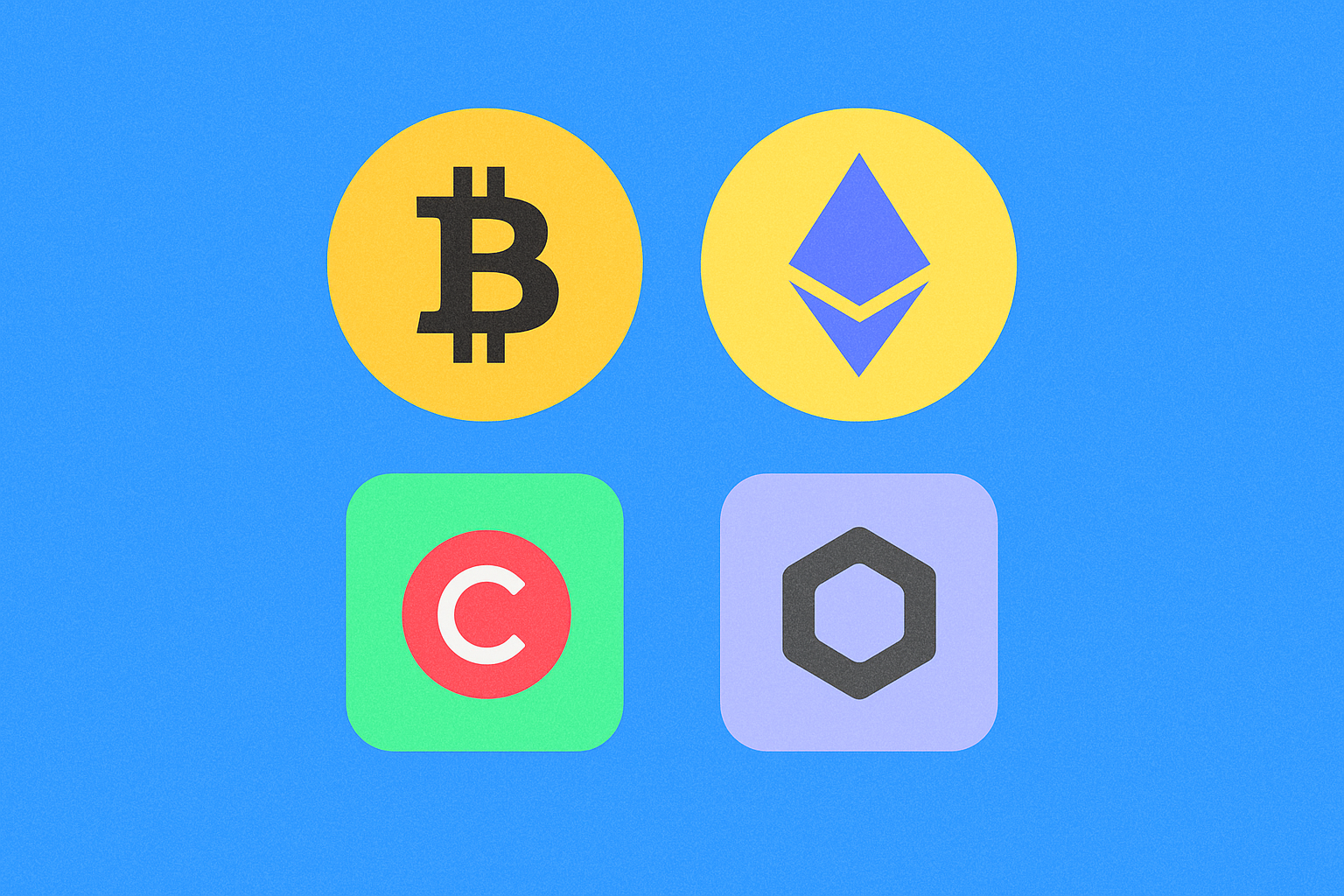
Coins, also known as native digital assets, are cryptocurrencies that originate directly from their own blockchain networks. In simpler terms, coins are created "within" the blockchain itself, rather than "on top of" an existing blockchain infrastructure. This fundamental distinction makes coins the primary currency of their respective blockchain ecosystems.
Native coins serve as the foundational layer of their blockchain networks, functioning as both a medium of exchange and a critical component of the network's consensus mechanism. They are intrinsically tied to the blockchain's core protocol and cannot exist independently from their native network. This deep integration gives coins unique properties and use cases that distinguish them from tokens.
How Do Crypto Coins Work?
There are two predominant methods for creating and managing native blockchain coins: the UTXO (Unspent Transaction Output) model and the Account-based model. Each approach offers distinct advantages in terms of transaction processing and balance management.
UTXO Model
The UTXO model creates new outputs whenever a transaction occurs on the blockchain. When miners successfully mine a new block, they generate a coinbase transaction that pays them the block reward for maintaining and updating the blockchain. This model treats each transaction output as a discrete, spendable unit, similar to physical cash denominations.
In the UTXO system, the blockchain doesn't track account balances directly. Instead, it maintains a record of all unspent transaction outputs. When you want to send coins, your wallet selects appropriate UTXOs to cover the transaction amount, creating new outputs for the recipient and potentially returning change to your address. This approach provides enhanced privacy and parallel transaction processing capabilities.
Account-Based Model
The Account-based model operates similarly to traditional banking systems, offering a more intuitive approach to balance management. When you submit a transaction, the blockchain directly adjusts the account balances by debiting the sender's account and crediting the receiver's account. This method maintains a global state of all account balances, making it straightforward to query any account's current holdings.
This model simplifies smart contract development and enables more complex programmable interactions, as contracts can easily reference and modify account states. The Account model has become particularly popular in blockchain platforms that support extensive smart contract functionality.
What Are Crypto Coins Used For?
Crypto coins serve multiple essential functions within their blockchain ecosystems, making them indispensable to network operations and user interactions.
-
Block Rewards: When new blocks are created and added to the blockchain, the nodes that mine or propose these blocks receive coins as compensation for maintaining the distributed database. This incentive mechanism ensures network security and encourages ongoing participation in the consensus process.
-
Transaction Fees and Gas: Users pay coins to execute transactions and interact with the blockchain. These fees compensate validators for processing transactions and help prevent network spam. In more advanced networks, gas fees also cover the computational resources required to execute smart contracts and complex operations.
Additionally, coins often serve as the primary store of value within their ecosystems, enabling users to hold, transfer, and exchange value in a decentralized manner. They may also play crucial roles in governance mechanisms, staking protocols, and other network-specific features.
Popular Crypto Coins
-
Bitcoin: The pioneering cryptocurrency and the first successful implementation of a decentralized digital currency. Bitcoin operates on its own blockchain and serves primarily as a store of value and medium of exchange.
-
Ether: The native cryptocurrency of the Ethereum blockchain, which powers one of the most widely-used smart contract platforms. Ether is essential for paying gas fees and participating in network operations.
-
Solana: The native coin of the Solana network, known for its high-throughput blockchain designed for decentralized applications and crypto projects requiring fast transaction processing.
-
Avalanche: The AVAX coin serves as the native cryptocurrency of the Avalanche platform, supporting transaction fees, staking, and providing a basic unit of account across the network's multiple subnets.
-
Cosmos: The ATOM coin powers the Cosmos network, an ecosystem focused on blockchain interoperability and enabling communication between different blockchain networks.
What Are Tokens in the Cryptocurrency World?
Tokens differ fundamentally from coins in their creation and relationship to blockchain infrastructure. Rather than being native to a blockchain, tokens are created using smart contracts deployed on existing blockchain platforms. Developers don't build tokens into the blockchain's core protocol; instead, they leverage the blockchain's programmability to create custom digital assets.
This distinction is crucial: while coins are integral to their blockchain's operation, tokens are applications built on top of blockchain infrastructure. Tokens inherit the security and decentralization properties of their underlying blockchain while offering flexibility in design and functionality.
The most popular token standards include ERC-20 for the Ethereum ecosystem, BEP-20 for the BNB network, and SPL for Solana. These standards provide templates and guidelines for creating interoperable tokens that can interact seamlessly with wallets, exchanges, and other blockchain applications.
How Do Crypto Tokens Work?
Token creators design tokens with specific purposes in mind, customizing their behavior to suit particular decentralized applications or use cases. In the case of ERC-20 tokens, the entire token logic resides within a smart contract deployed on the Ethereum blockchain.
When a developer creates a token, they define parameters such as total supply, distribution mechanism, transfer rules, and any special functions the token should perform. The smart contract then manages all token operations, including minting, burning, and transferring tokens between addresses. This programmability enables tokens to implement complex economic models and governance structures.
Unlike coins, which require changes to the blockchain's core protocol for modifications, tokens can be updated or redesigned by deploying new smart contracts. This flexibility makes tokens ideal for experimental projects, specialized applications, and evolving business models.
Use Cases of Crypto Tokens
Tokens serve diverse purposes across the cryptocurrency ecosystem, offering functionality that extends far beyond simple value transfer.
-
Governance: Governance tokens grant holders voting rights to make decisions about protocol upgrades, parameter changes, and treasury management. This enables decentralized decision-making and community-driven development.
-
Utility: Utility tokens provide holders with access to specific products, services, or features within an application. They act as digital keys that unlock functionality or grant special privileges within their respective ecosystems.
-
Medium of Exchange: Tokens can function as units of value for measuring and exchanging goods and services within specific platforms or communities. They facilitate economic activity in decentralized marketplaces and applications.
-
Speculation: Many tokens are created as investment vehicles, with value derived from market demand, project success, or anticipated future utility. These tokens enable participants to gain exposure to specific projects or sectors within the cryptocurrency space.
Popular Crypto Tokens
-
Chainlink: A decentralized oracle network that provides reliable, tamper-proof data feeds to smart contracts across multiple blockchain platforms. The LINK token compensates node operators for providing accurate data.
-
The Graph: An indexing protocol for querying blockchain data, making it easier for developers to build decentralized applications. The GRT token powers the network's query and indexing services.
-
Render: A distributed GPU rendering network that connects artists needing rendering power with GPU owners. The RNDR token facilitates transactions within this decentralized rendering marketplace.
-
Uniswap: A leading decentralized exchange protocol that enables automated token swapping. The UNI token provides governance rights and fee-sharing opportunities to holders.
-
Gala: A blockchain gaming platform that empowers players to own their in-game assets. The GALA token is used for transactions, governance, and rewarding player participation.
Coins vs Tokens: A Comprehensive Comparison
| Feature | Coins | Tokens |
|---|---|---|
| Definition | Native cryptocurrency of a blockchain | Created on existing blockchain infrastructure |
| Blockchain | Has its own independent blockchain | Does not have its own blockchain |
| Primary Purpose | Functions primarily as digital currency | Represents assets, utility, or specific functions |
| Creation Method | Mining or pre-mining | Smart Contracts |
| Examples | Bitcoin, Ethereum, Dogecoin | USDC, Chainlink, Shiba Inu |
The distinction between coins and tokens reflects different approaches to building value and functionality in the cryptocurrency space. Coins provide the foundational infrastructure and economic incentives for blockchain networks, while tokens leverage this infrastructure to create specialized applications and use cases.
Coins vs Tokens vs Traditional Finance
In traditional financial systems, the ledgers that record and issue currencies are centralized, controlled by central banks and financial institutions. These entities have exclusive authority over monetary policy, currency issuance, and transaction validation.
In contrast, coins created on blockchain networks are part of decentralized ledgers maintained by distributed networks of nodes. No single entity controls the issuance or management of these coins. This decentralization provides transparency, censorship resistance, and eliminates single points of failure.
Tokens take this concept further by enabling anyone to create programmable digital assets on public blockchain infrastructure. This democratization of asset creation and management represents a fundamental shift from traditional finance, where only authorized institutions can issue securities or create financial instruments.
Are Stablecoins Tokens or Coins?
Despite the "coin" in their name, stablecoins are predominantly classified as tokens. Developers create most stablecoins on established blockchain platforms using smart contracts, rather than building entirely new blockchain networks.
Stablecoins like USDC, USDT, and DAI operate as ERC-20 tokens on Ethereum and other compatible blockchains. They leverage the security and infrastructure of these established networks while implementing specialized logic to maintain their price stability mechanisms. This approach allows stablecoins to benefit from the liquidity, interoperability, and developer tools available on major blockchain platforms.
The token classification makes sense from a technical perspective: stablecoins don't require their own consensus mechanisms or validator networks. Instead, they rely on their host blockchain for transaction processing and security, focusing their smart contract logic on maintaining the peg to their underlying assets.
FAQ
What is the difference between Coins and Tokens?
Coins are native assets with their own blockchain, while tokens are created on existing blockchains. Coins are typically decentralized, whereas tokens may be managed by central entities.
What is a cryptocurrency Coin? What are its characteristics?
A cryptocurrency Coin is an independent digital currency like Bitcoin, built on blockchain technology. Coins function as money for transactions and value storage. They feature divisibility, portability, limited supply, and serve as medium of exchange—distinct from Tokens which represent project assets or utilities.
What is Token? What are the main differences between Token and Coin?
Token is a digital asset issued on a specific blockchain, while Coin operates on its own independent blockchain. The key difference is that Coin has its own blockchain, whereas Token depends on an existing blockchain platform.
Coin和Token在区块链技术上的实现方式有什么不同?
Coin is native to its own blockchain with built-in protocols, like Bitcoin and Ethereum. Token is built on existing blockchains via smart contracts, like ERC-20 tokens on Ethereum. Coins have independent blockchain infrastructure, while Tokens rely on host blockchains.
What are common Coins and Tokens?
Common Coins include Bitcoin (BTC) and Ethereum (ETH). Common Tokens include USDT on BTC, Spice on BCH, and LAMB on ETH networks.
What risks should I be aware of when investing in Coins and Tokens?
Coins and Tokens face high volatility with potential sudden losses. Avoid investing essential living expenses or emergency funds. Allocate only a small portfolio portion to crypto to protect financial security.
Share
Content
What Are Coins in the Cryptocurrency World?
How Do Crypto Coins Work?
What Are Crypto Coins Used For?
Popular Crypto Coins
What Are Tokens in the Cryptocurrency World?
How Do Crypto Tokens Work?
Use Cases of Crypto Tokens
Popular Crypto Tokens
Coins vs Tokens: A Comprehensive Comparison
Coins vs Tokens vs Traditional Finance
Are Stablecoins Tokens or Coins?
FAQ
How to Buy Cryptocurrency


Trending Cryptocurrencies



XZXX: A Comprehensive Guide to the BRC-20 Meme Token in 2025

Survey Note: Detailed Analysis of the Best AI in 2025

Detailed Analysis of the Best 10 GameFi Projects to Play and Earn in 2025

Kaspa’s Journey: From BlockDAG Innovation to Market Buzz

Best Crypto Wallets 2025: How to Choose and Secure Your Digital Assets

Popular GameFi Games in 2025

What is token economics model: allocation, inflation, burning and governance explained

2026 SENSO Price Prediction: Expert Analysis and Market Forecast for the Coming Year

How do futures open interest, funding rates, and liquidation data signal derivatives market trends in 2026?
2026 APRS Price Prediction: Expert Analysis and Market Forecast for the Next Generation of Agricultural Technology
Types of Cryptocurrencies and Tokens: A Comprehensive Guide