CRU vs BCH: A Comprehensive Comparison of Two Blockchain Networks and Their Unique Value Propositions

Introduction: Investment Comparison Between CRU and BCH
In the cryptocurrency market, the comparison between CRU vs BCH has been a topic that investors cannot bypass. The two not only have significant differences in market cap ranking, application scenarios, and price performance, but also represent different crypto asset positioning. CRU (Crust): Since its launch in 2020, it has gained market recognition with its positioning as a "decentralized storage network for Web3 ecosystem". Crust supports multiple storage layer protocols including IPFS and provides storage interfaces to the application layer. BCH (Bitcoin Cash): Since its inception in 2017, it has been regarded as a "peer-to-peer electronic cash system", being one of the cryptocurrencies with high global trading volume and market capitalization. BCH follows Satoshi's scaling roadmap and is committed to global adoption. This article will comprehensively analyze the investment value comparison of CRU vs BCH around historical price trends, supply mechanisms, institutional adoption, technological ecosystem, and future predictions, and attempt to answer the question that investors are most concerned about:
"Which is the better buy right now?"
I. Historical Price Comparison and Current Market Status
CRU and BCH Historical Price Trends
- 2021: CRU reached a notable price level during April 2021, with its price at $179.24.
- 2017: BCH experienced significant market activity following its launch in August 2017, with its price at $3,785.82 during December 2017.
- Comparative Analysis: During the market cycle from 2021 to 2026, CRU declined from $179.24 to $0.0226, while BCH decreased from $3,785.82 to $528.06.
Current Market Situation (2026-02-05)
- CRU Current Price: $0.0226
- BCH Current Price: $528.06
- 24-Hour Trading Volume: CRU at $13,394.36 vs BCH at $5,157,820.43
- Market Sentiment Index (Fear & Greed Index): 14 (Extreme Fear)
View real-time prices:
- Check CRU current price Market Price
- Check BCH current price Market Price
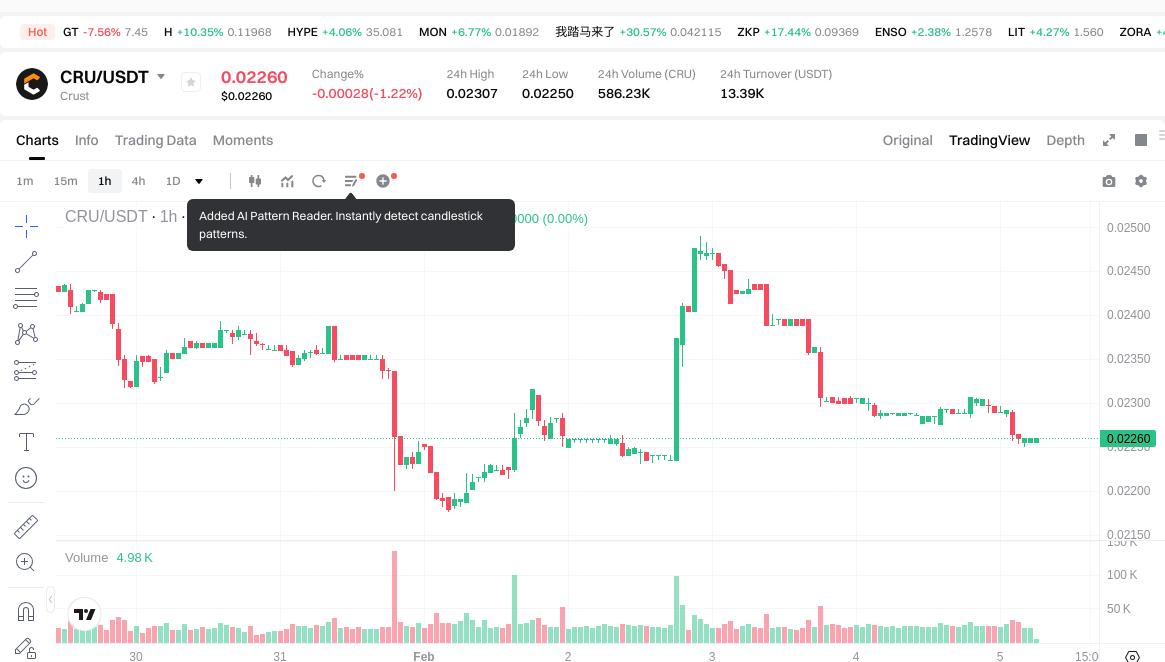
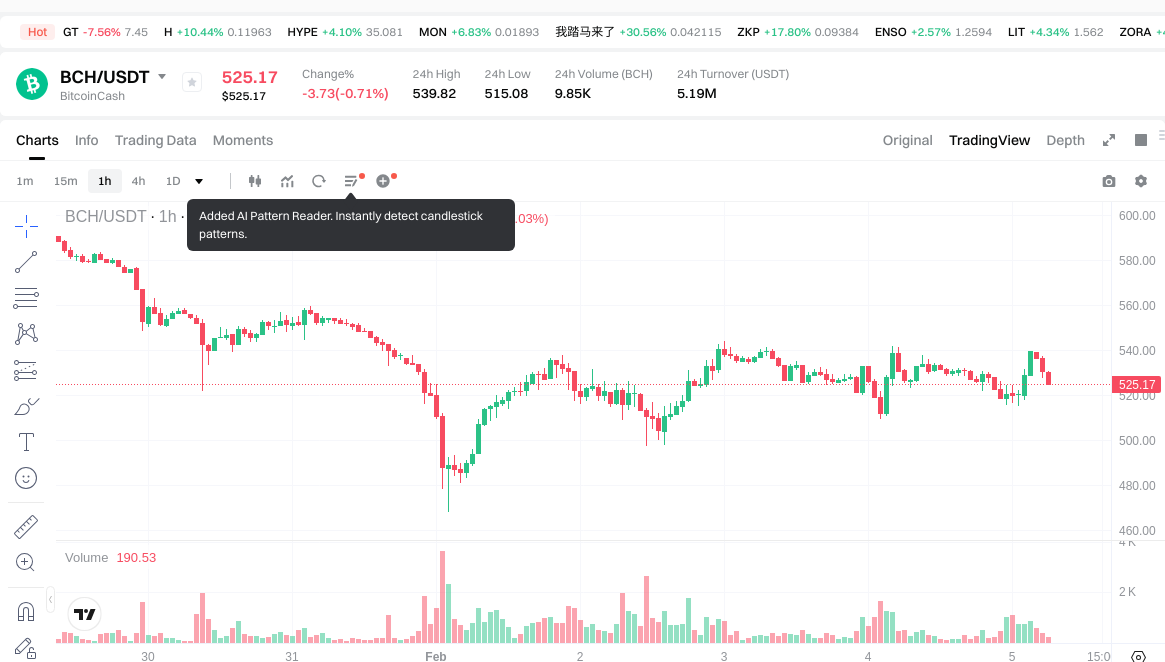
II. Core Factors Influencing CRU vs BCH Investment Value
Supply Mechanism Comparison (Tokenomics)
-
CRU: The available materials do not specify detailed supply mechanism information for CRU. Based on general blockchain project patterns, supply mechanisms typically involve token distribution schedules and circulation models that may impact long-term value proposition.
-
BCH: As a Bitcoin hard fork, BCH inherited Bitcoin's deflationary model with a capped supply and halving mechanism that reduces block rewards approximately every four years, creating predictable supply constraints over time.
-
📌 Historical Pattern: Supply mechanisms with built-in scarcity features have historically influenced price cycles, with halving events often correlating with increased market attention and potential price appreciation in subsequent periods.
Institutional Adoption and Market Application
-
Institutional Holdings: The materials do not provide specific data comparing institutional preference between CRU and BCH. Market positioning suggests BCH may attract attention from entities seeking Bitcoin-related exposure with different technical characteristics.
-
Enterprise Adoption: BCH has seen adoption in cross-border payment scenarios and merchant acceptance systems due to its focus on transaction efficiency. CRU's enterprise applications focus on BTC layer 2 solutions and decentralized infrastructure, targeting different use cases in the blockchain ecosystem.
-
Regulatory Landscape: Different jurisdictions maintain varying approaches to cryptocurrency regulation. BCH, as an established Bitcoin fork, operates within frameworks established for major cryptocurrencies, while emerging projects like CRU navigate evolving regulatory environments for layer 2 solutions.
Technical Development and Ecosystem Building
-
CRU Technical Progress: The materials reference CRU's focus on BTC layer 2 infrastructure, involving decentralized cross-chain technology and virtual machine compatibility. Development efforts center on creating interoperability solutions and supporting decentralized storage and computation networks.
-
BCH Technical Evolution: BCH continues development focused on maintaining larger block sizes for higher transaction throughput, positioning itself as a peer-to-peer electronic cash system with emphasis on usability and transaction speed.
-
Ecosystem Comparison: BCH maintains an established ecosystem with payment processing integrations and merchant adoption. CRU's ecosystem development focuses on DeFi infrastructure, decentralized storage, and BTC layer 2 applications, targeting technical infrastructure rather than direct consumer payments.
Macroeconomic Factors and Market Cycles
-
Performance in Inflationary Environments: Both projects exist within the broader cryptocurrency market that has historically attracted interest during periods of monetary expansion. BCH's fixed supply model aligns with store-of-value narratives during inflationary concerns.
-
Macro Monetary Policy Impact: Interest rate changes and USD index movements affect cryptocurrency markets broadly. Both CRU and BCH operate within this macroeconomic context, with price movements influenced by broader risk sentiment and liquidity conditions.
-
Geopolitical Considerations: Cross-border transaction demand and international developments affect cryptocurrency adoption patterns. BCH's payment focus positions it within narratives around financial sovereignty and censorship resistance, while CRU's technical infrastructure targets the evolving needs of the decentralized web ecosystem.
III. 2026-2031 Price Prediction: CRU vs BCH
Short-term Prediction (2026)
- CRU: Conservative scenario $0.018942 - $0.02255 | Optimistic scenario $0.02255 - $0.0299915
- BCH: Conservative scenario $467.39 - $525.16 | Optimistic scenario $525.16 - $640.70
Mid-term Prediction (2028-2029)
- CRU may enter a moderate growth phase, with estimated price range of $0.027 - $0.054
- BCH may enter a consolidation phase, with estimated price range of $422 - $962
- Key drivers: institutional capital inflows, ETF developments, ecosystem expansion
Long-term Prediction (2030-2031)
- CRU: Baseline scenario $0.027 - $0.047 | Optimistic scenario $0.045 - $0.066
- BCH: Baseline scenario $764 - $1,037 | Optimistic scenario $1,037 - $1,235
Disclaimer
CRU:
| Year | Predicted High Price | Predicted Average Price | Predicted Low Price | Price Change |
|---|---|---|---|---|
| 2026 | 0.0299915 | 0.02255 | 0.018942 | 0 |
| 2027 | 0.03677905 | 0.02627075 | 0.01471162 | 16 |
| 2028 | 0.046656852 | 0.0315249 | 0.027111414 | 39 |
| 2029 | 0.05394540888 | 0.039090876 | 0.03088179204 | 72 |
| 2030 | 0.051169956684 | 0.04651814244 | 0.0269805226152 | 105 |
| 2031 | 0.06642790740432 | 0.048844049562 | 0.04542496609266 | 116 |
BCH:
| Year | Predicted High Price | Predicted Average Price | Predicted Low Price | Price Change |
|---|---|---|---|---|
| 2026 | 640.6952 | 525.16 | 467.3924 | 0 |
| 2027 | 623.732532 | 582.9276 | 297.293076 | 10 |
| 2028 | 832.59549108 | 603.330066 | 422.3310462 | 14 |
| 2029 | 962.0701232436 | 717.96277854 | 660.5257562568 | 35 |
| 2030 | 1234.824182810946 | 840.0164508918 | 764.414970311538 | 59 |
| 2031 | 1068.54292635691419 | 1037.420316851373 | 767.69103447001602 | 96 |
IV. Investment Strategy Comparison: CRU vs BCH
Long-term vs Short-term Investment Strategies
-
CRU: May appeal to investors interested in decentralized infrastructure development and Web3 ecosystem positioning. The project's focus on storage networks and BTC layer 2 solutions targets technical infrastructure adoption cycles, which typically require extended timeframes for ecosystem maturation.
-
BCH: May attract investors seeking exposure to peer-to-peer electronic cash systems with established market presence. BCH's positioning as a payment-focused cryptocurrency with higher transaction throughput aligns with use cases emphasizing transaction utility and merchant adoption.
Risk Management and Asset Allocation
-
Conservative Investors: A diversified approach might consider allocation frameworks that emphasize established market positions and lower volatility profiles. Conservative strategies typically favor assets with demonstrated liquidity and longer operational histories.
-
Aggressive Investors: Higher-risk tolerance portfolios may incorporate emerging infrastructure projects alongside established cryptocurrencies, accepting increased volatility in exchange for potential asymmetric returns associated with earlier-stage ecosystem development.
-
Hedging Instruments: Portfolio risk management approaches may include stablecoin allocations for liquidity management, derivatives instruments where available, and cross-asset diversification strategies to mitigate concentrated exposure.
V. Potential Risk Comparison
Market Risk
-
CRU: Trading volume data shows $13,394.36 in 24-hour volume as of the reference date, indicating lower liquidity levels that may result in increased price volatility and wider bid-ask spreads during market stress periods.
-
BCH: With 24-hour trading volume at $5,157,820.43, BCH demonstrates higher liquidity levels, though remains subject to broader cryptocurrency market cycles and sentiment shifts that affect major digital assets.
Technical Risk
-
CRU: Development focus on decentralized storage networks and BTC layer 2 infrastructure involves technical complexity related to cross-chain interoperability and network coordination challenges inherent in emerging infrastructure projects.
-
BCH: As a Bitcoin fork, technical considerations include network upgrade coordination, mining ecosystem dynamics, and ongoing development debates within the community regarding protocol evolution and scaling approaches.
Regulatory Risk
- Different jurisdictions maintain varying regulatory frameworks for cryptocurrency assets. Payment-focused projects like BCH may encounter specific regulatory considerations related to money transmission and payment system regulations, while infrastructure projects like CRU operate within evolving frameworks for decentralized technology platforms.
VI. Conclusion: Which Is the Better Buy?
📌 Investment Value Summary:
-
CRU Characteristics: Positioned within decentralized storage and Web3 infrastructure development, targeting technical ecosystem builders and participants in emerging decentralized networks. Current market metrics show lower liquidity levels and significant price fluctuation from historical levels.
-
BCH Characteristics: Established presence as a peer-to-peer electronic cash system with focus on transaction utility and payment applications. Demonstrates higher trading volumes and longer operational history within the cryptocurrency ecosystem.
✅ Investment Considerations:
-
New Investors: May benefit from understanding fundamental differences between infrastructure projects and payment-focused cryptocurrencies, considering factors such as liquidity profiles, ecosystem maturity, and technical complexity when evaluating potential positions.
-
Experienced Investors: Portfolio construction may involve evaluating risk-adjusted return expectations, correlation patterns with broader cryptocurrency markets, and alignment with specific investment theses regarding infrastructure development versus payment adoption narratives.
-
Institutional Participants: Due diligence frameworks typically incorporate regulatory compliance considerations, liquidity requirements for position sizing, custody solutions availability, and alignment with institutional investment mandates and risk parameters.
⚠️ Risk Disclosure: Cryptocurrency markets exhibit high volatility characteristics. This content does not constitute investment advice, financial recommendations, or solicitation to buy or sell any assets. Investors should conduct independent research and consult qualified financial advisors before making investment decisions.
VII. FAQ
Q1: What are the main differences between CRU and BCH in terms of their fundamental use cases?
CRU focuses on decentralized storage infrastructure for Web3 ecosystems, while BCH serves as a peer-to-peer electronic cash system for payments. CRU supports storage layer protocols including IPFS and provides storage interfaces to the application layer, targeting developers building decentralized applications that require data storage solutions. BCH, as a Bitcoin fork launched in 2017, prioritizes transaction throughput with larger block sizes, positioning itself for merchant adoption and cross-border payment scenarios. This fundamental difference means CRU's value proposition depends on Web3 ecosystem growth and decentralized storage adoption, whereas BCH's utility centers on payment processing efficiency and cash-like transaction functionality.
Q2: How do the liquidity profiles of CRU and BCH compare for investors?
BCH demonstrates significantly higher liquidity with 24-hour trading volume of $5,157,820.43 compared to CRU's $13,394.36 as of February 2026. This substantial difference of approximately 385x in trading volume means BCH offers tighter bid-ask spreads, easier position entry and exit, and reduced slippage during trades. For CRU, lower liquidity levels may result in increased price volatility during market stress periods and challenges when executing larger orders without significant market impact. Investors should consider their position sizing requirements and liquidity needs when evaluating these assets, as liquidity constraints can affect both execution costs and the ability to adjust positions during rapid market movements.
Q3: What role do supply mechanisms play in the long-term value proposition of CRU vs BCH?
BCH inherited Bitcoin's deflationary model with a capped supply and halving mechanism that reduces block rewards approximately every four years, creating predictable supply constraints. This built-in scarcity feature has historically influenced price cycles, with halving events often correlating with increased market attention in subsequent periods. While the available materials do not specify detailed supply mechanism information for CRU, supply dynamics significantly impact long-term tokenomics and value accrual models. BCH's transparent and predetermined supply schedule provides investors with clarity regarding future token issuance, whereas emerging projects may have different distribution schedules that affect circulation and potential dilution over time.
Q4: How have CRU and BCH performed relative to their historical price peaks?
Both assets have experienced significant declines from their historical peaks as of February 2026. CRU declined from $179.24 in April 2021 to the current price of $0.0226, representing approximately a 99.9% decrease. BCH decreased from $3,785.82 in December 2017 to $528.06, reflecting approximately an 86% decline. These substantial drawdowns reflect broader cryptocurrency market cycles and sentiment shifts that have affected most digital assets. The magnitude of decline suggests both assets have experienced extended bear market conditions, though BCH has maintained a higher percentage of its peak value compared to CRU. Investors should consider whether current valuations reflect oversold conditions or fundamental changes in project trajectories.
Q5: What technical development priorities distinguish CRU from BCH?
CRU's technical development centers on BTC layer 2 infrastructure, decentralized cross-chain technology, and virtual machine compatibility, targeting interoperability solutions and decentralized storage networks. This positions CRU within the emerging Web3 infrastructure stack, focusing on technical capabilities that enable decentralized applications and data storage solutions. BCH continues development focused on maintaining larger block sizes for higher transaction throughput, emphasizing usability and transaction speed for payment applications. The technical roadmaps reflect fundamentally different objectives: CRU prioritizes infrastructure that enables decentralized application development, while BCH optimizes for peer-to-peer transaction efficiency and merchant adoption use cases.
Q6: What are the predicted price trajectories for CRU and BCH through 2031?
Price predictions suggest divergent trajectories for both assets. For CRU, conservative 2026 estimates range from $0.018942 to $0.02255, with long-term 2030-2031 baseline scenarios projecting $0.027 to $0.066 depending on ecosystem adoption. BCH predictions show conservative 2026 ranges of $467.39 to $525.16, with long-term 2030-2031 baseline scenarios estimating $764 to $1,235. These projections suggest BCH may maintain higher absolute price levels while CRU predictions indicate potential percentage gains from current levels. However, all cryptocurrency price predictions involve substantial uncertainty and should be considered speculative estimates rather than guaranteed outcomes, as actual performance depends on numerous variables including market conditions, technological developments, and adoption rates.
Q7: How do regulatory considerations differ between CRU and BCH for investors?
BCH, as an established Bitcoin fork operating since 2017, functions within regulatory frameworks established for major cryptocurrencies, though its payment-focused positioning may encounter specific considerations related to money transmission and payment system regulations in certain jurisdictions. CRU's positioning within decentralized storage and layer 2 infrastructure operates within evolving regulatory environments for emerging technology platforms, where regulatory clarity may still be developing. Different jurisdictions maintain varying approaches to cryptocurrency regulation, affecting compliance requirements, reporting obligations, and operational considerations. Investors should assess regulatory risks based on their domicile, the regulatory status of each asset in their jurisdiction, and potential future regulatory developments that could impact project operations or market access.
Q8: What investment strategies are most suitable for CRU versus BCH?
Investment strategy suitability depends on risk tolerance, investment timeframes, and portfolio objectives. CRU may appeal to investors interested in early-stage Web3 infrastructure development with higher risk tolerance, accepting increased volatility and lower liquidity in exchange for potential asymmetric returns associated with emerging ecosystem adoption. BCH may attract investors seeking exposure to established payment-focused cryptocurrencies with demonstrated market presence and higher liquidity levels, suitable for both short-term trading strategies and longer-term positions based on payment adoption theses. Conservative investors might favor established assets with higher liquidity profiles, while aggressive investors may incorporate emerging infrastructure projects alongside established cryptocurrencies. Portfolio construction should consider position sizing appropriate to each asset's liquidity profile, correlation with broader crypto markets, and alignment with specific investment theses.
Share
Content
Introduction: Investment Comparison Between CRU and BCH
I. Historical Price Comparison and Current Market Status
II. Core Factors Influencing CRU vs BCH Investment Value
III. 2026-2031 Price Prediction: CRU vs BCH
IV. Investment Strategy Comparison: CRU vs BCH
V. Potential Risk Comparison
VI. Conclusion: Which Is the Better Buy?
VII. FAQ
How to Buy Cryptocurrency


Trending Cryptocurrencies



2025 SUI coin: price, buying guide, and Staking rewards
How to Buy Crypto: A Step-by-Step Guide with Gate.com
HNT Price in 2025: Helium Network Token Value and Market Analysis

What is SwissCheese (SWCH) and How Does It Democratize Investment?

Cardano (ADA) Price Analysis and Outlook for 2025
How to Invest in Metaverse Crypto

Top 5 Tokens to Consider for DeFi Investment

Tax Planning for Bitcoin Investors Who Have Achieved Millionaire Status

FUD and FOMO in Crypto: Key Concepts Explained with Practical Examples

OpenSea NFT Exchange: Reviews, Advantages and Disadvantages

Top 10 Metaverse Platforms: An In-Depth Overview