


How do crypto competitors compare in market cap, performance, and user adoption in 2026?

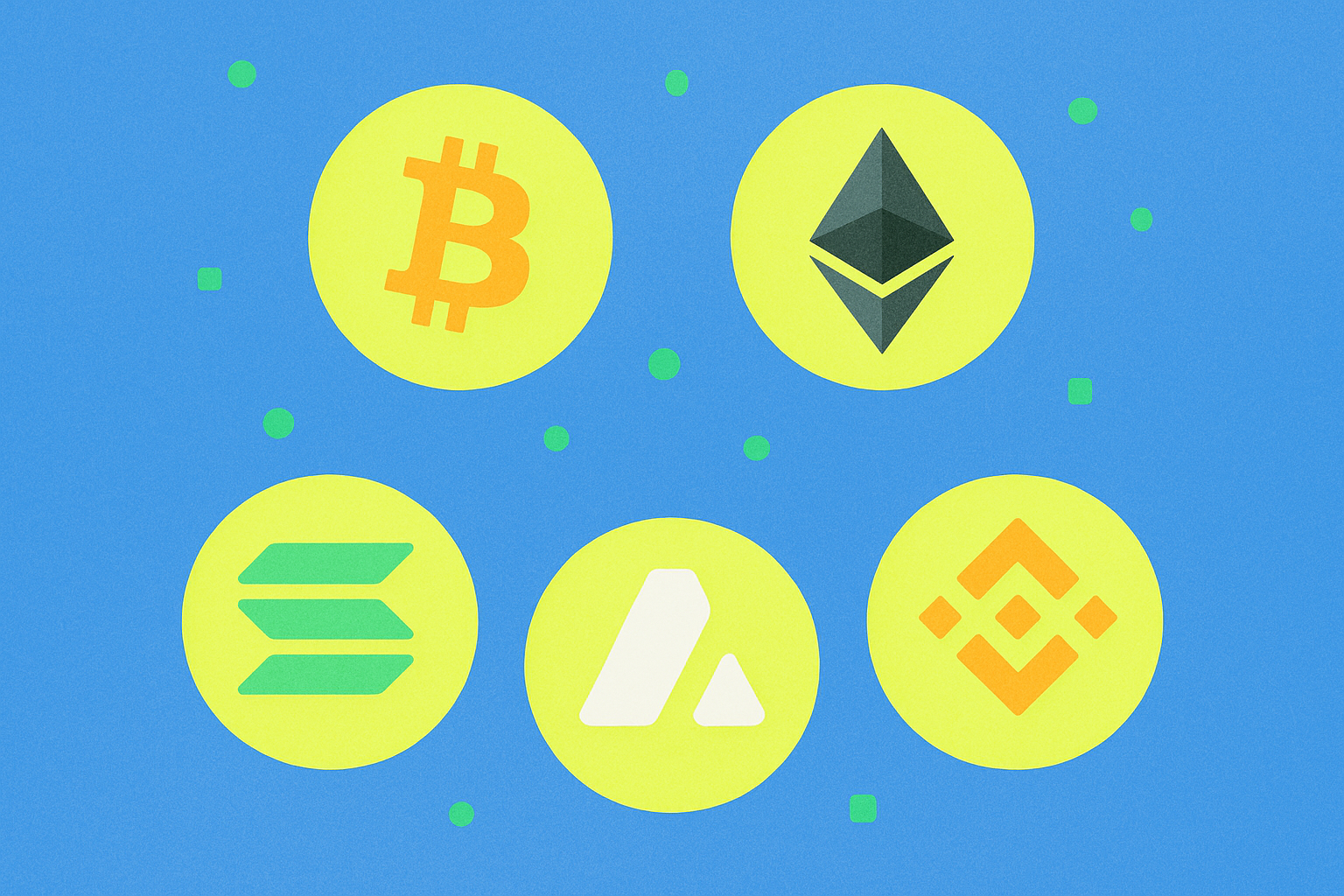
Bitcoin dominates with 45% market cap share while Ethereum and Solana compete for second position in 2026
Bitcoin's commanding 45% market cap share in 2026 reflects its sustained appeal as the primary reference asset within the cryptocurrency market. This dominance is reinforced by institutional participation, with major investors viewing Bitcoin as the cornerstone of diversified digital asset portfolios. Trading at approximately $70,000 after a significant decline from November's $126,000 peak, Bitcoin maintains its position despite broader crypto market volatility that has reduced total capitalization to $2.4 trillion.
The competition for second position between Ethereum and Solana reveals a distinct divergence in market positioning and user base dynamics. Ethereum commands approximately $400 billion in market capitalization, solidifying its role as the leading smart contract platform backed by institutional confidence and established DeFi infrastructure. Solana, with a $49 billion market cap, targets retail adoption through its high transaction speeds and emerging DeFi ecosystem.
| Cryptocurrency | Market Cap | Position | Primary Users |
|---|---|---|---|
| Bitcoin | 45% dominance | 1st | Institutional investors |
| Ethereum | ~$400B | 2nd | Institutions & developers |
| Solana | $49B | 3rd | Retail & traders |
This competitive structure illustrates how institutional capital flows continue supporting Bitcoin and Ethereum, while Solana's growth momentum stems from retail participation and performance metrics. The diverging strategies reflect fundamental market segmentation where Bitcoin serves as a macro asset, Ethereum powers decentralized finance and settlement, and Solana captures emerging use cases through technological differentiation.
Layer-2 solutions and alternative L1 blockchains emerge as differentiated alternatives to capture emerging user segments
The competitive landscape in 2026 reveals how Layer-2 solutions and alternative Layer-1 blockchains have carved distinct market positions by addressing specific pain points and targeting emerging user segments. While Ethereum maintains its dominance as the settlement and liquidity anchor, Layer-2 solutions like Optimism and Arbitrum reduce transaction fees and improve throughput, making the network more accessible to cost-sensitive users and high-frequency traders. Simultaneously, alternative L1 blockchains such as Solana focus on consumer performance with high throughput and low fees, capturing gaming and payment-focused communities, while BNB Chain leverages retail accessibility and Binance's distribution advantage for mass adoption. Specialized Layer-1 networks like Avalanche target institutional investors through subnet architecture and real-world asset pilots, demonstrating how different blockchains compete by specializing rather than duplicating. This segmentation strategy proves effective: Sui, which launched its mainnet in 2023, emphasizes high-speed transactions for asset-intensive applications like gaming, appealing to developers seeking novel data processing approaches. The differentiation works because each platform addresses distinct user needs—whether reducing costs through Layer-2 integration, prioritizing speed and affordability via alternative L1s, or enabling institutional-grade features through specialized infrastructure. As user adoption accelerates across these platforms, competition intensifies around developer momentum, real liquidity metrics, and genuine adoption beyond speculation.
User adoption metrics reveal Bitcoin maintains 60% network activity lead despite challengers gaining institutional backing
Bitcoin's network activity dominance in 2026 reflects its entrenched position in the cryptocurrency market despite intensifying competition. With 700,000 to 1,000,000 daily active addresses and approximately 300,000 to 500,000 unique users transacting regularly, Bitcoin maintains substantial user adoption metrics that underscore its market leadership. This 60% network activity share demonstrates the cryptocurrency's continued relevance as institutional investors increasingly diversify their exposure across blockchain platforms.
The broader cryptocurrency ecosystem is experiencing significant institutional consolidation, with traditional financial institutions channeling capital into established networks and emerging platforms alike. Global cryptocurrency adoption reached 9.9% in 2026, encompassing 559 million users worldwide—a milestone reflecting mainstream acceptance. While institutional backing has accelerated adoption for competing cryptocurrencies through spot ETFs and treasury strategies, these developments haven't fundamentally eroded Bitcoin's network dominance. Market participants continue prioritizing Bitcoin for settlement and value storage, even as institutional investors explore yield-generating opportunities through staking-enabled products on alternative blockchains.
The competitive pressure from challengers gaining institutional support has created a maturing ecosystem where Bitcoin maintains its verification leadership while accommodating specialized applications on competing networks. Rather than displacing Bitcoin entirely, institutional investment has segmented the market—directing capital toward smart contract platforms and layer-2 solutions while preserving Bitcoin's role as the foundational settlement layer.
FAQ
How will the market capitalization rankings of major cryptocurrencies such as Bitcoin, Ethereum, and Solana change in 2026?
Bitcoin maintains market leadership with approximately 40% dominance, followed by Ethereum at around 20%. Solana ranks among the top assets alongside XRP, Cardano, and Polkadot. Layer-2 solutions gain traction. Bitcoin and Ethereum's positions remain solidified by institutional adoption and regulatory clarity.
How do different public chains compare in transaction speed, cost, and scalability, and which projects are most competitive?
Ethereum leads in ecosystem but faces scalability challenges. Solana and BNB Chain excel in speed and cost efficiency with thousands of TPS. Avalanche offers strong scalability. Layer-2 solutions like Arbitrum and Optimism enhance Ethereum's performance. Solana, Polygon, and BNB Chain dominate in user adoption and transaction volume by 2026.
What level of mainstream adoption will cryptocurrency reach by 2026, and what are the expected user growth rates?
By 2026, cryptocurrency achieves mainstream adoption with significant institutional participation and regulatory clarity. Bitcoin and Ethereum dominate as core assets. User base expands substantially through RWA integration, stablecoin payments, and AI computing. Market growth driven by compliance frameworks and real-world utility rather than speculation.
How will Bitcoin maintain its advantages in market position and user loyalty compared to other L1 blockchains?
Bitcoin maintains its leadership through first-mover advantage and widespread institutional adoption. Its dominant market share and user trust remain unmatched. As the most established and secure network, Bitcoin commands premium valuation and loyalty among long-term investors and institutions entering Web3.
2026年哪些新兴加密项目有可能挑战现有市场格局,成为黑马?
AI和基因组学结合的项目如PLTX具有黑马潜质。这类创新项目结合了热门赛道,若获得市场认可和监管支持,可能通过低市值实现3-5倍增长,逐步挑战现有格局。关键在于实际应用落地和用户采纳。
How is the proportion of institutional investors in the crypto market expected to grow, and what impact will this have on the competitive landscape?
Institutional investor share is projected to increase significantly, enhancing market stability and reshaping competition. This concentration of capital favors established projects with stronger fundamentals, while intensifying competition among major platforms and protocols for institutional capital and market dominance.
How will the development of DeFi, NFT, and Web3 application ecosystems impact the adoption rate rankings of different crypto assets?
DeFi, NFT, and Web3 ecosystem growth will drive adoption of utility tokens and layer-one assets. Ethereum maintains dominance through DeFi TVL concentration. Security improvements and regulatory clarity will accelerate mainstream adoption rankings by 2026.
Share
Content
Bitcoin dominates with 45% market cap share while Ethereum and Solana compete for second position in 2026
Layer-2 solutions and alternative L1 blockchains emerge as differentiated alternatives to capture emerging user segments
User adoption metrics reveal Bitcoin maintains 60% network activity lead despite challengers gaining institutional backing
FAQ
How to Buy Cryptocurrency


Trending Cryptocurrencies



XZXX: A Comprehensive Guide to the BRC-20 Meme Token in 2025

Bitcoin Fear and Greed Index: Market Sentiment Analysis for 2025

5 ways to get Bitcoin for free in 2025: Newbie Guide

Top Crypto ETFs to Watch in 2025: Navigating the Digital Asset Boom
Bitcoin Market Cap in 2025: Analysis and Trends for Investors
2025 Bitcoin Price Prediction: Trump's Tariffs' Impact on BTC
Everything You Need to Know About the Ethereum ERC-20 Token Standard
How to Earn Money from Cryptocurrency and Bitcoin?
How to Buy Bitcoin in Russia Using Rubles Without Fees: Essential Tips

Why Open Protocols Are Essential for the Metaverse
How to Choose and Set Up the Best Cryptocurrency Wallet: A Comprehensive Guide
