A chart analysis guide for those new to cryptocurrency. This in-depth resource explains technical analysis techniques used on platforms like Bitcoin and Gate, including moving averages, support and resistance levels, candlestick patterns, and key indicators such as RSI and MACD. You’ll learn how to identify market trends, recognize chart patterns, and develop practical trading strategies.
Cryptocurrency trading is among the most popular ways to generate returns with digital assets, but achieving success demands specialized expertise and skill. Cryptocurrency prices are inherently volatile, and their trading environments are far more dynamic than those of forex or equities markets.
Mastering Bitcoin chart analysis enables more accurate timing for trade entries and exits. This provides a major edge and can significantly boost your potential returns. In this article, we’ll break down the key technical indicators used for Bitcoin (BTC) and similar cryptocurrencies, along with a detailed guide to common crypto chart patterns.
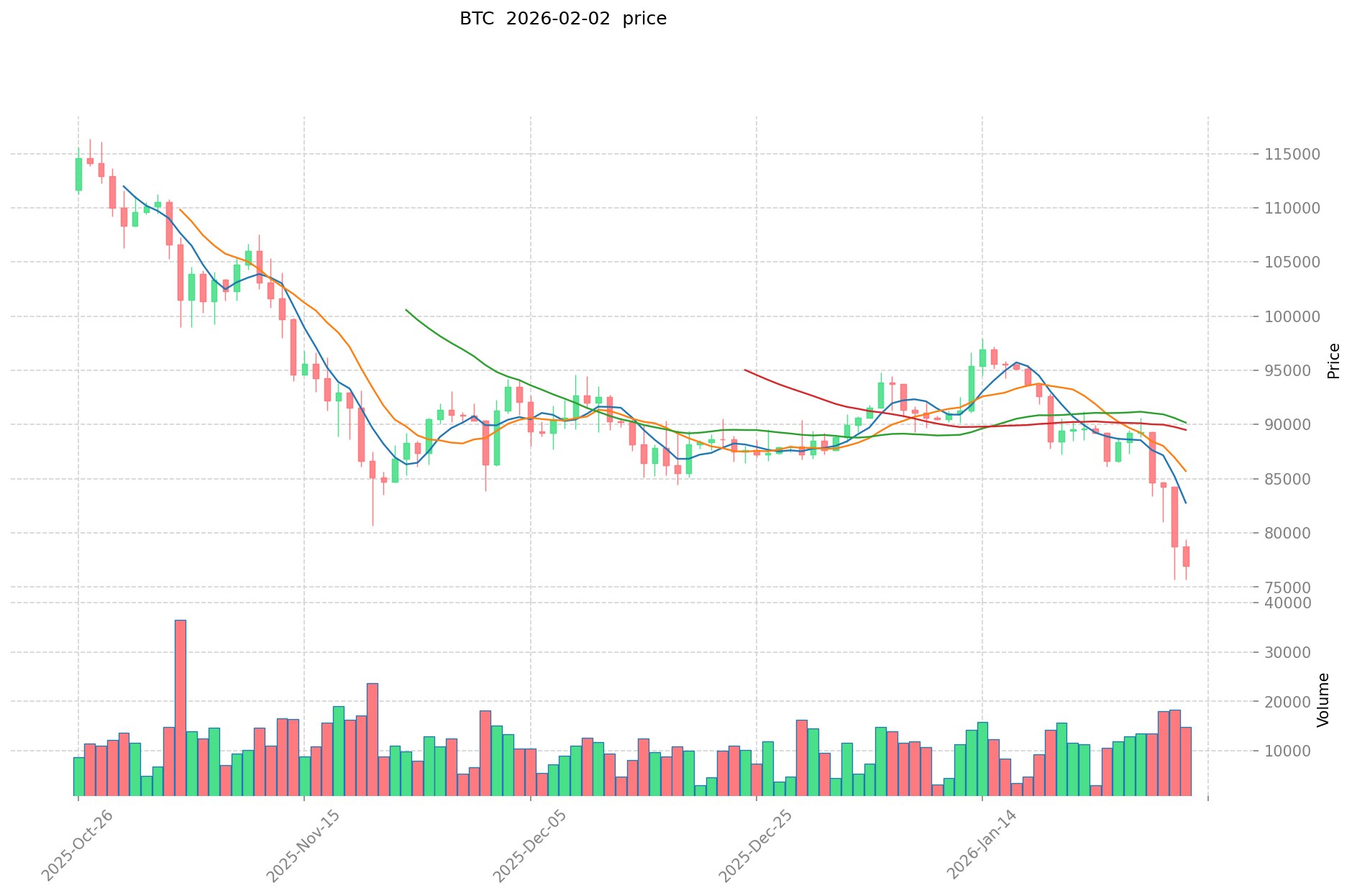
When analyzing markets, there are two primary approaches: technical analysis and fundamental analysis. This article focuses on the technical side of chart analysis. Fundamental analysis considers news, events, broad financial and economic impacts, and industry developments, while technical analysis relies mainly on chart data to forecast future price trends.
What Is Technical Analysis?
Technical analysis (TA) involves analyzing current market conditions to forecast future price movements. This approach uses price charts to identify market trends, support and resistance levels, and momentum. By leveraging technical analysis, traders can make more confident decisions on when to enter or exit positions.
Technical analysis is rooted in the idea that price movements follow specific patterns shaped by market psychology. This belief is based on observations that traders tend to act similarly in comparable circumstances. By studying historical price data and patterns, it's possible to anticipate future market moves to some extent.
Technical analysis does not assess the intrinsic value of a cryptocurrency. Instead, it uses mathematical indicators and established chart patterns to estimate the likelihood of future price changes. When applied correctly, it’s a powerful tool for risk management and maximizing profit opportunities.
Bull (Buy Pressure) and Bear (Sell Pressure) Markets
Bitcoin and crypto markets can move upward, downward, or sideways. An upward trend signals a bull market; a downward trend means a bear market. Sideways movement is called a range-bound market or consolidation phase.
A key principle in crypto price action is that following the prevailing trend is far more common than betting against it. Long-term trends tend to be relatively stable, and market sentiment typically follows these trends. In fact, Bitcoin bull and bear markets can last for years until the trend finally reverses.
Price trends can include short-term reversals and periods of consolidation. Even after apparent reversals, prices often revert to the original trend. In other words, price movement is never linear. With crypto chart analysis and pattern recognition, traders can spot subtle changes within trends across different timeframes.
Moving Averages
Moving averages are among the most widely used technical indicators in crypto charting. These trend-following tools smooth out short-term price volatility, making broader trends easier to visualize. Moving averages clarify the overall direction of price action.
There are two main types of moving averages used in crypto:
-
Simple Moving Average (SMA): Calculates the arithmetic mean of prices over a set period, with equal weight given to all data points. It’s straightforward and easy to interpret.
-
Exponential Moving Average (EMA): Assigns greater weight to recent price data, making it more responsive to new information and better suited for capturing rapid price changes.
Moving averages are especially effective for identifying trend reversals. The time period used for calculation will vary depending on a trader’s strategy and style.
The two most common moving averages in crypto charting are the 50-day and 200-day moving averages. These help traders spot long-term trend patterns and define ranges for support and resistance.
Applying both to Bitcoin price charts helps determine whether price has reached a potential high or low, or if a major trend reversal is underway. This enables more strategic trade decisions.
When these two moving averages cross, it provides an important signal about future price direction or trend shifts:
-
Golden Cross: Occurs when the 50-day MA crosses above the 200-day MA. This is widely seen as a strong buy signal, marking the transition from a bearish to bullish trend.
-
Death Cross: Occurs when the 50-day MA crosses below the 200-day MA. This is recognized as a sell signal, marking a shift from bullish to bearish momentum.
Moving averages also serve as dynamic support and resistance zones. When price crosses a moving average, the direction reveals key insights into market momentum.
Support and Resistance Levels
Support and resistance lines are core concepts in crypto chart analysis. These levels mark price zones where price tends to bounce or stall, serving as vital reference points for trading decisions.
Resistance is the price zone where upward movement repeatedly encounters selling pressure, making further gains difficult. If price repeatedly approaches but fails to break through a level, strong resistance is present.
Support is the price zone where downward movement repeatedly finds buying pressure, preventing further declines. If price repeatedly falls to but does not drop below a level, strong support exists.
When price breaks through these key levels—a phenomenon known as a breakout—it typically signals the start of a new trend. After a breakout, it’s important to identify the next support or resistance level. Notably, previous resistance often becomes new support after a breakout, and previous support can become new resistance if breached.
Accurate identification of support and resistance ranges enables more precise trading decisions, improves risk management, and helps optimize entry and exit timing.
Fibonacci Analysis
Fibonacci retracement is a powerful tool for crypto traders. This technique is based on a mathematical sequence and the golden ratio identified by Leonardo Fibonacci, which is found throughout nature.
Key ratios derived from the Fibonacci sequence (23.6%, 38.2%, 50.0%, 61.8%, 76.4%) are used to forecast price retracement levels in crypto chart analysis. These levels help traders identify potential support and resistance zones.
The core principle of Fibonacci retracement is that after a substantial move in one direction, price tends to pull back to previous levels before resuming its main trend. For example, after a strong uptrend, price often retraces part of its advance before reversing fully.
Traders draw Fibonacci retracement lines between major highs and lows to predict where price may bounce or consolidate. This helps set entry points, stop-losses, and profit targets. Combining Fibonacci analysis with other technical indicators can further enhance precision.
Other Technical Indicators
Beyond moving averages and Fibonacci analysis, crypto charting features numerous other useful technical indicators. Key examples include:
-
RSI (Relative Strength Index): A momentum oscillator used to identify overbought or oversold conditions. RSI helps traders gauge market strength and potential reversal points. It’s shown in a range from 0 to 100 below price charts. Typically, readings below 30 suggest oversold (buy opportunity), while readings above 70 suggest overbought (sell opportunity). RSI is also valuable for spotting divergence between price and RSI movement.
-
MACD (Moving Average Convergence Divergence): A popular indicator that combines multiple EMAs for more precise trend identification. Crossovers between the MACD and signal line generate buy and sell signals. The accompanying histogram visualizes the strength of the trend. MACD is particularly effective at identifying trend reversals.
-
Stochastics: A simple momentum oscillator that measures the current closing price’s position within a set range, predicting trend continuation. It’s displayed on a scale from 0 to 100; readings below 20 indicate oversold, and above 80 indicate overbought. Stochastics are especially useful for predicting short-term reversals.
-
Parabolic SAR (Stop and Reverse): This indicator plots dots above or below candlesticks to signal potential trend reversals or endings. Dots below the candles suggest an uptrend; dots above signal a downtrend. It’s particularly helpful for setting stop-losses in trend-following strategies.
-
Bollinger Bands: Plots bands above and below a moving average based on standard deviation to measure volatility. Bands contract during consolidation and expand during high volatility. The upper and lower bands act as dynamic resistance and support, and price breaking outside the bands signals strong momentum.
Additional indicators include Ichimoku Cloud, Average Directional Index (ADX), Chaikin Oscillator, and volume-based metrics. The key is to use several indicators together for confirmation, not rely on just one. Comprehensive analysis yields more reliable trading decisions.
Candlestick Charts
Understanding Japanese candlestick charts is essential for crypto chart analysis. Candlesticks visually represent price action over a specific timeframe and are powerful tools for market assessment. Each candlestick shows the open, high, low, and close for that period.
The candlestick structure includes:
-
Body: The thick part between open and close. A green or white body represents a bullish candle (close above open), while a red or black body indicates a bearish candle (close below open).
-
Wick (Shadow): Thin lines extending above and below the body, showing the high and low prices. The upper wick marks the high; the lower wick marks the low.
Candlestick patterns and signals offer valuable insights into market psychology and possible future price moves. Notable examples include:
- Strong Bullish Candle: A long-bodied bullish candle, showing heavy buying pressure.
- Strong Bearish Candle: A long-bodied bearish candle, showing heavy selling pressure.
- Doji: A candle with little to no body, where open and close are nearly the same, signaling market indecision or a turning point.
- Hammer: A candle with a small body and long lower wick, often indicating a potential reversal at the bottom of a downtrend.
When combined with technical indicators, candlestick patterns allow for more precise price forecasting and greatly enhance trading accuracy.
Timeframes
Selecting the right timeframe is critical for effective crypto chart analysis. The same market can look entirely different on different timeframes, and technical indicators may signal different things. For this reason, analyzing the market across multiple timeframes is key to success.
Most charting platforms offer timeframes ranging from seconds to months. Your preferred timeframe should match your trading style:
-
Scalpers: Ultra-short-term traders making frequent small trades use very short timeframes, often under one minute.
-
Day Traders: Traders closing all positions within a single day favor mid-range timeframes such as 15-minute, 1-hour, or 4-hour charts.
-
Swing Traders: Traders holding positions for several days to weeks primarily use daily or weekly charts.
-
Long-Term Investors: Holders with a multi-month or multi-year outlook analyze broad trends on weekly or monthly charts.
By examining multiple timeframes simultaneously, traders capture both short-term price action and long-term trends for a comprehensive market perspective. This "multi-timeframe analysis" is widely used by professionals. For example, you might confirm a long-term trend on a daily chart, then pinpoint entry opportunities on an hourly chart.
Cryptocurrency Chart Patterns
Certain patterns frequently appear on crypto charts, offering clues about future price direction. These patterns arise from collective market psychology and trader behavior, and often lead to predictable price moves. Identifying these patterns early helps you anticipate reversals, trend continuations, or shifts in momentum—unlocking favorable trading opportunities.
Widely recognized chart patterns for Bitcoin and other cryptocurrencies fall into these categories:
1. Reversal Patterns
Reversal patterns indicate a trend may be ending and a move in the opposite direction could be imminent:
- Head and Shoulders: A bearish reversal at the end of an uptrend, forming three peaks (left shoulder, head, right shoulder).
- Inverse Head and Shoulders: A bullish reversal pattern at the end of a downtrend.
- Cup and Handle: A bullish pattern with a U-shaped "cup" followed by a small downward "handle."
- Double Top/Double Bottom: Price bounces twice at the same level, suggesting a trend reversal.
- Rising Wedge/Falling Wedge: Formed by converging trendlines, these signal a possible reversal.
2. Continuation Patterns
Continuation patterns suggest the current trend may resume after a brief consolidation:
- Pennant: A small triangular pattern formed during a short-term pause.
- Rectangle: Price moves sideways between horizontal support and resistance.
- Flag: Parallel trendlines following a sharp price move.
3. Neutral Patterns
Neutral patterns indicate price could break in either direction:
- Symmetrical Triangle: Formed by converging ascending and descending trendlines.
- Ascending Triangle: Horizontal resistance and rising support, typically leading to a bullish breakout.
- Descending Triangle: Horizontal support and declining resistance, typically leading to a bearish breakout.
Many chart patterns used in forex trading can also be applied effectively to crypto markets.
To spot trend reversals or continuations, also watch for:
-
Higher Highs, Higher Lows: A bullish pattern where price consistently makes new highs and higher lows, confirming a healthy uptrend and sustained buy pressure.
-
Lower Highs, Lower Lows: A bearish pattern where price keeps making lower highs and lower lows, confirming a persistent downtrend and dominant sell pressure.
These trend structures are vital for understanding overall market flows and should be closely monitored when trading Bitcoin or any cryptocurrency.
Divergence is also crucial. Divergence occurs when price and technical indicators move in opposite directions. In an uptrend, if price hits new highs but an indicator like RSI does not (bearish divergence), momentum may be weakening and a reversal could be near. Conversely, in a downtrend, if price makes new lows but the indicator does not (bullish divergence), it may signal the end of the downtrend.
Other advanced methods include Elliott Wave Theory, which analyzes market rhythms and crowd psychology, and fractals—self-similar repeating patterns. Mastering these approaches will deepen your understanding of complex patterns that frequently appear in Bitcoin charts and enhance your trading precision.
FAQ
How do you read a basic cryptocurrency trading chart? What is a candlestick chart?
Candlestick charts are essential for visualizing price movement. Green bullish candles indicate price increases, while red bearish candles indicate declines. The height of each candle shows the price range, and trade volume reflects market activity.
What do bullish and bearish candlesticks represent?
A bullish candle means the close is above the open; a bearish candle means the close is below the open.
How do you use moving averages (MA) and Bollinger Bands?
Moving averages show trend direction, while Bollinger Bands highlight the range of price volatility. If a short-term MA crosses above a long-term MA, it’s an uptrend signal; price breaking above the upper band signals a sell opportunity, and falling below the lower band signals a buy opportunity. Used together, these indicators allow for more precise analysis.
What is the role of technical indicators like RSI and MACD?
RSI and MACD help analyze trend strength and direction. Used together, they offer a more accurate gauge of market momentum and potential reversals, improving trading accuracy.
How do you identify support and resistance levels?
Support is found at recent lows; resistance is at recent highs. Repeated bounces from the same zone indicate strong support or resistance. It’s important to clearly mark highs and lows on your chart.
How do you distinguish short-term and long-term trends in chart analysis?
Short-term trends last less than three weeks, medium-term trends last three weeks to three months, and long-term trends last more than a year. Use moving averages and support/resistance levels, and confirm trends with price highs and lows.
What risks and cautions should you consider when analyzing crypto charts?
When analyzing charts, watch for price volatility, market manipulation, and lack of liquidity. Past data does not guarantee future results, so always make comprehensive decisions using multiple indicators. Avoid emotional trading—focus on objective analysis.
* The information is not intended to be and does not constitute financial advice or any other recommendation of any sort offered or endorsed by Gate.