How will Bitcoin shape the global economy and society by 2035? This in-depth guide examines bullish, neutral, and bearish scenarios, offering detailed insights into price projections, regulatory trends, and opportunities for financial inclusion. Tailored for crypto investors and beginners alike, it serves as a strategic long-term outlook for Bitcoin.
The Future of Bitcoin: A 2035 Perspective
Since its inception in 2009, Bitcoin (BTC) has been poised to revolutionize the financial system as the world's first cryptocurrency. After roughly 15 years, the market has grown to tens of trillions of yen, with adoption spreading from individual investors to institutions and even some governments.
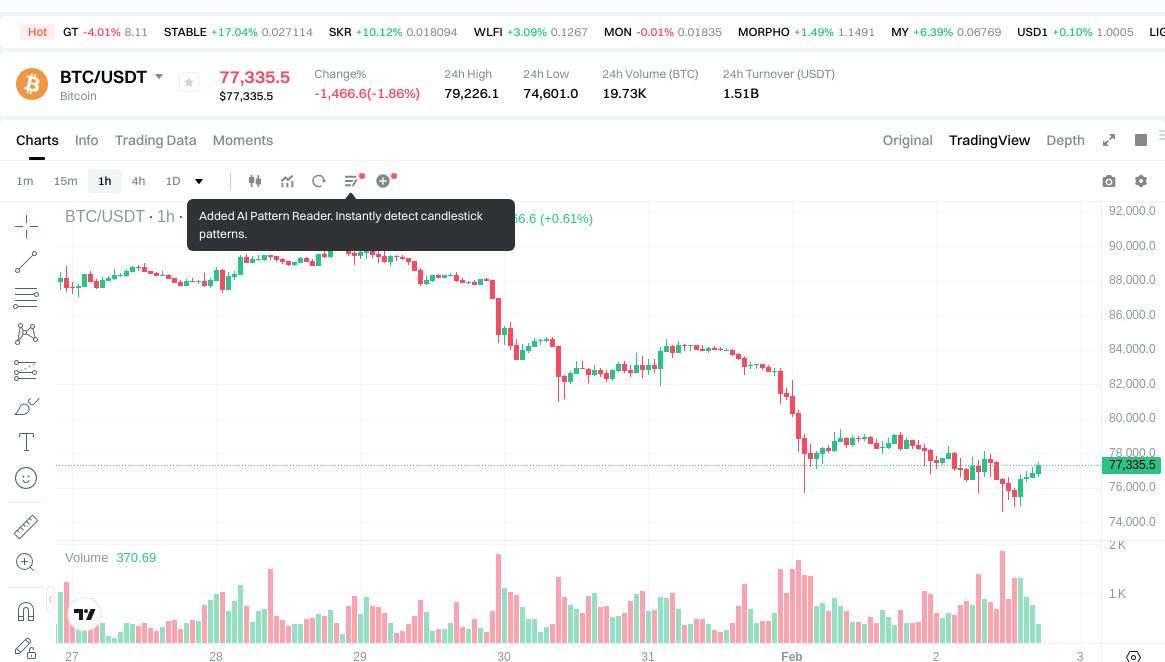
The next decade leading up to 2035 continues to spark debate about how Bitcoin could reshape economic, social, and regulatory landscapes. This article explores several scenarios under the theme "How will Bitcoin change the world in 10 years?" and provides a detailed analysis of its potential impacts.
Three Scenarios for Bitcoin’s Global Impact
To assess how Bitcoin might transform the world by 2035, we outline three distinct scenarios. Each scenario’s feasibility depends on factors such as technological progress, regulatory developments, and market acceptance.
Bullish Scenario: The Path to an Optimistic Future
In this scenario, Bitcoin achieves widespread global adoption and significant price appreciation, triggering major economic and social change. Bitcoin becomes recognized as "digital gold" and secures its place as an international reserve asset.
Governments begin holding Bitcoin as part of their foreign reserves, while corporations actively integrate it into their financial strategies. Bitcoin becomes deeply embedded in the financial system, earning trust equal to or surpassing traditional financial products.
Neutral Scenario: Moderate Development Trajectory
In the neutral scenario, Bitcoin establishes a stable position but does not fundamentally disrupt fiat currencies or social structures. Bitcoin is mainly used as a store of value and investment vehicle, exerting limited yet notable influence on the economy and society.
Financial institutions offer Bitcoin-related services, but its usage for everyday payments remains restricted. However, its utility for international remittances and asset management is increasingly recognized, leading to broader adoption for specific purposes.
Bearish Scenario: Potential for a Pessimistic Future
In the bearish scenario, Bitcoin fails to achieve mass adoption, and its influence wanes sharply due to stricter regulations and technical issues. Usage becomes limited to enthusiasts and niche applications, with minimal economic and societal impact.
Stringent government regulations and the rise of central bank digital currencies (CBDCs) erode Bitcoin’s market share. If vulnerabilities or security concerns surface, public trust may deteriorate rapidly and mainstream interest could fade.
Economic Impact: Transformations by 2035
Bitcoin’s economic impact will differ significantly depending on which scenario materializes. Below, we examine each case in terms of financial markets, macroeconomics, and corporate activity.
Bullish Scenario: Bitcoin at the Heart of the Global Economy
In the bullish scenario, Bitcoin is widely recognized as digital gold and becomes a core element of the financial system. Some projections suggest prices could reach hundreds of millions of yen by the mid-2030s.
Recently, some countries have adopted "strategic Bitcoin reserves" at the national level. This trend is likely to prompt more nations, including Japan, to incorporate Bitcoin into their foreign reserves.
For private companies, holding Bitcoin as a financial asset is expected to become standard practice. In recent years, several firms have reported substantial stock price gains after accumulating large Bitcoin positions. These success stories are likely to inspire more companies to adopt Bitcoin as part of their financial strategies.
In emerging and high-inflation countries, Bitcoin could serve as an alternative payment method, contributing to economic stabilization. It will also help reduce international remittance fees and improve financial access for the unbanked.
Key Economic Features of the Bullish Scenario:
- Governments adopt Bitcoin as a sovereign reserve asset
- Corporations integrate Bitcoin into financial strategies
- Acts as an economic stabilization tool in high-inflation countries
- Streamlines and lowers costs for international remittances
- Promotes financial inclusion and expands global economic participation
Neutral Scenario: Establishment as a Stable Asset Class
Here, Bitcoin attains the status of digital gold and serves as a stable asset class. Prices are expected to reach a certain level in the early 2030s and then move gradually.
Investors and financial institutions increasingly hold Bitcoin for diversification and inflation hedging. However, its use for everyday payments remains limited, making it primarily a long-term asset.
Meanwhile, banks and financial service providers are expected to adopt Bitcoin technology behind the scenes to enhance remittance and payment efficiency. Blockchain’s transparency and traceability will further strengthen the reliability of financial infrastructure.
Key Economic Features of the Neutral Scenario:
- Widely recognized as a stable asset class with gradual price appreciation
- Mainly an investment target with limited daily payment use
- Greater adoption of technology for financial infrastructure
- Institutional investors include Bitcoin in their portfolios
- Development alongside existing financial systems
Bearish Scenario: Limited Economic Impact
In the bearish scenario, Bitcoin fails to achieve widespread adoption and its economic impact is minimal. Stricter regulations and the rise of CBDCs shrink the market.
If technical challenges or quantum computing-related security issues emerge, trust could collapse swiftly. Bitcoin prices may plummet, and its economic relevance could dwindle to negligible levels.
Key Economic Features of the Bearish Scenario:
- Sharp value decline due to technical and security challenges
- Market contraction from tighter government regulation
- CBDCs replace Bitcoin
- Reduced liquidity undermines its appeal as an investment
- Virtually no impact on the broader economy
Social Impact: Changing How People Live
Bitcoin is more than just a financial product—it is also a social phenomenon. Depending on adoption, it could significantly influence lifestyles and values.
Bullish Scenario: Achieving Mass Adoption
In the bullish scenario, Bitcoin sees global proliferation and mass adoption. Some experts predict that billions could be using Bitcoin by the 2030s.
People gain the ability to manage and transfer assets independently without reliance on banks or financial institutions. Historical data shows that the number of cryptocurrency users reached 300 million in a short span, with adoption outpacing mobile phones and the internet.
Smartphone Bitcoin wallets become commonplace, enabling shopping and remittances 24/7. For the roughly 1.7 billion people worldwide who lack bank accounts, this opens new opportunities for economic participation.
Business practices also change. Freelancers and global enterprises use Bitcoin payments, and both brick-and-mortar and online stores widely accept Bitcoin. Innovations such as the Lightning Network make fast, low-cost micropayments possible, embedding Bitcoin in everyday life.
Wider adoption of decentralized organizations (DAOs) strengthens individual autonomy over assets and data. However, new social disparities may arise between early adopters and others.
Key Social Features of the Bullish Scenario:
- Mass adoption by billions
- Access to the global economy without bank accounts
- Bitcoin becomes a mainstream payment method
- Financial inclusion and reduced economic disparity
- Growth of DAOs increases individual autonomy
Neutral Scenario: A Supporting Role
In the neutral scenario, Bitcoin’s social influence is limited and does not drastically alter daily life. While people may be aware of Bitcoin and hold small amounts, it has minimal impact on everyday routines.
Bitcoin is mainly an investment and asset management tool. Households may hold Bitcoin as part of their assets, but traditional banks, credit cards, and mobile payments remain the primary means for daily transactions.
However, blockchain technology expands its role in social systems, supporting bank transfers, government IDs, and land registries for anti-corruption and efficiency. Most citizens remain unaware of its presence, but Bitcoin technology quietly underpins social infrastructure.
Key Social Features of the Neutral Scenario:
- Widely recognized as an asset management tool
- Limited use for daily payments
- Blockchain technology supports financial and administrative infrastructure
- Minimal changes to everyday life
- Develops in parallel with existing social systems
Bearish Scenario: Marginalization in Society
In the bearish scenario, Bitcoin loses mainstream attention and is used primarily by a small group of enthusiasts or in niche markets. Most people see it as a "past fad" and lose interest.
Stricter government regulation shrinks the market, leading to exchange closures and sharply reduced liquidity. Remaining users may increasingly seek anonymity or use Bitcoin for illicit purposes.
The Bitcoin community shrinks, developer participation drops, and progress in technology stalls—diminishing its appeal. By 2035, CBDCs and other fintech innovations take center stage, and Bitcoin fades into history.
Key Social Features of the Bearish Scenario:
- Declining social interest and user base
- Increase in illicit use
- Displacement by other financial technologies
- Community contraction and stalled technical development
- Complete loss of public trust
Regulatory Outlook: Government Response and Rulemaking
Bitcoin’s degree of penetration into the economy and society is heavily dependent on government and international regulatory responses. The regulatory environment is a decisive factor for Bitcoin’s future.
Bullish Scenario: Proactive Regulatory Development
In the bullish scenario, governments take a forward-looking approach, establishing balanced regulations that encourage innovation and manage risks. Some have adopted policies such as "strategic Bitcoin reserves," managing and holding Bitcoin as a strategic asset.
Internationally, regulatory harmonization advances, with G20 and FATF standardizing anti-money laundering and counter-terrorist financing (AML/CFT) measures. Privacy technologies like zero-knowledge proofs become widespread, balancing compliance and convenience.
Countries may also grant preferential tax treatment to Bitcoin as a unique asset class, lowering tax rates to incentivize investment and economic activity.
Key Regulatory Features of the Bullish Scenario:
- Governments strategically utilize Bitcoin
- Progress in standardizing global regulatory rules
- Tax incentives introduced
- Legal tender status considered in multiple countries
- Balanced regulation promoting both innovation and risk management
Neutral Scenario: Moderate Regulatory Maintenance
In the neutral scenario, governments maintain moderate, incremental regulations anchored in existing financial frameworks.
Exchanges may face registration requirements similar to securities firms, with strict asset segregation and user protection. Tax treatment is aligned with equities, though exemptions for small daily payments lag.
Some countries maintain strict rules while others deregulate, resulting in fragmented global standards. Crypto businesses may concentrate in regulation-friendly jurisdictions.
CBDCs coexist with Bitcoin, with CBDCs partially replacing cash and Bitcoin persisting mainly as a regulated investment asset.
Key Regulatory Features of the Neutral Scenario:
- Gradual updates based on existing financial regulations
- Tax treatment aligned with equities
- Coexistence of both regulation-friendly and strictly regulated countries
- CBDC and Bitcoin coexist
- Stronger user protection measures
Bearish Scenario: Regulatory Tightening and De Facto Ban
In the bearish scenario, global regulations toughen and Bitcoin trading and usage become effectively banned in many major jurisdictions. Governments eliminate Bitcoin to protect currency sovereignty and fight crime.
International institutions like the IMF and BIS may require countries—especially those with smaller economies—to ban Bitcoin as legal tender or government reserves as a condition for financial support.
Banks and financial institutions face pressure to restrict services to exchanges, shrinking the market. Mining may be banned for environmental reasons, making network maintenance difficult.
Key Regulatory Features of the Bearish Scenario:
- Comprehensive bans and tighter regulations on Bitcoin trading
- International organizations promote crypto asset exclusion
- Financial institution pressure closes exchanges
- Mining restrictions undermine network strength
- Exclusion policies enacted to protect currency sovereignty
Outlook and Challenges for Japan
Japan recognized Bitcoin as a legal payment method in 2017 by revising the Payment Services Act and pioneered the registration system for crypto exchanges. These moves have made Japan a global leader in crypto asset regulation.
Recent years have seen gradual tax reforms, with capital gains tax on crypto assets expected to fall from 55% (comprehensive taxation) to 20% (separate taxation), in line with stocks. Japan is also considering abolishing unrealized gains tax on corporate crypto holdings, further improving its crypto-friendly landscape.
Bullish Scenario: Toward a Global Crypto Asset Hub
In the bullish scenario, Japan leverages its advanced regulatory environment to lead the global crypto market. Domestic financial institutions and major corporations aggressively expand Web3 and Bitcoin services overseas, greatly increasing Japan’s influence in the sector.
The government may consider holding Bitcoin in its foreign reserves, potentially creating a new financial order where the yen and Bitcoin coexist—establishing Japan as a global crypto leader.
Neutral Scenario: Growth by Maintaining the Status Quo
Here, Japan treats crypto assets mainly as investment vehicles, maintaining the yen’s role as legal tender. The Bank of Japan introduces a limited digital yen, forming an ecosystem with cash, digital yen, and private electronic money.
Bitcoin payments remain limited, and the government continues to monitor the market cautiously. By providing a stable regulatory environment, Japan maintains a steady market share.
Bearish Scenario: Regulatory Tightening and Market Shrinkage
Japan may follow international regulatory tightening, imposing stricter exchange registration and leverage controls, which could shrink the domestic market.
If tax reforms are delayed and high rates persist, capital may flow overseas, weakening Japan’s competitiveness and risking its international status in crypto assets.
Conclusion: Opportunities and Challenges for Bitcoin’s Future
Bitcoin’s potential impact on the global economy and society by 2035 is multi-layered and complex. Optimistic scenarios promise greater financial inclusion and transparency, but environmental and regulatory challenges remain. Government and corporate actions will be crucial in shaping outcomes.
In Japan, maintaining regulatory stability while adapting policy to market trends is essential. When considering Bitcoin investment, individuals should understand their risk tolerance and craft strategies based on scenario-driven price movements.
Staying alert to technological and regulatory changes—and responding with agility—will be key to harnessing Bitcoin’s full potential. Over the next decade, Bitcoin’s evolution could profoundly affect not only financial systems but society as a whole.
FAQ
How Will Bitcoin Change the Global Financial System Over the Next 10 Years?
Bitcoin is expected to fundamentally reshape the financial system, with more countries adopting digital currencies and significantly improving international settlement efficiency. Its rising price will reinforce its role as digital gold and strengthen global economic stability.
Is Bitcoin Likely to Become a Mainstream Currency?
Bitcoin’s chance of becoming a mainstream currency is limited, but some countries are considering it as a strategic reserve asset. Advances in technology and shifts in government policy may support partial adoption over the coming decade.
How Is Bitcoin’s Value Expected to Evolve?
With regulatory support and ETF adoption, Bitcoin’s value is expected to rise, though volatility and market sentiment remain critical. By 2026, major institutional participation could push prices into the $2,000,000 range, but geopolitical risks could trigger corrections.
How Will Blockchain Technology Impact Industries Beyond Bitcoin?
Blockchain is set to transform industries such as supply chain management, finance, healthcare, and digital authentication. With greater transparency, tamper resistance, and smart contracts, its commercial value is projected to reach $360 billion by 2026.
Can Bitcoin Replace Legal Tender?
While Bitcoin is unlikely to fully replace legal tender, its significance as a digital asset is growing rapidly. As regulations mature, its role as a payment method will expand, with some countries already adopting it. By 2026, crypto assets are expected to coexist with traditional currency in integrated financial systems.
What Is the Projected Market Size and User Base for Bitcoin in 10 Years?
In 10 years, Bitcoin’s market size is forecast to reach around $15 trillion. The user base will multiply several times, making Bitcoin widely established as a global means of payment and asset holding.
* The information is not intended to be and does not constitute financial advice or any other recommendation of any sort offered or endorsed by Gate.