LOOKS vs APT: Which Package Manager Should You Choose for Your Linux System?


Introduction: Investment Comparison Between LOOKS and APT
In the cryptocurrency market, the comparison between LOOKS vs APT has consistently attracted investor attention. These two assets exhibit notable differences in market capitalization ranking, application scenarios, and price performance, representing distinct positioning within the crypto asset landscape.
LooksRare (LOOKS): Launched in January 2022, this platform positions itself as a community-first NFT marketplace where participants earn rewards through buying and selling NFTs.
Aptos (APT): Introduced in October 2022, this project has established itself as a high-performance Layer 1 blockchain utilizing the Move programming language, focusing on security and scalability for blockchain applications.
This article will provide a comprehensive analysis of LOOKS vs APT investment value comparison, examining historical price trends, supply mechanisms, institutional adoption, technical ecosystems, and future projections, attempting to address the question most pertinent to investors:
"Which is the better buy right now?"
I. Historical Price Comparison and Current Market Status
LooksRare (LOOKS) and Aptos (APT) Historical Price Trends
-
2022: LooksRare (LOOKS) experienced notable volatility following its launch in January 2022, with the token reaching an all-time high of $7.10 on January 21, 2022. However, market conditions and competitive pressures in the NFT trading platform space led to subsequent price corrections.
-
2023: Aptos (APT) demonstrated significant price movement after its mainnet launch in October 2022, reaching an all-time high of $19.92 on January 26, 2023. The price reflected strong initial interest in its high-performance Layer 1 blockchain technology utilizing the Move programming language.
-
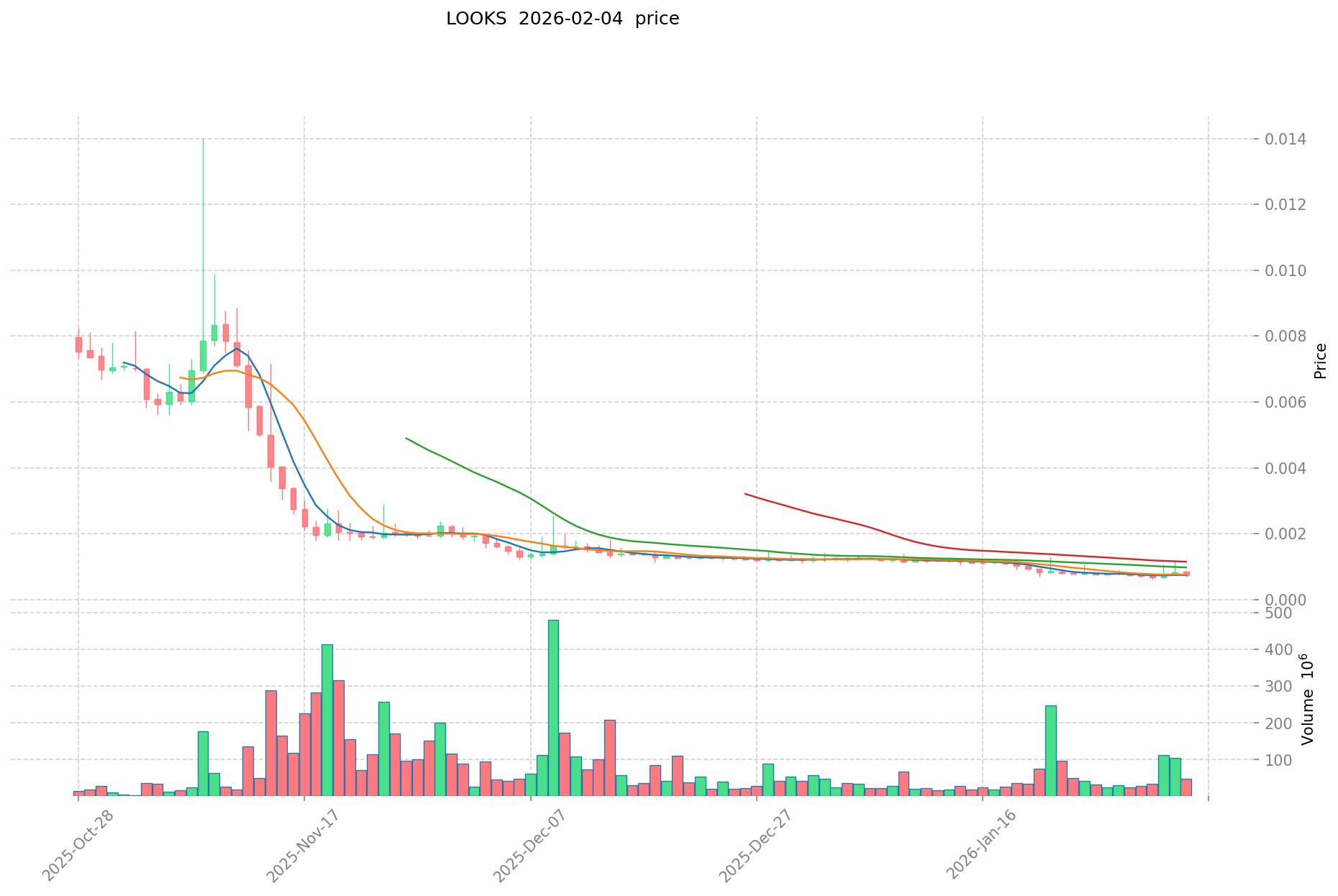
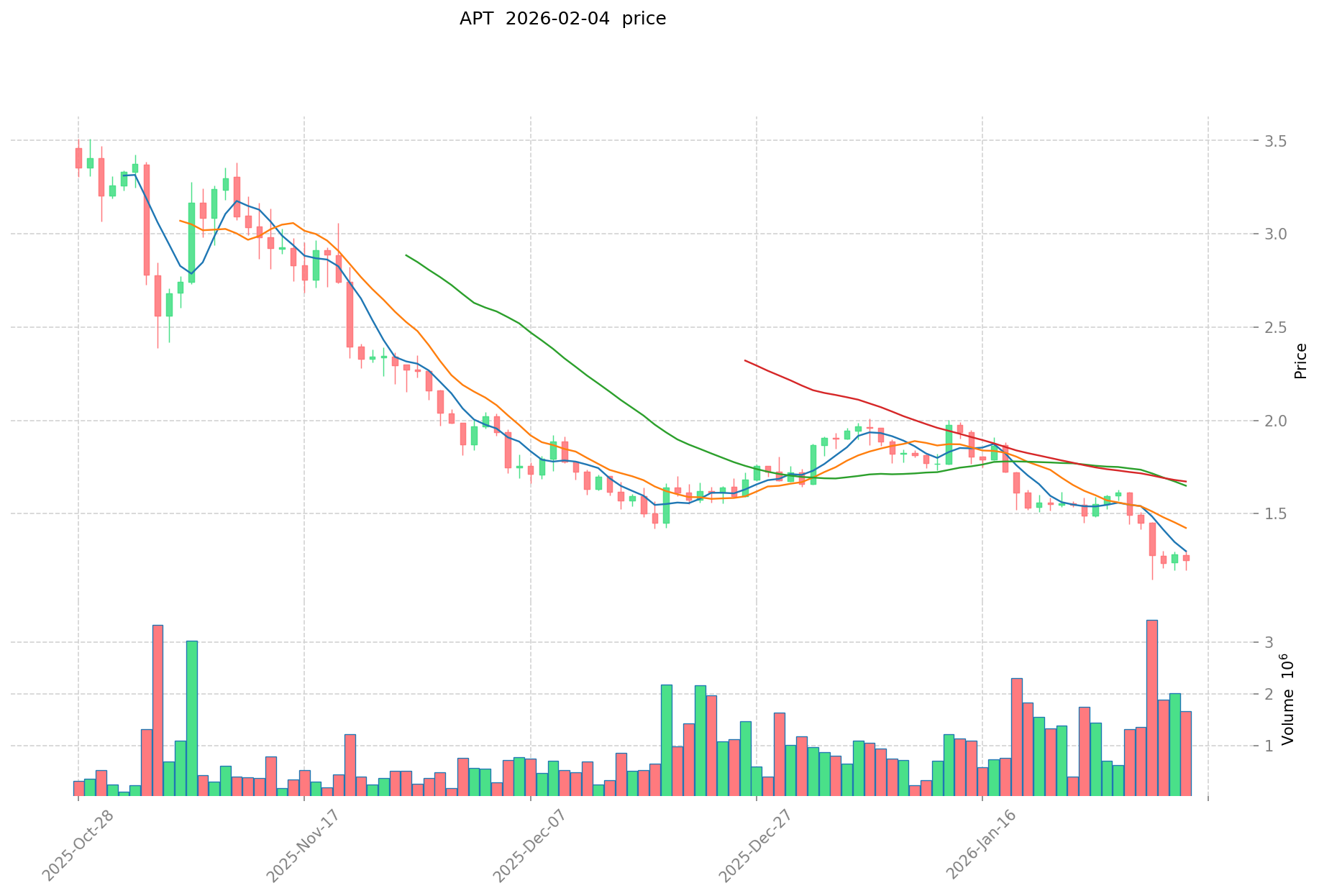
Comparative Analysis: Throughout the 2022-2025 market cycle, LOOKS declined from its peak of $7.10 to its all-time low of $0.00064821 on February 1, 2026, representing a decline of over 99%. In contrast, APT decreased from its high of $19.92 to $1.20 on February 4, 2026, showing relatively stronger price retention despite substantial market pressure.
Current Market Status (2026-02-04)
- LOOKS Current Price: $0.0006661
- APT Current Price: $1.2384
- 24-Hour Trading Volume: LOOKS recorded $34,289.01 compared to APT's significantly higher volume of $1,907,016.85
- Market Sentiment Index (Fear & Greed Index): 14 (Extreme Fear)
View real-time prices:
- Check LOOKS current price Market Price
- Check APT current price Market Price
II. Core Factors Influencing LOOKS vs APT Investment Value
Tokenomics Comparison
- LOOKS: The token operates within the LooksRare ecosystem, focusing on NFT marketplace dynamics with supply mechanisms designed to support trading activities and reward distribution.
- APT: Features a supply structure integrated with the Aptos blockchain architecture, with token distribution mechanisms tied to network validation and ecosystem development.
- 📌 Historical Pattern: Supply mechanisms influence price cycles through token unlock schedules, staking rewards, and market circulation dynamics, with different models responding variably to market demand shifts.
Institutional Adoption and Market Application
- Institutional Holdings: Market data indicates varying levels of institutional interest in both assets, with factors including liquidity, regulatory clarity, and ecosystem maturity influencing institutional allocation decisions.
- Enterprise Adoption: LOOKS primarily serves the NFT marketplace sector, while APT's application spans broader blockchain infrastructure use cases including decentralized applications and smart contract platforms.
- Regulatory Landscape: Different jurisdictions maintain distinct approaches toward marketplace tokens versus Layer-1 blockchain assets, affecting both tokens' accessibility and compliance frameworks.
Technical Development and Ecosystem Building
- LOOKS Technical Development: Platform upgrades focus on marketplace functionality, user experience enhancements, and integration with NFT infrastructure components.
- APT Technical Development: The Aptos ecosystem emphasizes Layer-1 innovations, with technical advancements targeting transaction throughput, security features, and developer tooling improvements.
- Ecosystem Comparison: LOOKS concentrates on NFT marketplace activities and trading features, whereas APT supports a broader range of applications including DeFi protocols, smart contract deployment, and decentralized application development, reflecting different strategic priorities in ecosystem expansion.
Macroeconomic Environment and Market Cycles
- Inflation Context: Asset performance under various economic conditions depends on multiple factors including utility value, market sentiment, and correlation with broader cryptocurrency market trends.
- Monetary Policy Impact: Interest rate changes and USD index fluctuations affect both tokens through liquidity conditions, risk appetite shifts, and capital flow patterns across crypto asset classes.
- Geopolitical Factors: Cross-border transaction demand and international regulatory developments create varying pressures on marketplace-focused tokens versus infrastructure-layer blockchain assets, with market conditions potentially amplifying or dampening token-specific characteristics during different phases of market cycles.
III. 2026-2031 Price Forecast: LOOKS vs APT
Short-term Forecast (2026)
- LOOKS: Conservative $0.00044057 - $0.0006778 | Optimistic $0.0006778 - $0.00081336
- APT: Conservative $0.99352 - $1.2419 | Optimistic $1.2419 - $1.825593
Medium-term Forecast (2028-2029)
- LOOKS may enter a consolidation phase, with projected price range of $0.0004361643 - $0.00100460381175
- APT may enter an expansion phase, with projected price range of $1.51549491665 - $2.820299076595
- Key drivers: institutional capital inflows, ETF developments, ecosystem expansion
Long-term Forecast (2030-2031)
- LOOKS: Baseline scenario $0.000639657639075 - $0.000927981487125 | Optimistic scenario $0.000927981487125 - $0.001342232422977
- APT: Baseline scenario $1.3295695646805 - $2.41739920851 | Optimistic scenario $2.41739920851 - $3.507162771706308
Disclaimer
LOOKS:
| Year | Predicted High Price | Predicted Average Price | Predicted Low Price | Price Change |
|---|---|---|---|---|
| 2026 | 0.00081336 | 0.0006778 | 0.00044057 | 1 |
| 2027 | 0.000931975 | 0.00074558 | 0.0007232126 | 11 |
| 2028 | 0.000863940825 | 0.0008387775 | 0.0004361643 | 25 |
| 2029 | 0.00100460381175 | 0.0008513591625 | 0.000468247539375 | 27 |
| 2030 | 0.001169256673777 | 0.000927981487125 | 0.000825903523541 | 39 |
| 2031 | 0.001342232422977 | 0.001048619080451 | 0.000639657639075 | 57 |
APT:
| Year | Predicted High Price | Predicted Average Price | Predicted Low Price | Price Change |
|---|---|---|---|---|
| 2026 | 1.825593 | 1.2419 | 0.99352 | 0 |
| 2027 | 2.162582565 | 1.5337465 | 0.85889804 | 23 |
| 2028 | 2.18083414835 | 1.8481645325 | 1.51549491665 | 48 |
| 2029 | 2.820299076595 | 2.014499340425 | 1.95406436021225 | 62 |
| 2030 | 3.2393149394034 | 2.41739920851 | 1.3295695646805 | 94 |
| 2031 | 3.507162771706308 | 2.8283570739567 | 1.838432098071855 | 127 |
IV. Investment Strategy Comparison: LOOKS vs APT
Long-term vs Short-term Investment Strategies
- LOOKS: May suit investors focused on NFT marketplace innovation and high-risk speculative opportunities, though extreme volatility and limited trading volume present considerable challenges for both short-term trading and long-term holding strategies.
- APT: May appeal to investors interested in Layer 1 blockchain infrastructure development and ecosystem expansion potential, with relatively higher liquidity supporting both active trading approaches and strategic accumulation during market consolidation phases.
Risk Management and Asset Allocation
- Conservative Investors: LOOKS 5-10% vs APT 90-95% - prioritizing established Layer 1 infrastructure over marketplace-specific tokens given current market conditions and liquidity considerations.
- Aggressive Investors: LOOKS 20-30% vs APT 70-80% - incorporating higher allocation to speculative positions while maintaining core exposure to broader blockchain infrastructure assets.
- Hedging Tools: Stablecoin reserves for rebalancing opportunities, derivatives instruments where available, and cross-asset diversification across different blockchain sectors to manage concentration risk.
V. Potential Risk Comparison
Market Risks
- LOOKS: Exposure to NFT market sentiment fluctuations, platform competition dynamics, and extremely low trading volumes that may result in significant price slippage during position changes.
- APT: Sensitivity to Layer 1 blockchain competitive landscape, ecosystem adoption rates, and broader smart contract platform market trends affecting investor sentiment and capital allocation patterns.
Technical Risks
- LOOKS: Platform scalability considerations, marketplace feature competitiveness, and user retention challenges in an evolving NFT infrastructure environment.
- APT: Network validation mechanisms, smart contract security architecture, and ongoing development execution affecting ecosystem growth trajectory and technical reliability.
Regulatory Risks
- Differing regulatory frameworks may apply distinct compliance requirements to NFT marketplace tokens versus Layer 1 blockchain assets, with jurisdictional variations potentially affecting accessibility, trading venues, and institutional participation levels for each token category.
VI. Conclusion: Which Is the Better Buy?
📌 Investment Value Summary:
- LOOKS Characteristics: Operates within the NFT marketplace sector with significant price decline from historical peaks, presenting high-risk speculative positioning with limited current trading activity and substantial uncertainty regarding future value recovery.
- APT Characteristics: Represents Layer 1 blockchain infrastructure with broader ecosystem applications, maintaining relatively higher liquidity and market capitalization despite market pressures, offering exposure to smart contract platform development and decentralized application growth potential.
✅ Investment Considerations:
- Beginning Investors: May consider focusing on higher liquidity assets with established trading volumes and clearer use case validation, potentially favoring Layer 1 infrastructure tokens over specialized marketplace platforms during initial portfolio construction.
- Experienced Investors: Could evaluate allocation strategies incorporating both asset types based on individual risk tolerance, market cycle analysis, and portfolio diversification objectives, with position sizing reflecting liquidity differences and volatility characteristics.
- Institutional Investors: May prioritize assets demonstrating regulatory clarity, institutional-grade custody support, and sufficient market depth for scale deployment, factors that currently favor Layer 1 blockchain infrastructure over marketplace-specific tokens.
⚠️ Risk Disclosure: Cryptocurrency markets exhibit extreme volatility. This analysis does not constitute investment advice. Conduct independent research and consult qualified financial advisors before making investment decisions.
VII. FAQ
Q1: What are the main differences between LOOKS and APT tokens?
LOOKS is an NFT marketplace token launched in January 2022, while APT is a Layer 1 blockchain infrastructure token launched in October 2022. LOOKS operates primarily within the NFT trading ecosystem with rewards-based mechanisms for marketplace participants, whereas APT powers a high-performance blockchain platform using the Move programming language, supporting broader applications including DeFi protocols and decentralized applications. The key distinction lies in their scope: LOOKS serves a specialized marketplace function, while APT provides foundational blockchain infrastructure for diverse use cases.
Q2: Which token has shown better price performance historically?
APT has demonstrated significantly better price retention compared to LOOKS. From their respective all-time highs, LOOKS declined over 99% (from $7.10 to $0.00064821), while APT decreased approximately 94% (from $19.92 to $1.20 as of February 4, 2026). Additionally, APT maintains substantially higher trading volume ($1,907,016.85 vs $34,289.01 for LOOKS in 24 hours), indicating stronger market liquidity and investor interest despite overall market pressures affecting both assets.
Q3: What are the projected price ranges for LOOKS and APT through 2031?
For LOOKS, conservative 2026 projections range from $0.00044057 to $0.0006778, extending to $0.000639657639075 - $0.000927981487125 by 2030-2031 in baseline scenarios. For APT, 2026 conservative estimates span $0.99352 to $1.2419, potentially reaching $1.3295695646805 - $2.41739920851 by 2030-2031 under baseline conditions. Optimistic scenarios suggest higher ranges for both tokens, though these projections remain subject to significant market uncertainties, ecosystem development progress, and macroeconomic factors.
Q4: How should investors allocate between LOOKS and APT based on risk tolerance?
Conservative investors may consider a 5-10% LOOKS allocation versus 90-95% APT, prioritizing established Layer 1 infrastructure over marketplace-specific tokens given current liquidity constraints and market conditions. Aggressive investors might increase LOOKS exposure to 20-30% while maintaining 70-80% in APT, accepting higher volatility for potential speculative returns. This allocation strategy reflects APT's relatively stronger liquidity profile, broader ecosystem applications, and lower concentration risk compared to LOOKS's specialized marketplace positioning.
Q5: What are the primary risks associated with investing in LOOKS versus APT?
LOOKS faces concentrated risks including NFT market sentiment fluctuations, intense platform competition, and extremely low trading volumes that may cause significant price slippage during transactions. The token's 99% decline from peak levels indicates substantial volatility and market skepticism. APT encounters risks related to Layer 1 blockchain competition, ecosystem adoption challenges, and smart contract security considerations, though these are partially offset by higher liquidity and broader application diversity. Both tokens remain exposed to regulatory uncertainties, with different compliance frameworks potentially applying to marketplace tokens versus infrastructure-layer blockchain assets.
Q6: Which token offers better liquidity for active trading strategies?
APT provides substantially superior liquidity with 24-hour trading volume of $1,907,016.85 compared to LOOKS's $34,289.01, representing approximately 55 times greater market activity. This liquidity difference significantly impacts trading execution, with APT offering tighter bid-ask spreads, reduced slippage risk, and improved ability to enter or exit positions without substantial price impact. For active traders requiring frequent position adjustments or larger transaction sizes, APT's liquidity profile presents considerably more favorable conditions than LOOKS's limited trading depth.
Q7: How do institutional investors typically approach LOOKS versus APT allocation decisions?
Institutional investors generally prioritize assets demonstrating regulatory clarity, institutional-grade custody support, and sufficient market depth for scaled deployment. These factors currently favor Layer 1 blockchain infrastructure like APT over specialized marketplace tokens like LOOKS. Institutional allocation frameworks typically assess liquidity thresholds, compliance requirements, and ecosystem maturity, where APT's broader applications, higher trading volumes, and established validator network may meet institutional criteria more readily than LOOKS's marketplace-focused model with limited current market activity.
Q8: What macroeconomic factors most significantly impact LOOKS and APT price performance?
Both tokens respond to broad cryptocurrency market cycles, interest rate changes, and shifts in risk appetite affecting capital flows across crypto asset classes. However, their sensitivities differ: LOOKS experiences heightened exposure to NFT market sentiment and digital collectibles demand trends, while APT correlates more closely with Layer 1 blockchain adoption rates and smart contract platform development activity. Inflation contexts, monetary policy adjustments, and geopolitical factors affecting cross-border transactions create varying pressures on marketplace-focused tokens versus infrastructure-layer blockchain assets, with different phases of market cycles potentially amplifying or dampening token-specific characteristics.
Share
Content
Introduction: Investment Comparison Between LOOKS and APT
I. Historical Price Comparison and Current Market Status
II. Core Factors Influencing LOOKS vs APT Investment Value
III. 2026-2031 Price Forecast: LOOKS vs APT
IV. Investment Strategy Comparison: LOOKS vs APT
V. Potential Risk Comparison
VI. Conclusion: Which Is the Better Buy?
VII. FAQ
How to Buy Cryptocurrency


Trending Cryptocurrencies



2025 SUI coin: price, buying guide, and Staking rewards

How to Buy Crypto: A Step-by-Step Guide with Gate.com

HNT Price in 2025: Helium Network Token Value and Market Analysis
What is SwissCheese (SWCH) and How Does It Democratize Investment?
Cardano (ADA) Price Analysis and Outlook for 2025

How to Invest in Metaverse Crypto
What is GAIN: Understanding the Generative Adversarial Interaction Network and Its Applications in Modern AI

What is MDX: A Comprehensive Guide to Markdown with JSX Integration

What is XELS: A Comprehensive Guide to Understanding This Innovative Ecosystem

What is SHM: A Comprehensive Guide to Simple Harmonic Motion and Its Real-World Applications

2026 GAIN Price Prediction: Expert Analysis and Market Outlook for the Next Bull Cycle