


OSMO vs BTC: Which Cryptocurrency Offers Better Investment Potential in 2024?

Introduction: OSMO vs BTC Investment Comparison
In the cryptocurrency market, comparisons between Osmosis and Bitcoin have always been a topic investors cannot ignore. The two not only show significant differences in market capitalization ranking, application scenarios, and price performance, but also represent different positioning of crypto assets. Osmosis (OSMO): Since its launch in 2021, it has gained market recognition through its advanced AMM protocol built on the Cosmos SDK, enabling developers to design, build, and deploy custom automated market makers. Bitcoin (BTC): Since its inception in 2008, it has been regarded as "digital gold" and remains the world's highest trading volume and market capitalization cryptocurrency. This article will comprehensively analyze the investment value comparison between OSMO and BTC from the perspectives of historical price trends, supply mechanisms, market adoption, and technical ecosystem, and attempt to answer the question investors care most about:
"Which is the better buy right now?"
Crypto Asset Market Analysis Report: Osmosis (OSMO) vs Bitcoin (BTC)
I. Historical Price Comparison and Current Market Status
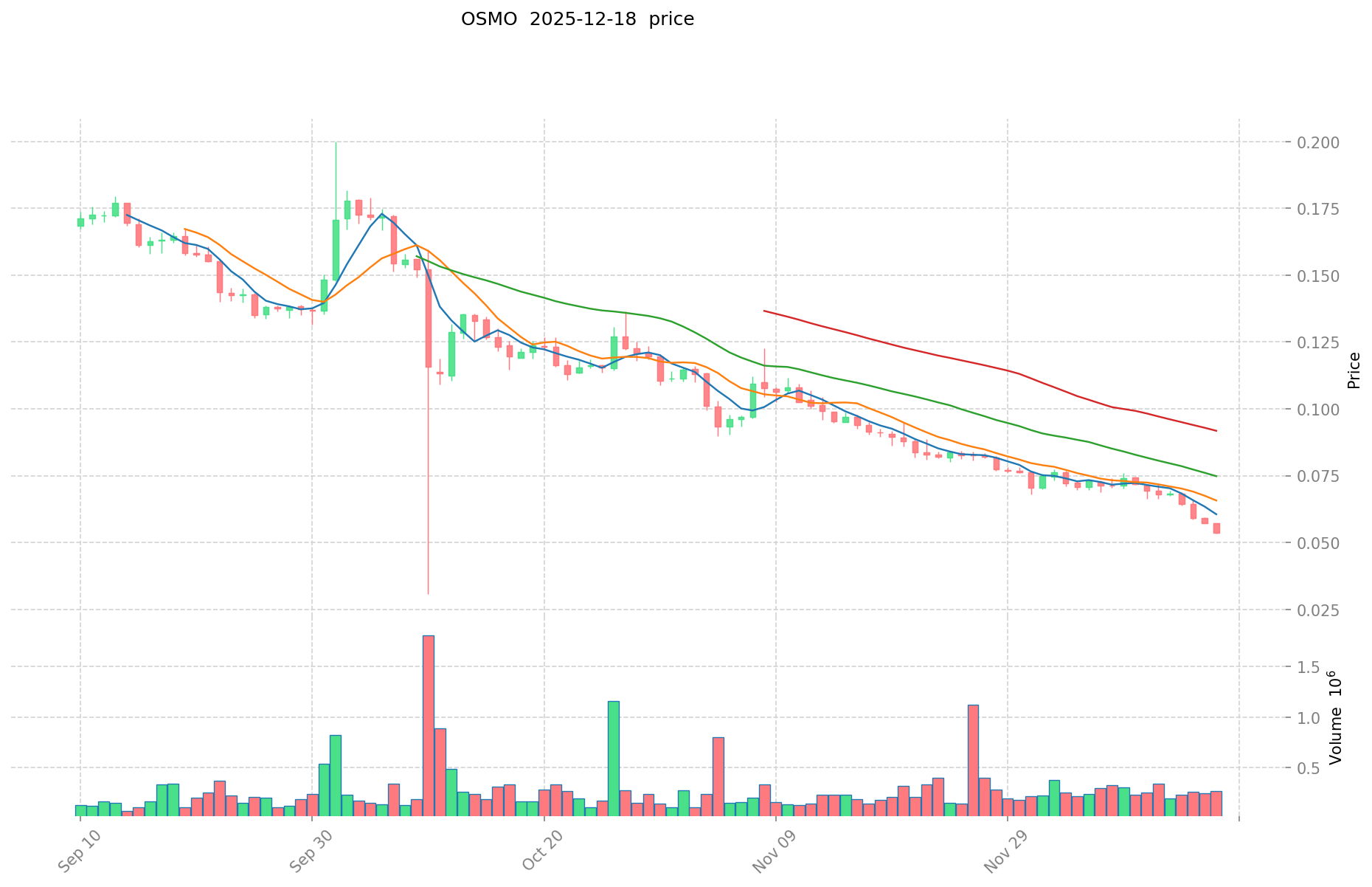
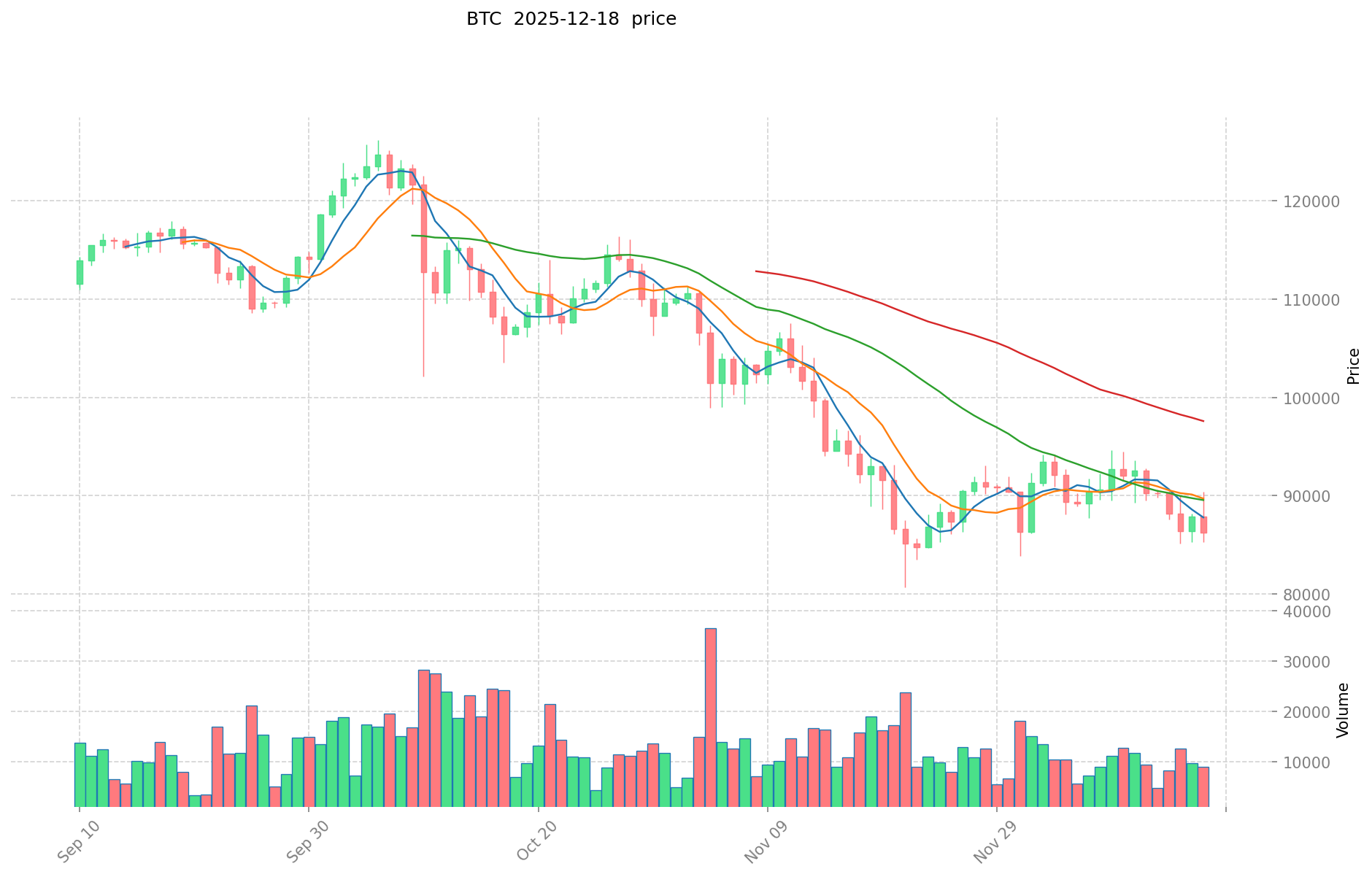
Osmosis (OSMO) and Bitcoin (BTC) Historical Price Trends
Price Performance Overview:
- Osmosis (OSMO) reached its all-time high of $11.25 on March 4, 2022, reflecting peak market enthusiasm during the bull market cycle.
- Bitcoin (BTC) achieved its all-time high of $126,080 on October 7, 2025, demonstrating continued strength in its valuation trajectory.
- Comparative analysis: OSMO has experienced a severe contraction from its peak, declining 99.56% from the all-time high to its current level. In contrast, BTC, despite recent pullbacks, maintains significantly higher institutional adoption and market dominance.
Current Market Status (December 19, 2025)
Price and Valuation Metrics:
- Osmosis (OSMO) current price: $0.04958
- Bitcoin (BTC) current price: $84,947
- 24-hour trading volume: OSMO at $18,867.57 USD vs BTC at $917,689,073.38 USD
- Market capitalization: OSMO at $48,993,666.92 USD vs BTC at $1,695,873,668,141.00 USD
- Market emotion index (Fear & Greed Index): 17 (Extreme Fear)
Recent Price Movement Analysis:
- OSMO 24-hour change: -8.5% ($0.04958, down from $0.05421)
- BTC 24-hour change: -1.23% ($84,947, down from $86,004)
- OSMO 7-day change: -27.70%
- BTC 7-day change: -6.64%
- OSMO 1-year change: -90.93%
- BTC 1-year change: -19.66%
View Real-Time Prices:
- Check OSMO current price Market Data
- Check BTC current price Market Data
II. Project Fundamentals and Ecosystem Analysis
Osmosis Protocol Overview
Osmosis is an advanced Automated Market Maker (AMM) protocol built using the Cosmos SDK. The protocol enables developers to design, build, and deploy custom AMM implementations, providing flexible liquidity solutions within the Cosmos ecosystem.
Token Characteristics:
- Token symbol: OSMO
- Total supply: 1,000,000,000 tokens
- Circulating supply: 755,589,760 tokens (75.56% circulating ratio)
- Fully diluted valuation: $48,993,666.92 USD
- Market rank: #585 by market capitalization
Governance Structure: OSMO tokens serve as governance tokens, providing token holders with a decentralized coordination mechanism to determine the strategic direction and approve future protocol changes.
Bitcoin Fundamentals
Bitcoin represents the pioneering decentralized digital currency and remains the market's largest cryptocurrency by market capitalization.
Token Characteristics:
- Token symbol: BTC
- Total supply: 21,000,000 tokens
- Circulating supply: 19,963,878 tokens (95.07% circulating ratio)
- Fully diluted valuation: $1,695,873,668,141.00 USD
- Market rank: #1 by market capitalization
- Market dominance: 55.60%
Network Architecture: Bitcoin operates as a peer-to-peer electronic cash system utilizing a distributed ledger (blockchain) to record and verify all transactions through a global network of nodes. Cryptographic security mechanisms ensure transaction integrity across the payment network.
III. Market Dynamics and Comparative Analysis
Liquidity and Trading Volume Comparison
The disparity in trading liquidity between these two assets is substantial:
- BTC 24-hour volume represents approximately 48,690 times the volume of OSMO
- BTC trades on 86 exchanges, while OSMO is available on 24 exchanges
- This fundamental difference reflects institutional adoption levels and market maturity
Market Capitalization Hierarchy
Bitcoin's market capitalization exceeds Osmosis by a factor of approximately 34,600 times, establishing Bitcoin as the dominant cryptocurrency by valuation metrics.
Volatility and Price Stability
- OSMO demonstrates extreme volatility with a 90.93% annual decline
- BTC shows comparatively moderate volatility with a 19.66% annual decline
- The Extreme Fear market sentiment (index: 17) indicates heightened market anxiety affecting both assets
IV. Risk Factors and Market Considerations
Osmosis-Specific Considerations
Concentration Risk:
- OSMO maintains only 4 identified holders, indicating potential concentration risk in token ownership
- High sensitivity to ecosystem developments within Cosmos
- Dependency on developer adoption and custom AMM utilization
Performance Concerns:
- Significant downward pressure across all timeframes
- Year-to-date decline of -90.93% represents substantial value erosion
- Limited trading liquidity relative to market cap
Bitcoin Market Factors
Macro-level Influences:
- Integration with traditional financial markets and ETF products
- Regulatory landscape developments across multiple jurisdictions
- Monetary policy expectations and macroeconomic conditions
V. Key Data Summary
| Metric | OSMO | BTC |
|---|---|---|
| Current Price | $0.04958 | $84,947 |
| Market Cap | $48.99M | $1.696T |
| 24h Volume | $18,867.57 | $917.69B |
| 24h Change | -8.5% | -1.23% |
| 7d Change | -27.70% | -6.64% |
| 1y Change | -90.93% | -19.66% |
| ATH | $11.25 (Mar 2022) | $126,080 (Oct 2025) |
| ATL | $0.04977 (Dec 2025) | $67.81 (Jul 2013) |
| Circulating Supply | 755.59M | 19.96M |
| Exchange Listings | 24 | 86 |
VI. Market Sentiment Assessment
The Crypto Fear & Greed Index reading of 17 (Extreme Fear) indicates a market environment characterized by heightened risk aversion and negative sentiment. This psychological state affects both assets, though established cryptocurrencies like Bitcoin tend to experience more resilience during fear-driven periods compared to smaller-cap projects.
Report Generated: December 19, 2025
Data Source: Gate Data, Market Research Aggregators
Disclaimer: This report is intended for informational purposes only and does not constitute investment advice. Cryptocurrency markets exhibit significant volatility and risk. Past performance does not guarantee future results.
Osmosis (OSMO) Investment Value Analysis Report
Executive Summary
This report analyzes the investment value factors of Osmosis (OSMO), a DeFi protocol token within the Cosmos ecosystem. The analysis focuses on tokenomics, market dynamics, regulatory considerations, and protocol utility as primary determinants of OSMO's valuation potential.
I. Protocol Overview and Utility
Osmosis Platform Functionality
Osmosis operates as a decentralized exchange (DEX) with customizable liquidity pools within the Cosmos network. OSMO token holders possess the following capabilities:
- Creation of custom liquidity pools
- Provision of liquidity to established pools
- Earning trading fees from liquidity provision
- Token staking mechanisms
Token Design Architecture
The OSMO token design centers on incentivizing the most critical role in Automated Market Makers (AMMs): Liquidity Providers (LPs). This core design philosophy directly captures value from protocol usage and activity.
II. Core Factors Impacting OSMO Investment Value
Supply Mechanism (Tokenomics)
OSMO Supply Structure:
- Total supply: 1,000,000,000 OSMO tokens
- Initial genesis allocation: 100,000,000 tokens
- Token release follows a model that mimics Bitcoin's halving cycle structure
- Annual release mechanism: approximately one-third reduction from the previous year's distribution
Supply Impact on Value:
- Supply scarcity directly influences price and investment value
- Supply variability demonstrates clear correlation with OSMO price fluctuations
- Scarcity functions as a foundational element of long-term value proposition
- Historical trend analysis reveals that supply mechanisms drive price cycle behavior
Protocol Adoption and Market Application
Utility Factors:
- Protocol Efficiency: OSMO token value remains intrinsically linked to its utility within the Osmosis protocol
- Cosmos Network Adoption: Adoption metrics within the Cosmos ecosystem directly correlate with token valuation
- Development Milestones: Continuous protocol upgrades and improvements support value sustainability
Market Dynamics Sensitivity:
OSMO demonstrates significant sensitivity to:
- Liquidity changes within the protocol
- Protocol upgrade announcements and implementations
- Cross-chain integration developments
- Inter-blockchain communication improvements
Regulatory and Compliance Considerations
Key Risk Factor:
Regulatory developments pose significant valuation impact:
- DeFi and cross-chain protocol regulations in major global economies and emerging markets could substantially affect OSMO token valuation
- Regulatory compliance evolution remains a primary temporal factor influencing OSMO value
- Monitoring of regulatory developments in key jurisdictions is essential for investment thesis assessment
Market Dynamics and Price Discovery
Current Price Behavior:
- OSMO price fluctuations frequently reflect current market trends and Osmosis platform's recent developments
- Investors and market analysts rely on detailed OSMO price analysis to make informed predictions regarding future price movements
- Market sentiment and platform activity metrics serve as leading indicators for valuation changes
III. Investment Value Assessment Framework
Key Value Determinants
| Factor | Impact Level | Description |
|---|---|---|
| Supply Scarcity | High | Token cap and release schedule |
| Protocol Utility | High | LP incentives and fee mechanisms |
| Ecosystem Adoption | High | Cosmos network expansion |
| Regulatory Environment | High | Compliance and policy changes |
| Market Trends | Medium | Sentiment and price cycles |
| Technical Development | Medium | Protocol upgrades and features |
Factors Supporting Valuation
- Well-structured tokenomics aligned with protocol incentives
- Focus on attracting and rewarding liquidity providers
- Integration within the broader Cosmos ecosystem
- Continuous development roadmap and upgrades
Risk Considerations
- Regulatory uncertainty in DeFi protocols and cross-chain solutions
- Market cyclicality and sentiment-driven price volatility
- Competition from alternative DEX protocols
- Liquidity concentration risks
IV. Conclusion
OSMO investment value depends on the intersection of multiple factors: token supply mechanisms, Osmosis protocol development progress, Cosmos ecosystem adoption trajectory, and evolving regulatory frameworks for DeFi protocols. Price predictions remain contingent upon market dynamics evolution and technical advancement realization. Investors should conduct thorough due diligence considering both the protocol's technical merits and the broader regulatory environment within which DeFi operates.
Report Date: December 19, 2025
Disclaimer: This analysis is intended for informational purposes only and does not constitute investment advice, financial recommendations, or endorsements of any investment strategy.
III. 2025-2030 Price Prediction: OSMO vs BTC
Short-term Prediction (2025)
- OSMO: Conservative $0.0342-$0.0496 | Optimistic $0.0496-$0.0670
- BTC: Conservative $55,260-$85,016 | Optimistic $85,016-$114,771
Mid-term Prediction (2027-2028)
- OSMO is expected to enter a growth consolidation phase, with projected price range of $0.0512-$0.0929
- BTC is expected to enter a bull market phase, with projected price range of $62,458-$166,323
- Key drivers: institutional capital inflows, spot ETF approvals, ecosystem development and DeFi adoption
Long-term Prediction (2029-2030)
- OSMO: Base scenario $0.0490-$0.1174 | Optimistic scenario $0.1174-$0.1456
- BTC: Base scenario $80,654-$167,907 | Optimistic scenario $137,684-$189,170
Disclaimer
The above price predictions are based on historical data analysis and market models. Cryptocurrency markets are highly volatile and subject to numerous external factors including regulatory changes, macroeconomic conditions, and technological developments. These forecasts do not constitute investment advice. Past performance does not guarantee future results. Investors should conduct their own research and consult with financial advisors before making investment decisions. All predictions carry significant risk of error.
OSMO:
| 年份 | 预测最高价 | 预测平均价格 | 预测最低价 | 涨跌幅 |
|---|---|---|---|---|
| 2025 | 0.0669735 | 0.04961 | 0.0342309 | 0 |
| 2026 | 0.0868547075 | 0.05829175 | 0.03497505 | 17 |
| 2027 | 0.0928937328 | 0.07257322875 | 0.058058583 | 46 |
| 2028 | 0.105898855392 | 0.082733480775 | 0.0512947580805 | 66 |
| 2029 | 0.140531090444415 | 0.0943161680835 | 0.04904440740342 | 90 |
| 2030 | 0.145605300287307 | 0.117423629263957 | 0.066931468680455 | 136 |
BTC:
| 年份 | 预测最高价 | 预测平均价格 | 预测最低价 | 涨跌幅 |
|---|---|---|---|---|
| 2025 | 114770.925 | 85015.5 | 55260.075 | 0 |
| 2026 | 104887.873125 | 99893.2125 | 96896.416125 | 17 |
| 2027 | 151538.0033625 | 102390.5428125 | 62458.231115625 | 20 |
| 2028 | 166323.197744625 | 126964.2730875 | 69830.350198125 | 49 |
| 2029 | 189170.418686720625 | 146643.7354160625 | 80654.054478834375 | 72 |
| 2030 | 186376.855527044634375 | 167907.0770513915625 | 137683.80318214108125 | 97 |
Crypto Asset Investment Strategy Report: Osmosis (OSMO) vs Bitcoin (BTC)
IV. Investment Strategy Comparison: OSMO vs BTC
Long-term vs Short-term Investment Strategy
Osmosis (OSMO):
- Suitable for investors focused on DeFi ecosystem potential, liquidity provider incentive mechanisms, and Cosmos network adoption growth
- Short-term strategy: Requires active monitoring of protocol developments, regulatory announcements, and ecosystem milestones
- Long-term strategy: Dependent on sustained Cosmos ecosystem expansion and DeFi protocol maturation
Bitcoin (BTC):
- Suitable for investors seeking inflation hedge properties, store-of-value characteristics, and institutional-grade asset exposure
- Short-term strategy: Benefits from macroeconomic conditions, monetary policy expectations, and ETF fund flows
- Long-term strategy: Positioned as digital gold with network effect strengthening over time
Risk Management and Asset Allocation
Conservative Investor Profile:
- OSMO: 5-10% portfolio allocation
- BTC: 40-50% portfolio allocation
- Remaining allocation: Stablecoins (30-40%), established layer-1 protocols (10-15%)
Aggressive Investor Profile:
- OSMO: 20-30% portfolio allocation
- BTC: 30-40% portfolio allocation
- Remaining allocation: Alternative DeFi tokens (15-25%), emerging protocols (10-15%)
Hedging Mechanisms:
- Stablecoin positions for volatility protection during market downturns
- Dollar-cost averaging strategy to mitigate timing risk
- Cross-asset diversification within DeFi and layer-1 protocols to reduce concentration risk
- Use of stop-loss orders given current Extreme Fear market sentiment (index: 17)
V. Risk Factor Comparison
Market Risk
Osmosis (OSMO):
- Extreme volatility with 90.93% annual decline indicates severe downward pressure
- Limited trading liquidity (24-hour volume: $18,867.57 USD) creates execution risk and slippage concerns
- Potential illiquidity events during periods of market stress or rapid liquidations
- Market capitalization of $48.99M represents vulnerability to coordinated selling pressure
Bitcoin (BTC):
- Moderate volatility with 19.66% annual decline reflects established market maturity
- Robust trading liquidity (24-hour volume: $917.69B USD) ensures efficient price discovery
- Institutional participation provides market depth and reduces extreme price movements
- Market dominance of 55.60% indicates stability relative to alternative cryptocurrencies
Technical Risk
Osmosis (OSMO):
- Smart contract vulnerability risks inherent to DeFi protocols and AMM implementations
- Cross-chain bridge security considerations for Cosmos ecosystem integration
- Dependency on Cosmos validator network security and consensus mechanism
- Protocol upgrade implementation risks affecting token utility
Bitcoin (BTC):
- Network hashrate concentration monitoring remains ongoing but historically dispersed
- Transaction finality through proof-of-work ensures cryptographic security strength
- Established security audit history and battle-tested consensus mechanisms
- Fork risks remain minimal given established community consensus around protocol governance
Regulatory Risk
Global Regulatory Environment:
- DeFi protocol regulations in emerging jurisdictions pose significant downside risk to OSMO valuation
- Potential stablecoin restrictions affecting liquidity provision mechanisms within Osmosis
- Cross-chain bridge regulation could limit OSMO protocol adoption trajectory
Bitcoin-Specific Regulatory Considerations:
- Spot ETF approvals have demonstrated regulatory acceptance pathway in major economies
- Anti-money laundering and know-your-customer compliance frameworks already established
- Central bank digital currency (CBDC) developments create both opportunities and competitive pressures
- Tax treatment clarification across jurisdictions reduces regulatory uncertainty relative to DeFi tokens
VI. Conclusion: Which Is the Better Buy?
📌 Investment Value Summary
Osmosis (OSMO) Advantages:
- Advanced AMM protocol with customizable liquidity pool design
- Strategic positioning within Cosmos ecosystem offering cross-chain liquidity solutions
- Token supply mechanism aligned with Bitcoin-like halving structure supporting scarcity principles
- Attractive liquidity provider incentives through protocol-generated fee streams
- Long-term price prediction scenario (2030) indicates potential 2,736% upside from current levels under optimistic conditions
Bitcoin (BTC) Advantages:
- Established market dominance with 55.60% market share and $1.696 trillion capitalization
- Institutional adoption through spot ETF products and corporate treasury reserves
- Proven store-of-value proposition over 17-year operational history
- Inflation hedge characteristics with fixed 21 million token supply
- Liquidity leadership with 86 exchange listings and $917.69B daily trading volume
- Regulatory clarity pathway demonstrated through global ETF approvals
- 2030 price projection indicates 97% potential upside under base scenario ($167,907 midpoint target)
✅ Investment Recommendations
New Investors:
- Begin with Bitcoin allocation (60-70%) to establish core position in established, institutional-grade cryptocurrency
- Maintain stablecoin reserves (25-35%) for market volatility management and opportunistic entry strategies
- Consider minimal OSMO exposure (5-10%) only after establishing foundational crypto knowledge and risk tolerance assessment
- Recommended action: Dollar-cost averaging into BTC positions during current Extreme Fear market conditions
Experienced Investors:
- Construct diversified portfolio: BTC (40-50%), OSMO (15-25%), alternative DeFi protocols (10-15%), stablecoins (20-30%)
- Implement tactical OSMO accumulation during severe drawdowns given long-term growth projection scenarios
- Monitor Cosmos ecosystem developments and DeFi regulatory environment as primary OSMO valuation drivers
- Utilize technical analysis alongside fundamental framework for OSMO entry/exit timing
- Recommended action: Establish BTC long-term core position while maintaining flexibility for OSMO tactical opportunities
Institutional Investors:
- Primary allocation: Bitcoin (50-60%) as institutional-grade reserve asset with regulatory clarity and ETF infrastructure
- Secondary allocation: Diversified DeFi exposure including OSMO (10-15%) for protocol innovation exposure within risk-managed framework
- Implementation: Utilize institutional custody solutions, derivatives hedging strategies, and regulatory compliance infrastructure
- Strategic consideration: Monitor regulatory framework evolution affecting DeFi protocol viability and cross-chain bridge security
- Recommended action: Establish strategic BTC positions through institutional products while maintaining smaller OSMO positions for ecosystem optionality
⚠️ Risk Disclaimer:
Cryptocurrency markets demonstrate extreme volatility with potential for substantial value loss. The current Extreme Fear sentiment index (17) indicates heightened market stress and downside risks. Historical performance projections do not guarantee future results. OSMO has experienced a 99.56% decline from its all-time high, reflecting significant technical challenges and market headwinds. Bitcoin, while more established, remains subject to macroeconomic factors, regulatory changes, and technological disruption.
This report is intended for informational purposes only and does not constitute investment advice, financial recommendations, or endorsements of investment strategies. All investment decisions carry significant risk. Investors must conduct independent research, assess personal risk tolerance, and consult qualified financial advisors before committing capital.
Report Generated: December 19, 2025
Data Source: Gate Data, Market Research Aggregators
Disclaimer: Past performance does not guarantee future results. Cryptocurrency investments carry substantial risk of loss.
None
Crypto Asset Investment Comparison: Osmosis (OSMO) vs Bitcoin (BTC) - FAQ
I. Frequently Asked Questions
Q1: What is the fundamental difference between Osmosis (OSMO) and Bitcoin (BTC) in terms of project purpose and positioning?
A: Bitcoin functions as a decentralized peer-to-peer digital currency and store-of-value asset, often referred to as "digital gold," with a fixed supply of 21 million tokens. Osmosis, by contrast, is a decentralized exchange protocol built on the Cosmos SDK that enables developers to design custom automated market makers (AMMs), with a total supply of 1 billion OSMO tokens. Bitcoin prioritizes monetary policy and scarcity, while Osmosis emphasizes DeFi protocol utility and liquidity provision incentives within the Cosmos ecosystem.
Q2: How do the current market valuations and trading liquidity compare between OSMO and BTC?
A: Bitcoin demonstrates significantly greater market maturity with a market capitalization of $1.696 trillion compared to Osmosis at $48.99 million—approximately 34,600 times larger. Bitcoin's 24-hour trading volume reaches $917.69 billion across 86 exchanges, while OSMO trades only $18,867.57 USD across 24 exchanges. This liquidity disparity of approximately 48,690 times reflects Bitcoin's institutional adoption and market dominance (55.60% market share) versus Osmosis's limited market penetration.
Q3: What explains Osmosis's severe price decline from its all-time high, and is recovery possible?
A: Osmosis experienced a 99.56% decline from its all-time high of $11.25 (March 2022) to its current price of $0.04958 (December 2025). This decline reflects multiple factors: DeFi market cyclicality, limited ecosystem adoption, regulatory uncertainty surrounding DeFi protocols, intense competition from alternative DEX solutions, and broader cryptocurrency market sentiment contraction. Recovery potential depends on sustained Cosmos ecosystem growth, successful protocol upgrades, increased liquidity provider adoption, and favorable regulatory developments. Long-term price projections (2030) suggest potential 136% upside from current levels under base scenario conditions.
Q4: Which asset presents lower risk for conservative investors—OSMO or BTC?
A: Bitcoin presents significantly lower risk for conservative investors due to: institutional adoption through spot ETF products, regulatory clarity pathway, proven 17-year operational history, moderate volatility (19.66% annual decline), superior liquidity infrastructure, and established store-of-value positioning. Conservative portfolio allocation recommendations suggest BTC allocation of 40-50% versus OSMO at only 5-10%, with the remaining allocation distributed to stablecoins (30-40%) and established layer-1 protocols (10-15%). OSMO's 90.93% annual decline, limited liquidity, and concentration risks (only 4 identified holders) make it unsuitable for risk-averse investors.
Q5: How do the tokenomics and supply mechanisms of OSMO and BTC differ, and what impact does this have on long-term valuation?
A: Bitcoin employs a fixed supply cap of 21 million tokens with approximately 95.07% currently in circulation, implementing a halving mechanism that reduces block rewards every 210,000 blocks. Osmosis features a 1 billion token total supply with 75.56% circulating, utilizing a release model that approximates Bitcoin's halving structure with approximately one-third reduction in annual distributions. Bitcoin's absolute scarcity creates deflationary dynamics supporting long-term store-of-value positioning, while Osmosis's larger supply combined with gradual release mechanisms aims to incentivize liquidity providers. OSMO's supply variability demonstrates direct correlation with price fluctuations, whereas Bitcoin's predetermined schedule provides greater predictability.
Q6: What regulatory risks should investors consider when comparing OSMO and BTC investments?
A: Bitcoin benefits from established regulatory clarity with spot ETF approvals across major jurisdictions, clear tax treatment frameworks, and recognized asset classification. Osmosis faces substantial regulatory uncertainty as a DeFi protocol involving smart contracts, cross-chain bridges, and automated market makers—all subject to evolving regulations in emerging jurisdictions. Potential DeFi protocol regulations, stablecoin restrictions affecting liquidity provision, and cross-chain bridge security mandates pose significant downside risk to OSMO valuation. Bitcoin's regulatory pathway is considerably more defined, making it suitable for institutional capital allocation, whereas OSMO's regulatory environment remains a primary temporal factor affecting valuation potential.
Q7: Based on 2030 price projections, which asset offers superior upside potential despite different risk profiles?
A: Under 2030 projections, Bitcoin indicates 97% upside potential (base scenario midpoint target: $167,907) with moderate volatility expectations and established institutional adoption drivers. Osmosis suggests 136% upside potential (base scenario midpoint target: $0.1174) under optimistic ecosystem adoption and regulatory clarity scenarios, representing substantially higher percentage gains. However, OSMO's current extreme volatility, 99.56% peak decline, and limited liquidity infrastructure create asymmetric risk-reward dynamics. Bitcoin offers lower-risk, more predictable appreciation aligned with macroeconomic cycles and institutional capital flows, while OSMO represents higher-risk/higher-reward exposure dependent on DeFi protocol adoption and regulatory breakthrough scenarios.
Q8: What portfolio allocation strategy is most appropriate given current market conditions (Extreme Fear index: 17)?
A: Given the Extreme Fear market sentiment index of 17, investors should implement defensive positioning: (1) Conservative investors: BTC 40-50%, stablecoins 30-40%, established layer-1 protocols 10-15%, OSMO minimal exposure (0-5%); (2) Experienced investors: BTC 40-50%, OSMO 15-25%, alternative DeFi protocols 10-15%, stablecoins 20-30%; (3) Implementation strategy: employ dollar-cost averaging into BTC during current market stress to mitigate timing risk, establish stop-loss orders given heightened volatility, maintain 25-35% stablecoin reserves for opportunistic deployment. The current Extreme Fear conditions present accumulation opportunities for high-conviction long-term positions in Bitcoin, while OSMO tactical accumulation should be restricted to experienced investors with established risk management protocols and higher risk tolerance thresholds.
Report Generated: December 19, 2025
Disclaimer: This FAQ is intended for informational purposes only and does not constitute investment advice. Cryptocurrency investments carry substantial risk including potential total loss of capital. Past performance does not guarantee future results. Investors must conduct independent research and consult qualified financial advisors before making investment decisions.
Share
Content
Introduction: OSMO vs BTC Investment Comparison
I. Historical Price Comparison and Current Market Status
II. Project Fundamentals and Ecosystem Analysis
III. Market Dynamics and Comparative Analysis
IV. Risk Factors and Market Considerations
V. Key Data Summary
VI. Market Sentiment Assessment
Executive Summary
I. Protocol Overview and Utility
II. Core Factors Impacting OSMO Investment Value
III. Investment Value Assessment Framework
IV. Conclusion
Short-term Prediction (2025)
Mid-term Prediction (2027-2028)
Long-term Prediction (2029-2030)
Disclaimer
IV. Investment Strategy Comparison: OSMO vs BTC
V. Risk Factor Comparison
VI. Conclusion: Which Is the Better Buy?
I. Frequently Asked Questions
How to Buy Cryptocurrency


Trending Cryptocurrencies



Is Lombard (BARD) a good investment?: Analyzing the potential risks and rewards of this AI stock

MP vs CRO: Unlocking Growth Potential in Digital Marketing Strategies

2025 SOV Price Prediction: Analyzing Potential Growth and Market Trends for Sovryn

2025 CORN Price Prediction: Expert Analysis and Market Forecast for the Year Ahead
Pi Network Mainnet Launch and Future

Avalanche (AVAX) 2025 Price Analysis and Market Trends

2025 Top Crypto Presales with High Growth Potential
Ruja Ignatova explained, the queen behind the largest Crypto Assets scam.

A Simple Guide to Purchasing USDT Using Your Credit Card

Easy Steps to Claim Your Bitcoin Airdrop

Top Bitcoin Holders: Analyzing Satoshi Nakamoto's Wealth
