Six Cryptocurrencies That Have Grown More Than 1,000 Times

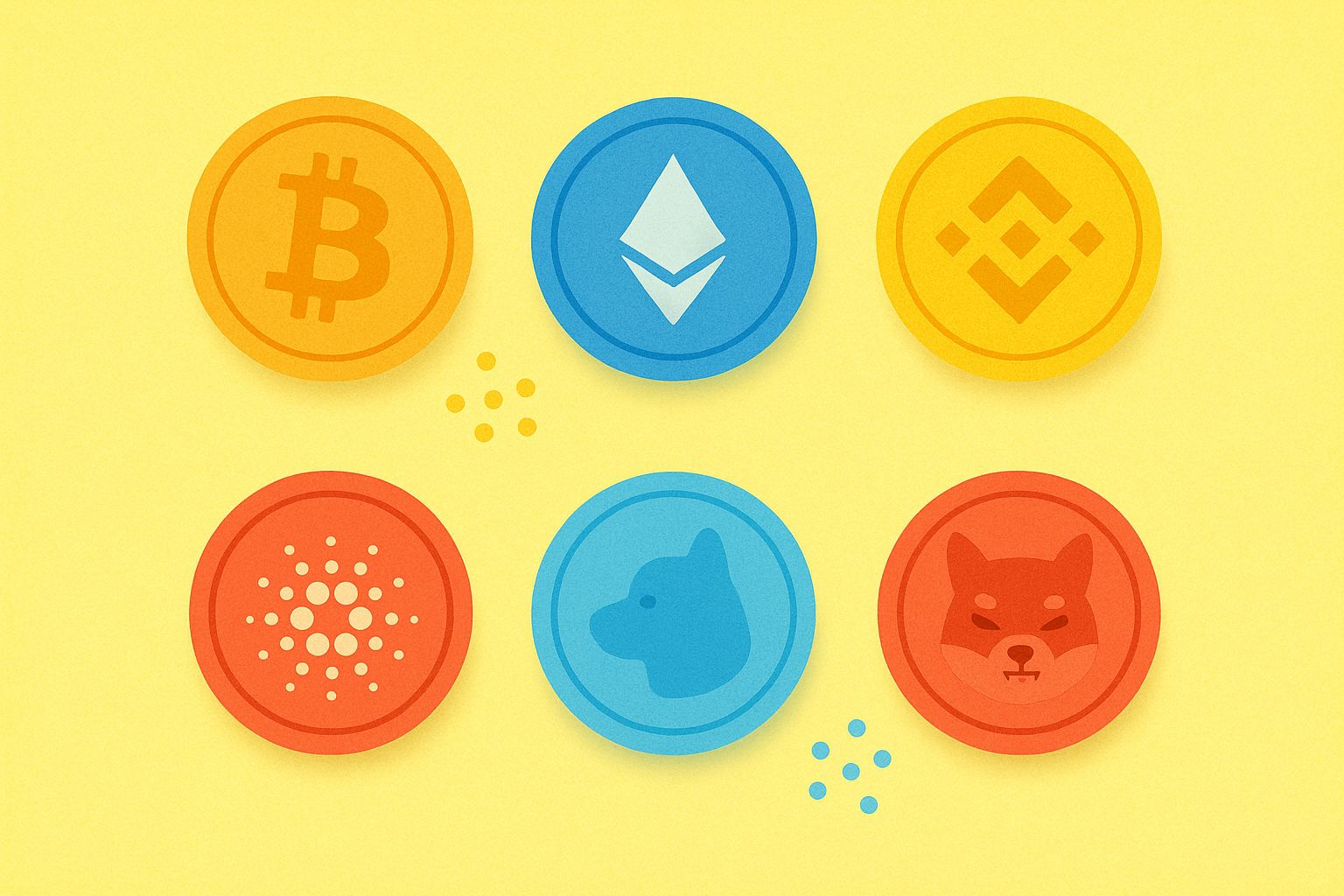
Overview of the Top 6 Tokens’ Growth (Initial Price, All-Time High, Multiples)
Over the past decade, the crypto asset market has achieved astonishing growth, with many tokens multiplying their initial prices by hundreds or even thousands of times. Bitcoin alone soared by at least one million times from its earliest price—potentially tens of millions at its highest estimate.
This article spotlights six leading tokens that have achieved over 1,000x price appreciation between 2009 and 2025, providing an in-depth analysis of each. The following table summarizes the launch year, initial price (at the start of trading), all-time high (up to April 1, 2025), and the approximate multiple from initial price to all-time high for each.
Initial prices are based on either the ICO price or the price when regular trading began; all-time highs are as of April 1, 2025. Multiples are calculated as the all-time high divided by the initial price.
| Token (Ticker) | Launch Year | Initial Price | All-Time High (Date) | Multiple (from Initial Price) |
|---|---|---|---|---|
| Bitcoin (BTC) | 2009 | $0.0008 (2010 est.) | $109,350 (Jan 20, 2025) | Approx. 136,687,500x |
| Ethereum (ETH) | 2015 | $0.31 (2014 ICO) | $4,878 (Nov 2021) | Approx. 15,736x |
| Major Exchange Coin (BNB) | 2017 | $0.15 (2017 ICO) | $690 (May 2021) | Approx. 4,600x |
| Cardano (ADA) | 2017 | $0.0024 (2015–17 ICO) | $3.10 (Sep 2021) | Approx. 1,291x |
| Dogecoin (DOGE) | 2013 | $0.0004 (Dec 2013 launch) | $0.74 (May 2021) | Approx. 1,850x |
| Shiba Inu (SHIB) | 2020 | $0.00000000051 (Aug 2020 launch) | $0.0000885 (Oct 2021) | Approx. 173,529x |
Bitcoin (BTC): Securing Its Role as Digital Gold
Launched in January 2009 by Satoshi Nakamoto, Bitcoin is the world’s first crypto asset. Serving as the foundation of the crypto market, it’s often called “digital gold.” With a strict maximum supply of 21 million BTC, its scarcity and decentralized security have made it a leading long-term store of value.
Bitcoin’s creation demonstrated the viability of a new monetary system independent of central banks and governments. Built on blockchain technology, Bitcoin enables secure, transparent transactions validated and recorded through a peer-to-peer network—eliminating the need for third-party intermediaries.
Price Performance (Initial Price, All-Time High, Multiples)
At its inception, Bitcoin had no meaningful market value, as no exchanges existed in 2009. The first dollar exchange rate emerged in October 2009, when 5,050 BTC sold for about $5—roughly $0.0009 per BTC.
In July 2010, Bitcoin began trading on exchanges with prices ranging from about $0.0008 to $0.08. By the end of 2010, it had reached around $0.5, broke $1 for the first time in 2011, and spiked to nearly $29.6 in June—experiencing dramatic volatility.
Bitcoin’s price continued to rise in four-year cycles, surpassing $1,000 in late 2013 and reaching $19,000 in December 2017. Its most recent all-time high was $109,350 on January 20, 2025. From early trading prices ($0.0008–$0.08), Bitcoin’s return to its peak represents a gain of at least one million times, and potentially tens of millions at the high end.
This extraordinary growth reflects not only speculation but also Bitcoin’s intrinsic value and the development of a robust supporting ecosystem.
Key Drivers of Bitcoin’s Growth
■ Market Maturity and Benchmark Asset Status
As the world’s first crypto asset, Bitcoin has long held the central position in the market. Institutions and corporations have adopted it as a primary asset, and it has consistently accounted for more than half of the crypto market’s total capitalization.
Its benchmark status is reinforced by its use as a trading pair for other crypto assets. Many exchanges offer BTC-denominated pairs, making Bitcoin the standard across the industry.
■ Supply Constraints and Scarcity via Halving
Bitcoin’s supply halves roughly every four years, reducing new issuance and helping to suppress inflation. Halvings in 2012, 2016, and 2020 triggered growing recognition of Bitcoin as an “inflation hedge,” especially amid global monetary easing.
This built-in scarcity creates upward price pressure as demand grows, much like gold, and strengthens Bitcoin’s reliability as a long-term store of value.
■ Macroeconomic Shifts and Safe-Haven Appeal
Post-COVID-19 stimulus and quantitative easing in 2020 accelerated capital flows into Bitcoin. By early 2021, Bitcoin drew investor interest as a risk asset alongside equities and real estate, surging from $29,000 at the end of 2020 to over $64,000 in just a few months.
As inflation fears rose, Bitcoin’s reputation as “digital gold” was cemented, driving renewed interest as a non-traditional store of value.
■ Institutional and Corporate Entry
MicroStrategy’s large-scale BTC purchases starting in 2020 symbolized institutional adoption. Tesla’s $1.5 billion BTC buy in 2021, along with PayPal and major US banks launching crypto services, prompted a wave of traditional finance players entering the market.
Institutional participation has transformed Bitcoin from a speculative instrument to a legitimate investment asset—improving liquidity and enhancing price stability.
■ National-Level Legal Tender Adoption
El Salvador’s 2021 recognition of Bitcoin as legal tender was a groundbreaking event. The government’s unprecedented wallet distribution initiative highlighted Bitcoin’s growing utility as a payment medium, not just a speculative asset.
This move signals wider real-world adoption potential, with other nations monitoring closely—potentially paving the way for further national-level rollouts.
■ Growing Recognition as Digital Gold
Bitcoin’s “digital gold” narrative is now global. In 2021, its market cap briefly topped $1 trillion, rivaling gold. Its capped supply and decentralization make it increasingly attractive for long-term holders, with portfolio allocations to Bitcoin now mainstream among investors.
■ Trump Administration’s Bitcoin Reserve Initiative (April 2025)
In April 2025, the Trump administration floated the idea of adding BTC to US foreign reserves to “maintain dollar hegemony” and counter other nations’ digital asset strategies. The announcement drove Bitcoin to new highs, underscoring the policy–market linkage.
This move signals Bitcoin’s growing recognition as a strategic, state-level asset, and could further impact future price trends.
Ethereum (ETH): Pioneering the Smart Contract Revolution
Launched in July 2015, Ethereum is a blockchain platform and the second-largest crypto asset. While Bitcoin is called “digital gold,” Ethereum is known as the “protocol of the decentralized internet” and is the backbone for smart contracts and DApps.
Ethereum’s core innovation is programmability. Developers can build custom tokens and applications, unlocking use cases in finance, gaming, art, supply chain, and more. Its flexible architecture has made Ethereum the epicenter of DeFi and NFT trends, with countless projects built on its network.
Price Performance (Initial Price, All-Time High, Multiples)
Ethereum’s 2014 ICO priced ETH at about $0.31, raising roughly $18 million. When the mainnet launched in July 2015, ETH traded at a few dollars.
The 2017 ICO boom triggered a demand surge, pushing ETH to around $1,400 in January 2018 before a steep drop to the $80s during the crypto winter. The DeFi and NFT boom after 2020 sent ETH soaring to a record $4,878.26 on November 10, 2021—more than 15,000x its ICO price, solidifying Ethereum’s evolution into critical internet infrastructure.
Key Drivers of Ethereum’s Growth
■ Innovation in Smart Contracts and DApps
Ethereum’s killer feature is enabling anyone to build custom tokens and DApps via smart contracts. Since 2016, countless projects have launched on Ethereum, powering the ICO boom.
Smart contracts—self-executing code—enable trustless transactions without intermediaries, opening new opportunities in finance, real estate, insurance, and more.
■ The Rise of DeFi
Starting in 2020, DeFi protocols like Uniswap and Compound on Ethereum grew explosively. Yield farming demand locked up ETH and drove price gains, cementing Ethereum’s role as DeFi’s financial infrastructure.
DeFi delivers financial services on-chain—lending, borrowing, trading, insurance—without banks or brokers, democratizing access to finance.
■ NFT Mania and Surging Demand
In early 2021, NFT marketplaces like OpenSea exploded in popularity. ETH became the currency for digital art and collectibles, fueling a wave of new users and sending gas fees—and prices—higher.
NFTs (Non-Fungible Tokens) authenticate ownership of digital assets (art, music, in-game items), with Ethereum providing the core standards (ERC-721, ERC-1155) and serving as the premier NFT platform.
■ Technical Evolution: Transition to Ethereum 2.0
The London upgrade in August 2021 introduced EIP-1559, burning a portion of transaction fees and curbing inflation. The Merge in September 2022 transitioned Ethereum from PoW to PoS, slashing energy usage by around 99.95% and improving long-term confidence among investors.
■ Institutional Adoption and Ecosystem Expansion
Ethereum has become the “next investment” after Bitcoin. The 2017 launch of the Enterprise Ethereum Alliance (EEA), with Microsoft and JP Morgan, marked significant institutional interest. CME’s ETH futures and institutional custody services have further deepened institutional participation since 2020.
Corporates and institutions have boosted Ethereum’s credibility, liquidity, and price stability. Development of private and consortium chains for enterprise use continues, with Ethereum technology driving efficiency improvements for businesses.
Major Exchange Coin (BNB): Ecosystem Growth and Real-World Demand
The Major Exchange Coin is the native token of one of the world’s largest crypto exchanges. Issued in July 2017 via an ICO, it began as an ERC-20 token before transitioning to its own blockchain. Now it functions as a utility token for trading fee discounts, gas payments, and broader ecosystem use.
This token stands out for its real-world utility—used directly in exchange services. Its use cases include trading fee discounts, IEO participation, staking, and lending, offering direct benefits to holders.
Price Performance (Initial Price, All-Time High, Multiples)
Sold at $0.15 during its ICO (100 million tokens), it traded in the low single digits before skyrocketing in early 2021 to a record $690.93 on May 10—over 4,600x the ICO price. By November 15, 2024, as the ecosystem expanded and regulations eased, it hit a new high of $705 (about 7,016x the ICO price). As of 2025, it hovers between $500 and $700 with market stabilization.
Key Drivers of Growth
■ Rapid Exchange Growth and User Expansion
Since 2018, the exchange has been the global leader in trading volume. Users benefit from trading fee discounts, ensuring steady demand for the token. Scandals at rival exchanges since 2019 have further accelerated fund inflows.
Increasing user numbers directly translate to greater token demand. The exchange’s high service quality and incentives drive widespread token holding and use.
■ Expanding Use Cases and Trading Fee Discounts
Beyond spot trading discounts, the token is used for IEOs, staking, lending, and more. Launchpad IEOs require holding the token, boosting its price and utility as the user base grows.
IEOs (Initial Exchange Offerings) are viewed as more reliable due to exchange oversight. Token holders gain priority access to promising projects, incentivizing long-term holding.
■ Success of Proprietary Blockchain
The exchange launched its own blockchain in 2019, making this token native. In 2020, a smart chain compatible with Ethereum enabled cheaper, faster transactions, accelerating DeFi and gaming dApp development. This ecosystem growth has solidified the token as the second major smart contract platform after Ethereum.
Lower transaction fees and faster speeds compared to Ethereum have attracted developers and projects, sharply expanding the ecosystem and increasing token value.
■ Deflationary Model via Regular Burns
The token supply will ultimately be reduced to 100 million. The exchange regularly buys back and burns tokens using a portion of profits, reducing supply and benefiting long-term holders.
Regular burns increase scarcity and price support, building long-term appreciation and investor confidence.
■ Brand Strength and Community Engagement
The charismatic founder and user-focused marketing have earned global loyalty. Frequent use in airdrops and IEOs has fostered a committed holder base. The exchange’s reliability, including compensation after hacks, further strengthens trust.
Community strength is critical to crypto success. The exchange actively engages users and incorporates feedback, boosting loyalty and long-term holding.
Cardano (ADA): Building Trust Through Academic Rigor
Cardano, launched in 2017, is a third-generation blockchain platform. Its ticker is ADA, supporting smart contracts and DApps.
Developed under the leadership of former Ethereum co-founder Charles Hoskinson, Cardano is built on peer-reviewed academic research and formal methods. Its Ouroboros proof-of-stake consensus and phased updates (Byron, Shelley, Goguen, etc.) underpin its technical evolution.
Cardano’s defining trait is its scientific development process. All protocols are peer-reviewed and implemented only after academic validation, earning high marks for security and reliability.
Price Performance (Initial Price, All-Time High, Multiples)
Cardano’s ICO in January 2017 (mainly in Japan and Korea) sold ADA at about $0.0024. The mainnet launch in October saw ADA surge above $1 during the altcoin boom.
After languishing during the 2018 crypto winter, Cardano rebounded in 2020–2021. Milestones like Shelley staking and the Alonzo smart contract upgrade drew renewed attention, and ADA reached its all-time high of $3.1 on September 2, 2021—over 1,300x its ICO price.
Key Drivers of Cardano’s Growth
■ Upgrades as Price Catalysts
Shelley enabled decentralization and staking in 2020; Alonzo added smart contracts in 2021. Each major upgrade sparked price rallies.
The 2023 Hydra upgrade dramatically improved scalability, supporting thousands of transactions per second. DeFi and NFT adoption accelerated by 2025, propelled by Cardano’s clear development roadmap.
■ Trust via Academic Development
Cardano’s theory-driven, peer-reviewed development has earned long-term support from investors seeking security and stability. This approach continues in 2025, with ongoing integration of advanced cryptography.
The community is strong and long-term oriented, favoring value creation over short-term speculation.
■ “Ethereum Killer” Potential
Lower energy use, fees, and higher security than ETH made Cardano a popular alternative during Ethereum’s high gas fee period in 2021. In 2025, Cardano’s Hydra upgrade has further cemented its role as an Ethereum alternative as scaling challenges persist for Ethereum.
Cardano is especially well-known as “Ada Coin” in Japan, helping drive adoption across Asia.
■ Real-World Use Cases
Cardano’s partnership with Ethiopia’s government has provided digital IDs and academic management for over five million students, expanding nationwide to over 10 million users by 2024.
By 2025, Cardano’s use has spread to agricultural traceability (Tanzania), educational certification (Southeast Asia), and notary services (Europe), making national-level deployments increasingly realistic. These examples show Cardano’s practical value beyond speculation.
■ Staking Incentives for Long-Term Holding
ADA holders earn several percent annual yield through staking. By 2025, about 75% of circulating ADA is staked (up from 70% in 2022), reducing available supply and encouraging long-term holding.
Staking provides passive returns and reflects the community’s confidence in Cardano’s long-term value.
Dogecoin (DOGE): From Meme to Mainstream Asset
Dogecoin, created in 2013 as a joke, was inspired by the Shiba Inu “Kabosu” meme by engineers Billy Markus and Jackson Palmer. Lacking a clear technical or practical goal, Dogecoin launched as an “infinite supply joke currency.”
Yet its friendly branding and playful culture won over the community, propelling Dogecoin into the top five by market cap in 2021. Dogecoin’s rise showcases the decisive power of community and hype in the crypto market.
Price Performance (Initial Price, All-Time High, Multiples)
Dogecoin launched in December 2013 at about $0.0004, rapidly gaining attention on Reddit and soaring over 300% in days. It hit a record low of $0.000086 in 2015, rebounded in the 2017–2018 altcoin boom, and then went parabolic in 2021—fueled by Elon Musk’s tweets and retail enthusiasm—hitting $0.74 on May 8 (about 1,850x its starting price).
By December 2024, anticipation around Musk’s Tesla projects drove another surge, setting a new high of $1.23 (Dec 15, 2024—about 3,075x the initial price). As of 2025, DOGE trades in the $0.80–$1.00 range during a correction.
Key Drivers of Dogecoin’s Growth
■ Meme Culture and Community Power
The Shiba Inu logo and lighthearted image make Dogecoin accessible to newcomers. Used for tipping and donations on Reddit and beyond, it’s established a niche as the “currency for fun.”
The “No highs, no lows, only Doge” philosophy is core to community cohesion, and as of 2025, Dogecoin memes continue to thrive on X and TikTok, underpinning price support.
Dogecoin’s community is also active in charity and sponsorships, broadening its role beyond speculation.
■ Celebrity and Influencer Endorsements
Elon Musk’s backing has been pivotal, especially following Tesla’s adoption of DOGE payments in 2024. Other celebrities, including Snoop Dogg and Mark Cuban, have also endorsed DOGE.
Social media virality drove the 2021 bubble and the $1.23 high in late 2024. In 2025, Grayscale’s DOGE ETF application (filed Jan 31, accepted Feb 13) boosted DOGE’s profile, especially with Musk’s support.
High-profile endorsements have turbocharged Dogecoin’s visibility and attracted new investors. Musk’s tweets, in particular, are known to move the price instantly.
■ Alignment with Retail Investor Movements
In January 2021, the “WallStreetBets” phenomenon rallied retail investors around Dogecoin. The “To the Moon” slogan sparked grassroots buying, and on Doge Day (April 20), DOGE briefly became the fifth-largest crypto by market cap.
By 2025, ETF anticipation continues to energize retail investors, keeping DOGE in the top 10 by market cap.
■ Broad Platform Access
Listings on major platforms like Robinhood and Coinbase have made DOGE widely accessible, especially among younger investors. Robinhood saw surges so large they even caused system outages.
In 2025, Grayscale’s ETF bid (NYSE Arca) and broader exchange support have encouraged institutional entry, boosting liquidity and investment accessibility.
■ Brand Built on Hype
Dogecoin thrives even without significant technical progress, as “holding for fun” is a valid motivation. Musk’s 2023 move to replace Twitter’s logo with a Shiba Inu reignited global attention. Dogecoin is always in the spotlight.
The $1.23 record in December 2024 followed Tesla’s pilot payment program, and SEC approval of the ETF in February 2025 sparked further excitement. Musk’s “Doge as Mars currency” comments continue to fuel speculative booms on X.
Dogecoin’s success proves that story and community can be as powerful as technical innovation in crypto. With a strong brand and dedicated following, market success is possible even without a technological edge.
Shiba Inu (SHIB): The Breakout Meme Coin
Launched in August 2020 by the anonymous “Ryoshi,” Shiba Inu is a meme crypto asset designed as a “Dogecoin Killer.” Built on Ethereum’s ERC-20 standard, SHIB is known for its ultra-low price and enormous supply, making it easy for anyone to accumulate large holdings.
The 2021 meme coin boom propelled SHIB to global fame, making millionaires overnight and showcasing the explosive potential of meme tokens while inspiring many copycat projects.
Price Performance (Initial Price, All-Time High, Multiples)
SHIB began trading on Uniswap in 2020 at $0.00000000051. Virtually unknown at first, SHIB’s listings on major exchanges in May 2021 sent it soaring to an all-time high of $0.00008845 in October 2021—an increase of over 500,000x.
After a correction, SHIB remains in the $0.00001–$0.00003 range as of 2025—still far above its early price.
Key Drivers of SHIB’s Growth
■ Meme Hype and “Dogecoin Killer” Marketing
SHIB leveraged the Shiba Inu breed and the promise of “becoming a millionaire if it hits $0.01,” which went viral on social media and powered two dramatic price surges in 2021.
Even in 2025, SHIB memes are active on X and TikTok, with gains of 150% annually and FOMO driving further speculation.
■ Passionate Community and Viral Hype
The SHIB Army community drives hype, with events like Elon Musk’s Shiba Inu tweets and Vitalik Buterin’s 90% SHIB burn sparking rapid price reactions. In 2025, the 410T token burn is supporting the price, and community cohesion remains central to SHIB’s value.
■ Fast-Track Listings on Major Exchanges
In 2021, SHIB was rapidly listed on leading exchanges, greatly expanding liquidity and shifting its image from “microcap” to “mainstream.” Accessible to many investors, SHIB is now listed on over 100 exchanges as of 2025, with new listings boosting liquidity and credibility.
■ Ultra-Low Price and Lottery Appeal
SHIB’s low price means investors can buy millions of tokens for a few hundred dollars, fueling dreams of massive gains if it ever hits $1. Viral stories of small investments turning into fortunes fuel FOMO, and as of April 2025, $100 buys about 8 million tokens—keeping its appeal strong among speculative buyers.
■ Project Evolution and Utility Expansion
Since launching ShibaSwap in 2021, SHIB has introduced the Shibarium layer 2 and “SHIB: The Metaverse,” with new burn mechanisms supporting the price. SHIB is evolving into a full ecosystem, with DeFi and NFT applications in the pipeline.
Summary: Future Outlook
Looking back at the six tokens (BTC, ETH, Major Exchange Coin, ADA, DOGE, SHIB) that have grown over 1,000x from 2009 to 2025, it’s clear that factors such as technological innovation, macro trends, and social media have all played key roles.
Bitcoin has solidified its “digital gold” status, Ethereum is the leading smart contract platform, the Major Exchange Coin is driven by ecosystem expansion and real-world utility, Cardano has built trust through academic rigor, and Dogecoin and SHIB have achieved explosive growth through meme culture and community strength.
What unites these tokens is a unique value proposition and strong community support. The combination of innovation, utility, hype, and cohesion has produced extraordinary growth.
Similar breakthroughs may happen again—new technologies or concepts that fit market demand could create the next “1000x token.” Still, past success offers no guarantees. The crypto market remains highly volatile, with significant risks from regulation and technology.
For investors, maintaining a clear perspective and long-term outlook is vital. Rather than chasing short-term price swings, focus on intrinsic project value and ecosystem potential. Diversification, risk management, and personal responsibility are essential for sound investment decisions.
The crypto asset market will keep evolving and opening new possibilities. Learning from past successes while remaining alert to future opportunities is the mark of a wise investor.
FAQ
Which crypto projects have achieved over 1,000x growth?
Bitcoin (approx. 136,687,500x), Ethereum (approx. 15,736x), BNB (approx. 7,016x), Cardano (approx. 1,291x), and Dogecoin (approx. 3,075x) have all surpassed 1,000x growth.
How can you identify and evaluate crypto projects with high-multiple growth potential?
Assess technological innovation, market demand, and execution strength. Projects with unique value, competitive positioning, solid technology, and real utility have the potential for high-multiple growth.
What risks are associated with investing in tokens that have grown over 1,000x?
Tokens with 1,000x growth are subject to extreme volatility, regulatory risk, and technical risk. High returns come with high volatility and potential losses. Investors should carefully evaluate their own risk tolerance.
Did Bitcoin and Ethereum both achieve over 1,000x growth in their early stages?
Yes. Bitcoin grew by about 136,687,500x and Ethereum by about 15,736x—both far exceeding 1,000x multiples.
Beyond established projects, which crypto assets currently have high-multiple growth potential?
Artemis, BlockDag, and 5thscape—focused on DeFi, blockchain scalability, and immersive metaverse experiences—demonstrate strong growth potential beyond established projects, thanks to their innovative approaches.
How long does it usually take for a crypto project to achieve 1,000x growth from obscurity?
Typically, this takes several to more than ten years. Growth speed varies with technology, market adoption, and community strength. Historically, a few rare cases have achieved rapid, short-term growth.
Share
Content
Overview of the Top 6 Tokens’ Growth (Initial Price, All-Time High, Multiples)
Bitcoin (BTC): Securing Its Role as Digital Gold
Ethereum (ETH): Pioneering the Smart Contract Revolution
Major Exchange Coin (BNB): Ecosystem Growth and Real-World Demand
Cardano (ADA): Building Trust Through Academic Rigor
Dogecoin (DOGE): From Meme to Mainstream Asset
Shiba Inu (SHIB): The Breakout Meme Coin
Summary: Future Outlook
FAQ
How to Buy Cryptocurrency


Trending Cryptocurrencies



How to Mine Ethereum in 2025: A Complete Guide for Beginners

Ethereum 2.0 in 2025: Staking, Scalability, and Environmental Impact

What is Ethereum: A 2025 Guide for Crypto Enthusiasts and Investors

How does Ethereum's blockchain technology work?
What are smart contracts and how do they work on Ethereum?

Ethereum Price Analysis: 2025 Market Trends and Web3 Impact
Who is Satoshi Nakamoto, or who created Bitcoin

Top 8 Cryptocurrency Exchanges for Lowest Trading Fees

What is mobile mining, and can you earn income with it
Bitcoin Holder Rankings: Who Are the Largest BTC Holders?

Stochastic RSI Indicates Bitcoin Price Bottom