Top cryptocurrencies with the highest potential: investment opportunities
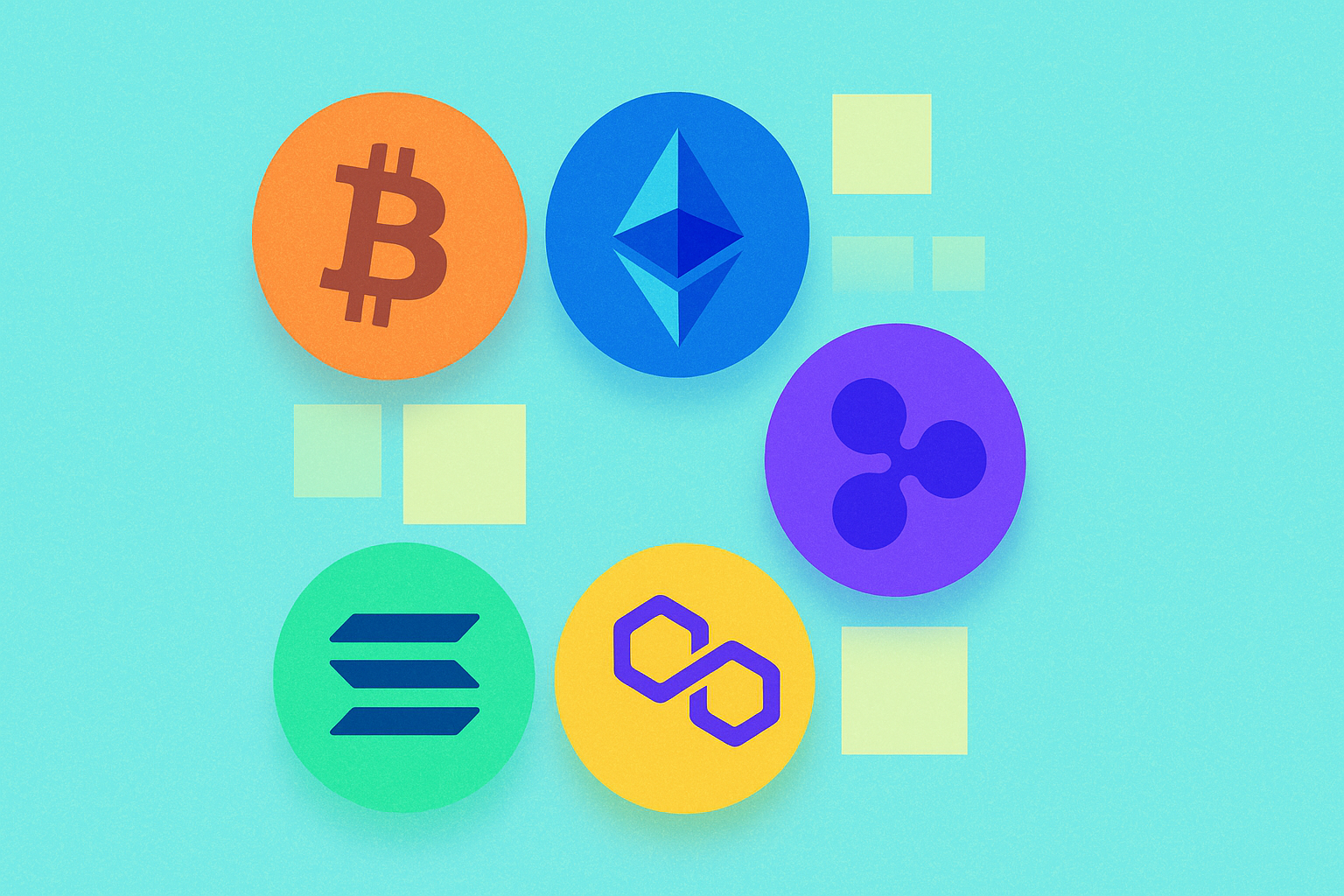
Top Cryptocurrencies with Growth Potential: Expert Picks
The cryptocurrency market is evolving rapidly, offering investors a wide range of profit opportunities. As digital assets diversify, understanding which ones hold the greatest growth potential becomes increasingly important. BeInCrypto’s editorial team surveyed leading industry experts to find out which cryptocurrencies deserve close attention in the near future.
Rafik Mamin’s Forecasts
Rafik Mamin, CEO of Minestream, identifies time-tested assets—Ethereum, XRP, Solana, and Bitcoin—as the frontrunners for maximum returns in the short and medium term. These cryptocurrencies have shown resilience against market volatility and are built on strong technical foundations.
He forecasts Bitcoin could reach $150,000, and under particularly favorable conditions, with institutional investor support, break past $180,000. This growth stems from increased interest by major financial institutions and the coin’s limited supply.
According to Mamin, Ether could climb to $5,700, and if momentum remains highly positive and planned upgrades succeed, reach $5,800. Ethereum’s ecosystem expansion and adoption of layer-two solutions are laying a robust foundation for growth.
Mamin also highlights XRP, which could reach $4–5 if the legal dispute with US regulators resolves favorably. Legal clarity could trigger significant growth for this cryptocurrency.
He estimates SOL’s price will range between $200–550, with the possibility of hitting $700 if ecosystem development and project onboarding maintain their current pace.
Alexey Bykov’s Recommendations
Alexey Bykov provides an expanded list of six promising cryptocurrencies for investors, with a focus on scalability solutions and technological innovation:
1. Ethereum — remains the leader in smart contracts thanks to continuous upgrades that boost scalability and lower transaction costs. Its shift to Proof-of-Stake and DeFi ecosystem growth further strengthen its position.
2. Optimism — a layer-two solution for Ethereum, it relieves congestion on the main network, cutting fees and speeding up transactions. Optimistic rollup technology makes it appealing to decentralized app developers.
3. StarkNet — an innovative layer-two platform using zk-rollups to significantly accelerate transaction speed and enhance security. This is particularly promising for projects requiring high throughput.
4. Polygon — effectively solves Ethereum’s scalability challenges, delivering fast, low-cost transactions. Widespread adoption of Polygon by major companies and projects affirms its long-term potential.
5. Bitcoin — stands as digital gold and the most reliable asset in the crypto sphere. Its limited supply and growing institutional acceptance appeal to conservative investors.
6. Solana — draws attention for its high transaction speed and low fees. NFT and DeFi ecosystem growth on Solana fuels additional demand for SOL.
Ilya Makar’s Perspective
Ilya Makar singles out Bitcoin as the leading candidate for growth, emphasizing its reputation as the most reliable, time-tested asset. Among altcoins, Makar highlights Ethereum and Cardano, both supported by robust technical foundations and active developer communities.
He also recommends tracking several high-potential projects: Polkadot for its unique parachain architecture, Chainlink as the top smart contract oracle provider, Solana for high performance, Avalanche for rapid transaction finality, Polygon as a trusted scalability solution, Cosmos for cross-chain communication, and Near Protocol for its developer-friendly infrastructure.
Alexander Weiss’s Picks
Alexander Weiss names three next-generation cryptocurrencies as his favorites: TON, Solana, and Sui. TON (The Open Network) stands out for integration with a popular messenger and a growing decentralized application ecosystem. Solana continues to lead in transaction speed. Sui introduces an innovative blockchain architecture focused on mass adoption.
Pavel Butenko’s Recommendations
Pavel Butenko suggests prioritizing Ethereum as the foundational asset for any crypto portfolio, along with layer-two tokens—Arbitrum and Optimism—which benefit from Ethereum’s ecosystem expansion.
He also sees strong potential in the RWA (real-world asset tokenization) sector, where Lido Finance and Synthetix deliver innovative financial tools. In the DePIN sector (decentralized physical infrastructure networks), IOTA leads thanks to its Tangle technology and focus on the Internet of Things.
Summary: Which Cryptocurrency to Invest In?
Expert opinions highlight several categories of cryptocurrencies with strong investment prospects in the near term. A sound investment strategy should weigh both growth potential and risk for each asset.
Reliable Assets Category:
Bitcoin remains the primary growth candidate, with projections up to $150,000 and potential for $180,000. Its digital gold status and rising institutional adoption make it the cornerstone of any crypto portfolio. Bitcoin suits conservative investors seeking stability and long-term appreciation.
Ethereum continues to shine, driven by constant upgrades and ecosystem development. The forecasted rise to $5,700–5,800 reflects new scalability solutions and expanding roles in DeFi and NFT sectors.
High-Performance Blockchains Category:
Solana holds its strong position thanks to fast transaction processing and low fees. Its price could reach $700 if ecosystem and project growth continue. Solana appeals to investors who value technological advancement.
Scalability Solutions Category:
Polygon, Optimism, and StarkNet stand out as long-term investments. These layer-two solutions benefit from Ethereum’s mainnet growth and address critical scalability challenges. Their tokens could deliver notable gains as adoption increases.
Alternative Smart Contract Platforms Category:
Cardano attracts attention for its scientific approach and gradual feature rollout. Polkadot offers unique cross-chain architecture. Avalanche and Cosmos are recommended for their technical strength and active ecosystem development.
Specialized Solutions Category:
Chainlink remains indispensable for smart contract oracles, ensuring steady demand for LINK. Near Protocol appeals to developers with its easy-to-use infrastructure and low entry barriers.
New Promising Projects Category:
TON and Sui represent a new blockchain generation with innovative technical solutions. Arbitrum, as a layer-two solution, is seeing rapid adoption. Lido Finance and Synthetix in the RWA sector offer access to real asset tokenization. IOTA in the DePIN sector focuses on decentralized physical infrastructure.
XRP deserves special mention, as it may see substantial growth if regulatory legal proceedings resolve favorably. Legal clarity could trigger a surge to $4–5.
Portfolio Construction Recommendations
For a balanced portfolio, experts recommend:
- Allocate 40–50% to reliable assets (Bitcoin and Ethereum)
- Distribute 30–40% among high-performance blockchains and scalability solutions (Solana, Polygon, Optimism)
- Invest 10–20% in promising alternative platforms (Cardano, Polkadot, Avalanche)
- Reserve 5–10% for specialized and new projects with high growth potential
Important Warning: Cryptocurrency investing is highly risky. Before making decisions, conduct your own research, assess your risk tolerance, and only invest funds you can afford to lose. Diversifying your portfolio and sticking to a long-term approach can help mitigate risks and increase your chances of success.
FAQ
Which cryptocurrencies are considered the most promising for investment in 2024?
Ethereum (ETH) and Solana (SOL) are viewed as the top prospects for 2024. Ethereum holds a strong second place with a market cap over $228 billion, while Solana delivers major technological innovation and increased trading activity.
What are the key metrics for assessing the investment potential of cryptocurrencies?
Key metrics include market capitalization, 24-hour trading volume, circulating supply, maximum supply, price trends, and developer activity. These indicators reflect the project’s health and market engagement.
How should beginners select a safe and promising cryptocurrency for investment?
Start with major cryptocurrencies like Bitcoin and Ether. Conduct thorough research, use secure wallets, diversify your portfolio, invest only what you can afford to lose, and monitor the market regularly.
What are the advantages and disadvantages of other cryptocurrencies compared to Bitcoin and Ether?
Other cryptocurrencies offer greater scalability, lower fees, and faster transactions. However, they lack the market stability and broad recognition of Bitcoin and Ether. Solana and Cardano focus on technological innovation and ecosystem growth.
What are the main risk factors in cryptocurrency investing and how can they be avoided?
Main risks include market volatility, asset storage vulnerabilities, and smart contract security issues. To reduce risks, diversify your portfolio, use secure storage services, monitor the market regularly, and never invest more than you can afford to lose.
What roles do market capitalization, liquidity, and technological innovation play in evaluating cryptocurrency prospects?
Market capitalization measures the size of a cryptocurrency, liquidity reflects trading volume, and technological innovation determines a project’s long-term potential and competitiveness.
Share
Content
How to Buy Cryptocurrency


Trending Cryptocurrencies



How to Mine Ethereum in 2025: A Complete Guide for Beginners

Ethereum 2.0 in 2025: Staking, Scalability, and Environmental Impact

What is Ethereum: A 2025 Guide for Crypto Enthusiasts and Investors
How does Ethereum's blockchain technology work?

What are smart contracts and how do they work on Ethereum?
Ethereum Price Analysis: 2025 Market Trends and Web3 Impact

What is AIX9: A Comprehensive Guide to the Next Generation of Enterprise Computing Solutions

What is KLINK: A Comprehensive Guide to Understanding the Revolutionary Communication Platform

What is ART: A Comprehensive Guide to Understanding Assisted Reproductive Technology and Its Impact on Modern Fertility Treatment
What is KAR: A Comprehensive Guide to Knowledge and Reasoning Systems in Modern Technology

What is MART: A Comprehensive Guide to Multi-Agent Reinforcement Learning Through Time