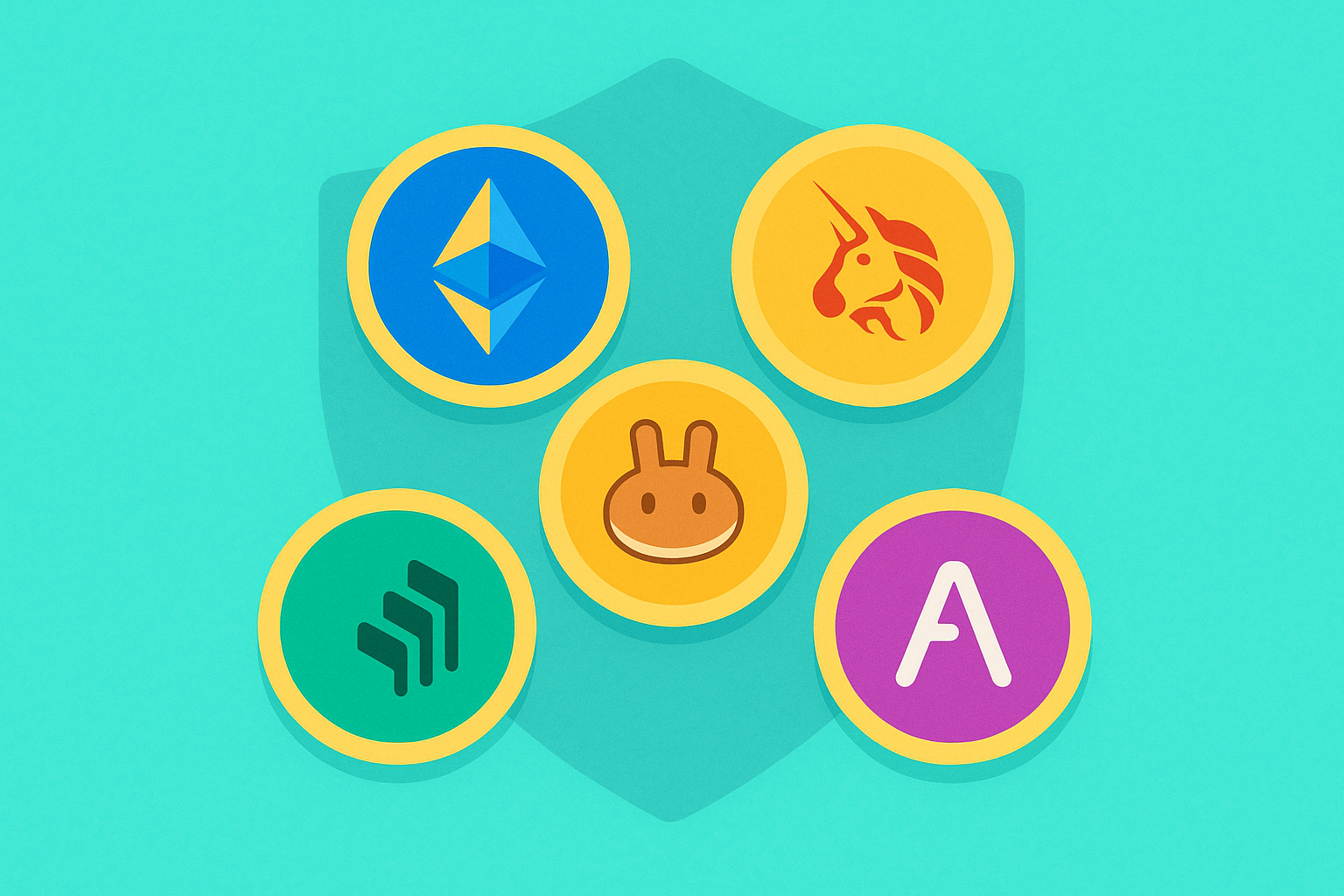
An in-depth guide to selecting DeFi platforms for beginners. Discover five top recommended projects, including Ethereum, Uniswap, and PancakeSwap. Gain insights into secure investment strategies, effective risk management, and why security audits matter. Begin trading on exchanges like Gate.
What Is DeFi Investing?
DeFi, or decentralized finance, is a groundbreaking financial system that enables transactions without traditional intermediaries or central authorities. Built on blockchain technology—primarily the Ethereum blockchain—DeFi platforms provide open and accessible financial services for anyone.
Smart contracts—self-executing programs that automatically deliver financial services when specific conditions are met—are the foundation of DeFi. Users retain complete control over their assets, as smart contracts automate processes without the need for third-party oversight.
DeFi offers several advantages over conventional centralized finance, including enhanced transparency, censorship resistance, anonymity, round-the-clock accessibility, and seamless integration with other services. These features position DeFi as a leading contender for next-generation financial infrastructure, with significant growth potential.
DeFi’s three primary characteristics are as follows:
Decentralized Financial System Without Central Administrators
The absence of banks and corporations as central authorities is DeFi’s hallmark. Blockchain-based autonomous programs deliver financial services, allowing anyone equal access to open financial tools. This inclusivity extends opportunities to groups historically excluded by traditional financial systems.
Composability
DeFi protocols function like building blocks, enabling new services through integration. For instance, assets borrowed via crypto lending can be swapped instantly on a decentralized exchange and then deployed on other platforms, supporting complex, multi-layered financial strategies. This flexibility has fueled DeFi’s rapid market expansion.
Easy Service Access with Wallet Connection
Anyone with a crypto wallet can access DeFi services simply by connecting to the blockchain network. Unlike traditional finance, users don’t need to complete cumbersome identity verification or credit checks. This streamlined process allows people worldwide to start using financial services quickly and efficiently.
Top 5 Recommended DeFi Tokens for Investment
Below are five highly rated DeFi tokens with notable investment value. Each token brings unique strengths and plays a vital role in the DeFi ecosystem.
Recommended DeFi Token #1: Ethereum (ETH)
Ethereum is the cornerstone of the DeFi market, widely regarded as the king of DeFi. Its smart contract functionality, high liquidity, and future potential make it the most important asset in the sector.
Ethereum’s indispensable role in DeFi stems from its innovative smart contract capabilities. Smart contracts are self-executing code triggered by predefined conditions, providing transparency and security without human intermediaries—unlike traditional finance.
ETH also serves as the primary liquidity pair for most DeFi services and is the base currency for nearly every major DEX, streamlining trading and enhancing market efficiency.
As DeFi protocols and decentralized applications (DApps) gain traction, demand for ETH is expected to rise. Upgrades like Ethereum 2.0 promise faster transactions and lower gas fees, further increasing ETH’s value proposition.
Recommended DeFi Token #2: Uniswap (UNI)
UNI is the governance token for Uniswap, the world’s largest decentralized exchange (DEX), launched in 2018. Uniswap’s main innovation is its Automated Market Maker (AMM) system.
Uniswap departs from conventional centralized exchanges by utilizing AMM algorithms, enabling users to deposit assets into liquidity pools and automatically match trades. This model ensures constant liquidity, overcoming limitations of traditional order books.
In 2020, Uniswap introduced the native UNI token to facilitate platform governance—a major milestone for DeFi. By providing tokens to liquidity pools, users earn a share of trading fees and UNI rewards.
Uniswap is expected to sustain its growth through ongoing AMM advancements and new feature development. UNI’s utility will expand with enhanced governance and future staking rewards, supporting its long-term value.
Recommended DeFi Token #3: PancakeSwap (CAKE)
PancakeSwap is a large-scale DEX operating on a high-speed blockchain developed by a major ecosystem. The CAKE token is issued and circulated on this platform.
This blockchain maintains Ethereum compatibility while offering much faster transaction speeds and lower fees—a key technical advantage. PancakeSwap leverages these benefits to provide low-cost trading compared to Ethereum-based DEXs.
CAKE token holders receive a portion of all trading fees, and users earn additional CAKE by providing liquidity to asset pools.
Beyond rewards, CAKE is essential for platform governance. Holders can vote on operational policies and new features, directly influencing PancakeSwap’s direction. This makes CAKE a compelling investment for active users.
Recommended DeFi Token #4: Compound (COMP)
Compound is a pioneering DeFi lending protocol launched in 2018, with the COMP governance token introduced in 2020. Compound has played a leading role in the crypto lending market.
Users who deposit crypto assets on Compound automatically earn interest, with rates dynamically adjusted based on token type, market supply and demand, and liquidity. Deposited assets may also be used as collateral for borrowing other cryptocurrencies.
With one of the longest operational track records in DeFi, Compound demonstrates high security and reliability in a sector often affected by hacking risks.
This proven history has earned Compound strong community trust. COMP is highly valued for its future potential and remains a recommended investment as the DeFi market grows.
Recommended DeFi Token #5: Aave (AAVE)
Aave stands as one of the largest and most comprehensive DeFi platforms, offering lending, liquidity provision, staking, and more. The AAVE token is central to its ecosystem.
AAVE functions as the governance token, empowering holders to propose and vote on platform management, new features, and parameter adjustments.
It also features a unique safety module: staked AAVE can be used to compensate for unexpected protocol losses, enhancing platform security and reliability.
Aave has established itself as the leading DeFi lending platform, with a steadily increasing user base and assets under management. As DeFi continues to expand, AAVE’s demand and price are poised for further growth.
How to Identify Top DeFi Tokens for Investment
With countless projects in the DeFi space, identifying the most valuable tokens can be challenging. Here are two key criteria for selecting reliable DeFi investments.
Criterion #1: Ranking in the Top 30 on Defillama
Projects ranked in the top 30 on Defillama’s protocol list are generally considered safe and trustworthy for investment.
Defillama is an industry-leading analytics platform, providing accurate, objective rankings based on TVL (Total Value Locked) for each DeFi protocol.
TVL measures the total crypto assets locked in a protocol, serving as a crucial indicator of usage, popularity, and reliability.
Defillama covers thousands of DeFi protocols across Ethereum, other high-speed blockchains, Polygon, Avalanche, and more. Users can easily compare TVL, active users, daily trading volume, and fee revenue across platforms.
Top 30 protocols have high TVL and consistent user activity, reflecting strong community trust and lower risks of hacking or scams. Tokens linked to these projects are therefore considered relatively safe investments.
Criterion #2: Tokens You Personally Use for DeFi Operations
Choosing tokens from DeFi platforms you actively use is a sound investment strategy.
Directly using and managing a DeFi platform provides deep practical knowledge and understanding. Key aspects experienced firsthand include:
Platform Mechanisms and Usability
Personal use clarifies how funds are lent and borrowed, how smart contracts operate, fee structures, actual risks, and user interface quality—insights unavailable from surface-level information.
Community Activity
Through participation, you gauge user engagement, demographic trends, the vibrancy of community discussions, and developer-user communication—all vital signs of project health.
Investing in tokens from platforms you haven’t used relies heavily on secondhand information—news articles, social media chatter, or others’ opinions—dramatically increasing risk of emotional or misinformed decisions.
Allocating capital to tokens from unfamiliar DeFi platforms means investing without full understanding of their mechanisms and risks, which is highly risky. For better investment outcomes, prioritize tokens from platforms you’ve personally operated and understand.
FAQ
What Is DeFi Investing? How Is It Different from Traditional Financial Investment?
DeFi investing leverages blockchain technology for decentralized finance. Unlike conventional investing, DeFi does not require central authorities, offers greater transparency, and typically lower fees. Anyone can participate freely, enabling more efficient asset management.
What Key Indicators Should I Check When Selecting DeFi Tokens?
Review total supply, active addresses, trading volume, governance token yields, and smart contract audit status. These metrics provide a comprehensive view of a project’s value and growth prospects.
What Are the Risks of DeFi Investing? How Can I Protect My Assets?
DeFi risks include rug pulls, hacking, price drops, and impermanent loss. To safeguard assets, invest in large, reputable DEXs and projects with confirmed security.
What Is the Typical Yield for DeFi Tokens? How Do High Yields Work?
DeFi yields from yield farming, staking, and lending can reach annual rates of 10–100% or more. High yields result from providing liquidity or locking tokens to earn rewards, primarily funded by protocol fees and new token issuance.
Why Are Security Audits and Smart Contract Audits Crucial for DeFi Protocols?
Security audits identify bugs and vulnerabilities in smart contracts, protecting funds from loss. Audits build reliability, foster investor trust, and ensure regulatory compliance.
* The information is not intended to be and does not constitute financial advice or any other recommendation of any sort offered or endorsed by Gate.