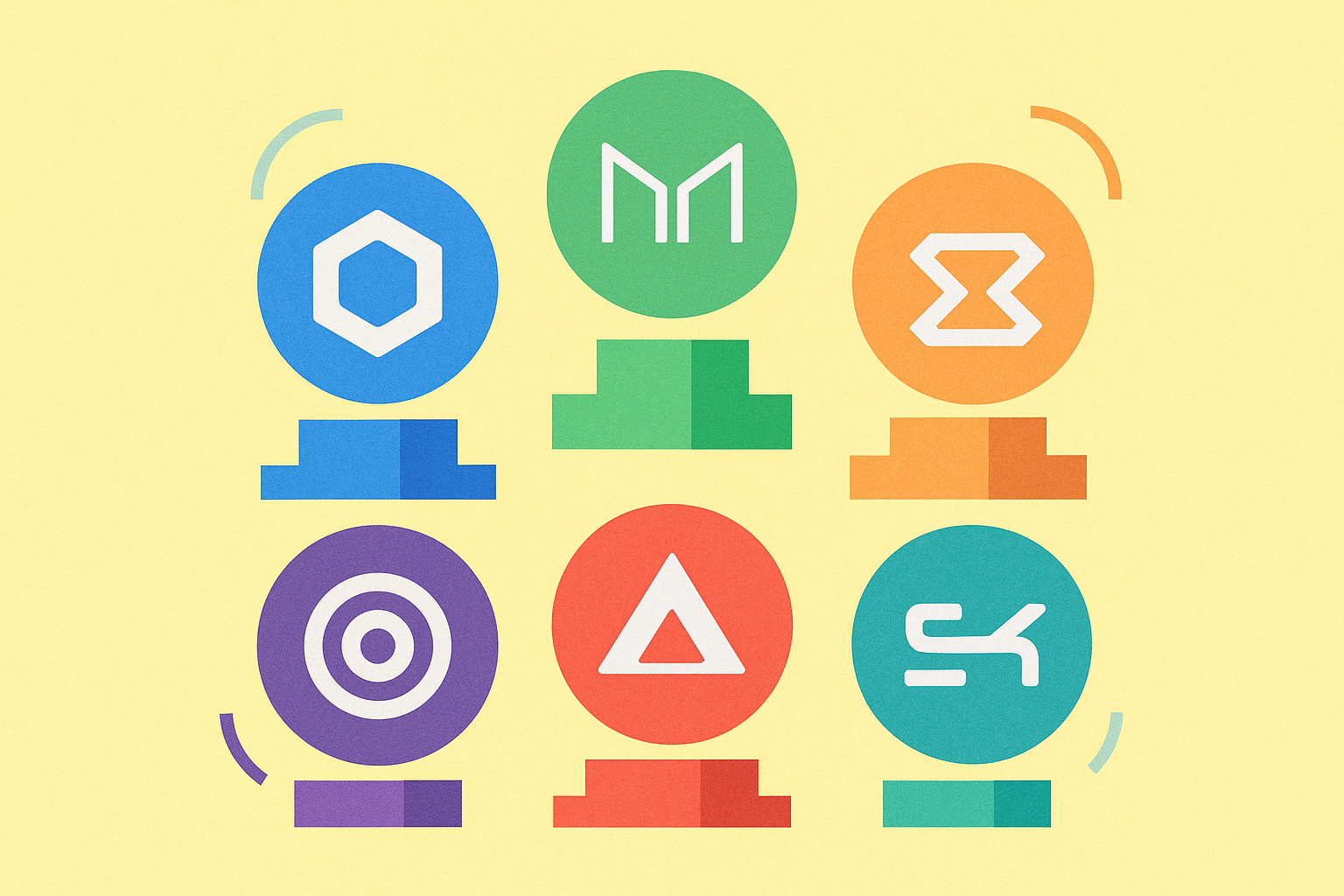
What are RWA cryptocurrencies? An in-depth look at their features and advantages. Explore six standout tokens such as Chainlink, Maker, and XDC, along with a step-by-step guide to buying RWA cryptocurrencies in Japan. This comprehensive guide is tailored for both beginners and intermediate users.
What Are RWAs? A Comprehensive Guide to Tokenizing Real World Assets
RWAs, or Real World Assets, are physical and intangible assets—like real estate, bonds, cash, and commodities—that have been converted into digital tokens. These tokens are issued and managed on blockchain networks, unlocking innovative advantages that set them apart from traditional asset management.
Tokenizing RWAs fundamentally redefines asset ownership. By converting asset rights into blockchain-verified digital tokens, investors gain several key benefits.
First, fractional ownership becomes possible. Previously, purchasing high-value real estate required substantial capital, but tokenization enables small-scale investing, giving regular investors access to opportunities once reserved for institutions.
Second, dramatically improved liquidity is a major advantage. Assets with historically low liquidity, such as real estate, become tradable 24/7 with investors worldwide after tokenization—offering a level of convenience unheard of in traditional markets.
Third, enhanced security and transparency are vital. Blockchain technology records transactions immutably and clarifies authenticity and ownership, reducing risks of fraud and illicit activity.
Recently, RWA tokenization has emerged as one of the most influential trends in crypto. Larry Fink, CEO of BlackRock—the world’s largest asset manager—has expressed strong confidence in RWA tokenization’s future. US venture capital leader Pantera Capital has also shown keen interest, noting that tokenizing traditional finance (TradFi) products can bridge TradFi and DeFi and improve liquidity and diversity for investors.
According to a Japan Research Institute report, “RWA tokens are attracting attention as a new financing method and are appealing for their global tradability. However, challenges remain around transferring rights and contract comprehension. Safeguards are needed to prevent access difficulties and speculative excess.”
Boston Consulting Group estimates the tokenized asset market could reach $16 trillion in the coming years, highlighting the explosive growth and rising importance of RWAs in global finance.
The Bank for International Settlements (BIS) offers a cautious view: “The crypto industry is eyeing RWA tokenization growth; however, cryptocurrencies cannot fully replace traditional finance.” Advancing the RWA market will require not just technical progress, but also regulatory development and coordination with existing financial systems.
Six RWA Projects to Watch
Tokens Listed on Japanese Crypto Exchanges
Chainlink
Chainlink is a decentralized oracle network that supplies external data to smart contracts—playing a crucial role in the RWA ecosystem. It consists of independent oracle nodes that ensure multi-layered data reliability and security.
An oracle provides off-chain information to smart contracts—for example, supplying up-to-date real estate prices, stock market data, or weather information required for autonomous contract operation.Smart contracts
For tokenized RWAs, Chainlink delivers several critical functions. Most notably, its Proof of Reserve feature keeps on-chain asset values current, enabling investors to verify asset backing in real time. This enhances transparency and trust, giving investors greater peace of mind.
Chainlink also enables asset ownership verification via robust on-chain identity systems, allowing proof without disclosing personal information—a breakthrough balancing privacy and transparency, previously unattainable in traditional finance.
A practical example is the cross-chain interoperability protocol (CCIP), which enables data and token movement across blockchains. For instance, Australia’s ANZ Bank used Chainlink’s technology for successful cross-chain transactions with tokenized assets, greatly improving transparency and efficiency.
Another notable case is SWIFT’s collaboration with BNP Paribas, BNY Mellon, and other major global institutions, using Chainlink’s CCIP to experiment with tokenized asset transfers. This marks a key milestone in integrating traditional international payments with blockchain technology.
By delivering data feeds and interoperability for RWAs, Chainlink provides solutions that overcome traditional financial limitations. As core infrastructure for financial re-platforming, Chainlink is expected to be essential for future RWA market growth.
Maker
Maker is a decentralized application on Ethereum, with its protocol designed by global developers and operated by MakerDAO—a decentralized autonomous organization. MakerDAO is governed democratically by MKR token holders, who vote on protocol changes to maintain the stability and transparency of the Dai stablecoin.
Maker’s core function is to provide Dai, a decentralized stablecoin pegged to the US dollar. As a truly decentralized currency without a central administrator, Dai is widely used as a foundation for the DeFi ecosystem.
MakerDAO is a pioneer in RWA tokenization. Its revenue diversification strategy—investing in US Treasury bonds—creates stable income less affected by crypto volatility. Around 80% of MakerDAO’s revenue now comes from RWA investments, a milestone for decentralized organizations.
MakerDAO classifies RWAs into four segments for systematic investment:
First, cash-like assets—including centralized stablecoins and short-term government bonds—offer liquidity and stability.
Second, clean money assets target environmentally and socially valuable investments, such as renewables and sustainable agriculture, reflecting MakerDAO’s commitment to a sustainable society beyond profit.
Third, other RWAs include broader asset classes like ERC-20 tokens.
Fourth, physically resilient RWAs are tangible assets resistant to seizure or freezing, suitable for geopolitical risk mitigation.
This structure enables MakerDAO to balance risk management and return maximization for RWA investments. MKR holders vote on key asset management decisions, directly participating in governance—a model that sets MakerDAO apart from traditional centralized financial institutions.
XinFin Network (XDC)
XDC Network is a blockchain platform specializing in enterprise and financial institution use, focused on streamlining trade finance. Its XDPoS (XinFin Delegated Proof of Stake) consensus algorithm delivers fast, low-cost transactions.
XDPoS improves on traditional DPoS by boosting transaction speed and minimizing energy consumption, offering scalability for large, enterprise-grade transactions.
XDC Network actively promotes blockchain’s real-world application in trade finance, supply chain management, and cross-border payments, achieving results in financial asset digitalization through tokenization.
A prime example is the USTY token, a digital security backed by BlackRock’s US Treasury ETF. USTY bridges traditional and digital assets, letting investors benefit from US Treasury stability and blockchain convenience.
XDC Network also focuses on tokenizing private credit. By digitizing a variety of loans—from real estate to consumer finance—companies gain more efficient funding options. Tokenization streamlines capital raising, reducing the time and cost of traditional bank loans.
XDC Network is further enhancing integration with specialized analytics tools like RWA.xyz, which provide real-time performance and market data for tokenized assets. This transparency improves investment decisions and market health.
As an enterprise-grade blockchain, XDC Network prioritizes usability and reliability, lowering barriers for traditional financial institutions and accelerating RWA adoption.
Tokens Listed on International Crypto Exchanges
Ondo Finance
Ondo Finance is an innovative company integrating blockchain and traditional finance by tokenizing established financial assets. Its main goal is to provide high-quality, transparent financial products to institutional investors, creating investment opportunities not found in traditional markets.
Ondo advances RWA utility and transparency, offering new opportunities to both individuals and institutions. Notably, small investors can now access premium bond products previously exclusive to large institutions.
Key RWA products from Ondo include:
USDY (US Dollar Yield Token)—backed by short-term US Treasuries and bank deposits, it delivers stable dollar yields. Independent third-party verification occurs daily, ensuring accurate asset backing and high investor trust. USDY suits conservative investors seeking steady returns.
OUSG (BlackRock Short-Term US Treasury ETF Token)—tokenizes BlackRock’s short-term US Treasury ETF, combining government bond safety and liquidity. Institutional investors value its stability; OUSG holders invest on-chain, backed by US government credit.
Ondo also developed the Flux Finance protocol, efficiently integrating tokenized assets into lending markets. By digitizing loans (real estate, consumer, SME) and directly connecting investors and borrowers, it bypasses traditional intermediaries for efficient capital flow.
Ondo Finance is committed to regulatory compliance, operating within each country’s financial rules to ensure institutional investor security.
Centrifuge
Centrifuge is a decentralized platform focused on RWA tokenization, supporting small and medium-sized enterprises in raising capital. It leverages blockchain to provide new funding options for businesses that previously faced barriers in traditional finance.
Centrifuge’s strength lies in its compatibility with both Polkadot and Ethereum, allowing integration across blockchain ecosystems and letting investors manage assets on multiple platforms—boosting liquidity and investment opportunities.
The flagship product, Tinlake, enables companies to tokenize assets such as real estate, invoices, and inventory as NFTs, using them as collateral for rapid fundraising. Tinlake shortens approval times from weeks or months to just days.
Tinlake offers two investment tokens:
TIN tokens—high risk, high return, absorbing pool losses first in exchange for higher yields, appealing to risk-seeking investors.
DROP tokens—lower risk, lower return, offering loss protection and stable income, ideal for conservative investors.
This two-tier structure meets a range of investor risk tolerances, while companies gain flexibility by accessing funding outside traditional finance.
Centrifuge is especially active in supporting emerging markets and SMEs, advancing financial inclusion by providing new opportunities to businesses previously excluded from the financial system and driving global economic growth.
Synthetix
Synthetix is an innovative DeFi protocol enabling the creation and trading of synthetic assets (Synths) on blockchain. Synths are derivatives representing the value of RWAs, allowing investors to track asset prices without direct ownership.
Synthetix essentially recreates the financial derivatives market on blockchain, with the advantage of no intermediaries and 24/7 trading.
The protocol’s native token, SNX, is staked to collateralize synthetic assets. Users can mint assets tracking gold prices, real estate indexes, and more—and trade them on-chain.
Synthetix supports diverse synthetic asset categories:
Commodity synths—track gold, silver, oil, and other commodity prices, letting investors access these markets without managing physical assets.
Fiat currency synths—track US dollar, euro, yen, and more, supporting currency hedging and global diversification.
Equity index synths—track indices like S&P 500 and Nasdaq, enabling stock market investing without a brokerage account.
Synthetix’s biggest benefit is allowing investors to diversify across asset classes and manage portfolio risk beyond crypto volatility. Its decentralized, censorship-resistant structure ensures open access for all.
How to Buy RWA Tokens in Japan: Exchanges and Steps
Japanese investors can purchase RWA tokens via two main channels. Here’s how each works:
Using Major International Exchanges
International exchanges offer access to a wider variety of RWA tokens not available domestically. Follow these steps:
Step 1: Create an Account and Complete KYC
Visit the international exchange’s website and register using your email or phone number. Complete identity verification (KYC) with a passport or driver’s license plus proof of address. This process usually takes a few hours to a few days.
Step 2: Buy XRP at a Domestic Exchange
For transfers, use a cryptocurrency with low fees and fast settlement—XRP (Ripple) is ideal for international transfers.
Create an account at a domestic exchange (e.g., Coincheck, Bitbank, GMO Coin), deposit yen, and purchase XRP via market or limit order.
Step 3: Transfer XRP to the International Exchange
Send XRP to your international exchange wallet. Be sure to copy the address and Destination Tag accurately to prevent loss. Transfers typically arrive within minutes.
Step 4: Exchange XRP for USDT
Most RWA tokens trade against USDT. Sell XRP for USDT using the XRP/USDT pair via market or limit order.
Step 5: Buy Your RWA Token
Use USDT to buy your chosen RWA token—select the trading pair (e.g., LINK/USDT, MKR/USDT), specify the amount, and place your order.
Market orders fill instantly at current prices; limit orders execute at your set price. Choose the method that fits your strategy.
Using Japanese Domestic Exchanges
Domestic exchanges offer fewer RWA tokens but are well-regulated and beginner-friendly.
Step 1: Register at a Domestic Exchange
Sign up at major platforms like Coincheck, Bitbank, GMO Coin, or bitFlyer with your email and phone number.
Step 2: Complete Identity Verification
Submit identification (driver’s license, My Number card, or passport) as required by regulation. Smartphone-based online verification is now common, enabling same-day trading.
Step 3: Deposit Yen
After verification, fund your wallet via bank transfer, online banking, convenience store payment, or credit card. Bank transfers are most common and cost-effective.
Step 4: Buy RWA Tokens
Select your RWA token (LINK, MKR, XDC, etc.) and trading pair (e.g., LINK/JPY, MKR/JPY), enter the amount, and execute the order.
Domestic exchanges offer brokerage (instant purchase at set price, with wider spreads) and marketplace (peer-to-peer trading, tighter spreads but slower execution) formats. Beginners should start with brokerage and move to marketplace as they gain experience.
Precautions and Risk Management When Buying RWA Tokens
Keep the following in mind when investing in RWAs:
Invest only surplus funds—crypto is volatile, so don’t risk essential capital.
Diversify across multiple RWAs and asset classes to mitigate risk.
Secure your account with two-factor authentication (2FA). For large, long-term holdings, consider cold storage via hardware wallets.
Don’t forget to report gains—crypto profits are taxed as miscellaneous income in Japan. Keep records and file correctly at tax time.
Conclusion: The Future of Finance Through RWA Tokenization
This article explored the revolutionary trend of real-world asset tokenization, covering its concept, prominent projects, and buying methods in Japan.
Tokenizing RWAs addresses long-standing challenges in traditional finance. Fractional ownership lowers barriers to high-value assets, liquidity improves market access, and blockchain boosts transparency and security—building investor trust and market integrity.
The six projects highlighted—Chainlink, Maker, XDC Network, Ondo Finance, Centrifuge, Synthetix—advance RWA tokenization through diverse approaches, giving investors more choices. Chainlink delivers data infrastructure, Maker combines stablecoins and RWA investment, and XDC Network streamlines trade finance.
Japanese investors can access RWAs via domestic exchanges (safe, regulated) and international exchanges (broader selection). Choose based on your experience and risk appetite.
The RWA market is still emerging, with regulatory and technical hurdles remaining. Investigate each project’s technology, team, and compliance before investing.
Analysts expect the RWA market to grow rapidly, reaching tens of trillions of dollars as financial institutions adopt blockchain, regulations improve, and technology matures.
RWA tokenization democratizes and optimizes finance, making high-quality investments accessible to all. Blockchain opens up products once reserved for institutions, contributing to a fairer and more inclusive financial system.
The RWA market will keep evolving, with new projects and opportunities ahead. Stay informed and invest carefully. We hope this guide helps you understand RWA tokenization and supports your investment decisions.
FAQ
What Are Real World Asset (RWA) Tokens, and How Do They Differ from Cryptocurrencies?
RWA tokens represent physical assets—such as real estate or commodities—tokenized on blockchain. Unlike cryptocurrencies, they’re directly backed by real-world value and allow digital trading of tangible assets.
What RWA Tokens Can Be Purchased in Japan?
Available RWA tokens in Japan include real estate, gold, art, luxury goods, carbon credits, and NFTs. These sectors have seen rapid growth since 2024.
Which Exchanges Should I Use to Buy RWA Tokens in Japan?
The standard method is to buy crypto at a major domestic exchange, then transfer it to an international exchange to purchase the RWA token. This enables access to a wider range of assets.
What Are the Risks of Investing in RWA Tokens?
Risks include asset reliability, regulatory compliance, market volatility, tokenization complexity, and liquidity constraints.
What Is the Future Growth Potential for RWA Tokens?
The RWA market is expected to expand rapidly over the next decade, potentially surpassing the crypto market. Experts see strong growth ahead.
How Do RWA Tokens Differ from Traditional Stock or Real Estate Investments?
RWA tokens offer higher liquidity and 24/7 trading compared to traditional investments. Fractional investing and fast sales make them more accessible than stocks or real estate.
* The information is not intended to be and does not constitute financial advice or any other recommendation of any sort offered or endorsed by Gate.