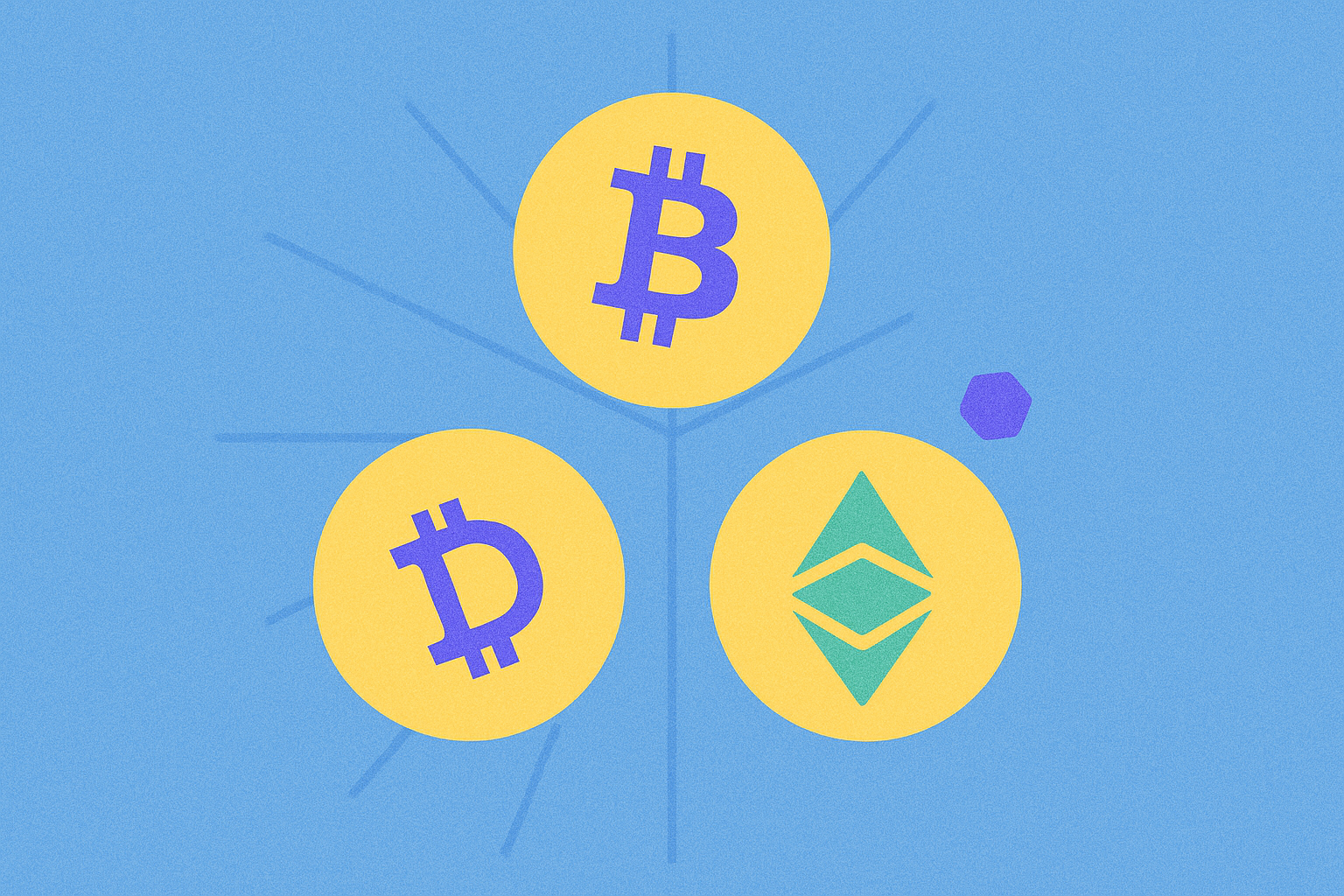
This comprehensive guide demystifies cryptocurrency forks for beginners by explaining how blockchain protocol changes shape the crypto ecosystem. The article covers essential concepts including accidental forks from mining conflicts and intentional forks stemming from community disagreements. It distinguishes between soft forks—backward-compatible minor upgrades—and hard forks requiring full network updates, often creating entirely new cryptocurrencies. The guide examines landmark hard forks like Bitcoin Cash, Ethereum Classic, and Bitcoin SV, illustrating both successful implementations and contentious community splits. Additionally, it clarifies the distinction between forking and cloning, where cloning creates entirely new blockchains from copied codebases. Whether you're a trader on Gate, developer, miner, or investor, understanding forks is crucial for navigating cryptocurrency's evolutionary landscape. The FAQ section addresses practical concerns about token distribution, price impacts, and post-fork ch
Understanding Blockchain Forks
In the world of cryptocurrencies, the term "fork" fundamentally refers to a change in the blockchain protocol. Since cryptocurrencies operate on decentralized networks, all elements of the distributed system must follow the same rules to properly cooperate and maintain the blockchain history intact. This consensus mechanism is crucial for the security and reliability of the entire network.
When this consensus breaks down, the result is two independent blockchains operating simultaneously in different parts of the network—an event also known as a chain split or fork. This phenomenon represents a critical moment in a cryptocurrency's evolution, as it can lead to the creation of entirely new digital assets or simply resolve technical discrepancies within the network.
Forks are an inherent part of blockchain technology's evolutionary process. They demonstrate the flexibility and adaptability of decentralized systems, allowing networks to upgrade, improve, or diverge based on community consensus or technical requirements. Understanding forks is essential for anyone involved in the cryptocurrency ecosystem, from miners and developers to investors and users.
Different Ways of Forking an Active Blockchain
Blockchain forks can occur through various mechanisms, each with distinct characteristics and implications for the network. Understanding these different types helps participants navigate the cryptocurrency landscape more effectively.
Accidental forks occur when different miners find a block at the same time, simultaneously creating two blockchains. This type of fork tends to resolve relatively quickly because as subsequent blocks are added to the chain, one becomes longer and the other blocks are simply discarded. These temporary forks are a natural part of the mining process and typically resolve within minutes as the network reaches consensus on which chain to follow. The longest chain rule ensures that the network eventually converges on a single version of the blockchain.
Intentional forks in cryptocurrencies emerge when there is a split between developers and their vision of how the software should operate. Protocol rules are changed and an entirely new coin is created. This type of fork usually stems from fundamental disagreements about the direction of the project, technical implementations, or governance structures. These forks represent significant events in a cryptocurrency's history and can have lasting impacts on the ecosystem.
Of course, in this situation there is a risk that if there is insufficient interest in the new creation, the token's value will drop to zero and it will cease to be mined. However, intentional chain splits can succeed if a sufficiently large community supports the new coin. Both assets can continue to develop alongside each other, each pursuing its own vision and attracting its own user base. The success of intentional forks depends heavily on community support, technical merit, and market adoption.
Types of Intentional Cryptocurrency Forks
Intentional cryptocurrency forks can be divided into two main categories: soft forks and hard forks. Each type has distinct characteristics, implementation requirements, and implications for the network and its participants.
Soft Fork
Soft forks typically involve minor corrections that are optional and backward compatible, meaning old rules are not outdated and updates are not required by everyone creating the decentralized network, as previous blocks remain understandable. This backward compatibility is the defining characteristic of soft forks, making them less disruptive to the network.
Only one blockchain remains valid while people update their software from the old version. Soft forks can be implemented gradually, with nodes updating at their own pace without causing network fragmentation. This makes soft forks a preferred method for implementing non-controversial upgrades or improvements.
Examples of soft fork implementations include the addition of new transaction types, improvements to block validation rules, or the introduction of new opcodes that don't break compatibility with older software versions. The SegWit (Segregated Witness) upgrade to Bitcoin, while controversial in its implementation method, was technically designed as a soft fork to maintain backward compatibility.
Hard Fork
A hard fork occurs when introduced changes are not compatible with previous versions; they are permanent and require all users to update the software that adheres to the latest rules. This incompatibility is what distinguishes hard forks from soft forks and makes them more significant events in a blockchain's history.
If some nodes or miners do not update, a chain split occurs, and after such a fork, two different blockchains are created. At this point, either both blockchains will coexist and operate independently, or one blockchain will become dominant. The outcome depends on various factors including community support, hash power distribution, and economic incentives.
Some hard forks do not arise from conflicting visions, meaning all interested parties peacefully agree to introduce a new set of rules. These planned hard forks are often used for major protocol upgrades, such as changing consensus mechanisms, implementing new features, or fixing critical security vulnerabilities. Ethereum's transition from proof-of-work to proof-of-stake through "The Merge" represents an example of a coordinated hard fork with broad community consensus.
Hard forks can be contentious or non-contentious. Contentious hard forks occur when there is significant disagreement within the community about the proposed changes, often resulting in two competing chains. Non-contentious hard forks happen when the community broadly agrees on the upgrade path, typically resulting in one chain becoming obsolete as users migrate to the new version.
Most Important Hard Forks in History
The history of cryptocurrencies is marked by several significant hard forks that have shaped the industry and created new digital assets. These forks demonstrate both the potential and the challenges of decentralized governance.
Bitcoin Cash was created in 2017 and is currently considered the most successful hard fork of the original cryptocurrency. The two networks share the same history up to block number 478,558. The reason for Bitcoin Cash's creation was a series of disagreements in the community related to debates about block size and the implementation of Segregated Witness. Proponents of larger blocks argued that increasing the block size would improve transaction capacity and reduce fees, while opponents were concerned about centralization risks and preferred layer-two scaling solutions. Bitcoin Cash implemented an 8MB block size limit (later increased to 32MB) compared to the original network's 1MB limit, representing a fundamental philosophical difference in scaling approaches.
Ethereum Classic is a successful fork of the primary smart contract platform that emerged after the hacking of The DAO (Decentralized Autonomous Organization), from which hackers stole ETH worth over 50 million dollars. The community decided on a hard fork from block 1,920,000 to reverse the theft and return the funds to investors. However, a portion of the community opposed this intervention, arguing that "code is law" and that blockchains should be immutable regardless of circumstances. This group continued mining the original chain, which became known as Ethereum Classic. This fork highlighted fundamental questions about blockchain immutability, governance, and the role of community intervention in response to exploits.
Bitcoin SV (Bitcoin Satoshi Vision) is another fork in the network, emerging from a Bitcoin Cash software update. In 2018, this network split occurred, causing significant controversy in the cryptocurrency market. The fork resulted from disagreements about the future direction of Bitcoin Cash, with Bitcoin SV proponents advocating for massive block sizes (up to 128MB initially, with plans for unlimited blocks) and a return to what they claimed was the original vision outlined in the Bitcoin whitepaper. The contentious nature of this fork led to a "hash war" between the two competing chains, demonstrating the potential for conflict when communities cannot reach consensus on fundamental protocol changes.
These historical forks illustrate important lessons about cryptocurrency governance, community consensus, and the technical challenges of maintaining decentralized networks. They also demonstrate that successful forks require not just technical merit but also strong community support, clear value propositions, and sustainable economic models.
What Is Cloning?
Cloning is sometimes confused as a synonym for chain forking, but it represents a fundamentally different process in cryptocurrency development. Understanding the distinction between cloning and forking is important for comprehending how new cryptocurrencies are created and how innovation occurs in the blockchain space.
Cloning occurs when someone copies the codebase of one cryptocurrency and, after making minor changes, creates a completely new distributed ledger from scratch. Unlike forks, which share transaction history with the parent chain up to a certain point, cloned cryptocurrencies start with an entirely new genesis block and have no shared history with the original project.
Cloning is popular on code-sharing platforms like GitHub, where developers can easily duplicate existing software that supports network nodes and then modify it to their own needs. The process involves taking the open-source code, making desired modifications to parameters such as block time, total supply, consensus mechanism, or mining algorithm, and then launching a completely new blockchain on an empty distributed ledger. This approach often leads to innovative solutions as developers experiment with different configurations and features.
For example, Litecoin was created in 2011 when Charlie Lee used an original copy of the codebase and changed several parameters, such as the proof-of-work algorithm (from SHA-256 to Scrypt) and block creation speed (from 10 minutes to 2.5 minutes). This enabled him to improve transfer speeds and scalability relative to the original network. Litecoin's success demonstrated that cloning could be a viable path to creating valuable new cryptocurrencies that serve different use cases or improve upon existing designs.
Other examples of successful clones include numerous projects that have taken the Ethereum codebase and modified it to create new smart contract platforms with different features, such as faster block times, different consensus mechanisms, or enhanced privacy features. The practice of cloning has accelerated innovation in the cryptocurrency space by allowing developers to build upon proven technology while experimenting with new ideas.
However, cloning also raises questions about innovation and value creation. Critics argue that many cloned projects offer little genuine innovation and simply copy existing technology without adding meaningful improvements. Successful clones typically differentiate themselves through significant technical improvements, different target markets, or novel features that address specific use cases not well-served by the original project.
The Future of Forks
Forks have a significant impact (both positive and negative) on the cryptocurrency ecosystem, and their role will continue to evolve as the industry matures. The impact extends beyond just the method of creating and improving cryptocurrencies to include the entire media environment surrounding them and their influence on market dynamics, community governance, and technological innovation.
On the positive side, forks represent a powerful mechanism for innovation and evolution in decentralized networks. They allow communities to experiment with different approaches, implement improvements, and respond to changing needs without requiring unanimous consent from all participants. This flexibility is a key strength of decentralized systems, enabling them to adapt more rapidly than traditional centralized systems. Forks also provide a form of checks and balances in cryptocurrency governance, ensuring that no single entity can unilaterally control the direction of a project against the wishes of a significant portion of the community.
However, forks also present challenges and risks. Contentious forks can divide communities, fragment hash power and development resources, and create confusion among users and investors. The proliferation of forks can dilute brand value and make it difficult for newcomers to understand which version of a cryptocurrency represents the "true" vision. Additionally, some forks are created primarily for speculative purposes rather than genuine technical or philosophical differences, potentially harming the ecosystem's reputation.
As more people with different beliefs and goals enter the cryptocurrency space, both soft forks and hard forks will continue to play a significant role in the overall growth and development of the entire cryptocurrency industry. The increasing sophistication of governance mechanisms, such as on-chain voting and formal proposal systems, may help communities navigate fork decisions more effectively and reduce the frequency of contentious splits.
Looking ahead, we can expect to see continued evolution in how forks are implemented and managed. Layer-two scaling solutions and cross-chain interoperability protocols may reduce the need for some types of forks by enabling greater flexibility without requiring changes to base layer protocols. At the same time, the ongoing development of formal governance frameworks and decision-making processes may help communities reach consensus more effectively, potentially reducing the frequency of contentious forks while still allowing for necessary protocol upgrades.
The future will likely see a balance between stability and innovation, with established networks becoming more conservative about protocol changes while new projects continue to experiment with different approaches through cloning and forking. Understanding forks—their mechanisms, implications, and historical precedents—will remain essential knowledge for anyone participating in the cryptocurrency ecosystem, whether as a developer, miner, investor, or user.
FAQ
What is a cryptocurrency fork (Cryptocurrency Fork)? What is the difference between it and blockchain forks?
A cryptocurrency fork is a code modification creating a new cryptocurrency, while a blockchain fork is a network split producing multiple parallel chains. The key difference: forks alter code to create new assets, whereas blockchain forks divide the existing network itself.
What is the difference between hard forks and soft forks, and how do they work?
Hard forks introduce incompatible upgrades, creating two separate chains post-split. Soft forks maintain backward compatibility with older protocols, preventing chain divergence. Hard forks require full network consensus; soft forks only need majority agreement.
Why do cryptocurrency projects need to fork? What are the main reasons for forks?
Cryptocurrency projects fork due to community disagreements, consensus algorithm changes, security vulnerability fixes, new feature implementations, and governance issues. Forks enable innovation and create new tokenomics models.
What happens to my cryptocurrency when a fork occurs? Will I receive new tokens?
When a fork occurs, your original tokens remain on the original chain. If it's a hard fork creating a new chain, you typically receive equivalent new tokens on the new chain at your wallet address. Always verify official announcements for specific fork details and token distribution terms.
What are the famous fork events that have occurred in Bitcoin and Ethereum history?
Bitcoin underwent a major split in 2017, creating Bitcoin Cash. Ethereum experienced the 2016 DAO hack, leading to a hard fork that reversed the attack and created Ethereum Classic, which continued on the original unforked chain.
After a fork, how do the two chains coexist? Do they run independently?
Yes, both chains run independently after a fork. Each blockchain maintains its own transaction history and consensus rules without affecting the other. They operate as separate networks simultaneously.
How do cryptocurrency forks impact price?
Forks can cause price volatility as new chains may attract investors while original chains lose market share. Hard forks create new cryptocurrencies, affecting supply and demand dynamics. Fork outcomes are uncertain with significant market impact.
How do I get new tokens after a fork?
To receive new tokens after a fork, hold your original coins in a wallet before the fork occurs. After the fork, use your original private key to access the new tokens on the new blockchain. Follow the official instructions from the new project for token distribution and wallet setup.
* The information is not intended to be and does not constitute financial advice or any other recommendation of any sort offered or endorsed by Gate.