Top 7 Play-to-Earn Cryptocurrencies

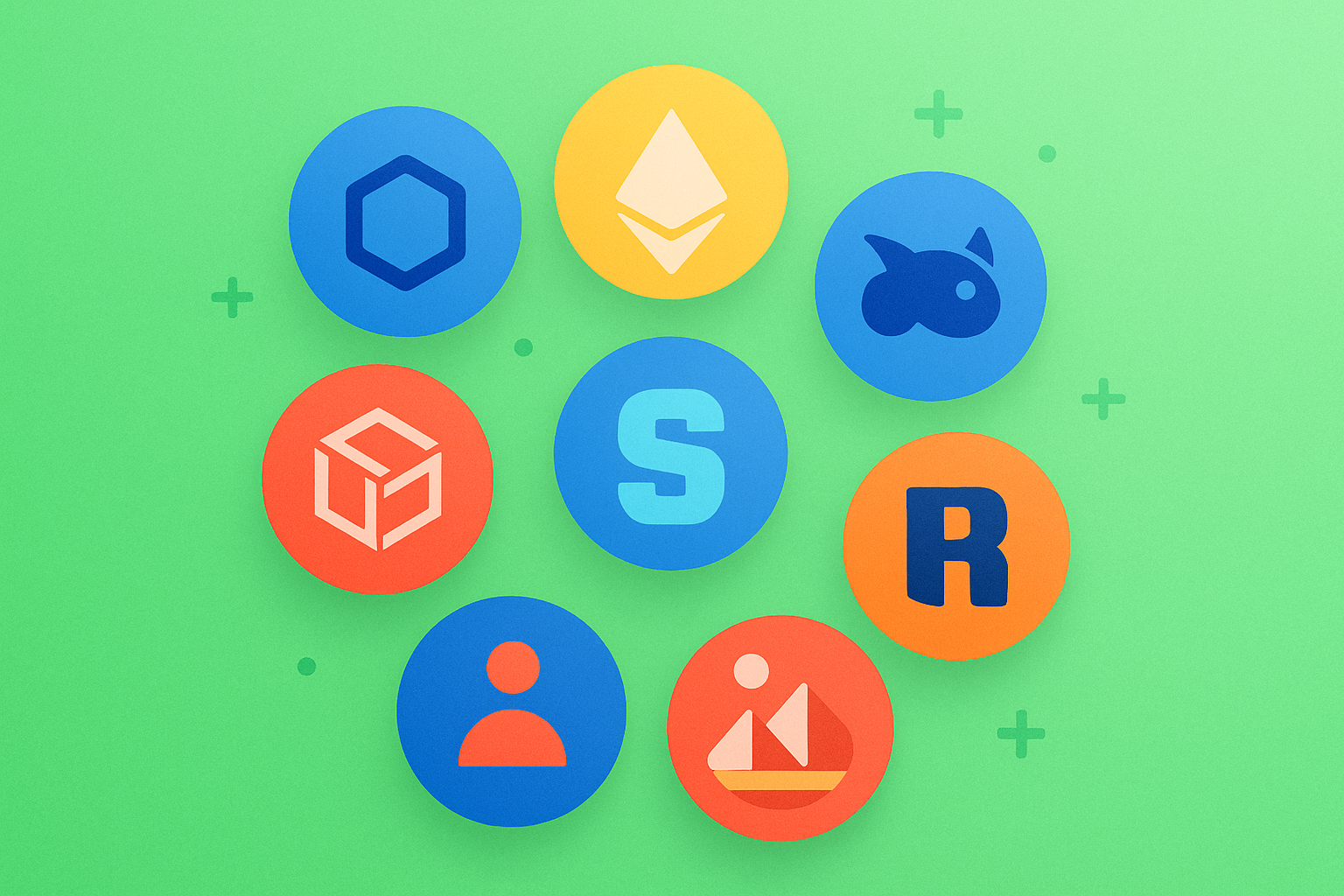
What Is Play to Earn? An Overview of the New Gaming Economy Model
Play to Earn (P2E) is a groundbreaking business model built on blockchain technology that enables players to earn cryptocurrency and digital assets by playing games. Traditionally, in-game items and characters only held value within the confines of the game and could not be transferred or traded externally. With the P2E model, these in-game assets are tokenized as NFTs (non-fungible tokens), making them tradable on the blockchain as unique digital property.
The defining feature of this new gaming economy is that players can earn crypto assets or NFTs by completing in-game tasks and challenges, then monetize them on external marketplaces to generate real income. In this sense, gameplay becomes a form of economic participation, not just entertainment.
P2E games leverage blockchain to decentralize ownership of in-game items and characters, putting control directly in the hands of players. The blockchain serves as a secure, transparent, decentralized ledger, ensuring true ownership of NFTs and crypto assets. While traditional games keep all data under the control of the game company, P2E gives players direct asset ownership, allowing them to freely manage and trade assets without reliance on the game provider’s decisions.
Additionally, NFTs and crypto assets earned in-game can be traded with other players on external platforms, creating an economic ecosystem that extends beyond a single game. This interoperability allows players to move assets across multiple games and trade on various platforms. P2E games also let players utilize their assets in other gaming projects or leverage DeFi (decentralized finance) mechanisms like staking and lending to generate additional income.
In summary, P2E is building a new kind of ecosystem that delivers real-world economic benefits to players through gameplay. In recent years, the market capitalization of P2E-related crypto assets has exceeded $8.6 billion, and continued growth is expected as the blockchain gaming sector expands.
Top 7 Play to Earn Crypto Assets by Market Cap
1. Immutable
Immutable is a highly regarded platform among blockchain game developers for building Web3 games on Ethereum. Its flagship product, Immutable X, utilizes zk-rollup technology developed by StarkWare, delivering high-speed and secure transactions while significantly reducing gas fees and maintaining Ethereum-grade security. This technology enables processing up to 9,000 transactions per second—far beyond the limits of the Ethereum mainnet.
Immutable has also forged a strategic partnership with Polygon, implementing zkEVM for enhanced smart contract compatibility and game development efficiency. This integration allows developers to use Ethereum’s tools while delivering a faster, more affordable gaming experience.
The IMX token plays several roles within the Immutable ecosystem: it is used for transaction fees, staking rewards, and protocol governance voting, serving as a key driver of ecosystem liquidity. Immutable is firmly established as a critical infrastructure provider accelerating Web3 game development and deployment.
Supported games span multiple genres and popularity, including the NFT trading card game "Gods Unchained," mobile RPG "Guild of Guardians," and open-world RPG "Illuvium"—each offering distinct gameplay and P2E features.
2. Notcoin
Notcoin is a crypto asset used in a Telegram-based game, centered on a simple "Tap-to-Earn" mechanic. The hallmark of the game is its straightforward, intuitive gameplay: players earn Notcoin simply by tapping the screen. This simplicity makes it especially accessible for newcomers to crypto and blockchain gaming—an ideal entry point for beginners.
The game incorporates strategic elements such as boosts and power-ups, which players can purchase with their earned Notcoin to increase their earnings. A leaderboard system adds competition among players, making the simple tap gameplay more engaging and rewarding for repeat play.
Notcoin also features robust social elements, including quest systems and team battles, enabling players to collaborate with friends for higher rewards and fostering a community-driven gaming experience.
Notcoin is integrated with the TON blockchain, supporting fast, secure transactions. Thanks to TON’s high throughput, large numbers of players can participate simultaneously without delays or network congestion.
3. Axie Infinity
Axie Infinity, developed by Vietnam’s Sky Mavis in 2018, is a globally popular blockchain game inspired by Pokémon and Tamagotchi. Players collect, raise, and battle digital pets called "Axies," which are represented as NFTs on the Ethereum blockchain.
Each Axie has unique genetics, looks, abilities, and skills, making strategic breeding and development vital. Players can breed Axies to create more powerful offspring and use them in battles or sell them on the marketplace.
Winning battles rewards players with in-game currency "Smooth Love Potion (SLP)" and governance tokens "Axie Infinity Shards (AXS)." SLP is an essential resource for breeding and is tradable on external exchanges. AXS tokens confer voting rights in game governance and can also earn additional rewards through staking.
In 2022, "Axie Infinity Origins" was released to provide more balanced gameplay and an improved user experience. Both "Axie Infinity Classic" and Origins are currently available. Origins features a free-to-start system for new players, supporting broader adoption of P2E gaming.
4. GALA
Gala Games, powered by GALA, differentiates itself from other Play to Earn platforms with a diverse selection of game genres and a cost-efficient trading environment. The platform hosts real-time strategy (RTS), multiplayer online battle arena (MOBA), role-playing games (RPG), simulation games, and more—allowing players to choose games that match their preferences.
In each game, players can earn GALA tokens or game-specific NFTs by achieving objectives. These assets are tradable on the Gala Games marketplace and can be used across multiple games on the platform.
While built on Ethereum, Gala Games leverages strategic integrations with Polygon and BNB Chain for dramatically lower gas fees. This multi-chain capability lets players choose the most cost-effective network for transactions, providing a clear advantage over other platforms.
Gala Games has also established its own node ecosystem; node operators earn GALA tokens and NFTs for their contributions, strengthening the platform’s stability and security through decentralized infrastructure.
5. The Sandbox
The Sandbox is a metaverse platform that stands out among Play to Earn games by empowering players as creators. The core appeal is the ability to buy digital real estate called "LAND" (NFTs) and freely develop and customize virtual environments.
Each LAND is stored as an NFT on Ethereum, giving owners full rights to develop and monetize their property. Using VoxEdit—a dedicated 3D voxel modeling tool—players can create unique items, characters, buildings, and even complete games. These creations can be sold in The Sandbox marketplace, directly monetizing player creativity.
The Sandbox also supports a decentralized virtual economy, allowing players to develop content, trade with others, and host events on their LAND to generate revenue. This multi-layered economy enables diverse earning opportunities for players.
The Sandbox has formed partnerships with major brands and entertainment companies, bringing unique experiences to the metaverse and expanding its appeal to a wider audience beyond traditional gamers.
6. Ronin
Ronin is an EVM-compatible blockchain purpose-built to efficiently support Play to Earn games and decentralized apps. It is known as the technical backbone of Axie Infinity’s explosive growth, handling millions of in-game transactions rapidly and at low cost.
Ronin was designed to solve the high gas fees and slow confirmations of Ethereum, using a proprietary consensus mechanism to process thousands of transactions per second and minimize gameplay lag.
Ronin introduced "Sponsored Transactions," allowing game developers to cover players’ gas fees. This feature lets new users start playing without holding crypto, dramatically reducing entry barriers and especially benefiting blockchain gaming newcomers.
The Ronin ecosystem also includes the Ronin Wallet and the official NFT marketplace, Mavis Market, providing a seamless, integrated experience for gamers. The Ronin Wallet’s user-friendly interface enables easy asset management, even for crypto beginners.
7. Decentraland
Decentraland is a pioneering metaverse platform built on Ethereum, where users can buy digital land (LAND) and freely develop and monetize virtual environments and applications. Its virtual world consists of more than 90,000 LAND parcels, each an NFT that can be owned and traded.
Decentraland’s economy is driven by three main tokens: MANA, LAND, and Estate. MANA is the platform’s core currency, used for buying LAND, trading items, and paying for services. LAND is the virtual real estate NFT, while Estates aggregate multiple LAND parcels into larger properties.
Unlike other Play to Earn games, Decentraland is governed by a decentralized autonomous organization (DAO). MANA token holders can propose and vote on development directions, policy changes, and content moderation, giving the community true control over the platform’s future without a centralized administrator.
Within Decentraland, users can earn in several ways: building and monetizing games or applications on LAND, hosting virtual events and selling tickets, offering advertising space, or creating and selling wearables and art in the marketplace.
The Future of Play to Earn Crypto Assets: Market Trends and Outlook
The gaming market has grown exponentially in recent years, outpacing other entertainment sectors. By 2018, gaming revenues had surpassed the combined total of film, television, and music—and the sector continues to accelerate. This underscores the evolution of gaming from pure entertainment to a central pillar of mainstream entertainment and economic activity.
In the U.S., the Entertainment Software Association (ESA) reports that roughly 227 million people—about 66% of the population—play video games. This massive user base points to the vast potential for P2E games; if blockchain games capture even a small share of the traditional market, a massive economic zone could emerge.
In Japan, a July 2023 survey by ForN (a DAO-based game guild service) found that while about 80% of respondents were interested in blockchain games including P2E, less than 10% actually played them. Among 1,018 gaming enthusiasts surveyed, about 25% said they were aware of blockchain games.
This gap highlights the growth potential for P2E, but also points to substantial barriers to entry. Technical challenges—such as setting up crypto wallets, understanding gas fees, and purchasing NFTs—may keep many potential players out. If these hurdles are removed, rapid adoption in Japan is likely.
In 2023, over 30% of announced blockchain games were canceled or discontinued—many on BNB Chain (11%), Polygon (10%), and Ethereum (6%). This high cancellation rate highlights the challenges of blockchain game development and the complexity of sustainable tokenomics. Many projects were forced to stop due to technical issues, lack of funding, or flawed economic design.
However, data from Q1 2024 points to a rebound. Blockchain games captured 30% of the Web3 industry’s market share and averaged 2.1 million unique active wallets per day, indicating a steady rise in real blockchain game users.
In the same period, Polygon established itself as the leading gaming blockchain, with a remarkable 429% quarter-on-quarter growth and more than 1.1 million new wallets per day. This surge demonstrates how Polygon’s low gas fees and fast transactions appeal to both developers and players.
Meanwhile, "Alien Worlds" on Wax held the top spot for unique active wallets with 9.6 million in the quarter. "Axie Infinity" led NFT trading volume in gaming dapps, reaching $181 million during the same period.
Investment, however, has grown more cautious. In Q1 2024, venture capital investment in blockchain gaming dropped 57% quarter-over-quarter to $288 million. This suggests investors are focusing capital on proven projects with sustainable models.
Despite the industry’s challenges in 2023, data from 2024 shows clear signs of recovery: wallet numbers, trading volumes, and major platforms are all growing. These positive trends point to sustained attention on P2E crypto assets going forward.
As technology matures, user experience improves, and regulatory frameworks become clearer, more mainstream gamers are likely to enter blockchain gaming. Traditional game companies are also accelerating blockchain adoption, signaling further expansion in the P2E market.
Conclusion
The Play to Earn model is driving transformation in the gaming industry as an innovative ecosystem where players can earn crypto assets and NFTs through gameplay. This article reviewed the top seven P2E-related crypto assets by market cap, highlighting each project’s unique strengths and characteristics.
Immutable is essential infrastructure for developers, Notcoin is an entry point for beginners, and Axie Infinity is a pioneering P2E game. GALA offers a broad range of genres, The Sandbox powers the creator economy, Ronin delivers fast, low-cost transactions, and Decentraland offers a truly decentralized metaverse.
Analysis of 2024 market trends shows that blockchain gaming growth remains robust, with platforms like Polygon and Axie Infinity leading the way. Increases in unique active wallets, NFT trading volumes, and new users all point to healthy market development.
At the same time, reduced investment and high project cancellation rates show the industry is still maturing, with sustainable business models as an ongoing challenge. However, as technology advances, user experience improves, and regulatory clarity increases, these challenges are expected to be addressed over time.
Looking ahead, the P2E market is poised for further growth. Integration with traditional gaming, the entry of major game companies, and new gaming mechanics will drive greater mainstream adoption. Play to Earn crypto assets will remain central to this expanding market, attracting continued interest from both investors and gamers.
FAQ
What Is Play to Earn and How Does It Work?
Play to Earn is a model where players earn cryptocurrency or NFTs by playing games and convert them into real-world income. Earnings come from farming in-game currencies, trading NFT items, and staking. Blockchain technology guarantees ownership of acquired assets.
Which Projects Are in the Top 7 Play to Earn Crypto Assets?
The top seven include blockchain gaming projects like Axie Infinity, Decentraland, The Sandbox, Gala, Enjin, Flow, and Immutable X—all of which use the P2E model where players earn crypto assets through gameplay.
How Much Initial Investment Is Needed to Earn with Play to Earn Games?
Initial investment varies by game but generally ranges from a few thousand to tens of thousands of yen. You may need to purchase NFT characters or in-game currency, and ongoing investment of both capital and time is important. Profitability depends on your skills and investment size.
What Are the Differences and Features of Major Play to Earn Games Like Axie Infinity and Splinterlands?
Axie Infinity is an NFT-based game that requires an initial investment. Splinterlands is a card collection game with lower entry costs. Gods Unchained is a trading card game that can be started for free. Each game has different earning potential and entry requirements.
What Are the Risks and Considerations When Investing in Play to Earn Crypto Assets?
There is no legal ownership, and items can lose all value if a game shuts down. Beware of scams and counterfeit NFTs, and rigorously safeguard your private keys. Token prices can fluctuate sharply and carry inflation risk, so only use funds you can afford to lose.
How Are Taxes Handled for Crypto Assets Earned from Play to Earn?
Crypto assets earned through Play to Earn are taxable. Report all acquired crypto assets as income on your tax return and calculate and pay taxes according to the laws of your jurisdiction.
Is Play to Earn a Sustainable Business Model for Future Earnings?
Yes, Play to Earn is expected to remain sustainable. As technology evolves and user demand grows, the model should continue expanding. Investor interest is rising and the market is set for further growth.
Share
Content
How to Buy Cryptocurrency


Trending Cryptocurrencies



Detailed Analysis of the Best 10 GameFi Projects to Play and Earn in 2025

Popular GameFi Games in 2025

What Are the Key On-Chain Metrics Revealing About Litecoin's Whale Activity in 2025?

What is GameFi and How Does It Work?
What is DeFi: Understanding Decentralized Finance in 2025

How Will Virtuals Protocol's AI Agent Economy Evolve by 2030?

What is AIX9: A Comprehensive Guide to the Next Generation of Enterprise Computing Solutions

What is KLINK: A Comprehensive Guide to Understanding the Revolutionary Communication Platform
What is ART: A Comprehensive Guide to Understanding Assisted Reproductive Technology and Its Impact on Modern Fertility Treatment
What is KAR: A Comprehensive Guide to Knowledge and Reasoning Systems in Modern Technology
What is MART: A Comprehensive Guide to Multi-Agent Reinforcement Learning Through Time