What are the major security risks and vulnerabilities in cryptocurrency exchanges and smart contracts in 2026?
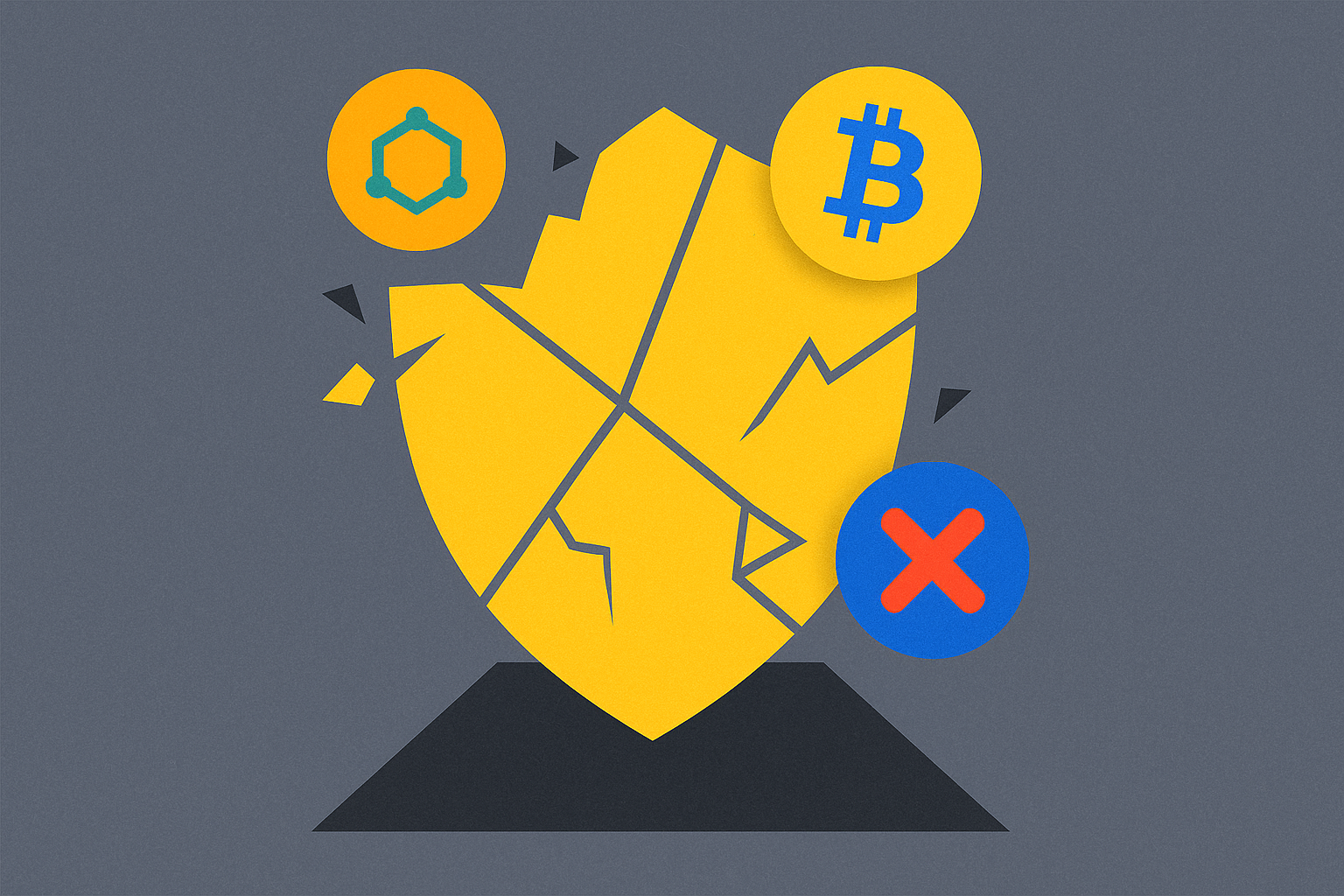
Smart Contract Vulnerabilities Account for 75% of Blockchain Security Incidents in 2019-2026
From 2019 through 2026, data reveals a stark reality about blockchain security: smart contract vulnerabilities have consistently driven the majority of security incidents, accounting for approximately 75% of all documented breaches during this period. This dominance reflects the critical role that code defects play in exposing cryptocurrency holdings to exploitation.
The 2026 data underscores this vulnerability landscape in concrete terms. January alone witnessed over $400 million in cryptocurrency losses across 40 separate security incidents. Among these, a sophisticated phishing attack on January 16 resulted in the theft of 1,459 Bitcoin and 2.05 million Litecoin—totaling $284 million and representing 71% of the month's cumulative losses. Beyond phishing, contract-specific exploits continued devastating ecosystems: Truebit suffered $26.6 million in losses due to an overflow vulnerability, while flash loan exploits and reentrancy attacks similarly impacted multiple platforms.
The mechanisms underlying these smart contract vulnerabilities range from logic errors to improper input validation and inadequate access controls. Data from 2025 shows illicit actors stole $2.87 billion across nearly 150 distinct hacks and exploits. Notably, attack vectors have evolved, with adversaries increasingly targeting operational infrastructure—private keys, custody wallets, and control planes—alongside traditional code vulnerabilities. This shift demonstrates that while smart contract vulnerabilities remain foundational security risks, the threat landscape has expanded to encompass infrastructure-level compromises.
Centralized Exchange Breaches: From Bitfinex's $120M Bitcoin Theft to WazirX's $230M Multi-Signature Wallet Compromise
The cryptocurrency sector has witnessed several catastrophic breaches that fundamentally reshaped how centralized exchanges approach security infrastructure. These incidents demonstrate that despite years of industry maturation, centralized exchange breaches remain one of the most significant threats to user assets in the digital currency ecosystem.
The Bitfinex incident of 2016 stands as a pivotal moment in exchange security history, representing a $120M Bitcoin theft that exposed critical vulnerabilities in hot wallet management and operational security protocols. This breach revealed how attackers could exploit gaps between exchange security layers, compromising access to vast reserves despite multiple protective measures being in place. Similarly, WazirX's $230M multi-signature wallet compromise illustrated that even advanced cryptographic safeguards like multi-signature schemes could be circumvented through sophisticated social engineering, insider threats, or compromised key management systems.
Both cases highlighted recurring patterns: inadequate segregation of signing authority, insufficient monitoring of unusual transaction patterns, and gaps in incident response procedures. The multi-signature wallet compromise at WazirX particularly underscored how attackers could bypass distributed authorization systems by targeting individual key holders or the infrastructure managing key access. These centralized exchange breaches collectively demonstrated that technological sophistication alone cannot eliminate human and operational vulnerabilities that remain embedded in exchange architecture.
Network Attack Evolution: DeFi Flash Loan Exploits and API Key Theft Strategies Targeting Hot Wallets
The cryptocurrency ecosystem experienced unprecedented losses in early 2026, with attackers deploying increasingly sophisticated network-level assault strategies. DeFi flash loan exploits emerged as one of the most devastating attack vectors, enabling bad actors to manipulate blockchain protocols and drain significant assets in mere seconds. Unlike traditional theft methods, these exploits leverage temporary uncollateralized loans within smart contracts to execute complex manipulation sequences before the transaction settles.
Parallel to DeFi flash loan attacks, API key theft strategies targeting hot wallets became alarmingly prevalent. Threat actors employed advanced social engineering and phishing campaigns to compromise exchange API credentials, granting them direct access to user funds held in hot wallets. January 2026 alone witnessed approximately $400 million in total losses, with a single phishing attack resulting in the theft of 1,459 Bitcoin and 2.05 million Litecoin from one investor. This incident underscores how compromised API keys can bypass traditional security layers protecting hot wallet infrastructure.
| Incident | Loss Amount | Attack Type | Vulnerability |
|---|---|---|---|
| Step Finance | $30 million | Compromised Keys | Hot Wallet Access |
| Truebit Protocol | $26.6 million | Overflow Vulnerability | Smart Contract Code |
| SwapNet | $13.4 million | Smart Contract Flaw | Protocol Logic |
| MakinaFi | $4.1 million | DeFi Exploit | Flash Loan Attack |
These coordinated attack methodologies—combining DeFi flash loan exploits with API key compromise—reveal how network attackers systematically target the intersection of smart contract vulnerabilities and hot wallet infrastructure, requiring multilayered security responses.
Regulatory Gaps and Custody Risks: The Critical Role of Compliance in Mitigating Cryptocurrency Exchange Security Failures
As cryptocurrency exchanges face unprecedented scrutiny in 2026, the intersection of regulatory compliance and custody infrastructure has become the primary determinant of security resilience. Major jurisdictions—the U.S., EU, and Asia—have established stricter institutional frameworks, with the Federal Reserve actively enabling banks to offer crypto custody and payment services. However, the difference between regulatory requirements and effective implementation creates significant exposure for both institutional and retail participants.
Proper custody architecture mitigates vulnerabilities through layered safeguards. Cold storage mechanisms, multisignature wallet technology, and segregated client accounts form the foundation of asset protection, while proof of reserves audits provide transparent verification of holdings. Simultaneously, compliance standards including KYC/AML protocols, FATF Travel Rule adherence, SOC 2 certifications, and ISO 27001 frameworks establish the operational and financial controls necessary to detect suspicious activity and prevent unauthorized access.
The critical gap remains implementation. While regulatory mandates require these safeguards, many platforms exhibit inconsistent execution of KYC/AML standards and Travel Rule compliance across jurisdictions. This inconsistency amplifies custody risks, as exchanges managing assets across borders must navigate fragmented regulatory requirements without clear coordination mechanisms. Institutions that align custody infrastructure with comprehensive compliance programs—spanning identity verification, transaction monitoring, and cross-border information sharing—significantly reduce the likelihood of security failures and regulatory enforcement action.
FAQ
What are the major security risks faced by cryptocurrency exchanges in 2026, such as hacking attacks and internal fraud?
In 2026, cryptocurrency exchanges face critical risks from AI-driven phishing attacks, smart contract vulnerabilities, and centralized infrastructure breaches. Advanced supply chain attacks and MFA fatigue tactics are prevalent threats. Centralized asset storage remains a significant vulnerability, with over 50 million user data records exposed globally.
What are the most common code vulnerabilities in smart contracts and how to identify and prevent them?
Common vulnerabilities include reentrancy attacks, integer overflow/underflow, and improper input validation. Prevent them using secure libraries like OpenZeppelin, conducting thorough code audits, applying least privilege principles, and validating all inputs rigorously.
What security measures should exchanges and DeFi platforms implement to protect user funds?
Exchanges and DeFi platforms should implement multi-factor authentication, cold storage for majority of funds, regular third-party security audits, withdrawal whitelists, real-time fraud monitoring, and maintain compliance with regulatory standards like AML and KYC protocols.
What are the emerging threats and attack vectors for smart contract security in 2026?
2026 witnesses multi-vector attacks combining reentrancy vulnerabilities with access control failures, targeting high-value protocols and institutional participants. These sophisticated attacks are increasingly destructive and complex in nature.
What major security incidents have occurred in cryptocurrency exchanges historically, and what can we learn from them?
Major incidents include Mt. Gox hack (850,000 BTC lost), FTX collapse (8 billion USD), and DeFi protocol breaches. Key lessons: strengthen smart contract audits, enhance private key management, implement multi-signature wallets, improve cold storage practices, and maintain transparent security protocols.
How to assess and audit smart contract security, what tools and standards are available?
Use tools like Slither, Mythril, and Echidna for automated analysis. Employ symbolic execution to detect vulnerabilities. Follow standards including OpenZeppelin guidelines and formal verification methods. Conduct manual code reviews and security audits by professional firms for comprehensive assessment.
Share
Content
Smart Contract Vulnerabilities Account for 75% of Blockchain Security Incidents in 2019-2026
Centralized Exchange Breaches: From Bitfinex's $120M Bitcoin Theft to WazirX's $230M Multi-Signature Wallet Compromise
Network Attack Evolution: DeFi Flash Loan Exploits and API Key Theft Strategies Targeting Hot Wallets
Regulatory Gaps and Custody Risks: The Critical Role of Compliance in Mitigating Cryptocurrency Exchange Security Failures
FAQ
How to Buy Cryptocurrency


Trending Cryptocurrencies



XZXX: A Comprehensive Guide to the BRC-20 Meme Token in 2025
Survey Note: Detailed Analysis of the Best AI in 2025

Detailed Analysis of the Best 10 GameFi Projects to Play and Earn in 2025
Kaspa’s Journey: From BlockDAG Innovation to Market Buzz

Best Crypto Wallets 2025: How to Choose and Secure Your Digital Assets

Popular GameFi Games in 2025

How does on-chain data analysis reveal XLM whale movements and transaction trends in 2026?

What is tokenomics: a complete guide to token allocation, inflation design, and governance utility in 2026

What is ICP market overview: current price, market cap ranking, trading volume, and supply details in 2026

What is VERT: A Comprehensive Guide to Vertical Exchange and Routing Technology

What is QSP: A Comprehensive Guide to Quality System Procedures in Modern Manufacturing