Cryptocurrency mining explained in simple terms

Cryptocurrency Mining: Key Functions
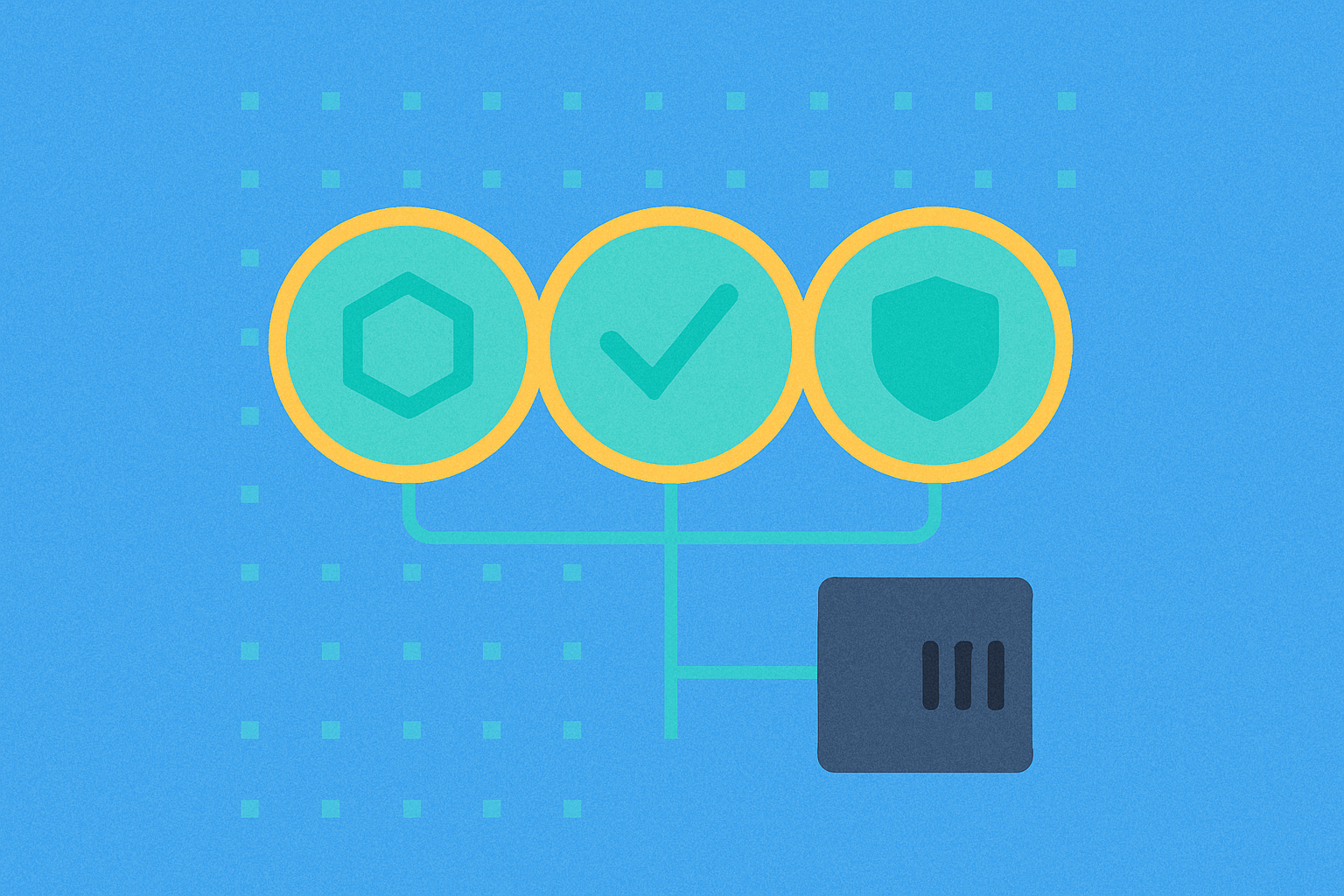
To accurately explain cryptocurrency mining, it's essential to examine its core functions in detail. Mining enables transaction verification, records new data to the blockchain, and releases new coins into circulation. Its primary role is to maintain the operation of cryptocurrencies as decentralized, peer-to-peer networks.
While mining is a complex and resource-intensive process, when executed properly, it can be highly profitable. Mining serves three principal roles in the cryptocurrency ecosystem.
Issuing New Coins
Unlike fiat currencies, which are issued by central banks, bitcoins are mined. This concept is analogous to gold mining; however, bitcoin exists within software code and must be mined to enter circulation. Specialized nodes perform this process, solving network challenges and receiving rewards in cryptocurrency.
As a result, miners function as the issuers of new digital assets, ensuring a controlled expansion of cryptocurrency supply according to protocol rules.
Transaction Verification
A transaction is considered secure once it's included in a block added to the blockchain. The more confirmations a transaction receives, the more secure the payment becomes. Miners validate each transaction, preventing double-spending and other fraudulent activities.
This verification process is critical for upholding trust in a decentralized system that operates without a central governing authority.
Network Security
Network security increases as more miners participate. Distributed mining power safeguards the network against attacks. In theory, reversing a bitcoin transaction is only possible if the majority of participants control the network’s mining hash rate.
This scenario is known as a "51% attack" and demands massive computational resources, making it economically unfeasible for large networks. While not all cryptocurrencies are created via mining, bitcoin remains the most notable example of a mined digital asset.
How Cryptocurrency Mining Works
Bitcoin, the most valuable digital asset, provides a clear example of mining. Its blockchain is managed by a network of nodes, classified as follows:
- Nodes: Computers connected to the network that record and synchronize all transactional data.
- Mining nodes: Specialized nodes responsible for processing new transactions and adding them to the blocks that comprise the blockchain.
Miners compete to solve complex mathematical problems using cryptographic algorithms. Once a miner finds a solution, it is broadcast to the network for verification and, upon approval, the block is added to the chain.
To solve a block, miners must identify a specific sequence of numbers. How does this process work?
Miners search for a number (nonce) which, combined with the hash function, results in a value within a set range that meets network requirements. This process demands countless calculations and substantial energy use.
There are various mining methods: CPU mining, GPU mining, and ASIC mining with specialized hardware. The appropriate method depends on the specifics of the asset, available budget, and technical resources.
For bitcoin mining, CPU power alone is insufficient—ASICs and GPUs are required. GPUs are often grouped together to form a setup known in the crypto community as a "mining farm," where multiple GPUs work in parallel to increase total hash rate.
Understanding Hash Functions
In simple terms, a hash function is a sequence of algorithms with properties that process data and generate a "hash"—a fixed-length number. There are basic and cryptographic hash functions; the latter are used in blockchains due to their unique qualities: irreversibility, determinism, and collision resistance.
Each bitcoin block features a special field that can be filled with a random number—referred to as a nonce (number used once) in the industry. Miners take data from known blocks (the memory pool) and assemble a new block by adding unconfirmed transactions.
After each transaction is hashed, they are paired and further hashed into a Merkle tree, or hash tree. To solve for the correct hash, miners must use trial and error to find the right nonce sequence.
If the output from the algorithm is less than the network’s target, it’s valid and accepted by other network participants. If the block’s hash exceeds the target, the miner must adjust the data and re-hash until the correct solution is found—potentially requiring billions of attempts.
Theoretically, a valid hash could be achieved by altering transaction details within the blockchain. This necessitates proof-of-work (Proof-of-Work), with miners sharing their solutions for verification by other nodes.
If a miner finds a solution that meets the network’s rule—that the hash must be less than the target—they share this with other nodes, who verify and add the new block to the blockchain.
Difficulty Metric
Mining difficulty depends on the number of participants and the network’s overall computational power. As more miners join, difficulty increases to prevent blocks from being generated too quickly, ensuring a stable mining process and predictable coin issuance.
The protocol automatically adjusts difficulty every 2,016 blocks (about every two weeks) to maintain an average block time of 10 minutes. If blocks are generated faster, difficulty rises; if slower, it decreases.
Mining Rewards
For each block mined, miners earn a reward consisting of two parts: the block reward (new coins) and transaction fees. To maintain a predictable supply, the block reward halves every 210,000 blocks—about every four years—in an event called a "halving."
To date, over 18 million bitcoins have been mined out of a maximum of 21 million. With each halving, transaction fees become a more significant part of miners’ revenue.
Is Mining Worth It?
If mining were not profitable, many cryptocurrencies would have ceased to exist, as miners are critical for blockchains operating on Proof-of-Work. However, in bitcoin mining, large- and mid-sized industrial operations have dominated for years.
The upfront costs for a bitcoin mining farm are significant—including equipment purchases, space rental or hosting (depending on the number of machines), maintenance, cooling systems, staff salaries, and more. A serious entry into this sector may require investments of $100,000 or more.
Some altcoins can still be mined using GPUs, for which the initial investment can be about ten times lower—around $10,000. However, profits are modest and highly sensitive to market volatility. This approach suits individual miners with limited starting capital.
Before starting, it’s crucial to calculate profitability, considering electricity costs, equipment depreciation, network difficulty, and current crypto prices. In some areas with low electricity rates, small-scale mining can still be profitable.
Where to Store Mined Crypto
To store cryptocurrency, use dedicated applications called crypto wallets. These vary in security, usability, and features.
For quick trading access, consider exchange (hot) wallets. While convenient, they require trust in the platform, as private keys are held by the service provider.
For long-term holding and maximum security, hardware (cold) wallets are best. These keep private keys offline, making them virtually immune to hacking. Top choices include devices from specialized manufacturers.
There are also software wallets for desktop and mobile, balancing convenience and security. For optimal protection, use multi-factor authentication and regularly back up your seed phrase.
Where to Sell Mined Coins
You can sell mined cryptocurrency on exchanges. When selecting a platform, evaluate key factors:
- Liquidity: Higher trading volumes make it easier to sell assets at market prices with minimal slippage.
- Fees: Platforms charge varying fees for trading and withdrawals.
- Security: Look for two-factor authentication and cold storage of funds.
- Fiat Support: Ability to convert crypto directly into national currencies.
- Regulatory Status: Ensure the platform is legal in your jurisdiction.
Localized platforms with high liquidity offer user-friendly interfaces and native language support. Leading options include both centralized and decentralized exchanges.
For beginners, large, regulated exchanges with straightforward interfaces and reliable support are recommended. Experienced traders may opt for decentralized platforms for enhanced privacy and greater control of funds.
The Future of Mining
Today’s mining system fortifies networks against attacks, but mining digital tokens requires costly and highly energy-intensive hardware. This raises ongoing concerns about environmental impact.
Multiple alternative consensus methods are in development. One of the most promising is Proof-of-Stake (PoS), where validators are chosen based on their coin holdings rather than computational power, significantly reducing energy use and making network participation more accessible.
Other alternatives include Proof-of-Authority, Delegated Proof-of-Stake, and hybrid models that combine different consensus mechanisms. In the future, traditional mining for some cryptocurrencies may disappear entirely.
However, for bitcoin and other major Proof-of-Work networks, a shift to alternative mechanisms is unlikely in the near term due to the fundamental changes required. Instead, the industry is trending toward renewable energy sources and greater mining equipment efficiency.
Those interested in starting cryptocurrency mining should carefully analyze the market and take long-term trends into account. Despite challenges, mining remains essential to the crypto ecosystem and continues to evolve alongside blockchain technology.
FAQ
What Is Cryptocurrency Mining and How Does It Work?
Cryptocurrency mining is the process of creating new coins by solving complex mathematical problems. Miners validate blockchain transactions and receive rewards for their computational work.
What Equipment Do You Need for Cryptocurrency Mining?
Mining requires specialized hardware: ASIC miners (the most efficient), GPU graphics cards, and FPGA devices. You'll also need a stable internet connection, cooling systems, and mining management software. Equipment choice depends on the cryptocurrency and your investment budget.
Can You Make Money Mining Cryptocurrency?
Yes, mining can be profitable, but it requires substantial investment in equipment and electricity. Profitability depends on coin prices, network difficulty, and costs. Under favorable conditions, mining remains a viable income source.
Which Cryptocurrencies Can Be Mined?
You can mine Bitcoin (BTC), Ethereum Classic (ETC), Monero (XMR), Dogecoin (DOGE), Ravencoin (RVN), Flux (FLUX), and Kaspa (KAS). Selection depends on your hardware and current profitability.
How Much Does It Cost to Start Mining Cryptocurrency?
Startup costs for mining range from several thousand to tens of thousands of dollars, depending on the equipment. Factor in the cost of GPUs or ASIC miners, plus electricity, cooling, and maintenance expenses.
Is Cryptocurrency Mining Legal?
Mining is legal in most countries, including the US, Germany, and the UAE, where it is regulated. However, some nations have banned mining due to high energy use and financial risks. Mined coins are subject to income tax.
What Risks and Challenges Are Involved in Cryptocurrency Mining?
Key risks include hardware wear and tear, crypto price volatility, high electricity costs, and legal constraints in certain areas. Competition is always increasing, reducing mining profitability.
Share
Content
How to Buy Cryptocurrency


Trending Cryptocurrencies



XZXX: A Comprehensive Guide to the BRC-20 Meme Token in 2025

Bitcoin Fear and Greed Index: Market Sentiment Analysis for 2025

5 ways to get Bitcoin for free in 2025: Newbie Guide

Top Crypto ETFs to Watch in 2025: Navigating the Digital Asset Boom

Bitcoin Market Cap in 2025: Analysis and Trends for Investors
2025 Bitcoin Price Prediction: Trump's Tariffs' Impact on BTC

Comprehensive Guide to Recession Preparation
Profitability Analysis of Cryptocurrency Mining: Miner and Altcoin Selection in Recent Years

Top 7 Most Popular NFT Games
Comprehensive Guide to NFTs: Understanding Digital Ownership and Blockchain Technology
Top 7 Metaverse Games for Play-to-Earn Gaming